“The sun shone, having no alternative, on the nothing new.”
— Opening line of the novel, setting a tone of inevitability and ennui.

Sign in to track this book
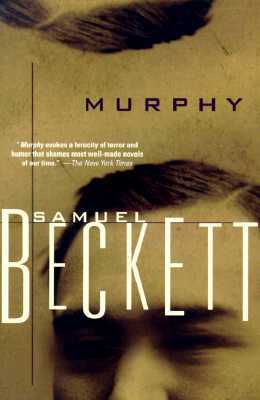
In 1930s London, Murphy, a man uncomfortable with the physical world, seeks a home and fortune, finding peace in an asylum and an absurd freedom.
“The sun shone, having no alternative, on the nothing new.”
— Opening line of the novel, setting a tone of inevitability and ennui.
“He was an Irishman, and, as such, could not but be a a creature of habit.”
— Describing Murphy's inherent nature and cultural background.
“Murphy's mind was a closed system, a little world of its own.”
— Explaining Murphy's solipsistic and isolated mental state.
“His mind, like a healthy stomach, was in a healthy state of indifference.”
— Further describing Murphy's detachment and lack of engagement with the external world.
“He sat on the green bench, a little world of his own, in the heart of the great world.”
— Murphy's physical and mental isolation amidst the bustling city.
“The part of him that he hated was the part that he loved.”
— Reflecting on Murphy's self-conflict and internal contradictions.
“He had no wish to be happy, but he had no wish to be unhappy.”
— Illustrating Murphy's passive approach to life and his lack of strong desires.
“The only way to pass the time was to waste it.”
— Murphy's cynical view on the nature of time and its consumption.
“All life is a game, a gamble, a throw of the dice.”
— A philosophical musing on the arbitrary and uncertain nature of existence.
“To be dead is to be a thing among things, a nothing among nothings.”
— A grim reflection on death and its implications for human existence.
“The trouble with life is that it is so daily.”
— A humorous yet poignant observation on the monotony and tedium of everyday existence.
“Murphy's mind was a magnificent structure, but it was empty.”
— Highlighting the paradox of Murphy's intellectual capacity and his lack of purpose or engagement.
“He was a man who loved to sit still, to be still, to be nothing.”
— Summarizing Murphy's ultimate desire for inertia and non-being.
“The end is in the beginning and yet you go on.”
— A cyclical view of existence, suggesting an inescapable loop despite foreknowledge of the outcome.
“He was not unhappy, he was not happy, he was just Murphy.”
— A succinct description of Murphy's state of being, beyond conventional emotional labels.
Ready to see how well you understood this book? Take our interactive quiz with 10 questions.
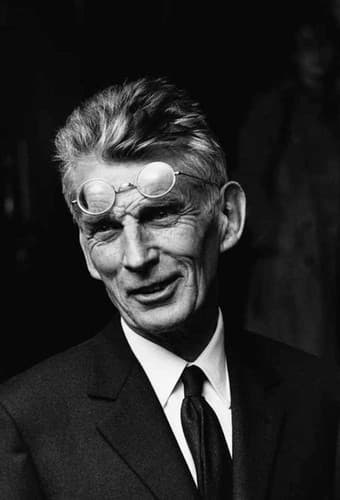
Samuel Barclay Beckett was an Irish novelist, dramatist, short story writer, theatre director, poet, and literary translator. His literary and theatrical work features bleak, impersonal and tragicomic experiences of life, often coupled with black comedy and nonsense. His work became increasingly minimalist as his career progressed, involving more aesthetic and linguistic experimentation, with techniques of repetition and self-reference. He is considered one of the last modernist writers, and one of the key figures in what Martin Esslin called the Theatre of the Absurd.

Jeff Olson
4.4
Thomas Sowell
4.4
Walter Brueggemann
4.3

Rhonda Byrne
4.3

Robin Wall Kimmerer
4.3
George S. Clason
4.3
Elliot Aronson
4.3
Joseph Campbell
4.3