BookBrief
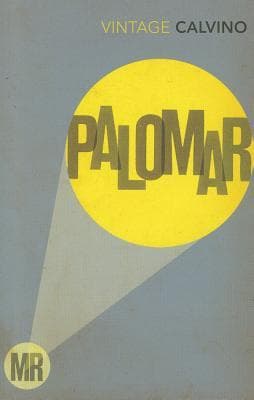
Mr Palomar cover
Archivist's Choice

Mr Palomar

Italo Calvino (1981)

Genre

Literary Fiction / Philosophy

Reading Time

120 min

Key Themes

See below

Track Your Reading

Sign in to track this book

Mr. Palomar examines daily life, turning ordinary moments into philosophical questions about the world's hidden depths.

Synopsis

Mr. Palomar, a thoughtful and very observant man, spends his life closely watching the world, believing that real understanding starts with what is on the surface. He looks at everything from a single wave on a beach, trying to define it, to a topless sunbather, dealing with social rules and his own view. His observations include nature, as he watches a gecko hunt, starlings fly, and a turtle's quiet life, always trying to find meaning and order. Palomar also looks inward, thinking about the universe, death, and his place in existence. Through these varied, often funny, observations, he explores how we perceive things, what we know, and who we are, eventually finding a quiet, sometimes sad, understanding of the world's details.
Reading time
120 min
Difficulty
Medium
Pacing
Slow
Mood
Philosophical, Contemplative, Whimsical, Introspective
✓ Read this if...
You enjoy philosophical meditations on everyday life, fragmented narratives, and highly descriptive, precise prose that makes you look at the world differently.
✗ Skip this if...
You prefer strong plot-driven stories, character development, or clear resolutions, as this book is more about the act of observation itself.

Plot Summary

Mr. Palomar Observes a Wave

Mr. Palomar is on a beach, trying to watch one wave, separating it from the sea's general movement. He tries to focus on its shape, its motion, and how it breaks, but he cannot isolate one wave from the constant flow. Each wave is unique but hard to tell apart, always changing. He thinks about how his perception changes what he sees, and how watching something changes it. His goal of exact description quickly turns into an awareness that it is pointless to isolate things in a continuous reality, showing that human perception and language cannot fully capture the world's complexity.

The Naked Breast and the Social Code

At the beach, Mr. Palomar watches a young woman sunbathing topless. He feels both appreciation for her appearance and a sense of social wrongdoing. He tries to watch her with scientific detachment, like any other natural thing, but he is always aware of the social rules about nudity and his own judgments. He worries about staring, about misunderstanding her intentions, and about others misunderstanding his thoughts. This inner conflict shows his struggle to balance his wish for objective observation with the subjective and often judgmental nature of human interaction and society's expectations.

The Gecko's Meal

Mr. Palomar watches a gecko on a wall, waiting for an insect. He is interested in the gecko's stillness, its sudden movements, and its hunting skill. He tries to understand the gecko's point of view, its direct and natural connection to its surroundings. This observation leads him to think about the reality of the food chain and nature's lack of moral judgment. He compares the gecko's direct focus on survival with his own complex, often overthinking human life, finding a certain simplicity in the gecko's straightforward interaction with the world.

The Cheese Shop

In a cheese shop, Mr. Palomar is overwhelmed by the many kinds of cheeses. He tries to bring order to this variety, classifying them by where they came from, their texture, age, or milk type. He imagines a system that could include all possible cheeses, a full list that would let him understand each one's place. However, he soon realizes this is pointless, as each cheese has its own character, resisting easy grouping. This experience shows his ongoing struggle to find general patterns and order in a world full of specific, subtle differences.

The Turtle's Melancholy

Mr. Palomar watches a large turtle in a pond, noticing its slow movements and old look. He gives human feelings to the creature, imagining its deep sadness or its indifference to time. He wonders about the turtle's inner life, its long past, and its view of existence. This observation becomes a thought about time, how long things live, and the mystery of consciousness in other beings. He questions if it is right to give human feelings to animals, yet he is drawn to the idea of shared, though unspoken, feelings.

The Flight of Starlings

Mr. Palomar watches a large group of starlings doing complex movements in the sky, making changing patterns. He is fascinated by how the individual birds seem to coordinate, wondering how such a big group can move as one without a leader. He thinks about how things organize themselves and how complexity emerges, seeing the flock as a symbol for society or even the universe. His attempt to understand the starlings' group behavior reflects his wider search for hidden order and rules in things that seem random.

The Garden of Stones

Mr. Palomar visits a Japanese garden and focuses on the stones. He tries to understand the artistic ideas behind their placement, looking for the balance and harmony the garden is meant to show. He thinks about how still and permanent the stones are, comparing them to his own passing thoughts and observations. He tries to clear his mind and just see, hoping to grasp the garden's essence without adding his own ideas. This experience teaches him about simple observation and appreciating subtle forms.

Reflecting on the Universe

Mr. Palomar tries to imagine the universe as a whole, to understand its huge size and complexity. He tries to build a mental picture, moving from the smallest particles to the largest galaxies, but he is always overwhelmed by the sheer size and his mind's limits. He thinks about how impossible it is to truly know or include such a vast thing. This mental exercise becomes a thought about human smallness and the endless nature of existence, showing the gap between human understanding and the universe's ultimate reality.

The Silence of the Snow

Mr. Palomar watches snow falling outside his window, noticing how quietly it gathers and changes the view. He is struck by the deep silence with the snowfall, a silence that seems to take in all other sounds. He thinks about the short-lived beauty of the snowflakes, each one unique but part of a larger, uniform blanket. This observation leads him to think about emptiness, purity, and the temporary covering of the world's complexities, finding a moment of peace and thought in simply watching the snow.

Learning to Be Dead

Mr. Palomar makes a final observation: he thinks about his own death. He tries to imagine what it would be like to stop existing, to no longer see or think. He tries to 'learn to be dead' by mentally turning off his consciousness, but he finds this impossible because the act of imagining not existing requires existence. This leads him to realize that his observations, his consciousness, and his very being are connected. He understands that while he can observe the world, he cannot observe his own absence from it, ending his journey of observation with a final, unanswerable question about existence itself.

Principal Figures

Mr. Palomar

The Protagonist

Mr. Palomar's arc is not one of traditional character development but rather a deepening of his observational practice and a growing awareness of its inherent limitations.

Mrs. Palomar

The Supporting

She remains a consistent, stable presence, largely unaffected by Mr. Palomar's philosophical quests.

The Naked Woman

The Mentioned

N/A, she is a static object of observation.

The Gecko

The Mentioned

N/A, it is a static object of observation.

The Turtle

The Mentioned

N/A, it is a static object of observation.

The Starlings

The Mentioned

N/A, they are a static object of observation.

Themes & Insights

The Limits of Perception and Language

Mr. Palomar's close observations show that human perception and language cannot fully grasp reality. Whether he is trying to describe a wave or sort cheeses, he finds that reality is too fluid, complex, or subtle for words or ideas. His attempts often lead to frustration, showing that observing something changes it, and language can only describe, never fully capture, the world's details.

'He tries to concentrate on a single wave, to isolate it from the continuous movement of the water, to define its beginning and end, but he immediately realizes that this is impossible.'

Narrator

The Search for Order in Chaos

Mr. Palomar wants to find patterns, systems, and order in the world's many differences. He tries to classify and understand everything he sees, from a wave's structure to cheeses in a shop. This search for order is a main part of his character, reflecting a human need to make sense of the universe. However, he often finds that reality resists such easy sorting, presenting endless unique things that cannot be generalized.

'He has set himself the task of observing the wave from beginning to end, of capturing its full arc, its entire development.'

Narrator

The Subjectivity of Observation

Even though Mr. Palomar tries to observe things objectively, the story always shows that his view is personal. His thoughts, worries, and cultural background always filter what he sees. For example, his observation of the topless woman is heavily influenced by social rules and his own self-awareness. This theme shows that even the most careful attempt at objectivity is shaped by the observer's mind, making pure, unbiased perception hard to achieve.

'Mr. Palomar decides that to observe a naked breast, one must adopt a detached attitude, like a scholar studying a text.'

Narrator

Humanity's Place in Nature

Mr. Palomar often compares human life with the natural world, watching animals like geckos, turtles, and starlings. These observations lead him to think about instinct versus thought, nature's simplicity versus human complexity, and the lack of morality in the food chain. He often finds a certain purity or efficiency in nature that contrasts with the often-anxious human condition. This theme explores humanity's relationship with the non-human world, questioning our unique place and our human-centered views.

'The gecko, on the other hand, lives in a world of immediate sensation, where thought is action, and action is thought.'

Narrator

The Nature of Existence and Non-Existence

Toward the end of the book, Mr. Palomar thinks about the biggest questions of existence and death. His attempts to mentally build the universe or to 'learn to be dead' show his struggle with what humans can understand about ultimate reality. He grapples with the idea of not existing, realizing the contradiction of trying to observe his own absence. This theme explores philosophical questions about consciousness, being, and the ultimate mystery of life and death.

'He tries to imagine the universe without him, but the very act of imagining requires his presence.'

Narrator

Plot Devices & Literary Techniques

Micro-Observations

Detailed, focused examination of seemingly mundane phenomena.

Calvino structures the book around Mr. Palomar's extremely detailed and often obsessive observations of small, everyday things: a single wave, a gecko, a piece of cheese, a flock of birds. Each observation becomes a starting point for philosophical inquiry, demonstrating how profound insights can be drawn from the minutiae of daily life. This device allows for deep exploration of perception, language, and the nature of reality without relying on a conventional plot or dramatic events. It highlights the richness hidden in the 'surface of things'.

Internal Monologue and Stream of Consciousness

The primary narrative mode, revealing Mr. Palomar's thoughts and philosophical struggles.

The majority of the book is composed of Mr. Palomar's internal thoughts, reflections, and analyses as he observes. His detailed mental processes, self-corrections, and philosophical digressions are presented directly to the reader. This device provides intimate access to his intellectual journey, showcasing his attempts to categorize, understand, and ultimately grapple with the limitations of his own mind. It foregrounds the subjective experience of observation, making Mr. Palomar's consciousness the central 'action' of the book.

Philosophical Allegory/Fable

Each observation serves as a mini-allegory for a broader philosophical concept.

Each short chapter, seemingly about a specific observation (e.g., a wave, a topless woman, a cheese shop), functions as a philosophical allegory. The specific details of the observation are less important than the abstract ideas they trigger in Mr. Palomar's mind. For instance, the wave illustrates the impossibility of isolating discrete phenomena, while the cheese shop explores the limits of taxonomy. This device allows Calvino to explore complex philosophical themes through concrete, relatable scenarios, making abstract ideas tangible.

Episodic Structure

A series of self-contained vignettes rather than a continuous plot.

The book is composed of numerous short, self-contained chapters, each focusing on a distinct observation by Mr. Palomar. There is no overarching plot or character arc in the traditional sense. This episodic structure mirrors the fragmented nature of perception and allows Calvino to explore a wide range of philosophical questions without being constrained by a linear narrative. Each episode offers a fresh perspective, contributing to a cumulative exploration of Mr.Palomar's mind and the world he perceives.

The Observer as Protagonist

The act of observing itself is the central 'action' of the book.

Instead of a plot driven by external events or character interactions, the central 'action' of 'Mr. Palomar' is the protagonist's act of observation. Mr. Palomar doesn't 'do' much in the conventional sense; he looks, he thinks, he perceives. This device shifts the focus from external narrative to internal experience, elevating the act of seeing and interpreting the world to the primary subject matter. It emphasizes the philosophical implications of perception and the mind's engagement with reality.

Critical analysis

Notable Quotes

The art of opening your eyes, of closing them, of fixing them on a point, of letting them wander, of contracting the pupils, of dilating them, seems to him to be more important than the art of speaking or thinking.

Mr. Palomar observes the sea and reflects on perception.

Mr. Palomar has decided that he will go on seeing the waves as long as he has understood them. But it is not easy to reduce the waves to a single, unambiguous definition.

Mr. Palomar tries to analyze and understand a single wave.

He tries to fix in his mind the outline of a single wave. He fails. He finds himself gazing at a stretch of sea that does not resemble the previous one.

Mr. Palomar's attempt to isolate and define a wave proves difficult.

Mr. Palomar believes that a man should look at the world as if for the first time, every day.

A general reflection on Mr. Palomar's approach to life.

He decides that the only way to observe a garden is to observe it as if it were not a garden, but a collection of plants, each one existing for itself.

Mr. Palomar contemplates how to properly observe a garden.

He tries to empty his mind of any preconception, of any name, of any judgment. He wants to see things as they are, before language intervenes.

Mr. Palomar attempts a pure, unmediated observation of a turtle.

To look means to take possession, but also to lose something. To look means to appropriate, but also to be appropriated.

Mr. Palomar reflects on the act of seeing and its implications.

The universe is a mirror in which Mr. Palomar tries to recognize himself.

A broader philosophical statement about Mr. Palomar's quest for self-understanding.

He wants to understand the silence, to penetrate it, to make it speak.

Mr. Palomar's attempt to understand the silence of the night.

Perhaps the universe is just a mistake of God, a clumsy attempt to create something.

Mr. Palomar's philosophical musings on the nature of existence.

He tries to imagine the world without him, without his gaze, without his thoughts. And he finds it difficult.

Mr. Palomar contemplates his own mortality and significance.

Every object, every creature, every event, contains within itself the whole history of the universe.

Mr. Palomar's realization about the interconnectedness of things.

The world is there to be looked at, and Mr. Palomar is there to look at it.

A concise summary of Mr. Palomar's primary motivation.

He realizes that the more he tries to define things, the more they escape him.

Mr. Palomar's ongoing struggle with precise definition and the elusive nature of reality.

Quiz

Test Your Knowledge

Ready to see how well you understood this book? Take our interactive quiz with 10 questions.

10
Questions
~5
Minutes
?
Best Score

Key Questions (FAQ)

'Mr Palomar' is a collection of vignettes detailing the observations and philosophical musings of its protagonist, Mr. Palomar. He meticulously examines everyday phenomena, from the patterns of a wave to the behavior of a gecko, in an attempt to understand the world's surface before delving into its deeper meanings, often leading to humorous or profound internal struggles.

About the author

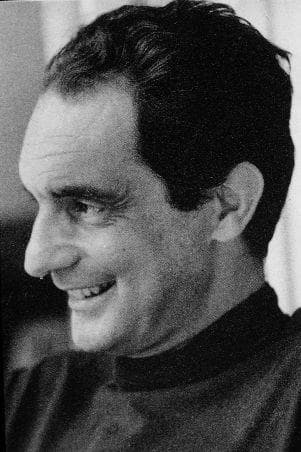
Italo Calvino

Italo Calvino was an Italian writer and journalist. His best known works include the Our Ancestors trilogy (1952–1959), the Cosmicomics collection of short stories (1965), and the novels Invisible Cities (1972) and If on a winter's night a traveler (1979).