“The past is never dead. It's not even past.”
— A recurring theme exploring the deep historical roots and their impact on present-day Mexico.

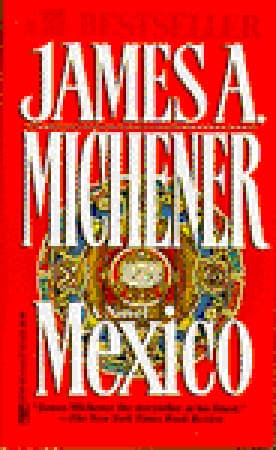
James A. Michener (1992)
Genre
Lifestyle / Historical Fiction
Reading Time
16-20 hours
Key Themes
See below
Sign in to track this book
An American journalist uncovers his family's Mexican past while covering a bullfight, connecting with the nation's history of ancient rituals, Spanish conquest, and revolution.
Norman Clay, an American journalist with Mexican ancestry, gets an assignment from the 'Herald-Tribune' to cover a major bullfight in San Miguel de Allende. This event will feature two famous matadors: the experienced veteran, Don Victoriano, and the popular rising star, El Magnífico. Norman's editor, Fred Duncan, sees this as a good chance for Norman to reconnect with his Mexican roots, which he has largely ignored. Norman's mother, a proud but quiet Mexican woman, encourages him to go on this trip. As he gets ready, Norman thinks about his limited knowledge of Mexico beyond childhood stories and family gatherings. He feels both worried and curious about the land that shaped his ancestors.
When he arrives in San Miguel de Allende, Norman Clay is immediately struck by the city's colonial beauty and its strong sense of history. He meets many interesting people, including local artists, shopkeepers, and other journalists, who give him glimpses into modern Mexican life. While starting his work, Norman begins to explore the city's ancient sites and learns about its pre-Hispanic past from local historians and archaeologists. He is especially interested in the stories of the Olmecs and Mayans, their advanced civilizations, and their often-brutal religious practices, including human sacrifice. These first encounters start to stir a deeper interest in his own heritage, beyond just covering the bullfight.
Norman Clay's research into Mexico's past leads him to the time of the Spanish conquest. He learns about Hernán Cortés's arrival in the early 16th century, his alliances with rival indigenous groups, and the eventual fall of the Aztec Empire under Moctezuma II. Norman is particularly moved by the stories of the Tlaxcalans, who allied with Cortés against the Aztecs, and the tragic fate of the Aztecs themselves, whose rich culture was largely destroyed or absorbed by the Spanish. He struggles with the two sides of the Spanish legacy: the introduction of Christianity and European culture versus the brutal suppression of native beliefs and the exploitation of indigenous peoples. This period shows the violent clash of civilizations that formed modern Mexico.
Norman Clay's historical journey continues through centuries of Spanish colonial rule, or the Viceroyalty of New Spain. He discovers how the Spanish created a strict social hierarchy, with Peninsulares at the top, followed by Criollos, Mestizos, and indigenous populations. Norman learns about the encomienda system, the exploitation of silver mines, and the widespread influence of the Catholic Church. He then moves to the early 19th century and the fight for independence, led by figures like Miguel Hidalgo y Costilla and José María Morelos. Norman recognizes that this period set the stage for the complex national identity he sees in modern Mexico, a mix of Spanish and indigenous influences, marked by both pride and lasting resentment.
Norman Clay looks into the early 20th-century Mexican Revolution, a time of major social and political upheaval. He reads about the main figures: Francisco Madero, Emiliano Zapata, Pancho Villa, and Venustiano Carranza, each fighting for different goals, from land reform to political freedom. Norman learns about the brutal civil war, the millions of lives lost, and the eventual creation of the Constitution of 1917, which aimed to address many of the complaints that caused the conflict. He understands that the Revolution, though devastating, ultimately shaped the modern Mexican state and its unique blend of nationalism, social justice goals, and lasting internal divisions. This history provides important context for the political and social dynamics he sees in present-day Mexico.
As the date of the big bullfight gets closer, Norman Clay focuses on understanding the art and ritual of tauromaquia. He talks with fans, former matadors, and even bull breeders, learning about the detailed rules, the different parts of the fight, and the specific roles of each participant, from the picadores to the banderilleros. Norman comes to appreciate the deep cultural roots of bullfighting in Mexico, seeing it not just as a sport but as a dramatic performance, a dance of life and death, closely linked with Spanish heritage and Mexican identity. He sees the rigorous training and great courage required of the matadors, preparing him for the intense event he is about to cover.
Norman Clay spends time interviewing and watching Don Victoriano and El Magnífico. Don Victoriano, the older, more traditional matador, represents the classic style—graceful, precise, and deeply respectful of the bull. He is a legend, admired for his experience and skill. El Magnífico, in contrast, is younger, flashier, and more daring, appealing to a new generation of fans with his bold moves and charming presence. Norman learns about their personal journeys, their sacrifices, and the great pressure they face, not only in the ring but also from the public and their teams. He senses a deep, unspoken rivalry between them, driven by tradition, ambition, and the very different paths they have taken to reach the top of their profession.
The day of the big bullfight arrives, and Norman Clay takes his seat in the crowded plaza de toros, feeling the exciting atmosphere. He carefully watches Don Victoriano and El Magnífico as they face their bulls. Don Victoriano performs with his usual artistry, showing masterful control and a deep understanding of the animal, earning great respect from the purists. El Magnífico, true to his style, takes more risks, thrilling the crowd with his daring passes and close encounters. The fight is a flurry of capes, banderillas, and swords, ending in moments of both victory and near-tragedy. Norman, at first a detached observer, finds himself caught up in the emotion, recognizing the deep cultural importance of the spectacle.
After the bullfight, Norman Clay processes the intense experience. Both matadors perform well, though the specific outcome and critical reception vary. Norman writes his article, trying to capture the drama, skill, and cultural weight of the event. Beyond the immediate assignment, the trip has deeply affected him. He feels a stronger connection to his Mexican heritage, understanding the layers of history, culture, and struggle that have shaped the nation. He realizes that Mexico is not one thing but a complex blend of indigenous traditions, Spanish influence, and revolutionary spirit. His view of his own identity broadens, embracing both his American and Mexican roots.
As Norman Clay gets ready to leave San Miguel de Allende, he feels a sense of completion and a deep change within himself. He has not only reported on a bullfight but has also gone on a personal journey of discovery, tracing his family line through thousands of years of Mexican history. He has seen the beauty, brutality, resilience, and passion that define the country. His initial detachment has been replaced by deep empathy and understanding. Norman returns to the United States with a richer sense of self, no longer seeing his Mexican heritage as a distant curiosity but as an important part of who he is, ready to accept its complexities and stories.
The Protagonist
Norman transforms from a detached observer of Mexican culture to someone deeply connected to and proud of his heritage, embracing the duality of his identity.
The Supporting
His arc is less about personal change and more about representing the enduring power of tradition in a changing world.
The Supporting
His arc centers on his ambition and drive to establish his own legacy, challenging the old guard.
The Mentioned
Not a character in the present narrative, his historical actions define a major turning point for Mexico.
The Mentioned
As a historical figure, his arc is one of ultimate defeat and the end of an era.
The Mentioned
His arc is one of revolutionary leadership and martyrdom, laying the groundwork for independence.
The Supporting
He serves as a catalyst for Norman's journey, providing the initial impetus for his self-discovery.
The Supporting
Each bull's 'arc' is contained within its singular fight, culminating in its defeat or the matador's failure.
The novel explores how personal and national identity are formed and understood, especially through Norman Clay's journey. Norman, an American with Mexican ancestors, initially feels disconnected from his heritage. His assignment forces him to face and accept the complex layers of Mexican history—from ancient civilizations to colonial rule, revolution, and modern culture. He grapples with what it means to be Mexican and how that shapes who he is. The theme also applies to Mexico as a nation, constantly defining itself through its rich, often difficult, past, trying to balance its indigenous roots with its Spanish legacy. The bullfight itself becomes a small example of this identity struggle, mixing European tradition with Mexican interpretation.
“He had always thought of his Mexican heritage as a distant, colorful backdrop, but now it was stepping forward, demanding to be recognized as the very fabric of his being.”
Michener shows how Mexico's past deeply influences its present. From the old ruins and colonial buildings in San Miguel de Allende to the lasting social hierarchies and political struggles, history is a living part of the novel. Norman's journey through time, learning about the Olmecs, Mayans, Aztecs, the Spanish conquest, and the Mexican Revolution, reveals how these events created the complex, often contradictory, national character. The bullfight, too, is full of history, a ritual passed down through generations, connecting modern Mexicans to their Spanish and indigenous ancestors. The novel argues that understanding this history is key to understanding modern Mexico and its people.
“History was not merely dates and names in a book; it was the very ground upon which they stood, the air they breathed, the blood that ran in their veins.”
This theme is clearly shown through how traditional Mexican culture clashes with and exists alongside modern influences. The bullfight itself is a main example: an old, ritualistic art form trying to stay relevant and appealing in today's world. Don Victoriano represents tradition, while El Magnífico represents a more modern, showy approach. Beyond the bullring, the novel presents traditional crafts, religious practices, and social customs alongside modern tourism, media, and political ideas. Mexico is shown as a nation always dealing with this tension, keeping its rich heritage while adapting to a globalized world. Norman Clay, as an American journalist, connects these two worlds.
“The bullfight was a mirror, reflecting not just the clash of man and beast, but the eternal struggle between the old ways and the insistent march of the new.”
Sacrifice and ritual are repeated ideas that show Mexico's deep spiritual and cultural aspects. The novel clearly describes the ancient practices of human sacrifice by pre-Hispanic civilizations, revealing a profound, though brutal, spiritual worldview. This idea of sacrifice is then echoed, though symbolically, in the bullfight. The matador's willingness to risk his life, the bull's certain fate, and the audience's emotional involvement turn the event into a modern ritual of life and death, courage and fate. The theme extends to the sacrifices made by historical figures during the conquest and revolution, highlighting the human cost of building a nation and the lasting power of ritualized actions.
“From the pyramids of Teotihuacán to the sands of the bullring, the land had always demanded its sacrifices, whether of blood or of self.”
A contemporary narrative frames a series of extensive historical flashbacks.
The novel uses a frame story structure where Norman Clay's contemporary assignment to cover a bullfight in San Miguel de Allende serves as the outer narrative. Within this frame, Michener employs extensive historical flashbacks and informational sections, delving deep into Mexico's past, from its ancient civilizations (Olmecs, Mayans, Aztecs) to the Spanish conquest, colonial rule, and the Mexican Revolution. These nested narratives provide rich historical context, explaining the origins of modern Mexico and allowing Norman (and the reader) to understand the roots of the culture he observes.
The bullfight acts as a symbolic representation of Mexico's history and national character.
The central event of the bullfight is not merely a plot point but a powerful, multi-layered metaphor for Mexico itself. It represents the clash of cultures (Spanish tradition vs. indigenous interpretation), the struggle between life and death (sacrifice), the tension between tradition and modernity (Don Victoriano vs. El Magnífico), and the enduring spirit of the Mexican people. The intricate ritual, the bravery, the artistry, and the inherent danger all reflect the complex, often violent, and deeply passionate history that Norman Clay uncovers throughout the novel.
Norman Clay, with his mixed heritage, offers a dual perspective on Mexican culture.
Norman Clay functions as both an outsider and an insider. As an American journalist, he initially approaches Mexico with a degree of detachment and journalistic objectivity, representing the 'outsider' perspective. However, his Mexican heritage makes him an 'insider,' capable of a deeper, more personal connection to the culture. This dual perspective allows Michener to present a comprehensive view of Mexico, explaining its complexities to a potentially unfamiliar audience while also delving into the nuanced emotional and historical layers that only a character with a personal stake can truly experience and convey.
The narrative frequently pauses to provide detailed historical accounts.
Michener's signature style of 'historical recapitulation' is a prominent device. The novel frequently interrupts the contemporary plot to dedicate substantial sections to detailed historical exposition. These sections are not mere summaries but immersive narratives of past eras, complete with fictionalized characters and events that illustrate historical trends, cultural practices, and significant turning points. This device ensures that the reader gains a profound understanding of Mexico's long and complex history, providing essential context for the contemporary events and themes explored in the main storyline.
“The past is never dead. It's not even past.”
— A recurring theme exploring the deep historical roots and their impact on present-day Mexico.
“Mexico is a land of paradoxes, where ancient gods still whisper and modern skyscrapers touch the sky.”
— Describing the country's blend of ancient traditions and contemporary development.
“The land was harsh, demanding, and beautiful beyond words. It shaped its people as much as they shaped it.”
— Reflecting on the profound influence of Mexico's diverse geography on its inhabitants.
“In Mexico, life is cheap and death is a constant companion, yet joy erupts in the most unexpected places.”
— Observations on the Mexican attitude towards life and death, and their intertwined nature.
“Every stone, every ruin, every whisper of the wind carried the weight of a thousand years of stories.”
— Emphasizing the rich historical tapestry woven into the Mexican landscape.
“The bullfight was not merely a sport; it was a ritual, a dance with death, a testament to courage and fate.”
— Exploring the cultural significance and deeper meaning of bullfighting in Mexico.
“For the Mexican, time was not a straight line but a circle, always returning, always remembering.”
— A philosophical insight into the Mexican perception of time and history.
“The heart of Mexico beat with a rhythm of both immense suffering and indomitable spirit.”
— Summarizing the resilience and enduring spirit of the Mexican people despite historical hardships.
“To understand Mexico, one must first understand its food – a vibrant, complex tapestry of flavors and history.”
— Highlighting the importance of cuisine as a window into Mexican culture and identity.
“The revolutions came and went, but the land, the people, and their enduring spirit remained.”
— Reflecting on the continuity of Mexican identity through periods of political upheaval.
“There was a certain fatalism in the Mexican soul, a quiet acceptance of what was, combined with a fierce will to survive.”
— Describing a key characteristic of the Mexican psyche: a balance of acceptance and determination.
“The desert, with its stark beauty and unforgiving nature, was a crucible where true character was forged.”
— Illustrating the impact of Mexico's diverse landscapes on the formation of character.
“Love, like a good tequila, could be intoxicating, fiery, and leave a lasting impression.”
— A colorful metaphor comparing the intensity of love to a quintessential Mexican drink.
“The pyramids stood as silent witnesses to empires that rose and fell, reminding all of the fleeting nature of power.”
— Contemplating the ancient ruins and their message about the impermanence of human achievements.
Ready to see how well you understood this book? Take our interactive quiz with 10 questions.
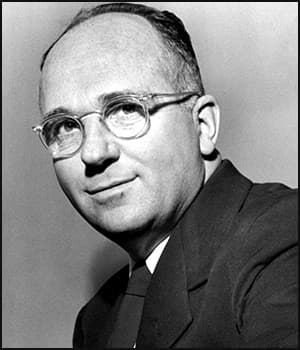
Biography coming soon.