BookBrief
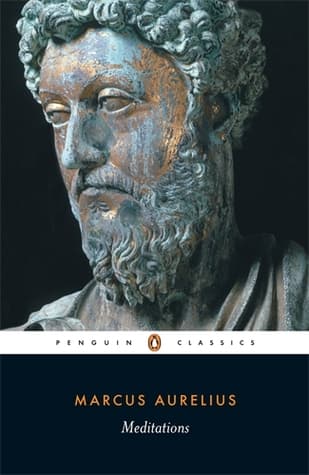
Meditations cover
Archivist's Choice

Meditations

Marcus Aurelius (2006)

Genre

Leadership / History / Spirituality / Philosophy / Self-Help

Reading Time

303 min

Key Themes

See below

Track Your Reading

Sign in to track this book

Explore the private reflections of a Roman emperor on the universe, leadership, and his own soul, offering lasting wisdom for self-mastery and inner strength.

Core Idea

Meditations is a personal journal of reflections by Roman Emperor Marcus Aurelius, written for his own guidance and improvement. It outlines a practical philosophy for living a virtuous life, based on Stoicism. The central idea is to build an 'inner citadel'—a strong mind unaffected by outside events—through reason, self-discipline, and accepting fate. Aurelius repeatedly stresses the importance of separating what we control (our thoughts, judgments, and actions) from what we do not (external events, others' opinions, physical conditions). He urges readers to focus only on what they control to achieve peace and live in harmony with nature and universal reason. He advocates for a life of duty, service, and rational engagement, all while being aware of how brief life is and how temporary all things are.
Reading time
303 min
Difficulty
Medium
✓ Read this if...
You are seeking timeless wisdom on resilience, self-mastery, and finding peace amidst life's chaos, or if you are interested in the practical application of Stoic philosophy.
✗ Skip this if...
You prefer modern self-help with actionable steps and clear narratives, or if you are looking for a light, easy read rather than dense philosophical reflections.

Core idea

The central argument and framework that powers the entire book.

Meditations is a personal journal of reflections by Roman Emperor Marcus Aurelius, written for his own guidance and improvement. It outlines a practical philosophy for living a virtuous life, based on Stoicism. The central idea is to build an 'inner citadel'—a strong mind unaffected by outside events—through reason, self-discipline, and accepting fate. Aurelius repeatedly stresses the importance of separating what we control (our thoughts, judgments, and actions) from what we do not (external events, others' opinions, physical conditions). He urges readers to focus only on what they control to achieve peace and live in harmony with nature and universal reason. He advocates for a life of duty, service, and rational engagement, all while being aware of how brief life is and how temporary all things are.

At a glance

Reading time

303 min

Difficulty

Medium

Read this if...

You are seeking timeless wisdom on resilience, self-mastery, and finding peace amidst life's chaos, or if you are interested in the practical application of Stoic philosophy.

Skip this if...

You prefer modern self-help with actionable steps and clear narratives, or if you are looking for a light, easy read rather than dense philosophical reflections.

Key Takeaways

1

The Inner Citadel

Cultivate an unshakeable inner core immune to external chaos.

Quote

Withdraw into yourself. The rational guiding principle has this nature: it is content with itself when it acts rightly, and by so acting secures tranquility for itself.

Marcus Aurelius promotes the idea of an 'inner citadel,' a mental fortress that remains unaffected by the changing external world. This does not mean ignoring reality, but recognizing that our reactions to events, not the events themselves, are within our control. By focusing on our judgments, intentions, and virtues, we can create a calm and rational inner state that cannot be disturbed by misfortune, criticism, or physical pain. This self-reliance is the basis of Stoic peace, stating that true freedom and happiness are found within,...

Supporting evidence

Aurelius frequently reminds himself that 'things themselves touch the soul not at all, but only the opinions about things,' and that 'you have power over your mind — not outside events. Realize this, and you will find strength.' This recurring theme underscores his belief in the mind's sovereignty.

Apply this

Practice daily mental exercises to distinguish between what is within your control (your thoughts, actions, reactions) and what is not (weather, other people's opinions, past events). When faced with adversity, pause and ask: 'Is this truly harmful, or is my judgment making it so?' Redirect your energy to your internal response rather than the external stimulus.

inner-citadelcontrol-dichotomystoic-tranquility
2

Acceptance of Fate (Amor Fati)

Embrace everything that happens as necessary and beneficial to the whole.

Quote

Whatever happens to you has been ready for you since all time. The weaving of events has been intertwining from eternity.

A central Stoic principle, amor fati—'love of fate'—encourages not just passive acceptance, but an active embrace of everything that happens. Marcus believed in a rational, interconnected universe governed by a benevolent force (or logos). Therefore, every event, no matter how hard, is part of a larger, perfect plan and serves a purpose for the good of all. Resisting fate is both pointless and irrational, as it means fighting against the nature of reality. By seeing obstacles as chances for virtue and understanding that 'what stan...

Supporting evidence

Aurelius consistently refers to the 'nature of the whole' and the 'universal reason,' stating, 'Accept the things to which fate binds you, and love the people with whom fate brings you together, but do so with all your heart.' He often reflects on the interconnectedness of all events.

Apply this

When confronted with an undesirable situation, instead of complaining or resisting, try to find the inherent purpose or lesson within it. Ask yourself: 'How can I make the best of this? What virtue can I practice here?' Actively reframe setbacks as necessary components of your personal development and the unfolding of the world.

amor-fatilogoscosmic-orderprovidence
3

The Brevity of Life

Recognize life's fleeting nature to prioritize virtue and presence.

Quote

Do not act as if you were going to live ten thousand years. Death hangs over you. While you live, while it is in your power, be good.

Marcus often thinks about how short life is and how death is certain. This is not a morbid thought, but a strong reason to live virtuously and with purpose. By constantly reminding himself of his death, he removes the unimportant concerns and worries that affect most people. Awareness of limited time makes him focus on what truly matters: developing character, doing his duties, and acting justly and kindly in the present. He dismisses the pursuit of fame or material wealth, knowing they are temporary and ultimately meaningless when fa...

Supporting evidence

He repeatedly questions the value of posthumous fame, noting that 'those who pursue posthumous fame forget that the people who remember them will themselves die soon.' He also observes the rapid decay of all things and the endless flow of time.

Apply this

Conduct a 'mortality meditation' periodically: imagine your life as finite and reflect on what you would genuinely regret not doing or being. Use this clarity to re-evaluate your daily priorities. Before indulging in procrastination or trivial pursuits, ask: 'Is this how I want to spend my limited time?'

memento-moripresent-momentvirtue-ethics
4

The Power of Perspective

Reframe events by stripping away subjective judgment and seeing things as they are.

Quote

To bear in mind constantly that all that happens, happens with justice and so if you observe carefully, you will find it to be so.

Aurelius skillfully uses 'objective representation,' urging himself to describe events without adding emotional or moral judgments. For example, instead of 'this person is evil and wronged me,' he would aim for 'this person performed an action.' This detachment allows for a clearer, more rational assessment of situations. He often breaks down grand concepts like 'fame' or 'wealth' into their basic parts, showing their superficiality. By removing layers of societal conditioning and personal bias, one can see the true nature of things—o...

Supporting evidence

He advises: 'Take away your opinion, and then there is taken away the complaint, 'I have been harmed.' Take away the complaint, 'I have been harmed,' and the harm is taken away.' He also describes a roasted pig as 'the carcass of a beast' to remove its tempting allure.

Apply this

When you find yourself reacting strongly to something, pause and try to describe the event purely factually, as if you were an impartial observer. Ask: 'What are the objective facts here, stripped of my interpretation and emotional labels?' This helps to defuse negative emotions and foster a more rational approach.

objective-representationcognitive-reframingindifferent-things
5

Duty and Service

Fulfill your role in the cosmic order through diligent action and service to humanity.

Quote

What is good for the bee is good for the hive.

As emperor, Marcus Aurelius had immense responsibility, and his writings show a strong sense of duty. He believed that every person is part of a larger, interconnected community (the 'cosmic city') and has a specific role to play. Our purpose is not personal satisfaction, but contributing to the common good through rational, virtuous action. This means diligently performing our assigned tasks, whether important or ordinary, with integrity and without complaint. He saw leadership as a form of service, not privilege, and constantly remi...

Supporting evidence

His constant self-admonitions to 'act according to nature' and 'to do what is proper to your own constitution' (i.e., rational, social being) underscore this. He often contrasts selfish pursuits with actions beneficial to the 'community of mankind.'

Apply this

Identify your primary roles and responsibilities (e.g., parent, employee, citizen). Reflect on how you can perform these duties with greater diligence, integrity, and a mindset of service. Actively look for opportunities to contribute positively to your immediate community or the broader world, even in small ways.

cosmic-citysocial-dutyvirtuous-action
6

Control Your Reactions to Others

Recognize that others' flaws are their own, and your reaction is your choice.

Quote

When you are offended by someone's impudence, ask yourself at once, 'Can the world exist without impudent people?' It cannot. So do not ask the impossible.

Marcus Aurelius often deals with the frustrations of difficult people. His solution is not to change others, which is impossible, but to change his own reaction. He reminds himself that people will always be flawed, irrational, and unjust, and expecting otherwise is foolish. Instead of getting angry, he advises understanding that their actions come from their own ignorance or flawed reasoning, not necessarily a personal attack. He also stresses that being upset by another's wrongdoing only harms oneself. By accepting others' imperfect...

Supporting evidence

He often reminds himself, 'When you wake up in the morning, tell yourself: The people I deal with today will be meddling, ungrateful, arrogant, dishonest, jealous, and unruly.' This prepares him mentally for inevitable human flaws.

Apply this

Before reacting to someone's irritating behavior, pause and consider: 'Is this person acting out of malice, or simply ignorance/habit?' Remind yourself that you cannot control their actions, only your response. Practice responding with patience or indifference rather than anger or frustration, seeing their flaw as a test of your own virtue.

empathytoleranceemotional-regulation
7

The Impermanence of All Things

Everything material and temporal is in constant flux and will eventually pass.

Quote

Observe constantly that all things take place by change, and accustom yourself to consider that the nature of the Universe loves nothing so much as to change existing things and to make new things of them.

Aurelius consistently observes the endless flow of time and the temporary nature of all things. From empires and famous people to physical objects and even our own bodies, everything changes and decays. This is not a reason for despair, but a deep truth that frees us from attachment. By recognizing that all external things—possessions, status, even loved ones—are temporary, we learn not to base our happiness or identity on them. This understanding creates a detachment that reduces suffering when things inevitably change or are lost. I...

Supporting evidence

He often reflects on the swift passage of time and the oblivion that awaits all things, stating, 'All things are ephemeral—both the one who remembers and the one who is remembered.' He notes how quickly 'all things vanish: bodies into the elements, and their memory into the gulf of time.'

Apply this

When you feel attachment to a possession, a status, or even a particular outcome, remind yourself of its transient nature. Practice letting go of expectations and embracing change. Regularly reflect on the impermanence of your own body and circumstances to cultivate a deeper appreciation for the present and a detachment from the material.

impermanencedetachmentfluxanatta
8

Live According to Nature

Align your actions with reason, virtue, and the universal order.

Quote

Live a good life. If there are gods and they are just, then they will not care how devout you have been, but will welcome you based on the virtues you have lived by. If there are gods, but unjust, then you should not want to worship them. If there are no gods, then you will be gone, but will have lived a noble life that will live on in the memories of your loved ones.

For Marcus, 'living according to nature' is the ultimate guide for a fulfilling life. This means living in line with our rational ability, which is our unique human trait and a part of the divine logos within us. It also implies living in harmony with universal nature—the interconnected, rational order of the cosmos. This means embracing virtues like wisdom, justice, courage, and temperance, as these are the natural expressions of a rational being. To act against reason, to give in to irrational passions, or to harm others, is to ac...

Supporting evidence

He frequently exhorts himself to 'return to your rational faculty' and to 'act as a rational and social animal.' He believes that 'what is harmful to the hive is harmful to the bee,' illustrating the natural interconnectedness and the importance of social virtue.

Apply this

Before making a decision, ask yourself: 'Is this action rational? Is it virtuous? Does it contribute to the common good or harm it?' Strive to overcome irrational impulses (anger, fear, greed) by engaging your reason. Regularly reflect on whether your daily habits and choices are in alignment with your higher, rational self.

logosvirtue-ethicsnatural-lawrationality
9

The Practice of Self-Examination

Regularly scrutinize your thoughts and actions to identify and correct flaws.

Quote

Every moment, look within and see that you are a good person, if you hold to righteousness, and if you are content with what you have.

The Meditations themselves show Marcus Aurelius's constant practice of self-examination. He continually questions his motives, analyzes his reactions, and corrects himself for perceived failures. This is not self-punishment but a disciplined way of self-improvement. By regularly reviewing his day, his thoughts, and his interactions, he aimed to identify areas where he fell short of Stoic ideals and to strengthen virtuous habits. This internal dialogue served as a constant adjustment, ensuring he stayed aligned with reason and duty. ...

Supporting evidence

The entire book is a series of notes to himself, filled with questions like 'What is my ruling principle now doing?' and 'Am I acting justly?' He directly addresses himself, correcting his own thinking.

Apply this

Dedicate a few minutes each evening to review your day. Ask: 'Where did I act virtuously? Where did I fall short? What triggered my negative emotions? How could I have responded more rationally or kindly?' Use these insights to set intentions for improvement the following day.

introspectionself-reflectionmoral-developmentmindfulness
10

The Value of Detachment

Cultivate indifference to external rewards and punishments to preserve inner freedom.

Quote

The soul is dyed by its thoughts. Think only of those things that are in accord with nature and that which you can do.

Stoic detachment, as practiced by Marcus, is not apathy but a rational indifference to things outside our control—wealth, fame, pleasure, pain, even health. These are 'indifferents' because they do not, by themselves, determine our moral character or inner peace. Being overly attached to them makes us vulnerable and slaves to external circumstances. By developing detachment, we free ourselves from anxiety and fear, securing our inner freedom. This allows us to use external things when they are available, but not to crave or dread them...

Supporting evidence

He often dismisses the pursuit of pleasure and the avoidance of pain as irrational drivers, stating that 'pain is neither unbearable nor everlasting, if you bear in mind that it has its limits.' He frequently reminds himself that 'death is a release from the impressions of the senses, and from the passions that make us their puppets.'

Apply this

Practice differentiating between 'preferred indifferents' (things you'd generally prefer, like health) and 'dispreferred indifferents' (things you'd generally avoid, like illness). Recognize that neither fundamentally impacts your ability to be virtuous. When experiencing discomfort or desire, mentally label it as an 'indifferent' to lessen its emotional hold.

indifferentsapatheianon-attachmentinner-freedom

Critical analysis

Notable Quotes

You have power over your mind—not outside events. Realize this, and you will find strength.

A core Stoic principle emphasizing internal control.

Waste no more time arguing about what a good man should be. Be one.

A direct call to action regarding virtue and character.

The best revenge is to be unlike him who performed the injury.

Advice on responding to wrongdoing with virtue rather than malice.

It is not death that a man should fear, but he should fear never beginning to live.

Reflecting on the importance of living fully and purposefully.

If you are distressed by anything external, the pain is not due to the thing itself, but to your estimate of it; and this you have the power to revoke at any moment.

Another foundational Stoic idea about perception and emotional control.

Never let the future disturb you. You will meet it, if you have to, with the same weapons of reason which today arm you against the present.

Encouragement to face the future with present wisdom and calm.

The soul becomes dyed with the colour of its thoughts.

A metaphor illustrating the profound impact of one's internal world on their being.

Accept the things to which fate binds you, and love the people with whom fate brings you together, but do so with all your heart.

Advice on embracing one's circumstances and relationships with genuine affection.

Live a good life. If there are gods and they are just, then they will not care how devout you have been, but will welcome you based on the virtues you have lived by. If there are gods, but unjust, then you should not want to worship them. If there are no gods, then you will be gone, but will have lived a noble life that will live on in the memories of your loved ones.

A thought on how to live regardless of one's beliefs about gods, emphasizing virtue.

Look within. Within is the fountain of good, and it will ever bubble up, if thou wilt ever dig.

Emphasizing that true goodness and happiness come from within.

Do every act of your life as if it were your last.

A powerful reminder to approach each moment with full presence and intention.

To endure is to be wise.

A concise statement on the virtue of perseverance and resilience.

How much more grievous are the consequences of anger than the causes of it.

Reflecting on the destructive nature of anger compared to its initial triggers.

The object of life is not to be on the side of the majority, but to escape finding oneself in the ranks of the insane.

A strong statement about prioritizing reason and virtue over popular opinion.

Quiz

Test Your Knowledge

Ready to see how well you understood this book? Take our interactive quiz with 10 questions.

10
Questions
~5
Minutes
?
Best Score

Key Questions (FAQ)

The Meditations primarily expound Stoic philosophy, emphasizing virtue, reason, and living in harmony with nature. It encourages individuals to focus on what they can control (their thoughts and actions) and accept what they cannot, fostering inner tranquility and resilience.

About the author