“Of all creatures that have life and reason, we women are the most miserable.”
— Medea's opening lament about the plight of women.

Sign in to track this book
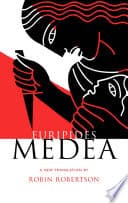
Medea, a sorceress and princess, seeks brutal revenge on her betraying husband, Jason, sacrificing everything, even her children, to make him suffer, forcing a look at the destructive power of unchecked passion and the complex nature of justice.
“Of all creatures that have life and reason, we women are the most miserable.”
— Medea's opening lament about the plight of women.
“For in other ways a woman is full of fear, and shudders at the sight of steel; but when once she is wronged in the matter of love, no other soul is more bloodthirsty.”
— Medea explains the intensity of a woman scorned.
“I would rather stand three times in the battle line than bear one child.”
— Medea expresses the pain and danger of childbirth.
“The man who is a tyrant by nature, and not by fortune, will ever have a bitter heart.”
— Chorus reflects on the nature of tyranny.
“And to have a friend is the noblest thing of all, and the most to be desired.”
— A general reflection on the value of friendship, often contrasted with Medea's isolation.
“A man's anger is a thing to be feared, but a woman's is more terrible still.”
— Creon expresses his fear of Medea's potential for revenge.
“Wronged women are dangerous. No one should provoke them.”
— A warning about the consequences of mistreating women.
“Oh, what a miserable wretch I am! Why did I ever leave my father's house?”
— Medea laments her past choices and the loss of her homeland.
“It is not for me to teach you, but to learn from you.”
— A common phrase showing respect or feigned humility.
“No one should ever trust a woman who has a mind of her own.”
— Jason's misogynistic view of Medea's intelligence and independence.
“When love is in excess, it brings a man no honor nor any worthiness.”
— Chorus comments on the destructive nature of uncontrolled passion.
“For there is no justice in the eyes of men, but only in the eyes of the gods.”
— Medea's bitter reflection on human justice and divine retribution.
“To suffer woes which hope can never sweeten is to be wretched indeed.”
— A general reflection on the depth of despair when hope is lost.
“Great men's anger is dangerous.”
— A warning about the power and potential destruction caused by powerful individuals.
Ready to see how well you understood this book? Take our interactive quiz with 10 questions.
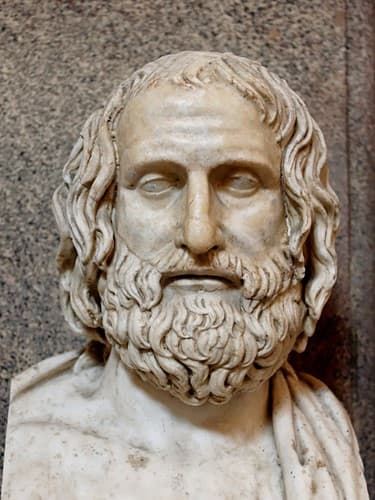
Euripides was a tragedian of classical Athens. Along with Aeschylus and Sophocles, he is one of the three ancient Greek tragedians for whom any plays have survived in full. Some ancient scholars attributed ninety-five plays to him, but the Suda says it was ninety-two at most. Of these, eighteen or nineteen have survived more or less complete. There are many fragments of most of his other plays. More of his plays have survived intact than those of Aeschylus and Sophocles together, partly because his popularity grew as theirs declined—he became, in the Hellenistic Age, a cornerstone of ancient literary education, along with Homer, Demosthenes, and Menander.

Jeff Olson
4.4
Thomas Sowell
4.4

Walter Brueggemann
4.3

Rhonda Byrne
4.3

Robin Wall Kimmerer
4.3
George S. Clason
4.3

Elliot Aronson
4.3
Joseph Campbell
4.3