BookBrief
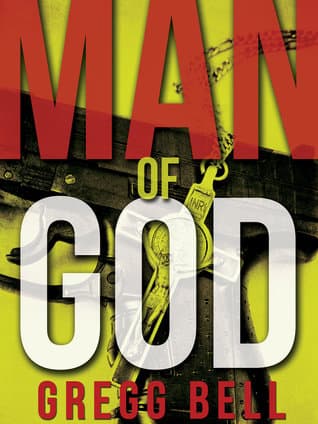
Man of God cover
Archivist's Choice

Man of God

Gregg Bell (2013)

Genre

General

Reading Time

12 Minutes

Key Themes

See below

Track Your Reading

Sign in to track this book

A Chicago reverend, pushed to his breaking point by thirty years of violence, forms an alliance with a disillusioned gang member to protect his family, forcing him to choose between divine mercy and street justice.

Core Idea

Gregg Bell's "Man of God" explores the multifaceted life and enduring legacy of a prominent spiritual figure, delving into the personal struggles, public triumphs, and the deeply held beliefs that shaped his ministry. The book examines how this individual navigated the complexities of faith in a modern world, addressing both the inspirational aspects of his leadership and the human vulnerabilities that underpinned his journey. It aims to provide a comprehensive portrait, inviting readers to consider the broader implications of his theological contributions and societal impact.
Difficulty
Medium

Core idea

The central argument and framework that powers the entire book.

Gregg Bell's "Man of God" explores the multifaceted life and enduring legacy of a prominent spiritual figure, delving into the personal struggles, public triumphs, and the deeply held beliefs that shaped his ministry. The book examines how this individual navigated the complexities of faith in a modern world, addressing both the inspirational aspects of his leadership and the human vulnerabilities that underpinned his journey. It aims to provide a comprehensive portrait, inviting readers to consider the broader implications of his theological contributions and societal impact.

At a glance

Difficulty

Medium

Key Takeaways

1

The Corrosive Nature of Prolonged Exposure to Violence

Even the most devout can succumb to violent ideation when relentlessly confronted with brutality.

Quote

Once he was a gentle soul, a man of peace, but after thirty years of ministering in his gang-infested Chicago neighborhood, Reverend John Archer fantasizes about killing gang members.

Reverend John Archer's change from a man of peace to one who imagines violence shows how long-term exposure to trauma and brutality can destroy even the strongest moral beliefs. This is a psychological shift where the brain, constantly on alert and seeing terrible acts, starts to accept violent solutions as a way to survive or find justice. Archer's internal struggle shows the human cost of living in violent places. Such conditions do not just affect victims, but also those who try to heal and bring peace, pushing them to their spirit...

Supporting evidence

Reverend Archer's internal conflict and fantasies of killing gang members after decades of ministry in a violent neighborhood.

Apply this

Recognize the psychological toll of sustained exposure to violence, even for caregivers or community leaders. Implement robust mental health support systems for individuals working in high-trauma environments to prevent burnout and moral injury.


2

The Inadequacy of Passive Resistance Against Systemic Evil

Turning the other cheek proves ineffective when faced with organized, ruthless violence.

Quote

turning the other cheek hasn’t worked—the gangs are winning.

The book argues that traditional, passive resistance, like 'turning the other cheek,' is not enough against organized evil such as gang violence. Reverend Archer's decades of work show that this approach, while noble, does not protect the vulnerable or stop aggressors. This is not a theological rejection, but a practical observation: when one side acts without morals and the other sticks to non-violence, the non-violent side is often exploited and overwhelmed. This idea questions applying pacifist rules in all situations, suggesting t...

Supporting evidence

Archer's observation that 'the gangs are winning' despite his decades of non-violent ministry.

Apply this

Evaluate the effectiveness of non-violent strategies in contexts of extreme, unyielding violence. Consider the necessity of protective measures and, potentially, strategic confrontation when passive resistance consistently fails to safeguard lives and communities.

3

The Catalyst of Personal Threat

Abstract principles are swiftly abandoned when family and personal safety are jeopardized.

Quote

With his family in mortal danger, Archer must decide between trusting the laws of God or the laws of the street.

Reverend Archer's immediate shift from prayer to action after his family is threatened is a strong comment on human nature. While he might suffer personally for his faith, the threat to his wife and children instantly overrules his religious beliefs. This highlights a basic human truth: the urge to protect one's family is a primal, often overwhelming, force that can override even deep moral and spiritual codes. The 'laws of God' become secondary to the 'laws of the street' when his loved ones face mortal danger. This shows how theoret...

Supporting evidence

Archer's frantic actions to protect his family after identifying the gang leader, knowing the consequences.

Apply this

Understand that ethical frameworks are often tested and redefined under extreme personal duress. Anticipate that individuals will prioritize the safety of their loved ones, even if it means compromising deeply held beliefs.

4

The Unlikely Alliance: Finding Humanity in Unexpected Places

Even within the heart of evil, glimmers of humanity and a desire for change can be found.

Quote

Even more surprising, Billy’s heart seems to be softening, while Archer’s is hardening.

The appearance of Billy, the gang member, as a possible ally is a turning point and a look into human complexity. Despite his role in a brutal gang, Billy's tiredness with the leader's cruelty shows that even people deep in destructive systems can want something different. This unexpected alliance challenges simple good-vs-evil stories, suggesting that a shared dislike of extreme cruelty can bridge seemingly impossible gaps. The contrast between Billy's softening heart and Archer's hardening one is striking, showing how outside events...

Supporting evidence

Billy's confession to Archer that he is 'sick of the gang leader’s brutality too,' leading to their alliance.

Apply this

Seek out potential allies and common ground in unexpected places, even among those seemingly opposed. Recognize that individuals are rarely monolithic in their motivations and may harbor dissent or desire for change.

5

Divine Intervention and Ambiguous Guidance

God's answers can be surprising, unconventional, and seemingly contradictory to established doctrine.

Quote

Archer prays desperately and believes he hears from God, but the answer surprises—the gang member, Billy, is sick of the gang leader’s brutality too.

Archer's desperate prayer and the 'surprising' answer he gets from God create a theological problem. The divine guidance does not come as a direct command to 'love your enemy' in the usual way, but through the unexpected humanity of his captor, Billy. This suggests that divine help is not always obvious or comfortable; it can be subtle, practical, and even seem to support unusual or 'ungodly' alliances if they lead to a greater good (like protecting the innocent). It questions the idea of predictable divine responses, implying that Go...

Supporting evidence

Archer's belief that he heard from God, which led to the revelation about Billy's disaffection with the gang leader.

Apply this

Be open to unconventional solutions and unexpected sources of help, even when seeking divine guidance. Recognize that 'answers to prayer' might not always conform to expectations or traditional interpretations.

6

The Hardening of the Righteous Heart

Prolonged exposure to evil can lead to moral hardening, even in those dedicated to good.

Quote

Billy’s heart seems to be softening, while Archer’s is hardening.

The reversal of Archer's and Billy's emotional states is a psychological insight. Billy, the gang member, shows remorse and a softening heart, while Reverend Archer's heart is 'hardening.' This shows the concept of moral injury and the damaging effect of constant exposure to evil. Archer, after decades of trying to fight violence with peace, reaches a point where his ability to empathize and forgive lessens, replaced by a desire for decisive, even violent, action. This is not a failure of faith but a human reaction to overwhelming, en...

Supporting evidence

The direct statement that 'Billy’s heart seems to be softening, while Archer’s is hardening.'

Apply this

Acknowledge that moral hardening can be a protective mechanism in response to trauma. Provide support and outlets for processing moral injury among those working in difficult, violent environments.

7

The Justification of 'Ungodly' Actions for Godly Ends

Extreme circumstances can necessitate morally ambiguous choices to achieve righteous outcomes.

Quote

The odd pair form an uneasy alliance and together come up with a desperate plan—an ungodly one.

The phrase 'an ungodly one' describing Archer and Billy's plan is important. It means Archer is willing to cross traditional moral and spiritual lines when his family and community face a threat to their existence. This explores the idea of 'dirty hands'—that sometimes, morally questionable actions are needed to prevent greater evils or secure a greater good. It is a practical, rather than idealistic, approach to ethics, suggesting that strict adherence to 'godly' methods can sometimes lead to disaster when faced with absolute evil. T...

Supporting evidence

Archer and Billy's decision to formulate an 'ungodly plan' to neutralize the gang leader and protect Archer's family.

Apply this

Engage in critical ethical reasoning when confronted with situations where conventional moral guidelines prove insufficient. Consider the real-world implications and necessary compromises in high-stakes ethical dilemmas.

8

The Clash Between Spiritual Law and Street Law

Survival often dictates a different moral code than religious doctrine.

Quote

The way of the Lord is to love thy enemy, but the way of the hood is to kill or be killed.

This central conflict covers the entire story. The contrast between 'the way of the Lord' and 'the way of the hood' shows an unbridgeable gap between ideal spiritual principles and the brutal reality of survival in a violent place. The book argues that in such contexts, abstract religious ideas like 'love thy enemy' are often impractical and can even be dangerous. 'Kill or be killed' represents a primal self-preservation instinct that takes priority when life is at stake. Archer's difficult choice is not just personal, but reflects a ...

Supporting evidence

Reverend Archer's ultimate decision to act on 'the laws of the street' to protect his family.

Apply this

Analyze the societal conditions that force individuals to choose between moral ideals and basic survival. Advocate for systemic changes that reduce the necessity of such morally compromising choices.

9

Retirement as a Catalyst for Reckoning

Approaching the end of a career can force a confrontation with unresolved failures and moral compromises.

Quote

Still, not in the best of health and only a week from retirement, Archer feels if he can hang on, he’ll have fulfilled his duty to God and man.

Archer's nearing retirement adds depth to his crisis. The coming end of his ministry forces him to face what he sees as failures in his life's work—the gangs are still winning, and his methods have not brought lasting peace. This creates tension: he wants to finish his 'duty' honorably, but the rising violence suggests his duty is far from done. Retirement, instead of offering peace, becomes a deadline for a final, desperate attempt to make a difference, even if it means giving up the principles he preached for decades. This shows how...

Supporting evidence

Archer's thoughts about fulfilling his duty before retirement, immediately followed by the boy being shot and his subsequent actions.

Apply this

Recognize that major life transitions can be periods of intense personal re-evaluation and potential radical shifts in values or behavior. Provide opportunities for reflection and support during such times.

Critical analysis

Notable Quotes

Quiz

Test Your Knowledge

Ready to see how well you understood this book? Take our interactive quiz with 10 questions.

10
Questions
~5
Minutes
?
Best Score

Key Questions (FAQ)

The main conflict revolves around Reverend John Archer, a minister in a gang-infested neighborhood, who grapples with his own violent thoughts and the failure of his peaceful methods against escalating gang violence. His life and family are further endangered when he identifies a dangerous gang leader, forcing him to make a desperate choice between his faith and survival.

About the author