“But the valley of Blue Moon was not one of those places that have a name and can be found on a map. It was a place that existed in men's minds, a dream, a hope, a legend.”
— Describing the elusive nature of Shangri-La before its discovery.


James Hilton (2022)
Genre
Lifestyle / Fantasy / Historical Fiction / Science Fiction
Reading Time
200 min
Key Themes
See below
Sign in to track this book
Amidst the looming shadow of global war, a cynical diplomat crashes into a hidden Himalayan paradise where time slows, wisdom flourishes, and the secret to eternal peace might just be humanity's last hope.
The story begins with a framing device, where the narrator, a British diplomat named Rutherford, recounts a conversation he had with a mutual friend, Wyland, about the mysterious disappearance of Hugh Conway. Conway, a seasoned British consul, along with three other Europeans – Miss Brinklow, an American missionary; Henry Barnard, an American businessman suspected of fraud; and Captain Mallinson, a young, ambitious vice-consul – are evacuated from Baskul, Afghanistan, during a native revolt in May 1931. Their plane, intended to take them to Peshawar, is hijacked by an unknown pilot and flown eastward into the Himalayas, far off its designated course. The passengers are terrified and disoriented, unaware of their captor's intentions or their destination.
After several days of unsettling flight over towering, uncharted peaks, the plane runs out of fuel and crash-lands in a desolate, snow-covered region of the Himalayas. The pilot, a silent and enigmatic Tibetan, is severely injured in the landing. The four bewildered passengers are stranded in an impossibly remote and frigid landscape. With no immediate hope of rescue or understanding of their situation, they huddle together, facing the harsh realities of their isolation. Conway, with his experience and calm demeanor, takes charge, attempting to make sense of their perilous circumstances while Mallinson grows increasingly agitated and fearful.
Just as despair begins, a small group of Tibetans, led by a man named Chang, appears. They inform the Europeans that they are from a nearby lamasery, also called Shangri-La, and offer them refuge. The injured pilot, before dying, manages to utter a few words, urging them to go to Shangri-La. The weary travelers are carried by sedan chairs through a narrow, treacherous pass, eventually emerging into a beautiful, temperate valley. This hidden paradise, Shangri-La, is a stark contrast to the frozen wilderness they just endured, filled with lush vegetation and an atmosphere of tranquility.
The lamasery of Shangri-La is a place of peace, intellectual pursuit, and astonishing longevity. The inhabitants, including the High Lama, Chang, and a mysterious Manchu woman named Lo-Tsen, appear to age slowly, if at all. The Europeans are provided with comfortable quarters, fine food, and access to an extensive library. Conway, with his scholarly inclinations, is drawn to the lamasery's serene atmosphere and intellectual discussions. Miss Brinklow, initially skeptical, finds herself comfortable, while Barnard discovers gold in the valley, hinting at another reason for his presence. Mallinson, however, remains suspicious and wants to escape.
Conway is repeatedly invited to converse with the High Lama, a figure of immense wisdom and antiquity. During these discussions, the High Lama reveals the lamasery's reason for being: to preserve art, culture, and knowledge in preparation for a looming global catastrophe, a second world war that will plunge civilization into chaos. He explains that the valley's unique environment and the lamasery's spiritual practices grant its inhabitants extraordinary longevity, but at a cost – leaving the valley means rapid aging and death. The High Lama expresses his desire for Conway to eventually succeed him as the leader of Shangri-La, recognizing Conway's blend of intellect, empathy, and detachment.
Conway is increasingly drawn to Lo-Tsen, a graceful and enigmatic Manchu woman who arrived at Shangri-La centuries ago. Though she appears to be in her twenties, she is, in fact, over two hundred years old. Lo-Tsen communicates primarily through music and art, sharing her experiences and the lamasery's history with Conway. Their unspoken connection deepens, and Conway begins to feel a sense of belonging and peace within the valley. Her presence, along with the High Lama's teachings, gradually sways Conway towards embracing the unique way of life offered by Shangri-La, despite Mallinson's persistent pleas for escape.
Mallinson, unable to adapt to the lamasery's tranquil pace and convinced they are being held captive, becomes increasingly agitated and determined to leave. He sees Shangri-La as a prison, not a paradise, and dismisses the High Lama's philosophy as delusion. He constantly tries to persuade Conway to help him find a way out, appealing to Conway's sense of duty and ambition. His youthful impatience and fear of being cut off from the world contrast with Conway's growing acceptance and fascination with the lamasery's unique existence. Mallinson's desperation eventually leads him to seek out the difficult pass that brought them to Shangri-La.
During a final, intense conversation, the High Lama reveals his true age – over 250 years old – and that his time is drawing to a close. He reiterates his vision for Shangri-La as a sanctuary for humanity's treasures during the coming global conflict and formally asks Conway to take his place. He emphasizes that Conway possesses the rare qualities needed to lead the lamasery: an understanding of human nature, a scholarly mind, and a detached yet compassionate spirit. Soon after this revelation, the High Lama passes away peacefully, leaving Conway with the momentous decision of accepting his new role or returning to the outside world.
Despite the High Lama's wishes and his own growing affinity for Shangri-La, Conway is swayed by Mallinson's fervent pleas and his own lingering doubts about abandoning his former life completely. Lo-Tsen, surprisingly, decides to accompany them, driven by a desire to see the world again or perhaps out of loyalty to Conway. The three of them embark on the perilous journey back through the high, snow-filled pass. The escape is arduous, fraught with danger, and a stark contrast to the serene existence they left behind. The extreme conditions immediately begin to take a toll on Lo-Tsen.
As they descend from the protective valley, the effects of leaving Shangri-La become apparent. Lo-Tsen, who appeared youthful in the lamasery, begins to age with terrifying speed. Her beauty fades, her skin wrinkles, and her vitality drains away before Conway's horrified eyes. She transforms into a withered, ancient woman and eventually dies in Conway's arms. This devastating event confirms the High Lama's warnings about the consequences of leaving Shangri-La, leaving Conway to grapple with the loss and the truth he had initially doubted.
Conway is found by a search party, disoriented and suffering from amnesia, in a mission hospital in Chung-Kiang. He has no memory of Shangri-La or the events that transpired, only a vague sense of a beautiful, lost paradise. Mallinson is not with him. Eventually, his memory partially returns, and he recounts his incredible story to Rutherford and Wyland. Haunted by the memory of Shangri-La and the tragic loss of Lo-Tsen, Conway becomes obsessed with finding his way back to the hidden valley. He disappears again, dedicating his life to rediscovering the path to the lost horizon, driven by a yearning for the peace and purpose he found there.
The Protagonist
Conway transforms from a world-weary, detached diplomat into a man with a renewed sense of purpose, deeply yearning for the peace and profound wisdom of Shangri-La.
The Antagonist/Supporting
He fulfills his life's mission by finding a worthy successor in Conway, ensuring the continuation of Shangri-La's purpose.
The Supporting
Mallinson remains steadfast in his desire to leave Shangri-La, his youthful ambition and fear preventing him from understanding its value.
The Supporting
She gradually finds peace and a sense of belonging in Shangri-La, softening her rigid views.
The Supporting
He finds a new, albeit material, purpose in Shangri-La, settling into a comfortable existence.
The Supporting
He consistently serves as a calm and informative guide, embodying the lamasery's welcoming spirit.
The Supporting
She forms a deep bond with Conway, but her choice to leave Shangri-La leads to her tragic, rapid decline and death, illustrating the valley's power.
The Mentioned
He remains an observer, facilitating the telling of Conway's story.
The Mentioned
He serves as the initial storyteller, sparking Rutherford's interest in Conway's fate.
Shangri-La is the quintessential utopian ideal, a hidden paradise offering peace, longevity, and intellectual fulfillment, isolated from the world's turmoil. It represents a longing for an escape from the decline and violence of modern civilization, especially with a looming world war. Conway's initial weariness and his eventual yearning to return embody the human desire for such a sanctuary. The lamasery is a deliberate effort to create an ideal society, albeit one with a high cost of entry and exit.
““We have a theory that too much activity wears out the system. The secret of Shangri-La is to live in moderation, to avoid extremes, and to cultivate a serene mind.””
The extraordinary longevity granted by Shangri-La's unique environment is a central theme, exploring humanity's desire to defy death and aging. The inhabitants maintain youthful appearances for centuries, allowing for deep intellectual pursuits and a detached perspective on the fleeting nature of life outside the valley. However, the tragic, rapid aging and death of Lo-Tsen upon leaving Shangri-La shows the fragility of this gift and the harsh reality that such prolonged life is tied to the valley itself, making departure a terrifying prospect.
““You may live here for ever, if you wish. You may live here so long that you will forget the meaning of the word death.””
The novel contrasts the serene, ancient, and contemplative Eastern philosophy of Shangri-La with the hurried, materialistic, and often destructive nature of Western civilization. Mallinson represents Western ambition and impatience, while Conway, though Western, possesses a more Eastern sensibility of detachment and intellectual curiosity, making him receptive to Shangri-La's ways. The lamasery's purpose to preserve culture against a Western-driven global war highlights this tension, suggesting a solution or refuge from the flaws of modern progress.
““We are all brothers here, in a world that is rushing towards a second great war.””
Shangri-La's primary mission, as articulated by the High Lama, is the preservation of knowledge, art, and culture in anticipation of a global cataclysm. The lamasery's vast library and the inhabitants' dedication to intellectual and artistic pursuits emphasize the value placed on human achievement and the responsibility to safeguard it. This theme explores the idea of a 'last refuge' for humanity's greatest works, a beacon of hope and continuity amidst potential global destruction, and questions what truly matters for civilization's survival.
““We believe that the world is on the verge of a new dark age, and that Shangri-La must be the ark.””
Conway's character arc explores the tension between emotional detachment, which he cultivated after World War I, and the engagement with life, purpose, and even love that Shangri-La offers. The lamasery itself promotes a form of detached serenity, a 'middle way' that avoids extremes. However, Conway's connection with Lo-Tsen and his ultimate decision to leave (albeit temporarily) show the difficulty of complete detachment. His return to the world and subsequent desperate search for Shangri-La reveal his yearning for the profound, yet detached, engagement he found there.
““The Middle Way, my son, is the path of moderation. It is the avoidance of extremes.””
A narrative structure where Conway's story is told by a narrator who heard it from another friend.
The novel employs a framing device, with an unnamed narrator (Rutherford) recounting the story of Hugh Conway based on a conversation with a mutual friend, Wyland. This technique adds an air of mystery and verisimilitude to the fantastical elements of the story. By presenting Shangri-La as a tale heard second-hand, it allows for a certain level of ambiguity and heightens the sense of the incredible, making the reader question the reality of the events while still being drawn into the narrative. It also distances the reader slightly, enhancing the mythical quality of Shangri-La.
A hidden, idealized valley serving as a sanctuary and philosophical experiment.
Shangri-La itself functions as a major plot device, a meticulously crafted utopian setting that drives the entire narrative. Its existence, its unique properties (longevity, peace), and its philosophical purpose are central to the plot. It acts as both a physical destination and a symbolic ideal, forcing the characters, particularly Conway, to confront their values, desires, and the nature of happiness and purpose. The valley's isolation and its specific rules create the central conflict and the moral dilemmas faced by the protagonists.
The prediction of a coming global cataclysm, giving urgency to Shangri-La's mission.
The High Lama's prophecy of an impending catastrophic world war serves as a crucial plot device. It provides the overarching justification for Shangri-La's existence and its mission to preserve culture and knowledge. This foresight gives the lamasery a profound sense of purpose and urgency, influencing Conway's decision-making and highlighting the contrast between the valley's tranquility and the outside world's impending chaos. It elevates Shangri-La from a mere retreat to a vital ark for humanity's future, making Conway's choice to leave or stay immensely significant.
A dramatic consequence that visually confirms Shangri-La's unique properties and the peril of leaving.
Lo-Tsen's rapid aging and death upon leaving Shangri-La is a powerful and tragic plot device. It provides undeniable, visceral proof of the lamasery's extraordinary properties and the severe consequences of abandoning its protection. This event shatters any lingering doubts Conway might have had about the High Lama's warnings and solidifies the reality of Shangri-La's unique existence. It serves as the catalyst for Conway's desperate quest to return, transforming his intellectual curiosity into an urgent, heartfelt mission, deeply affecting his character and future actions.
“But the valley of Blue Moon was not one of those places that have a name and can be found on a map. It was a place that existed in men's minds, a dream, a hope, a legend.”
— Describing the elusive nature of Shangri-La before its discovery.
“There was a certain beauty in the very unreality of it all.”
— Conway's initial impression of Shangri-La's isolation and unique atmosphere.
“The rule of life is to be as little as possible involved in the world.”
— The High Lama explaining the philosophy of detachment at Shangri-La.
“We have a rule here. We are not allowed to be clever.”
— Chang explaining one of the unusual customs of Shangri-La to Conway.
“It is not a question of living a long time, but of living well.”
— The High Lama emphasizing quality of life over mere longevity.
“The world has need of a sanctuary where the flame of civilization may be kept burning, however dimly, when it flickers out elsewhere.”
— The High Lama revealing the ultimate purpose of Shangri-La.
“The greatest joy of life is to be able to live in peace and quiet, to be able to think and to dream.”
— Conway reflecting on the simple pleasures afforded by Shangri-La.
“He knew that he would find no rest, no peace, until he had found Shangri-La again.”
— Conway's desperate longing to return after leaving the valley.
“The treasure of Shangri-La was not gold or jewels, but the accumulated wisdom of centuries.”
— Conway understanding the true value of the lamasery's collection.
“All things are possible to him who believes.”
— An old maxim that resonates with Conway's journey and the nature of Shangri-La.
“He had discovered that the world was not a place to conquer, but a place to understand.”
— Conway's evolving perspective after his experiences in the valley.
“The valley was a dream, and like all dreams, it could not last.”
— Reflecting on the transient nature of Shangri-La and its spell.
“Perhaps the human race is not meant to live too long.”
— A thought on the implications and potential downsides of extreme longevity.
“There was a certain feeling of being outside of time, of living in an eternal present.”
— Conway describing the timeless atmosphere within Shangri-La.
Ready to see how well you understood this book? Take our interactive quiz with 10 questions.
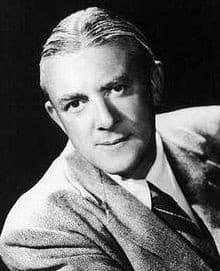
James Hilton may refer to:James Hilton (academic), Vice Provost and University Librarian & Dean of Libraries at the University of Michigan James Hilton (designer), English designer James Hilton (novelist) (1900–1954), English novelist Jimmy Hilton (1883–1943), English rugby league footballer of the 1900s and 1910s James L. Hilton, astronomer