BookBrief
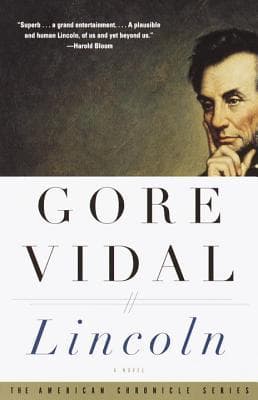
Lincoln cover
Archivist's Choice

Lincoln

Gore Vidal (1984)

Genre

Politics / Biography / History

Reading Time

15-20 hours (approx. 672 pages)

Key Themes

See below

Track Your Reading

Sign in to track this book

Gore Vidal strips away the myth to reveal Abraham Lincoln as a shrewd, melancholic political animal, navigating personal tragedy and a deeply divided capital to reluctantly emancipate a nation teetering on the brink of collapse.

Core Idea

Gore Vidal's "Lincoln" offers a new view of the 16th U.S. President. It moves past idealized versions to show a master politician, a pragmatist, and often a ruthless leader, not the saintly figure of popular stories. The book argues that Lincoln's main goal was to keep the Union together. Ending slavery became a necessary, but secondary, way to achieve that. Vidal carefully rebuilds Lincoln's political moves, his complex ties with a cabinet of rivals, his smart use of language, and the huge personal and political weight of leading a nation through its worst conflict. He shows Lincoln as a figure driven by a strong will to power and national unity, even if it meant sacrificing civil liberties and causing great human suffering.
Reading time
15-20 hours (approx. 672 pages)
Difficulty
Medium
✓ Read this if...
You are interested in a sophisticated, character-driven political biography that challenges conventional historical narratives and delves into the machinations of power during the American Civil War.
✗ Skip this if...
You prefer traditional, hagiographic biographies of historical figures, are sensitive to critical portrayals of national heroes, or dislike historical fiction that takes liberties with dialogue and internal thought to illuminate character.

Core idea

The central argument and framework that powers the entire book.

Gore Vidal's "Lincoln" offers a new view of the 16th U.S. President. It moves past idealized versions to show a master politician, a pragmatist, and often a ruthless leader, not the saintly figure of popular stories. The book argues that Lincoln's main goal was to keep the Union together. Ending slavery became a necessary, but secondary, way to achieve that. Vidal carefully rebuilds Lincoln's political moves, his complex ties with a cabinet of rivals, his smart use of language, and the huge personal and political weight of leading a nation through its worst conflict. He shows Lincoln as a figure driven by a strong will to power and national unity, even if it meant sacrificing civil liberties and causing great human suffering.

At a glance

Reading time

15-20 hours (approx. 672 pages)

Difficulty

Medium

Read this if...

You are interested in a sophisticated, character-driven political biography that challenges conventional historical narratives and delves into the machinations of power during the American Civil War.

Skip this if...

You prefer traditional, hagiographic biographies of historical figures, are sensitive to critical portrayals of national heroes, or dislike historical fiction that takes liberties with dialogue and internal thought to illuminate character.

Key Takeaways

1

The Politician, Not the Saint

Lincoln was a shrewd political operator, not just a moral icon.

Quote

The American people, like all peoples, prefer to be lied to. But they must also be told the truth, or at least a version of it they can accept as truth.

Gore Vidal carefully removes the idealizing portrayals of Abraham Lincoln, showing him first as a master politician working within the harsh realities of 19th-century American government. This Lincoln is practical, calculating, and often manipulative. He is good at playing groups against each other, managing public opinion, and making hard choices not always based on pure moral belief but on strategic need. His 'greatness' comes from his political sharpness and his ability to guide a complex, broken nation during its worst crisis, rat...

Supporting evidence

Vidal details Lincoln's careful management of his cabinet, often pitting strong personalities like Seward and Chase against each other, and his strategic delays and pronouncements regarding slavery, waiting for the opportune moment when it would serve military and political objectives.

Apply this

When evaluating historical figures or contemporary leaders, look beyond the idealized narratives to understand the political realities and strategic motivations that often drive their decisions. Recognize that 'good' outcomes can arise from complex, even morally ambiguous, political processes.

political-realismstatesmanshippragmatism
2

Union Over Abolition

Preserving the United States was Lincoln's primary, overarching objective.

Quote

My paramount object in this struggle is to save the Union, and is not either to save or to destroy slavery. If I could save the Union without freeing any slave I would do it, and if I could save it by freeing all the slaves I would do it; and if I could save it by freeing some and leaving others alone I would also do that.

Vidal stresses that Lincoln's first and lasting goal was to preserve the Union, not to end slavery right away. While he personally disliked slavery, Lincoln was willing to accept its existence if it meant preventing secession and keeping national unity. The Emancipation Proclamation, a huge step, is shown not as a sudden moral awakening, but as a calculated military and political move. It was issued when the war had reached a stalemate. It served to weaken the Confederacy, boost Union morale, and stop European countries from joining t...

Supporting evidence

The narrative highlights Lincoln's early proposals for compensated emancipation and colonization, and his hesitancy to make abolition a war aim until it became militarily expedient following the Battle of Antietam.

Apply this

Understand that major societal shifts often occur through a confluence of moral imperatives, political calculations, and strategic necessity. Change is rarely linear or purely ideologically driven.

emancipation-proclamationcivil-war-causesnational-unity
3

A Beleaguered Capital

Washington D.C. was a hostile, divided city mirroring the nation's schism.

Quote

Washington City was not a capital at all but a malarial swamp of a Southern town, filled with spies and secessionists.

Vidal vividly depicts Washington D.C. at the start of Lincoln's presidency as a deeply divided and dangerous place. Far from a loyal federal city, it was a Southern-leaning town. It was culturally and politically aligned with the Confederacy, full of spies and sympathizers. Lincoln arrived in a capital where his authority was questioned, his life was possibly at risk, and even his own cabinet members doubted his leadership. This background of internal distrust and outside threat shows the immense pressure Lincoln was under from his fi...

Supporting evidence

Vidal details the constant rumors of assassination plots, the open secessionist sympathies of many residents, and the initial lack of a strong Unionist presence in the city, forcing Lincoln to arrive secretly.

Apply this

Recognize that leadership often begins by securing one's immediate environment and building a loyal base, especially in times of crisis. The 'center of power' can itself be a contested battleground.

washington-dc-historycivil-war-politicspolitical-instability
4

Mary Todd Lincoln: A Tragic Figure

Lincoln's wife was a complex, often reviled, and deeply suffering woman.

Quote

She was a woman of strong will and intelligence, trapped by the expectations of her time and the profound sorrows that life visited upon her.

Vidal offers a sympathetic yet honest portrait of Mary Todd Lincoln, saving her from being seen only as a madwoman or social climber. She is shown as intelligent, politically aware, but also unpredictable, prone to fits of temper and deep sadness. These were made worse by the huge pressures of her position, her Southern family ties, and the tragic deaths of three of her four sons. Her grief, often misunderstood and mocked by a hostile public and press, deeply affected Lincoln, who bore her outbursts and sorrows with quiet, lasting pat...

Supporting evidence

The narrative explores Mary's frantic spending, her spiritualist séances, her public gaffes, and the devastating impact of Willie Lincoln's death, all presented within the context of her psychological fragility and the unforgiving scrutiny she faced.

Apply this

Cultivate empathy for figures in the public eye, recognizing that personal tragedies and psychological struggles often occur beneath the surface of their public personas, especially in high-stress environments.

mary-todd-lincolngrief-and-losshistorical-psychology
5

The Weight of Command

Lincoln's burdens of leadership were immense, shaping his character.

Quote

He carried the nation's agony on his shoulders, and it was a burden that would transform him, physically and spiritually.

Vidal carefully shows the crushing weight of the presidency during the Civil War. Lincoln's days were a constant cycle of military planning, political maneuvering, managing public opinion, and dealing with personal grief. The endless stream of casualties, the poor performance of generals, the betrayals of political rivals, and the deep personal sorrow of losing his son Willie, all changed him. This burden showed on his face and spirit, turning the once-jovial lawyer into a gaunt, melancholic figure. The book emphasizes that true leade...

Supporting evidence

Vidal describes Lincoln's sleepless nights, his trips to the telegraph office for war updates, his constant reading of military dispatches, and the visible aging and somber demeanor that became increasingly prominent throughout his presidency.

Apply this

Appreciate the immense psychological and emotional toll that high-stakes leadership can take. Understand that effective leaders in crisis often sacrifice personal well-being for their perceived duty.

leadership-in-crisispresidential-stresscivil-war-leadership
6

A Master of Language and Persuasion

Lincoln's rhetorical genius was key to uniting a fractured nation.

Quote

His words, so carefully chosen, so deceptively simple, had the power to move men's hearts and minds, even when their logic defied immediate understanding.

Vidal consistently highlights Lincoln's deep skill with language, showing him as a master speaker and storyteller. His ability to create compelling stories, give powerful speeches (like the Gettysburg Address, though not directly detailed in its delivery within the novel, its impact is implied), and write persuasive letters was key in shaping public opinion, gathering support for the Union, and explaining the moral importance of the conflict. He understood the power of words to inspire, to comfort, and to define the national purpose, ...

Supporting evidence

The book showcases Lincoln's careful drafting of speeches and proclamations, his use of parables and anecdotes to convey complex ideas, and his ability to communicate directly and effectively with different audiences, from generals to common citizens.

Apply this

Develop strong communication skills, particularly in articulating vision and purpose, as they are essential for leadership and influence in any context, especially during periods of disagreement or crisis.

rhetoricpersuasionpublic-speakinglincoln-speeches
7

The Cabinet of Rivals

Lincoln skillfully managed a contentious cabinet of strong personalities.

Quote

Each man thought himself the rightful leader, the true statesman. Lincoln let them think it, then gently, inexorably, bent them to his will.

One of Lincoln's most notable political achievements, as shown by Vidal, was his ability to assemble and manage a 'team of rivals.' This was a cabinet made up of men who often saw themselves as his intellectual and political superiors, many of whom had been presidential candidates themselves. Figures like William Seward (Secretary of State) and Salmon P. Chase (Secretary of the Treasury) constantly challenged his authority and competed for influence. Lincoln navigated this difficult political landscape with a mix of patience, strategi...

Supporting evidence

Vidal details the constant power struggles, Seward's early attempts to dominate foreign policy, Chase's maneuvering for the presidency, and Lincoln's subtle ways of keeping them in check, often by allowing them to argue among themselves.

Apply this

Learn to manage diverse and strong personalities within a team, leveraging their strengths while maintaining clear leadership and vision. Understand that consensus isn't always possible, but collaboration is often necessary.

cabinet-governmentteam-managementpolitical-strategy
8

The Reluctant Dictator

Lincoln expanded presidential power dramatically, out of wartime necessity.

Quote

To save the Union, certain liberties must be curtailed, certain powers assumed, for a time at least.

Vidal portrays Lincoln as a president who, out of perceived necessity, greatly expanded the powers of the executive branch during the Civil War. This included suspending habeas corpus, ordering the arrest of dissenters, and taking actions that arguably went beyond constitutional limits. While Lincoln justified these actions as essential for national survival, Vidal subtly raises questions about the long-term effects on American democracy. Lincoln is shown agonizing over these decisions, understanding the precedents he was setting, but...

Supporting evidence

The narrative covers the suspension of habeas corpus, the jailing of newspaper editors, and Lincoln's unilateral decisions regarding military strategy and emancipation, often without explicit congressional approval.

Apply this

Consider the delicate balance between national security and individual liberties, especially during times of crisis. Reflect on how leaders justify extraordinary measures and their potential long-term impact on governance.

executive-powercivil-libertieshabeas-corpuswartime-presidency
9

The Enduring Enigma

Despite his public persona, Lincoln remained deeply private and unknowable.

Quote

No one truly knew him. Not his wife, not his closest advisors. He was a man of masks, of carefully constructed public and private selves.

Even after nearly 700 pages, Vidal's Lincoln remains, in many ways, a mystery. Despite the detailed portrayal of his actions, thoughts, and interactions, the novel suggests that Lincoln kept a deep inner reserve. He was a man of contradictions: folksy yet intellectual, melancholic yet capable of sharp humor, seemingly open yet deeply private. This unknowability is a central theme, strengthening the idea that even the most carefully researched biography can only scratch the surface of a complex historical figure. His true reasons and i...

Supporting evidence

Vidal frequently depicts Lincoln's habit of telling stories or parables rather than directly expressing his feelings, his solitary walks, and the inability of even Mary or his secretaries to fully penetrate his emotional defenses.

Apply this

Accept that even with extensive information, the full complexity and inner life of individuals, especially historical figures, may remain elusive. Be comfortable with a degree of ambiguity in understanding human motivation.

historical-biographypersonal-mysteryhuman-complexity

Critical analysis

Notable Quotes

The people will have their say, and if they choose a rail-splitter from Illinois, then so be it. This is America, not a monarchy.

Lincoln's early political career, reflecting on democracy.

A house divided against itself cannot stand. I believe this government cannot endure permanently half slave and half free.

The 'House Divided' speech, before the Civil War.

My great concern is not whether God is on our side; my great concern is to be on God's side, for God is always right.

During the Civil War, reflecting on divine will and the Union cause.

With malice toward none, with charity for all, with firmness in the right as God gives us to see the right, let us strive on to finish the work we are in.

Second Inaugural Address, looking towards Reconstruction.

The world will little note, nor long remember what we say here, but it can never forget what they did here.

Gettysburg Address, honoring the fallen soldiers.

I claim not to have controlled events, but confess plainly that events have controlled me.

Reflecting on the overwhelming pressures of the presidency during wartime.

The ballot is stronger than the bullet.

Discussing the power of democratic processes over violence.

If I were to try to read, much less answer, all the attacks made on me, this shop might as well be closed for any other business.

Responding to criticism and political attacks as president.

I am a firm believer in the people. If given the truth, they can be depended upon to meet any national crisis. The great point is to bring them the real facts.

Emphasizing the importance of public trust and transparency.

You think I don't know the price of a life? I weigh it every day, every hour. It is the heaviest burden I carry.

A private moment of anguish over the casualties of the Civil War.

Better to remain silent and be thought a fool than to speak and to remove all doubt.

A general reflection on wisdom and speech, often attributed to Lincoln.

The dogmas of the quiet past are inadequate to the stormy present. The occasion is piled high with difficulty, and we must rise with the occasion.

Annual Message to Congress, 1862, urging adaptability during crisis.

War is at best a remedy for a disease that should never have been contracted.

Reflecting on the tragic necessity of the Civil War.

I shall do my best, and that is all I can do.

A simple statement of resolve and commitment.

Quiz

Test Your Knowledge

Ready to see how well you understood this book? Take our interactive quiz with 10 questions.

10
Questions
~5
Minutes
?
Best Score

Key Questions (FAQ)

Gore Vidal's 'Lincoln' is a historical novel that re-examines the life of Abraham Lincoln, presenting him not as a monolithic hero but as a complex man and shrewd political animal navigating the American Civil War. It delves into his personal struggles, political maneuvering, and the difficult decisions he faced during a tumultuous period in U.S. history.

About the author

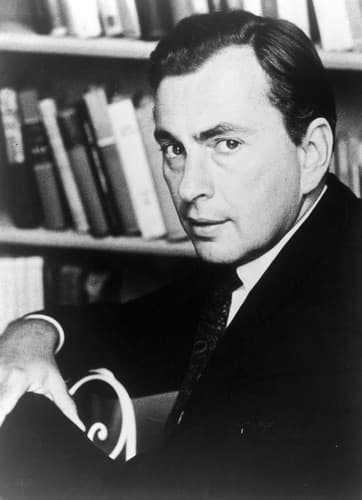
Gore Vidal

Eugene Luther Gore Vidal was an American writer and public intellectual known for his epigrammatic wit. His novels and essays interrogated the social and cultural sexual norms he perceived as driving American life. Beyond literature, Vidal was heavily involved in politics. He unsuccessfully sought office twice as a Democratic Party candidate, first in 1960 to the U.S. House of Representatives, and later in 1982 to the U.S. Senate.