BookBrief
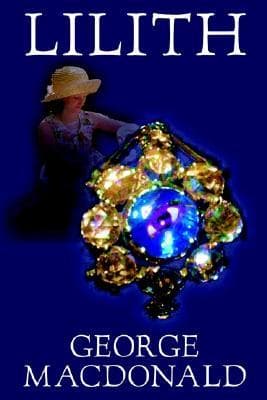
Lilith cover
Archivist's Choice

Lilith

George MacDonald (1895)

Genre

General

Reading Time

600 min

Key Themes

See below

Track Your Reading

Sign in to track this book

Haunted by a spectral guide through a mirror to a cosmic realm, a man descends into the darkness of life, death, and salvation, where even tortured souls find solace in a healing sleep before ultimate redemption.

Core Idea

George MacDonald's "Lilith" follows Adam, a modern man, into a fantastical, yet real, metaphysical realm where he confronts the consequences of self-will and the nature of existence. Through encounters with figures like Mr. Raven (a divine guide) and Lilith (representing resistance to divine will and fragmented being), the novel argues that spiritual awakening requires self-surrender, acceptance of suffering, and a reorientation away from ego-driven desires towards a higher, interconnected truth. It posits that death is not an end but a transformative gateway, and that cosmic sleep can be a divine mercy preparing one for ultimate reality.
Reading time
600 min
Difficulty
Hard
✓ Read this if...
You are interested in allegorical fantasy that delves into deep spiritual and philosophical themes, exploring concepts of good, evil, redemption, and the nature of reality through a dream-like narrative. Ideal for readers who appreciate symbolic literature with a strong Christian mystical underpinning.
✗ Skip this if...
You prefer straightforward narratives, literal interpretations, or fast-paced plot-driven stories. This book's dense symbolism, archaic language, and meandering, dream-logic structure might be challenging for those unfamiliar with 19th-century allegorical fantasy.

Core idea

The central argument and framework that powers the entire book.

George MacDonald's "Lilith" follows Adam, a modern man, into a fantastical, yet real, metaphysical realm where he confronts the consequences of self-will and the nature of existence. Through encounters with figures like Mr. Raven (a divine guide) and Lilith (representing resistance to divine will and fragmented being), the novel argues that spiritual awakening requires self-surrender, acceptance of suffering, and a reorientation away from ego-driven desires towards a higher, interconnected truth. It posits that death is not an end but a transformative gateway, and that cosmic sleep can be a divine mercy preparing one for ultimate reality.

At a glance

Reading time

600 min

Difficulty

Hard

Read this if...

You are interested in allegorical fantasy that delves into deep spiritual and philosophical themes, exploring concepts of good, evil, redemption, and the nature of reality through a dream-like narrative. Ideal for readers who appreciate symbolic literature with a strong Christian mystical underpinning.

Skip this if...

You prefer straightforward narratives, literal interpretations, or fast-paced plot-driven stories. This book's dense symbolism, archaic language, and meandering, dream-logic structure might be challenging for those unfamiliar with 19th-century allegorical fantasy.

Key Takeaways

1

The Mirror as a Portal to Metaphysical Truth

Ordinary objects can be gateways to profound spiritual realities.

Quote

After he followed the old man through the mirror, nothing in his life was ever right again.

MacDonald uses the mirror as a symbol for the boundary between the physical and spiritual realms. It is not merely a reflective surface but a literal portal, suggesting that the 'ordinary' world we perceive is a thin veil over deeper truths. This initial passage through the looking-glass immediately upends the protagonist's reality, forcing him to confront the instability of his previous understanding and the existence of dimensions beyond his conventional comprehension. This act of passage signifies a necessary disruption of the fami...

Supporting evidence

The very premise of the story hinges on the protagonist's physical journey *through* a mirror, not just looking into it, leading him to a different dimension.

Apply this

Question the 'given' reality around you. Look for symbolic meaning in everyday objects and events, understanding that deeper truths might be hidden in plain sight, requiring only a shift in perspective or a willingness to transgress perceived boundaries.

metaphysicssymbolismspiritual-journey
2

Cosmic Sleep as Divine Mercy

Suffering souls find ultimate healing through a profound, redemptive slumber.

Quote

MacDonald mentions a cosmic sleep that heals tortured souls, preceding the salvation of all.

One of the unique concepts in 'Lilith' is the idea of a 'cosmic sleep' — a divine, purgatorial slumber that acts as a balm for the most tortured and resistant souls. This is not merely unconsciousness but an active, therapeutic process orchestrated by divine mercy, allowing beings to shed their accumulated sin, pain, and self-will, and be prepared for ultimate salvation. It represents a departure from traditional punitive views of an afterlife, instead offering a vision of universal restoration through a compassionate, transformative ...

Supporting evidence

The narrative explicitly describes this 'cosmic sleep' as a mechanism for healing and preparing 'tortured souls' for eventual salvation.

Apply this

Consider periods of profound rest or 'reset' in your own life as opportunities for spiritual and emotional healing. Embrace the idea that sometimes, stepping back and allowing for a deeper, unconscious process can be more transformative than active struggle.

universalismredemptionpurgatorydivine-mercy
3

The Nature of Death: A Gateway, Not an End

Death is a transition into a more profound state of being, not annihilation.

Quote

It was a special mirror and the man he followed was a special man - a man who led him to the things that underlie the fate of all creation.

MacDonald reframes death, presenting it not as a terrifying finality but as a necessary passage to a deeper reality. In the world of Lilith, 'dying' can mean shedding an old self, entering a new dimension, or undergoing a spiritual transformation. This perspective challenges the conventional fear of death, suggesting that what we perceive as an end is merely a gateway to an expanded state of existence, where the true 'things that underlie the fate of all creation' become accessible. This makes the journey through death a vital part of...

Supporting evidence

The protagonist experiences multiple 'deaths' or transformations throughout the narrative, each leading to a new state of being or understanding rather than cessation.

Apply this

Re-evaluate your understanding of 'endings' in life. Recognize that what seems like a conclusion might be an essential transition to a new phase, offering opportunities for deeper insight and growth.

eschatologytransformationspiritual-deathrebirth
4

The Peril of Self-Will and Resistance

Unchecked self-will leads to spiritual stagnation and suffering.

Quote

Lilith is considered among the darkest of MacDonald's works, and among the most profound.

'Lilith' explores the destructive power of self-will, particularly through Lilith. Her refusal to submit to divine love and her insistence on her own independent power, even at the cost of immense suffering for herself and others, is a stark warning. This is about a deep resistance to the flow of life and love, leading to a frozen, deadened existence. MacDonald portrays this resistance not as strength, but as a weakness that traps the soul in a cycle of pain, highlighting that true freedom lies in aligning with a higher will, not in a...

Supporting evidence

Lilith's character arc, her resistance to redemption, and the consequences of her actions (e.g., the spectral forms of her children, her petrification) exemplify the perils of self-will.

Apply this

Reflect on areas where stubborn self-will might be hindering your growth or causing unnecessary conflict. Practice discernment between healthy autonomy and destructive resistance, seeking alignment with higher principles or the well-being of others.

free-willsinpridespiritual-bondage
5

The Redemptive Power of Suffering

Pain, when embraced, can be a catalyst for profound spiritual growth and purification.

Quote

It is a story concerning the nature of life, death, and salvation.

MacDonald presents suffering not as punishment but as an instrument of grace. The trials and torments experienced by the characters, including the protagonist, are not arbitrary but serve to purify, humble, and reorient their souls towards truth and love. This perspective challenges the modern avoidance of pain, suggesting that true healing and salvation often require confronting and moving through discomfort. It is a transformative fire that burns away illusion and ego, revealing the authentic self. The pain experienced by characters...

Supporting evidence

The prolonged suffering of various characters, particularly the spectral children and even Lilith, is explicitly linked to their eventual, albeit slow, path towards the cosmic sleep and salvation.

Apply this

Instead of merely enduring suffering, seek to understand its potential lessons. Frame challenges as opportunities for growth and purification, trusting that difficult experiences can lead to deeper wisdom and compassion.

theodicyatonementspiritual-disciplinegrace
6

The Call to Radical Self-Surrender

True liberation comes from yielding one's will to a higher, loving authority.

Quote

It was a special mirror and the man he followed was a special man - a man who led him to the things that underlie the fate of all creation.

At its heart, 'Lilith' is a meditation on the necessity of self-surrender for spiritual salvation. The journey of the protagonist, and the ultimate hope for characters like Lilith, involves letting go of personal control, ego, and preconceived notions. This surrender is not a weakness but an act of courage, trusting in a benevolent, albeit mysterious, divine order. It implies a willingness to be guided, even through uncomfortable or illogical paths, towards a greater good. This theme is central to MacDonald's broader theological visio...

Supporting evidence

Mr. Raven's role as a guide, leading the protagonist through increasingly strange and challenging experiences that demand trust and letting go of his rational understanding, exemplifies the call to surrender.

Apply this

Identify areas in your life where you might be clinging too tightly to control. Practice releasing the need for absolute certainty and cultivate trust in a guiding force, whether spiritual or intuitive, allowing for unexpected paths to unfold.

mysticismfaithdivine-willhumility
7

The Interconnectedness of All Creation

No soul exists in isolation; the fate of one impacts the whole.

Quote

It was a special mirror and the man he followed was a special man - a man who led him to the things that underlie the fate of all creation.

MacDonald shows how every soul, action, and choice resonates throughout creation. The suffering of Lilith, for instance, is not confined to her alone but has tangible, horrifying effects on her children and the landscape of her world. This highlights a theological principle: that salvation is not merely an individual affair but a cosmic one. The 'fate of all creation' is interconnected, implying that the redemption of one contributes to the redemption of all, and conversely, the resistance of one impedes the harmony of the whole. This...

Supporting evidence

The direct impact of Lilith's choices on her children's spectral existence and the desolation of her world clearly demonstrates this interconnectedness.

Apply this

Recognize how your actions and inner state ripple outwards to affect your community and the wider world. Cultivate compassion and a sense of shared destiny, understanding that your personal growth contributes to collective well-being.

holismcosmic-unitykarmacollective-consciousness
8

The Ambiguity of Good and Evil

Reality is complex; traditional moral binaries often fail to capture its nuances.

Quote

Lilith is considered among the darkest of MacDonald's works, and among the most profound.

While 'Lilith' deals with forces of good and evil, MacDonald blurs the lines, presenting a world more nuanced than simple moral binaries. Characters like Lilith are flawed and cause suffering, yet they are also objects of divine pity and potential redemption. Even the protagonist's journey forces him to confront his own complicity and misunderstandings. This ambiguity challenges readers to look beyond superficial judgments and into the deeper motivations and potential for transformation within seemingly 'evil' entities. It suggests th...

Supporting evidence

Mr. Raven, who appears as a guide, also embodies aspects of death and judgment, complicating a simple 'good vs. evil' dynamic. Lilith herself, despite her villainy, is ultimately subject to a plan of salvation.

Apply this

Resist quick judgments of others or situations. Seek to understand the underlying complexities, motivations, and potential for change, even in those you perceive as 'bad' or in seemingly negative circumstances.

moral-relativismshadow-workdualitycompassion
9

The Home as a Spiritual Anchor

The familiar 'home' can represent the ultimate spiritual belonging and peace.

Quote

After he followed the old man through the mirror, nothing in his life was ever right again.

The protagonist's initial home, though ordinary, serves as an anchor to his reality and, ultimately, to a deeper spiritual 'home.' His departure through the mirror disrupts this, leading him on a chaotic journey where 'nothing was ever right again.' This suggests that while the physical home is left behind, the yearning for a true spiritual dwelling, a place of peace and belonging, becomes a driving force. MacDonald implies that ultimate salvation is a return to a divine 'home,' a state of perfect alignment and rest. The familiar imag...

Supporting evidence

The narrative begins with the protagonist in his home, and his entire journey can be interpreted as a quest to find a truer, spiritual home after his initial reality is shattered.

Apply this

Reflect on what 'home' truly means to you beyond its physical structure. Cultivate a sense of inner peace and belonging, understanding that your spiritual home is a state of being that you can carry with you, even amidst life's disruptions.

belongingspiritual-returnnostalgiainner-peace
10

The Necessity of the Guide (Mr. Raven)

Spiritual transformation often requires the guidance of a wise, enigmatic mentor.

Quote

It was a special mirror and the man he followed was a special man - a man who led him to the things that underlie the fate of all creation.

Mr. Raven is more than just a character; he is the spiritual guide, an enigmatic figure who initiates the protagonist's journey and provides cryptic, yet essential, direction. His role shows that spiritual transformation is rarely a solitary endeavor. The guide, often appearing in unexpected forms and delivering uncomfortable truths, is crucial for navigating the treacherous landscapes of the inner and outer worlds. Mr. Raven embodies wisdom, death, and resurrection, leading the protagonist not necessarily where he wants to go, but wh...

Supporting evidence

Mr. Raven is the catalyst for the protagonist's journey, physically leading him through the mirror and providing crucial, though often obscure, instructions and explanations throughout the narrative.

Apply this

Be open to mentorship and guidance in your own life, especially from those who challenge your assumptions or lead you into uncomfortable but necessary growth. Seek out 'guides' who embody wisdom and can illuminate paths you might not see on your own.

mentorarchetypespiritual-guidanceinitiation

Critical analysis

Notable Quotes

The one thing that cannot be forgiven is the refusal to be forgiven.

Spoken by Mr. Raven to Adam, discussing the nature of sin and redemption.

For the love of God is not the love of a father for his child, but the love of a mother for her child, who will not let it go, though it be dead.

Mr. Raven explaining the persistent, unwavering nature of divine love.

The highest form of love is to be the love of God, and the lowest form is to be the love of oneself.

A reflection on the hierarchy of love, contrasting selfless and selfish affection.

We are all children of the dust, and to dust we shall return. But the dust is not the end of us.

A contemplation of mortality and the promise of something beyond physical death.

Sleep is a divine invention. It is the gate of dreams, and the door of forgetfulness.

Mr. Raven discussing the nature and purpose of sleep, both as escape and revelation.

To be truly human is to be capable of suffering, and to be capable of suffering is to be capable of love.

A deep insight into the connection between suffering, humanity, and the capacity for love.

The greatest danger is not in being lost, but in being found in the wrong place.

Mr. Raven warning Adam about the perils of false comfort and misplaced belonging.

Sorrow is good, for it draws us nearer to the heart of things.

A paradoxical statement suggesting the redemptive quality of sorrow and its ability to reveal deeper truths.

There is no freedom but the freedom to be good.

Mr. Raven defining true freedom not as license, but as alignment with goodness.

The very darkness is God's, and the very light is God's.

A statement emphasizing God's omnipresence and control over all aspects of existence, light and dark.

Truth is not a thing to be found, but a thing to be made.

A profound philosophical statement about the active creation and realization of truth.

He who would save his life must lose it.

A biblical echo, spoken in the context of self-sacrifice and finding true life through surrender.

The world is but a school, and the lessons are hard, but the teacher is good.

A comforting perspective on life's difficulties, framing them as educational under a benevolent divine hand.

To be clean is not to have no dirt, but to have no love for dirt.

A distinction between external purity and internal disposition, emphasizing the heart's intention.

Quiz

Test Your Knowledge

Ready to see how well you understood this book? Take our interactive quiz with 10 questions.

10
Questions
~5
Minutes
?
Best Score

Key Questions (FAQ)

Lilith explores profound themes concerning the nature of life, death, and salvation. It delves into the spiritual journey of a protagonist who encounters cosmic truths and the underlying fate of creation.

About the author