BookBrief
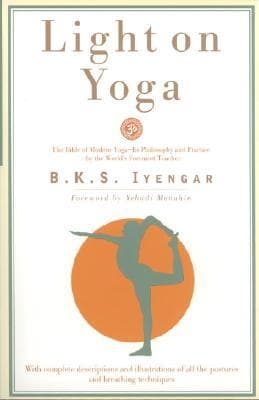
Light on Yoga cover
Archivist's Choice

Light on Yoga

B.K.S. Iyengar

Genre

Reference / Spirituality / Health / Philosophy / Self-Help

Reading Time

While it has 544 pages, it's a reference book. For a full read-through, expect 20+ hours, but it's designed for ongoing consultation.

Key Themes

See below

Track Your Reading

Sign in to track this book

This illustrated yoga guide offers a complete path to physical and spiritual change, detailing every posture and breath to balance mind, body, and and soul.

Core Idea

Light on Yoga is a complete guide to Hatha Yoga, offering a clear path to physical skill, mental clarity, and spiritual development through precise asanas (postures) and pranayama (breathing techniques). B.K.S. Iyengar carefully explains the alignment, benefits, and therapeutic uses of hundreds of poses. He emphasizes that yoga is more than just exercise; it is a philosophy for self-realization, bringing together body, mind, and spirit through regular practice, self-study, and ethical living. The book's main idea is that through dedicated and precise yoga practice, people can achieve physical health, mental stability, and spiritual insight. This leads to a balanced life and a deeper understanding of oneself. Iyengar argues that focusing on alignment and using props makes the practice accessible and effective for everyone. This allows practitioners to move past physical limits and begin a journey towards inner peace and freedom.
Reading time
While it has 544 pages, it's a reference book. For a full read-through, expect 20+ hours, but it's designed for ongoing consultation.
Difficulty
Hard
✓ Read this if...
You are a serious yoga practitioner (beginner to advanced) looking for a highly detailed, systematic, and foundational guide to Hatha Yoga, focusing on precise alignment and traditional techniques. Essential for aspiring or current yoga teachers.
✗ Skip this if...
You are looking for a casual introduction to yoga, a purely philosophical treatise without practical application, or a book that focuses solely on modern, flow-based yoga styles without emphasis on classical postures and detailed instruction.

Core idea

The central argument and framework that powers the entire book.

Light on Yoga is a complete guide to Hatha Yoga, offering a clear path to physical skill, mental clarity, and spiritual development through precise asanas (postures) and pranayama (breathing techniques). B.K.S. Iyengar carefully explains the alignment, benefits, and therapeutic uses of hundreds of poses. He emphasizes that yoga is more than just exercise; it is a philosophy for self-realization, bringing together body, mind, and spirit through regular practice, self-study, and ethical living.

The book's main idea is that through dedicated and precise yoga practice, people can achieve physical health, mental stability, and spiritual insight. This leads to a balanced life and a deeper understanding of oneself. Iyengar argues that focusing on alignment and using props makes the practice accessible and effective for everyone. This allows practitioners to move past physical limits and begin a journey towards inner peace and freedom.

At a glance

Reading time

While it has 544 pages, it's a reference book. For a full read-through, expect 20+ hours, but it's designed for ongoing consultation.

Difficulty

Hard

Read this if...

You are a serious yoga practitioner (beginner to advanced) looking for a highly detailed, systematic, and foundational guide to Hatha Yoga, focusing on precise alignment and traditional techniques. Essential for aspiring or current yoga teachers.

Skip this if...

You are looking for a casual introduction to yoga, a purely philosophical treatise without practical application, or a book that focuses solely on modern, flow-based yoga styles without emphasis on classical postures and detailed instruction.

Key Takeaways

1

Yoga as a Living Philosophy

Beyond mere exercise, yoga is an embodied philosophical system for self-realization.

Quote

Yoga is a complete subject in itself and a living philosophy. It is a science, an art, and a philosophy. It touches the life of man at every level: physical, mental, moral, and spiritual.

Iyengar firmly states that yoga is not just physical activity but a complete path to spiritual freedom and self-discovery. He sees asanas (postures) and pranayama (breathing) as tools to discipline the body and mind, preparing them for higher consciousness. The book connects physical practice with the ethical and philosophical ideas of Patanjali's Yoga Sutras. It stresses that real yoga cultivates inner peace, moral behavior, and a deeper understanding of one's true nature. This view challenges the modern, often surface-level, idea of...

Supporting evidence

Iyengar structures the entire book around the eight limbs of yoga (Ashtanga Yoga) as described by Patanjali, dedicating sections to Yama, Niyama, Asana, Pranayama, Pratyahara, Dharana, Dhyana, and Samadhi, illustrating how physical postures are foundational yet preparatory steps for deeper meditative states.

Apply this

Approach each yoga practice not just as a workout, but as an opportunity for self-study and ethical reflection. Integrate the Yamas (moral restraints) and Niyamas (observances) into daily life, recognizing their direct impact on the quality of your asana and pranayama practice. For instance, practicing 'ahimsa' (non-violence) extends to being gentle with your body during poses.


ashtanga-yogapatanjaliself-realization
2

Precision Through Alignment

Meticulous attention to anatomical alignment is paramount for safety, efficacy, and deeper energetic effects.

Quote

The correct alignment of the body in asanas is essential. It prevents injury, ensures maximum benefit, and allows the energy to flow freely.

Iyengar's method means precision. He offers extensive detail on the exact position of every body part in each asana, from foot angle to gaze. This carefulness is not just for looks; it prevents injury, maximizes physical benefits, and helps prana (life force) flow correctly. He argues that only through correct alignment can one fully experience a pose, allowing the body to become a stable and open vessel. This focus on anatomical detail sets Iyengar Yoga apart and provides a strong framework for safe and effective practice.

Supporting evidence

The book features over 600 photographs, each accompanied by detailed, multi-step instructions for entering, holding, and exiting every posture, with specific cues on how to align limbs, spine, and head. For example, in Tadasana (Mountain Pose), he specifies the distribution of weight through the feet, the lift of the kneecaps, and the broadening of the collarbones.

Apply this

When practicing any yoga pose, slow down and actively scan your body from head to toe, ensuring each part is aligned according to the principles. Use props like blocks or straps to achieve correct alignment if your flexibility is limited, rather than forcing the body into an incorrect shape. Regularly check your reflection in a mirror to self-correct your form.

alignmentpranaasana-technique
3

The Interconnectedness of Body and Mind

Physical postures are tools to cultivate mental discipline and emotional balance.

Quote

The body is the temple of the soul. By purifying and disciplining the body through asanas, the mind becomes calm and clear, making it fit for meditation.

Iyengar consistently reinforces that yoga's physical practice connects with mental and emotional states. He sees the body not as separate from the mind, but as its physical form and a way to understand and control it. By mastering difficult postures, practitioners learn patience, persistence, and focus. These skills directly improve mental strength and emotional control outside of practice. The physical effort in asanas, combined with focused breathing, teaches one to stay steady and calm during discomfort, mirroring life's challenges...

Supporting evidence

Iyengar frequently discusses how holding a challenging pose like Sirsasana (Headstand) requires not just physical strength but immense mental focus and determination, which in turn calms the nervous system and sharpens the intellect. He notes that 'steadiness of the body leads to steadiness of the mind.'

Apply this

During challenging poses, observe your mental dialogue and emotional reactions. Practice 'pratipaksha bhavana' (cultivating the opposite thought) by focusing on breath and stability rather than discomfort or frustration. Recognize that the discipline gained in holding a pose is directly applicable to maintaining focus and composure in stressful situations in daily life.

pranayamameditationself-discipline
4

Pranayama: The Breath of Life

Conscious breath control is the key to vital energy and deeper meditative states.

Quote

Pranayama is the rhythmic control of the breath. It is not merely breathing exercises but the control of prana, the vital energy of life.

Iyengar includes significant sections on pranayama, stressing its importance beyond simple breathing exercises. He explains that pranayama is the conscious control of 'prana,' the universal life force, and that mastering it is essential for health, mental clarity, and spiritual awakening. Specific breathing techniques can cleanse the nervous system, balance energy channels, and calm the mind, making it ready for higher states of awareness. He cautions against attempting pranayama without a strong asana foundation, as the body must be ...

Supporting evidence

The book provides detailed instructions for various pranayama techniques like Ujjayi, Nadi Shodhana, and Kapalabhati, outlining specific ratios for inhalation, retention, and exhalation, and explaining their physiological and psychological effects. He explicitly states that pranayama should only be attempted after proficiency in asanas is achieved.

Apply this

Start with foundational breathing practices, focusing on extending and smoothing the breath without force. Progress to more complex pranayama techniques only under guidance, ensuring your body and mind are prepared through consistent asana practice. Integrate mindful breathing into daily activities, observing how it impacts your stress levels and focus.

prananervous-systemmeditation
5

The Progressive Path of Practice

Yoga is a gradual journey, requiring consistent effort and patience, not instant gratification.

Quote

Yoga is a path of gradual unfolding. Do not expect instant results. Consistent and dedicated practice over time is essential.

Iyengar emphasizes that yoga is a lifelong journey of gradual progress, not a quick fix. He promotes consistent practice, noting that deep changes come from sustained effort and patience. The book guides practitioners from basic poses to advanced asanas and pranayama, reflecting this progressive nature. He highlights the importance of mastering each stage before moving on, ensuring a solid foundation. This philosophy goes against the modern trend of rapid advancement, instead encouraging a deep, embodied understanding that grows over ...

Supporting evidence

The book is organized into chapters that progressively introduce more complex poses and breathing techniques, clearly indicating which postures are suitable for beginners, intermediate, and advanced practitioners. He often suggests holding poses for short durations initially, gradually increasing the time as strength and flexibility improve.

Apply this

Commit to a regular, consistent practice schedule, even if it's just 15-20 minutes daily. Focus on mastering foundational poses with precision before attempting more advanced variations. Cultivate patience and non-attachment to outcomes, celebrating small improvements and recognizing that the journey itself is the reward.

consistencypatiencediscipline
6

Yoga as Therapy and Healing

Specific postures and sequences can alleviate various physical and mental ailments.

Quote

Yoga is not a religion but a science of well-being, a science of integration, a science of living healthy. It is a practical method to make one's life purposeful, useful, and noble.

Beyond its spiritual goals, Iyengar details yoga's therapeutic benefits. He explains how specific asanas, practiced correctly and regularly, can help with many physical conditions, from back pain and digestion issues to nervous system problems and breathing difficulties. He also touches on mental and emotional healing, such as reducing stress, anxiety, and depression. This practical, health-focused side of yoga makes it accessible and helpful for those seeking relief, confirming its role as a system for overall well-being. However, he...

Supporting evidence

The book includes a dedicated section on 'Curative Asanas' and 'Curative Pranayama,' recommending specific poses and sequences for conditions such as asthma, insomnia, headaches, high blood pressure, and various gynecological disorders, detailing the particular benefits of each for these ailments.

Apply this

If dealing with specific health issues, research or consult with an experienced Iyengar yoga teacher to understand which poses or modifications are appropriate for your condition. Approach therapeutic practice with consistency and patience, recognizing that healing is a gradual process. Always listen to your body and avoid pushing into pain.

therapeutic-yogaholistic-healthwell-being
7

The Role of Props and Support

Props are valuable tools for accessibility, deeper understanding, and extended holds in poses.

Quote

Props are not a crutch, but a tool to help the student understand and experience the pose correctly, especially if flexibility or strength is lacking.

Iyengar changed yoga by introducing and popularizing props like blankets, blocks, straps, and chairs. He saw these not as signs of weakness, but as smart tools to help practitioners of all levels achieve correct alignment, hold poses longer, and access poses otherwise difficult due to physical limits. Props help in understanding a pose's actions, provide support for restorative practices, and allow the benefits of inversions and backbends to be experienced safely. This innovation made yoga more inclusive and allowed for a precise, the...

Supporting evidence

Numerous photographs throughout the book depict practitioners using various props to modify poses, such as a strap to extend reach in Paschimottanasana, blankets under the hips in seated poses, or a chair for support in Sarvangasana.

Apply this

Don't hesitate to use props in your practice. Experiment with blocks, straps, and blankets to support your body in poses, allowing you to maintain correct alignment and experience the pose more fully and comfortably. Consider how props can help you sustain restorative poses for longer durations.

yoga-propsaccessibilityrestorative-yoga
8

Humility and Self-Study (Svadhyaya)

An essential component of yoga is continuous self-observation and honest introspection.

Quote

Svadhyaya is self-study, which means introspection and observation of one's own self. It is the study of the scriptures, but more importantly, the study of the book of life within oneself.

Beyond physical and breathing techniques, Iyengar subtly includes the importance of Svadhyaya, or self-study, as a core part of the yogic path. He encourages practitioners to observe their own bodies, minds, and emotions with humility and honesty during practice. This self-reflection extends beyond the mat, urging one to think about their actions, thoughts, and reasons in daily life. This ongoing process of self-assessment and learning from experiences is important for personal growth, overcoming limits, and moving closer to self-real...

Supporting evidence

Iyengar repeatedly encourages practitioners to 'listen to your body' and 'observe the effects' of each pose, which are direct calls for self-study. He also connects Svadhyaya to the study of sacred texts, but emphasizes that the most important text is one's own life and being.

Apply this

After each practice, take a few moments for quiet reflection. Journal about your physical sensations, mental state, and any insights gained. During challenging moments in life, pause and observe your reactions without judgment, using these observations as opportunities for growth and self-understanding.

svadhyayaintrospectionself-awareness
9

The Power of Inversions

Headstands and shoulderstands are considered 'king' and 'queen' of asanas for their profound benefits.

Quote

Sirsasana (Headstand) is the king of all asanas, and Sarvangasana (Shoulderstand) is the queen. They are invaluable for physical health, mental clarity, and spiritual progress.

Iyengar places great importance on inversions, especially Sirsasana (Headstand) and Sarvangasana (Shoulderstand), calling them the 'king' and 'queen' of asanas. He links many physical, physiological, and mental benefits to these poses, including better circulation, improved brain function, hormone balance, and nervous system regulation. He believes they reverse gravity's effects, refresh organs, and calm the mind, preparing it for meditation. However, he stresses that these powerful poses must be approached carefully, with proper prep...

Supporting evidence

Iyengar dedicates extensive sections to the detailed instruction of Sirsasana and Sarvangasana, including preparatory poses, variations, and counter-poses. He lists specific benefits for various bodily systems, from stimulating endocrine glands to relieving common ailments like colds and headaches.

Apply this

If new to inversions, learn them under the guidance of a qualified teacher, using props for support and safety. Practice preparatory poses to build strength and confidence. Gradually increase the duration of holds as your body adapts, always prioritizing correct alignment over duration.

inversionssirsasanasarvangasanaendocrine-system
10

Yoga as Art and Science

The practice of yoga demands both scientific precision and artistic expression.

Quote

Yoga is a science because it is practical, systematic, and verifiable. It is an art because it requires sensitivity, intuition, and aesthetic expression.

Iyengar clearly states that yoga is a mix of science and art. The 'science' is in its structured approach to physical alignment, breath control, and the repeatable physical and psychological effects. It is practical, verifiable through consistent effort. The 'art' appears in the subtle parts of practice—the intuitive adjustments, the graceful movement, the sensitivity to one's body, and the beauty of a perfectly done pose. This dual nature means that while precision is key, so is a sense of fluidity, inner feeling, and personal expres...

Supporting evidence

Throughout the book, Iyengar provides scientific explanations for the benefits of poses (e.g., how inversions affect circulation) while simultaneously using evocative language to describe the 'feeling' or 'intelligence' of the body in a pose, bridging the gap between objective instruction and subjective experience.

Apply this

While focusing on precise alignment, also cultivate an inner awareness of how the pose feels in your body. Allow for a degree of fluidity and grace in your movements, moving beyond rigid adherence to instruction to find your own embodied expression within the pose. Approach your practice with both disciplined focus and intuitive exploration.

holistic-practiceintuitionembodiment

Critical analysis

Notable Quotes

Yoga is a timeless pragmatic science evolved over thousands of years, dealing with the physical, moral, mental and spiritual well-being of man.

Introductory remarks on the nature of Yoga.

The asanas are not exercises that you 'do,' but postures that you 'hold.'

Explaining the difference between yoga asanas and typical physical exercises.

Regular practice of asanas eradicates the impurities of the body and mind.

Discussing the benefits of consistent asana practice.

Health is a state of complete harmony of the body, mind and spirit. When one is free from physical disabilities, mental distractions and spiritual ignorance, then one is truly healthy.

Defining true health from a yogic perspective.

The yogi's life is not one of ease, but of constant effort and discipline.

Emphasizing the dedication required for the yogic path.

It is through the alignment of the body that I discovered the alignment of my mind, and through the alignment of my mind, I discovered the alignment of my life.

Reflecting on the interconnectedness of physical and mental alignment.

Yoga teaches us to cure what need not be endured and endure what cannot be cured.

Highlighting the practical wisdom of yoga in dealing with suffering.

Pranayama is the controlled and purposeful prolongation of the breath.

Defining the practice of Pranayama.

The body is your temple. Keep it pure and clean for the soul to reside in.

Metaphorical instruction on caring for the physical body.

The greatest wealth is health.

A concise statement on the ultimate value of health.

In each pose, there is a certain quality of surrender, a release of ego.

Describing the mental aspect of holding an asana.

Don't just do the pose, feel the pose.

Encouraging a deeper, more mindful engagement with asanas.

Yoga allows you to find an inner peace that is not ruffled and disturbed by the endless stresses and struggles of life.

Explaining how yoga cultivates inner tranquility.

The mind is like a wild horse; it needs to be tamed and trained.

Using an analogy to describe the nature of the mind and the need for mental discipline.

Quiz

Test Your Knowledge

Ready to see how well you understood this book? Take our interactive quiz with 10 questions.

10
Questions
~5
Minutes
?
Best Score

Key Questions (FAQ)

'Light on Yoga' by B.K.S. Iyengar is a comprehensive guide to the practice of Yoga, detailing hundreds of postures (asanas) and breathing exercises (pranayama). It serves as a definitive source-book for both beginners and experienced practitioners of the Iyengar method, offering detailed instructions and over 600 photographs.

About the author

B.K.S. Iyengar

B.K.S. Iyengar was a world-renowned yoga guru and the creator of Iyengar Yoga. His seminal work, "Light on Yoga," published in 1966, became an international bestseller and is considered a foundational text for modern yoga practice. He dedicated his life to making yoga accessible and beneficial for all, developing a precise and systematic approach to asana and pranayama.