BookBrief
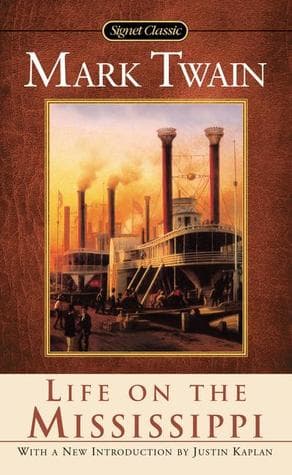
Life on the Mississippi cover
Archivist's Choice

Life on the Mississippi

Mark Twain (1883)

Genre

Lifestyle / Biography / Memoir / History

Reading Time

540 min

Key Themes

See below

Track Your Reading

Sign in to track this book

Before Huckleberry Finn, Mark Twain navigated the mighty Mississippi, chronicling its vanished grandeur, humorous eccentricities, and the formative steamboat days that launched a literary legend.

Core Idea

Mark Twain's "Life on the Mississippi" is a semi-autobiographical and historical account. It argues the Mississippi River is not merely a geographical feature but a dynamic, living entity that shaped American identity, commerce, and culture in the pre-Civil War era. Through his personal experiences as a steamboat pilot and later observations, Twain illustrates how intimate knowledge of the river, while granting mastery and a unique perspective, simultaneously strips away its romantic mystique. It reveals a world of practicalities, dangers, and human complexities. He contends that the river was a microcosm of America, reflecting its rapid progress, its social stratifications, and the tension between the idealized past and the inevitable march of modernity, often with bittersweet and disillusioning consequences.
Reading time
540 min
Difficulty
Medium
✓ Read this if...
You are interested in American history, the antebellum South, riverboat culture, or want to understand the origins of Mark Twain's distinctive voice and worldview. Also for those who appreciate a blend of memoir, social commentary, and adventure.
✗ Skip this if...
You prefer a straightforward narrative without digressions, or if you are looking for a purely factual historical account without personal anecdotes and literary embellishment.

Core idea

The central argument and framework that powers the entire book.

Mark Twain's "Life on the Mississippi" is a semi-autobiographical and historical account. It argues the Mississippi River is not merely a geographical feature but a dynamic, living entity that shaped American identity, commerce, and culture in the pre-Civil War era. Through his personal experiences as a steamboat pilot and later observations, Twain illustrates how intimate knowledge of the river, while granting mastery and a unique perspective, simultaneously strips away its romantic mystique. It reveals a world of practicalities, dangers, and human complexities. He contends that the river was a microcosm of America, reflecting its rapid progress, its social stratifications, and the tension between the idealized past and the inevitable march of modernity, often with bittersweet and disillusioning consequences.

At a glance

Reading time

540 min

Difficulty

Medium

Read this if...

You are interested in American history, the antebellum South, riverboat culture, or want to understand the origins of Mark Twain's distinctive voice and worldview. Also for those who appreciate a blend of memoir, social commentary, and adventure.

Skip this if...

You prefer a straightforward narrative without digressions, or if you are looking for a purely factual historical account without personal anecdotes and literary embellishment.

Key Takeaways

1

The River as a Living Text

Mastering the Mississippi was an act of profound, intuitive literacy.

Quote

A river is in this respect like a human being—what we might call the 'personalities' of the river, its mood and temper, are constantly changing. It is never the same from one hour to another, or from one day to the next.

Twain's initial ambition to become a steamboat pilot was about achieving an almost mystical communion with the Mississippi. He describes the arduous process of learning the river's 1,200 miles of constantly shifting channels, currents, snags, and sandbars. This was not a static map to memorize, but a dynamic, living entity requiring constant, intuitive interpretation. The river demanded a pilot to read its subtle cues, a ripple, a discoloration, a shifting shadow, as a scholar reads an ancient manuscript. This mastery transformed the ...

Supporting evidence

Twain recounts his apprenticeship under Horace Bixby, who forced him to memorize every bend, snag, and depth, emphasizing that the river 'changes its face every day.' He describes the gradual process of seeing beyond the mere beauty of the river to understand its dangerous, hidden language.

Apply this

Cultivate 'deep reading' in your own domain. Instead of surface-level consumption, seek to understand the underlying dynamics, subtle cues, and historical context of your chosen field. Develop an intuitive grasp that goes beyond mere data points.
experiential-learningintuitive-masteryread-the-environment
2

The Cost of Knowledge

Professional expertise can strip away the romantic beauty of a subject.

Quote

Now when I had mastered the language of this water and had come to know every trifling feature that bordered the great river as familiarly as I knew the letters of the alphabet, I had made a valuable acquisition. But I had lost something, too. I had lost the river’s song.

Twain reflects on the paradoxical consequence of becoming an expert pilot: the river, once a source of awe, wonder, and poetic beauty, became a collection of data points, hazards, and navigational markers. Where he once saw a 'sunset glory' or a 'dazzling sheen,' he now saw 'snags,' 'shoals,' and 'cross-currents.' This shift illustrates the trade-off in professionalization. While expertise grants control and practical utility, it often demystifies and dissects, replacing holistic appreciation with analytical understanding. This is not...

Supporting evidence

Twain explicitly details how the 'graceful curves' and 'splendid sunsets' of the river transformed into 'marks to steer by' and 'signs of danger' after he learned to pilot, lamenting the loss of its 'poetry.'

Apply this

When pursuing mastery, consciously carve out time for 'beginner's mind' experiences. Revisit your field from a layperson's perspective to reconnect with the initial wonder. Journal about your emotional connection to your work before deep diving into technicalities.

disenchantment-of-the-worldexpert-blindnessaesthetic-loss
3

The River as a Microcosm of America

The Mississippi's varied towns and people reflected the nation's diverse and often contradictory character.

Quote

The people of these towns are a curious lot, a mix of the refined and the rough, the industrious and the idle, all bound together by the great artery that flows past their doors.

Twain's journey down the Mississippi is a sociological survey of 19th-century America. Each town and landing along the river, from the bustling commerce of St. Louis to the sleepy, isolated hamlets, presents a distinct cultural vignette. He encounters many characters: genteel Southern planters, rough-and-tumble riverboat gamblers, earnest schoolteachers, superstitious frontiersmen, and enslaved people. The river acts as a unifying artery, connecting these disparate elements, yet also highlighting their differences in customs, dialects...

Supporting evidence

Twain describes the contrasting atmospheres of various towns, from the 'flourishing' growth of Hannibal to the 'shiftless' character of some Southern landings, and recounts anecdotes involving different regional types, like the feuding Grangerfords and Shepherdsons (foreshadowing *Huckleberry Finn*).

Apply this

When analyzing a system or organization, examine its peripheral elements and interconnected nodes, not just its core. Understand how diverse subcultures and regional variations contribute to the larger whole, and identify potential points of tension or unique strengths.

regionalismcultural-diversitysocial-commentary
4

Nostalgia's Treachery

The past, though romanticized, often conceals harsher realities beneath its golden veneer.

Quote

When I was a boy, there was but one permanent ambition among my comrades in our village on the west bank of the Mississippi River. That was, to be a steamboatman.

Twain's return to the Mississippi after many years is fraught with a powerful, yet unfulfilled, sense of nostalgia. He initially yearns for the 'good old days' of steamboating, recalling the glamour and excitement of his youth. However, his journey reveals a stark contrast between his idealized memories and the changed, often diminished, reality. The steamboat era is waning, replaced by railroads. The river itself is less wild, more regulated. More critically, Twain confronts the darker aspects he had perhaps overlooked or romanticize...

Supporting evidence

Twain contrasts his boyhood dreams of steamboat glory with the actual decline of steamboat travel during his return visit. He also subtly, and sometimes explicitly, addresses the presence of slavery and the 'peculiar institution's' impact, which he would explore more deeply in *Huckleberry Finn*.

Apply this

When evaluating past experiences or 'the way things used to be,' consciously challenge your own nostalgic biases. Seek out diverse perspectives and historical context to gain a more balanced and accurate understanding, acknowledging both the good and the bad.

selective-memoryhistorical-revisionismromanticism-vs-realism
5

The Art of the Tall Tale

Humor and exaggeration serve as potent tools for social commentary and storytelling.

Quote

I was born in Missouri, and I have a good deal of that state in me.

Twain is a master of the tall tale, using hyperbole, dialect, and a deadpan delivery to entertain and subtly critique. His anecdotes, often presented as genuine encounters or overheard conversations, are filled with outrageous characters, improbable events, and clever wordplay. This is not mere silliness; it is a sophisticated literary device. The exaggeration highlights absurdities in human nature, exposes social pretenses, and lampoons regional eccentricities. By framing serious observations within a humorous narrative, Twain makes ...

Supporting evidence

Twain's numerous humorous sketches, such as the story of the 'cub pilot' who overestimates his abilities, or the various exaggerated characters he encounters, like the 'feudists' and 'gold-rushers.'

Apply this

In communication, consider how humor and controlled exaggeration can make complex or sensitive topics more accessible and engaging. Use storytelling to illustrate points, even if slightly embellished for impact, ensuring the core message remains intact.

satireamerican-humornarrative-device
6

The Power of Observation

A keen eye for detail is the bedrock of compelling narrative and authentic character.

Quote

A pilot must have a memory like a encyclopaedia, a quick eye, and a judgment that is as swift as lightning.

Twain's strength as a writer lies in his meticulous observation, both of the physical world and human behavior. His descriptions of the river's ever-changing features, the subtle eddies, the shifting sandbars, the specific types of driftwood, are incredibly precise, allowing the reader to visualize the scene vividly. Equally important is his acute perception of people: their dialects, mannerisms, motivations, and moral failings. This observational rigor is the foundation upon which his humor, social commentary, and character developme...

Supporting evidence

Twain's detailed descriptions of the river's physical characteristics, such as 'snags,' 'sawyers,' and 'cottonwood trees,' and his vivid portrayals of various characters' speech patterns and eccentricities.

Apply this

Practice 'active observation' daily. Dedicate time to simply watch and listen without judgment. Take notes on details, dialogue, and non-verbal cues in your environment. This enhances empathy, problem-solving, and creative thinking.

sensory-detailcharacter-studynarrative-authenticity
7

The March of Progress, and its Discontents

Technological advancement brings efficiency but often at the cost of unique cultures and skills.

Quote

The steamboat, once the monarch of the Mississippi, has been dethroned by the railroad.

Twain chronicles the decline of the steamboat era, a period of romance and adventure, giving way to the ascendancy of the railroad. While acknowledging the efficiency and speed railroads brought, he subtly laments the loss of a distinct way of life. The specialized, intuitive skill of the steamboat pilot, the unique social hierarchies of the riverboats, and the culture of river towns all begin to fade. This reflects a broader theme in history: technological 'progress' often streamlines processes but simultaneously eradicates older, mo...

Supporting evidence

Twain details the shrinking number of steamboats, the decline in river traffic, and the increased prominence of railroad lines during his return trip, explicitly contrasting the 'old days' with the 'new.'

Apply this

When evaluating new technologies or processes, consider not only their benefits but also the potential for cultural or skill displacement. Actively preserve or document unique knowledge and traditions before they are lost to 'progress.'

technological-disruptioncultural-erosioncraft-vs-industry
8

The Shifting Nature of Truth

Truth on the river was fluid, demanding constant re-evaluation and adaptation.

Quote

The river was a book that was never read, for it was never the same page twice.

One of the lessons of piloting the Mississippi was that 'truth' was never static. What was safe yesterday might be treacherous today. A familiar landmark could be washed away, a deep channel could become a shallow bar overnight. This forced pilots to develop a radical adaptability, constantly questioning their assumptions and relying on immediate, intuitive observation rather than rigid, pre-conceived notions. Twain highlights a fundamental challenge: how do we navigate a world where the ground beneath our feet is perpetually shifting...

Supporting evidence

Twain's descriptions of the river 'cutting off a bend' or 'building up a new island' overnight, forcing pilots to constantly re-learn the landscape and discard outdated knowledge.

Apply this

Embrace intellectual humility and continuous learning. Regularly challenge your own assumptions and be prepared to update your mental models based on new information. Cultivate a flexible mindset, understanding that 'facts' can evolve in dynamic environments.

epistemological-relativismadaptive-thinkinguncertainty-management
9

The Weight of Responsibility

True authority comes with the heavy burden of lives and livelihoods.

Quote

When I was a cub pilot, I was afraid of the river. When I became a pilot, I was afraid for the river, and for the lives that depended on me.

Twain portrays the immense responsibility resting on a steamboat pilot's shoulders. With hundreds of lives and valuable cargo at stake, every decision, every nuanced reading of the river, carried life-or-death consequences. This weight transformed his perspective from a self-centered ambition to a selfless dedication to safety and competence. He illustrates that true leadership and authority are not about power or prestige, but about the solemn commitment to protect and guide those entrusted to one's care. The pilot's constant vigilan...

Supporting evidence

Twain describes the constant anxiety and sleepless nights experienced by pilots, the unforgiving nature of the river, and the strict hierarchy and discipline required on a steamboat to prevent disaster.

Apply this

When taking on a leadership role, internalize the gravity of your decisions. Prioritize the well-being of your team and stakeholders above personal gain. Cultivate a mindset of constant vigilance and ethical accountability.

ethical-leadershipaccountabilityhigh-stakes-decision-making
10

The Enduring Allure of the Frontier

The Mississippi embodied the American spirit of exploration and self-reliance.

Quote

The Mississippi is a book that opens at every page a new chapter of adventure and discovery.

Even in its decline, the Mississippi River, as Twain describes it, represents the American frontier. It is a vast, untamed space demanding courage, ingenuity, and self-reliance from those who navigate it. The river offered a path to independence, adventure, and the chance to reinvent oneself away from the constraints of settled society. This spirit of the frontier, with its blend of danger and opportunity, permeates the book, reflecting a core aspect of American identity. While the physical frontier may have closed, Twain's narrative ...

Supporting evidence

Twain's personal journey from a small town boy to a skilled pilot, his encounters with diverse, independent characters, and the constant challenges posed by the river itself, all embody the frontier spirit.

Apply this

Seek out 'frontier experiences' in your life, whether through learning new skills, exploring unfamiliar territories (intellectual or physical), or taking on challenging projects that demand ingenuity and self-reliance. Embrace the discomfort of the unknown for personal growth.

american-frontierself-reliancespirit-of-adventure

Critical analysis

Notable Quotes

When I was a boy, there was but one permanent ambition among my comrades in the town I lived in. That was, to be a steamboatman.

Twain reflects on his childhood dream of becoming a steamboat pilot on the Mississippi River.

The face of the water, in time, became a wonderful book—a book that was a dead language to the uneducated passenger, but which told me a thrilling story of life and death, of joy and woe, every time I consulted its pages.

Twain describes how, as a pilot, he learned to read the subtle signs and dangers of the river.

A pilot, in those days, was the grandest and most envied thing on the whole earth.

Twain emphasizes the high status and prestige of steamboat pilots during the golden age of river travel.

I had had a “call” to literature, of a mild, general kind, ever since I could remember; but I had never thought of literature in the way of a profession.

Twain discusses his early inclinations towards writing before his career on the river.

Presently I could not remember any more; the thought of it was gone, vanished, and had left no trace. I was not afraid now.

Twain describes the moment he overcame his fear during his initial training as a cub pilot.

It was a time of great prosperity for the Mississippi, and for the river towns. It was a time of great activity and speculation.

Twain describes the thriving economic conditions along the Mississippi before the Civil War.

The river and the steamboats have had their day. The railroad has supplanted them.

Twain reflects on the decline of steamboat travel and the rise of railroads during his return journey.

The Mississippi is a just and fair judge. It has no favorites.

Twain comments on the impartial and unforgiving nature of the river.

I was to learn that the face of the water, in time, became a wonderful book—a book which told me a thrilling story of life and death, of joy and woe, every time I consulted its pages.

Twain's profound realization about the depth of knowledge required to navigate the river.

In the space of one hundred and seventy-six years the Mississippi has shortened itself two hundred and forty-two miles. That is an average of a mile and a third per year.

Twain humorously presents a calculation about the changing course of the Mississippi River.

The 'old river' is a mighty volume of water, and a mighty volume of history.

Twain reflects on the historical significance and grandeur of the Mississippi.

It is a singular thing that the more a man has to do with the Mississippi, the more he learns to respect its power and its treachery.

Twain's observation on the enduring respect and caution held by those who work on the river.

The people of the South are not a people to forget their traditions, or to be unmindful of their past.

Twain comments on the strong sense of tradition and history among Southerners.

It was a time of great prosperity for the Mississippi, and for the river towns. It was a time of great activity and speculation.

Twain describes the vibrant economic atmosphere along the Mississippi before the Civil War.

Quiz

Test Your Knowledge

Ready to see how well you understood this book? Take our interactive quiz with 10 questions.

10
Questions
~5
Minutes
?
Best Score

Key Questions (FAQ)

Life on the Mississippi is a non-fiction work by Mark Twain that blends autobiography, history, and memoir. It chronicles Twain's experiences as a steamboat pilot on the Mississippi River before the Civil War, offering a romanticized yet realistic portrayal of river life and its eventual decline, alongside historical reflections on the river's significance.

About the author

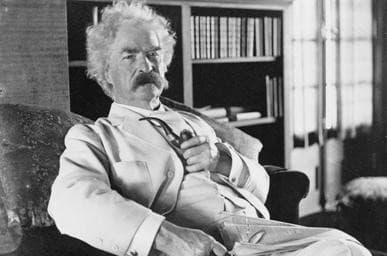
Mark Twain

Samuel Langhorne Clemens, best known by his pen name Mark Twain, was an American writer, humorist, entrepreneur, publisher, and lecturer. He was praised as the "greatest humorist the United States has produced", and William Faulkner called him "the father of American literature". His novels include The Adventures of Tom Sawyer (1876) and its sequel, Adventures of Huckleberry Finn (1884), the latter of which has often been called the "Great American Novel". Twain also wrote A Connecticut Yankee in King Arthur's Court (1889) and Pudd'nhead Wilson (1894), and co-wrote The Gilded Age: A Tale of Today (1873) with Charles Dudley Warner.