“The only reason why man has two ears and one mouth is that he may listen the more and speak the less.”
— A general reflection on human nature and the art of listening.

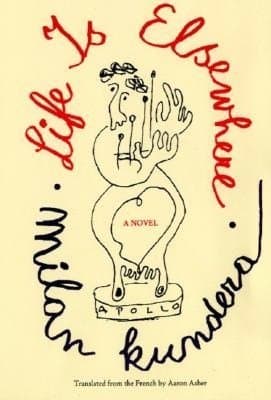
Milan Kundera (2023)
Genre
Philosophy
Reading Time
12-15 hours
Key Themes
See below
Sign in to track this book
In an ironic story of adolescence, Jaromil, a poet dominated by his mother and caught in the communist revolution, navigates a world that gently erodes the sacred values of youth, love, and art.
“The only reason why man has two ears and one mouth is that he may listen the more and speak the less.”
— A general reflection on human nature and the art of listening.
“Youth is a terrible thing, it is a crime.”
— Jaromil's mother reflects on the nature of youth and its perceived flaws.
“Poetry is not a form of expression but a form of existence.”
— A central theme regarding Jaromil's identity and his relationship with poetry.
“Life is elsewhere.”
— The titular phrase, representing a yearning for something beyond the immediate reality, often linked to revolutionary ideals or artistic dreams.
“A man's worth is measured by the number of things he can do without.”
— A philosophical observation on detachment and self-sufficiency.
“Every man has a right to be a poet, but not every poet has a right to be a man.”
— Exploring the tension between artistic ambition and the demands of ordinary life or morality.
“The past is a foreign country; they do things differently there.”
— While more famously associated with L.P. Hartley, Kundera echoes similar sentiments about the irrevocability and strangeness of the past.
“The history of mankind is the history of its poetry.”
— Elevating the role of poetry and art in shaping human experience and historical narrative.
“To live means to love, to love means to suffer, to suffer means to die.”
— A somewhat fatalistic view on the interconnectedness of life, love, and suffering.
“He understood that the world was not made for poets, but for engineers, for doctors, for soldiers.”
— Jaromil's disillusionment with the practical world's disregard for artistic pursuits.
“The greatest joy for a mother is to see her son become a poet.”
— Jaromil's mother's intense, almost possessive, pride in her son's artistic talent.
“Humanity's true history is not in its battles or its politics, but in its dreams, its poems, its songs.”
— Reinforcing the novel's central argument about the profound significance of art and imagination.
“Every revolution begins with a poem, and ends with a gendarme.”
— A cynical observation on the trajectory of revolutionary movements, from idealistic beginnings to authoritarian outcomes.
“He who wants to make a revolution must first be a good poet.”
— Suggesting that the power of imagination and persuasive language is crucial for initiating societal change.
Ready to see how well you understood this book? Take our interactive quiz with 10 questions.
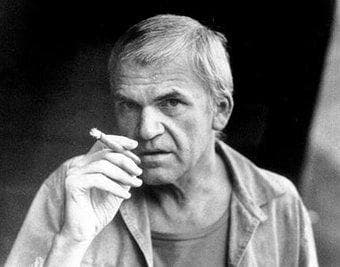
Milan Kundera is a Czech-born French writer. Kundera went into exile in France in 1975, acquiring citizenship in 1981. His Czech citizenship was revoked in 1979 and restored in 2019. He "sees himself as a French writer and insists his work should be studied as French literature and classified as such in book stores".
Jeff Olson
4.4
Thomas Sowell
4.4
Walter Brueggemann
4.3

Rhonda Byrne
4.3

Robin Wall Kimmerer
4.3
George S. Clason
4.3
Elliot Aronson
4.3

Joseph Campbell
4.3