BookBrief
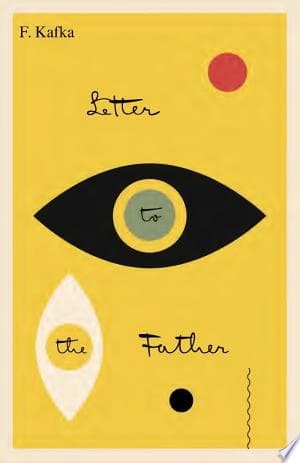
Letter to the Father/Brief an den Vater cover
Archivist's Choice

Letter to the Father/Brief an den Vater

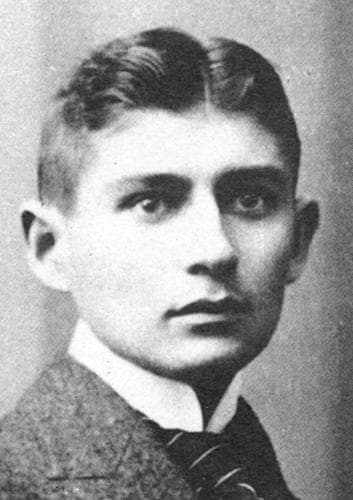
Franz Kafka (2015)

Genre

General

Reading Time

12 Minutes

Key Themes

See below

Track Your Reading

Sign in to track this book

In a piercing, posthumously revealed confession, Franz Kafka examines the stifling paternal authority and deep alienation that shaped his life and art, showing the unbridgeable gap between a son's soul and a father's expectations.

Core Idea

Kafka's "Letter to His Father" is a profound and agonizing exploration of the dysfunctional relationship between a son and his overbearing father, Hermann Kafka. Written in 1919 but never delivered, the letter serves as an attempt by Franz to articulate the psychological torment and deep-seated feelings of inadequacy, guilt, and resentment that stemmed from his father's perceived tyranny, emotional abuse, and lack of understanding. It delves into the formation of Kafka's personality, his literary aspirations, and his inability to marry, all of which he attributes, directly or indirectly, to the crushing weight of his father's authority and critical judgment. The letter is a meticulous self-analysis and a detailed indictment, revealing how Hermann's robust, practical, and often boisterous nature overshadowed and intimidated Franz's sensitive, intellectual, and physically frail disposition. Kafka uses the letter to justify his own perceived failures and shortcomings, presenting his father as the primary cause of his profound alienation and inability to find happiness or fulfillment. It's a testament to the enduring impact of parental influence and a poignant cry for understanding and validation that never found its intended recipient.
Difficulty
Medium

Core idea

The central argument and framework that powers the entire book.

Kafka's "Letter to His Father" is a profound and agonizing exploration of the dysfunctional relationship between a son and his overbearing father, Hermann Kafka. Written in 1919 but never delivered, the letter serves as an attempt by Franz to articulate the psychological torment and deep-seated feelings of inadequacy, guilt, and resentment that stemmed from his father's perceived tyranny, emotional abuse, and lack of understanding. It delves into the formation of Kafka's personality, his literary aspirations, and his inability to marry, all of which he attributes, directly or indirectly, to the crushing weight of his father's authority and critical judgment.

The letter is a meticulous self-analysis and a detailed indictment, revealing how Hermann's robust, practical, and often boisterous nature overshadowed and intimidated Franz's sensitive, intellectual, and physically frail disposition. Kafka uses the letter to justify his own perceived failures and shortcomings, presenting his father as the primary cause of his profound alienation and inability to find happiness or fulfillment. It's a testament to the enduring impact of parental influence and a poignant cry for understanding and validation that never found its intended recipient.

At a glance

Difficulty

Medium

Key Takeaways

1

The Father as an Overwhelming Force

Hermann Kafka's physical and emotional dominance shaped Franz's entire existence.

Quote

From this you concluded that I had no will, and if I did, it was ridiculous; from my point of view, I was terrified of you.

Kafka describes his father's powerful presence: his size, loud voice, and confidence. This made young Franz feel small, weak, and inadequate. He calls his father's words 'judgments' and his actions displays of strength. This constant feeling of being overshadowed led to self-doubt, anxiety, and guilt. The letter suggests this overwhelming paternal presence was not mean-spirited but a natural expression of Hermann's personality, which nonetheless crushed Franz's emerging self-assertion. This left him struggling his whole life to define...

Supporting evidence

Kafka's vivid descriptions of his father's physical stature and the 'unassailable' logic of his pronouncements, contrasted with his own perceived weakness and 'stammering' attempts at communication.

Apply this

Understanding how dominant figures in childhood can inadvertently stunt emotional development and self-esteem, leading to long-term psychological patterns. It highlights the importance of creating space for children's independent voices.

2

The Paradox of Unconditional Love and Crushing Criticism

Kafka perceived his father's love as conditional on conformity, leading to a profound sense of alienation.

Quote

I was a timid child, and you were a strong man, so I would have had to make a tremendous effort to resist you.

This is one of the book's best insights. Kafka recognizes his father's affection and support but argues this love was tied to Hermann's expectations. Any deviation from these—Franz's writing, his vegetarianism, his perceived weakness—was met with criticism, ridicule, or dismissal. This created a paradox: love was there, but it felt conditional, dependent on Franz becoming an ideal he could not reach. The son felt unworthy of his father's acceptance, leading to a deep sense of being an outsider, even in his own family. This pattern hel...

Supporting evidence

Kafka's recounting of his father's reactions to his writing, his engagement, and his general 'unmanliness,' often expressed through sarcastic remarks like 'always reading books.'

Apply this

Recognizing that even well-intentioned parental love, when coupled with excessive criticism or rigid expectations, can foster deep-seated insecurity and a sense of not being 'enough' in children. It prompts reflection on the nuances of expressing love and acceptance.

3

The 'Kafkaesque' as a Personal Reality

The letter reveals the biographical roots of the absurd, bureaucratic, and oppressive worlds in Kafka's fiction.

Quote

My writing was about you; all I did there was to bewail what I could not bewail upon your breast.

The 'Letter to the Father' is a key to understanding the origins of the 'Kafkaesque' in his literature. The constant feeling of being judged, the unexplained guilt, the powerful authority figures, the useless attempts at communication, and the confusing logic that rules one's life—all these elements, common in works like 'The Trial' or 'The Metamorphosis,' are clear in Kafka's description of his relationship with Hermann. The father becomes the ultimate, unchallengeable authority, whose rules and judgments, however random, must be fol...

Supporting evidence

Kafka explicitly states his writing was a direct response to his inability to express himself to his father, effectively turning his personal torment into his artistic subject matter.

Apply this

It offers a profound insight into the interplay between an artist's personal life and their creative output, demonstrating how deep-seated psychological conflicts can fuel enduring artistic themes. It encourages looking for biographical connections in literature.

4

The Unbridgeable Communication Gap

Despite the letter's length, it underscores the inherent impossibility of genuine dialogue between father and son.

Quote

It is just that you are incapable of speaking in a calm, reasonable manner, and I am incapable of listening to you when you are not.

The act of writing such a long, detailed letter—which Kafka never sent—shows the impossible communication barrier. Kafka explains that his father often communicated through commands, sarcasm, or dismissive statements, leaving no room for a son's nuanced reply. Conversely, Franz's own shyness and fear made him unable to express his feelings directly. This creates a tragic cycle: the father's style prevented open talk, and the son's fear maintained the silence. The letter itself becomes a substitute for a conversation that could never h...

Supporting evidence

The fact that the letter was not delivered, combined with Kafka's detailed analysis of their conversational patterns, where his father's words were 'blows' and his own were 'trembling.'

Apply this

Illustrates the destructive patterns of poor communication within families, where fear, dominance, and lack of active listening can create chasms that are difficult, if not impossible, to bridge. It emphasizes the importance of empathy in dialogue.

5

Guilt and Self-Blame as Internalized Oppression

Kafka absorbed his father's criticisms, leading to a pervasive sense of personal failure and guilt.

Quote

I had to accept the judgment that I was a failure, and not just in your eyes, but in the eyes of the whole world.

A recurring idea is Kafka's deep sense of guilt, which he attributes directly to his father. Hermann's criticisms, whether direct or implied, were taken by Franz not as mere disagreements but as fundamental flaws in his character. This led to a lifelong struggle with self-worth, where any personal failing, real or imagined, was magnified. The letter shows how this internalized guilt became a self-perpetuating cycle, harming his relationships, his career, and his general happiness. He felt constantly indebted and inadequate, always see...

Supporting evidence

Kafka's detailed accounts of his father's specific criticisms (e.g., about his job, his health, his vegetarianism) and his own subsequent feelings of shame and inadequacy.

Apply this

Highlights how parental criticism, even if intended to motivate, can be internalized as profound self-blame, leading to chronic anxiety and low self-esteem in adulthood. It underscores the psychological impact of constant negative reinforcement.

6

The Father as a Mirror of the World's Injustice

Hermann Kafka became a microcosm for Franz of all arbitrary and overwhelming authority.

Quote

For me, you had the mysterious quality that all tyrants possess, whose right is based on their mere existence.

Kafka turns his personal struggle with his father into a universal comment on power dynamics. Hermann, for Franz, was not just a father; he was the first and strongest example of authority that felt arbitrary, overwhelming, and unchallengeable. This early experience shaped Franz's view of all institutions and power figures—employers, government, even God. He saw the world as unfair, governed by unclear rules and wielded by figures who demanded obedience without explanation or empathy. This view runs through his fiction, where characte...

Supporting evidence

Kafka's explicit comparison of his father to a 'tyrant' and his analysis of how his father's 'right' seemed to stem from his mere existence, mirroring the power structures in his novels.

Apply this

Encourages a critical examination of how early experiences with authority figures can profoundly influence one's perception of societal structures and power dynamics. It offers a lens for understanding cynicism towards institutions.

7

The Quest for Forgiveness and Absolution

Despite the accusations, the letter is also a desperate, unspoken plea for understanding and reconciliation.

Quote

Don't misunderstand me, I don't mean that you would have been able to make me happy. But you would have been able to make me less unhappy.

While seemingly an accusation, the 'Letter to the Father' also functions as a deep, if indirect, plea for his father's understanding and, perhaps, forgiveness. Kafka carefully lists his complaints not purely out of spite, but seemingly to explain the reasons for his own perceived failures and unhappiness. He is not seeking a retraction of past wrongs, but rather an acknowledgment of Hermann's profound impact. The letter is a final, desperate attempt to close the emotional gap, to explain 'why' things were the way they were, and to see...

Supporting evidence

The sheer effort and detail put into the letter, even knowing it might not be read, suggests a profound need for the truth to be articulated and potentially understood.

Apply this

Reveals the complex motivations behind confronting past familial trauma, often stemming from a deep-seated need for understanding and emotional closure, even when direct reconciliation seems impossible. It highlights the therapeutic value of articulation.

8

The Burden of Inheritance and Legacy

Kafka grapples with the psychological and genetic inheritance from his father, both desired and feared.

Quote

I was utterly dependent on you, and yet I was also utterly rebellious against you.

Kafka explores the complex nature of inheritance, not just of possessions, but of personality traits, fears, and life paths. He acknowledges parts of his father he admires (his strength, vitality, business skill) but also those he deeply fears inheriting (his temper, his perceived insensitivity). This creates an internal conflict: a desire to be strong and capable like his father, yet a simultaneous rejection of the very qualities that made Hermann dominant. The letter shows a struggle to form an independent identity while constantly ...

Supporting evidence

Kafka's detailed self-analysis contrasting his own perceived weaknesses with his father's strengths, and his awareness of how he both emulated and rebelled against his father's characteristics.

Apply this

Offers insight into the universal struggle of children to define themselves against, or in relation to, their parents' legacies, grappling with both positive and negative inherited traits and expectations. It underscores the weight of family history.

9

The Unsent Letter as a Literary Act

The letter's undelivered status transforms it from a personal document into a profound literary artifact.

Quote

It is a letter that no one will ever read, and yet it is written for someone.

The fact that Kafka's mother kept the letter and returned it to him is important. This act changes what began as a personal confession and accusation into a work of art, a significant literary document. Its unsent status means it was never a real dialogue, but rather a monologue, a self-exploration, and a carefully built argument. It confirms the impossibility of the desired communication, and in doing so, it goes beyond its immediate biographical context. This makes it not just a 'letter' but a piece of literature that offers unique ...

Supporting evidence

The historical fact of the letter not being delivered and subsequently becoming known to the public through Max Brod, Kafka's literary executor.

Apply this

Highlights how the author's personal struggles, when articulated with such precision and depth, can transcend individual experience to become universal art, regardless of their original intent or recipient. It emphasizes the power of writing as a form of self-discovery and expression.

Critical analysis

Notable Quotes

Quiz

Test Your Knowledge

Ready to see how well you understood this book? Take our interactive quiz with 10 questions.

10
Questions
~5
Minutes
?
Best Score

Key Questions (FAQ)

Kafka's 'Letter to the Father' is a deeply personal and unflinching examination of his complex and strained relationship with his overbearing father. Written in 1919, it explores themes of guilt, inadequacy, and the profound impact of paternal authority on the son's psyche.

About the author

Franz Kafka

Franz Kafka was a German-speaking Bohemian novelist and short-story writer based in Prague, who is widely regarded as one of the major figures of 20th-century literature. His work fuses elements of realism and the fantastic. It typically features isolated protagonists facing bizarre or surrealistic predicaments and incomprehensible socio-bureaucratic powers. It has been interpreted as exploring themes of alienation, existential anxiety, guilt, and absurdity. His best known works include the novella The Metamorphosis and novels The Trial and The Castle. The term Kafkaesque has entered English to describe absurd situations like those depicted in his writing.