BookBrief
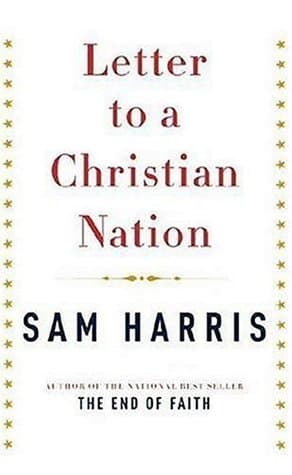
Letter to a Christian Nation cover
Archivist's Choice

Letter to a Christian Nation

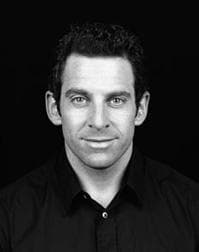
Sam Harris (2006)

Genre

Politics / Spirituality / Science / Philosophy

Reading Time

90-120 min

Key Themes

See below

Track Your Reading

Sign in to track this book

Sam Harris critiques fundamentalist Christianity, challenging its role in public life with arguments about science, ethics, and the link between faith and violence.

Core Idea

Sam Harris directly challenges Christian morality and ideas, arguing that faith is a dangerous illusion that harms morality, reason, and science. He says that following religious rules, especially biblical literalism, leads to absurd beliefs, causes violence, and stops the development of a rational, secular ethics needed for global problems. Harris believes religious moderation is a myth because it supports the extremism it tries to avoid. He advocates for reason and scientific understanding as the only reliable way to moral truth and societal well-being.
Reading time
90-120 min
Difficulty
Easy
✓ Read this if...
You are a Christian questioning your faith, an atheist seeking concise arguments against religious dogma, or someone interested in a direct, confrontational critique of religious influence in modern society.
✗ Skip this if...
You are easily offended by direct challenges to religious beliefs, are looking for a nuanced theological discussion, or prefer a less polemical approach to the topic of religion and secularism.

Core idea

The central argument and framework that powers the entire book.

Sam Harris directly challenges Christian morality and ideas, arguing that faith is a dangerous illusion that harms morality, reason, and science. He says that following religious rules, especially biblical literalism, leads to absurd beliefs, causes violence, and stops the development of a rational, secular ethics needed for global problems. Harris believes religious moderation is a myth because it supports the extremism it tries to avoid. He advocates for reason and scientific understanding as the only reliable way to moral truth and societal well-being.

At a glance

Reading time

90-120 min

Difficulty

Easy

Read this if...

You are a Christian questioning your faith, an atheist seeking concise arguments against religious dogma, or someone interested in a direct, confrontational critique of religious influence in modern society.

Skip this if...

You are easily offended by direct challenges to religious beliefs, are looking for a nuanced theological discussion, or prefer a less polemical approach to the topic of religion and secularism.

Key Takeaways

1

Faith Undermines Morality

Moral reasoning based on dogma is inherently flawed and dangerous.

Quote

Faith is nothing more than the license religious people give one another to believe things for which there is no evidence.

Harris argues that faith—believing things without evidence or despite it—is a poor basis for morality. When moral judgments come from old texts or divine commands, they become rigid, often cruel, and resistant to reason or correction. This leads to a fixed moral system where old rules, like those about homosexuality or women's roles, are defended not by their value but by their supposed divine origin. True morality, Harris says, should be based on human well-being and suffering, open to change through reason and empathy, not unchangin...

Supporting evidence

Harris points to biblical commands for stoning disobedient children or the sanctioning of slavery, arguing that if these are taken as divine commands, they either expose God as immoral or require contorted justifications that undermine moral clarity. He also highlights the Christian notion of 'original sin' and vicarious redemption as morally unintuitive.

Apply this

Evaluate moral claims not by their source (e.g., 'God said it') but by their consequences for human well-being and their logical coherence. Engage in ethical discussions by appealing to reason, empathy, and evidence rather than scriptural authority. Challenge the assumption that faith is a necessary prerequisite for moral behavior.

moral-relativismsecular-ethicsdogma
2

The Absurdity of Biblical Literalism

Interpreting ancient texts literally leads to intellectual and moral incoherence.

Quote

The Bible is a chaos of contradictory rules and moral injunctions.

Harris examines the mental effort needed for contemporary Christians to believe the Bible is literally true. He points out many scientific, historical, and logical problems in biblical texts. From the creation story contradicting modern science to inconsistencies in the Gospels about Jesus's life, death, and resurrection, Harris argues that literal interpretation leads to intellectual dishonesty. He also notes the moral horrors allowed or commanded in the Old Testament, which fundamentalists must either ignore, selectively interpret, ...

Supporting evidence

Harris cites the creation story (Genesis) versus evolution, the global flood narrative (Noah's Ark) versus geology, and the numerous discrepancies between the Gospels concerning key events in Jesus's life. He also brings up explicit Old Testament commands for genocide and slavery.

Apply this

When encountering religious texts, apply critical thinking and historical context. Question claims of divine inspiration or inerrancy by comparing them against scientific understanding, historical fact, and internal consistency. Recognize that selective interpretation is a common tactic to preserve belief in the face of contradictory evidence.

biblical-criticismscientific-literacyhermeneutics
3

Religion's Link to Violence

Faith, particularly its absolute certainty, fuels conflict and hinders peace.

Quote

The problem with religion, as with other ideologies, is that it can make otherwise sane people do insane things.

Harris directly challenges the common idea that religion brings peace. He argues that while many religious people are peaceful, the core ideas of faith—especially belief in exclusive divine truth and the promise of eternal reward or punishment—strongly motivate violence. When followers believe they have absolute truth, revealed by God, and that those who disagree are not just wrong but condemned, compromise becomes impossible. The 'us vs. them' mindset grows, and even small theological differences can cause deadly conflicts. Harris sa...

Supporting evidence

Harris points to the history of religious wars (Crusades, Thirty Years' War), ongoing conflicts in the Middle East, and religiously motivated terrorism (9/11) as examples where faith provided the primary justification for violence. He also discusses how religious certainty prevents rational resolution of conflicts.

Apply this

Analyze conflicts not just for political or economic roots, but for underlying ideological certainties, especially religious ones. Challenge claims that a particular religion is inherently peaceful by examining its historical record and foundational texts. Advocate for a secular framework in international relations and conflict resolution that prioritizes shared humanity over sectarian dogma.

religious-extremisminterfaith-dialoguesecularism
4

The Folly of Intelligent Design

Creationism disguised as science is intellectually bankrupt and anti-scientific.

Quote

Intelligent design is not science; it is a religious doctrine that has been dressed up in a lab coat.

Harris dismisses Intelligent Design (ID) as a clear attempt to bring creationism into science education under a new name. He argues that ID offers no testable ideas, makes no predictions, and provides no way for its proposed 'designer' to work. Instead, it relies on 'irreducible complexity' arguments, which evolutionary biology has disproven. Harris emphasizes that ID is a 'god of the gaps' argument, giving credit to a designer for whatever science has not yet fully explained, instead of engaging in real scientific inquiry. He highlig...

Supporting evidence

Harris references the concept of 'irreducible complexity' (e.g., bacterial flagellum) as presented by ID proponents and explains how evolutionary mechanisms (like co-option of parts) provide naturalistic explanations. He also touches on the legal rulings against teaching ID in public schools.

Apply this

Identify and critique 'god of the gaps' arguments wherever they appear. Defend the integrity of scientific education by advocating for the exclusive teaching of evidence-based theories like evolution. Understand that science is a process of inquiry, not a collection of immutable facts, and that ID fundamentally misunderstands this process.

creationismevolutionary-biologyscientific-method
5

The Myth of Religious Moderation

Moderate faith inadvertently enables fundamentalism by validating its core assumptions.

Quote

Religious moderation is the product of secular thinking and scriptural ignorance.

Harris argues that religious moderates, though often well-meaning, contribute to the problem. By saying their milder interpretations of scripture are the 'true' meaning of their faith, they unintentionally give legitimacy to the dogmatic framework that fundamentalists take literally. Moderates often pick and choose which parts of their holy texts to follow, creating their own religion, yet they still defend faith as a virtue and these texts as divinely inspired. This selective adherence, Harris believes, gives cover to extremists, let...

Supporting evidence

Harris points out that moderates rarely condemn the more violent or absurd passages in their holy books outright, but rather allegorize them or simply ignore them, while still defending the book's overall divine origin. He argues that this 'polite hypocrisy' validates the entire enterprise of faith.

Apply this

Challenge the notion that 'moderate' religion is inherently harmless. Engage with religious moderates by asking them to account for the more problematic aspects of their faith's scripture. Advocate for openly admitting that certain aspects of religious traditions are outdated or morally repugnant, rather than trying to reinterpret them into benign forms.

fundamentalismreligious-pluralismsecular-humanism
6

The Illusion of Free Will (and its Moral Implications)

Our actions are determined by prior causes, challenging traditional notions of blame and punishment.

Quote

Free will is an illusion. Our wills are simply not of our own making.

While not the main point of Letter to a Christian Nation, Harris often discusses his view that free will, as commonly understood, is an illusion. He argues that our thoughts, intentions, and actions come from earlier causes—a complex mix of genetics, environment, and brain activity—over which we have no ultimate control. This view challenges traditional religious ideas of sin, punishment, and personal responsibility. If we are not truly free to choose our actions, then the idea of a just God condemning people to eternal damnation fo...

Supporting evidence

Harris references neuroscientific findings that show brain activity preceding conscious decisions, suggesting our 'choices' are made before we are aware of them. He also uses thought experiments about how different initial conditions would lead to different outcomes, regardless of a person's 'will'.

Apply this

Re-evaluate concepts of personal blame and moral responsibility in light of the determined nature of our actions. Cultivate greater empathy for others by recognizing the vast array of factors influencing their behavior. Advocate for justice systems that prioritize rehabilitation and societal safety over punitive retribution, acknowledging the limited role of 'free will' in criminal behavior.

determinismcompatibilismneuroscience
7

The Superiority of Secular Ethics

A morality based on human well-being is more robust and adaptable than faith-based ethics.

Quote

The only thing that ultimately matters is the well-being of conscious creatures.

Harris advocates for a secular, utilitarian ethical system based on the well-being of conscious beings. He argues that morality is not arbitrary or subjective, but can be objectively discussed and improved based on what causes suffering and what promotes flourishing. Unlike religious ethics, which are often rigid and tied to old, sometimes harsh, texts, secular ethics can change with new knowledge and societal conditions. This approach allows for a universal morality that crosses cultural and religious boundaries, as all humans share ...

Supporting evidence

Harris contrasts the moral progress on issues like slavery, women's rights, and LGBTQ+ rights in secular societies with the often-regressive stances taken by religiously conservative groups who appeal to scripture.

Apply this

Approach ethical dilemmas by asking: 'What course of action will minimize suffering and maximize well-being for all involved?' Engage in interdisciplinary study, drawing on psychology, neuroscience, and sociology, to better understand the conditions for human flourishing. Advocate for public policies based on empirical evidence and a commitment to universal human rights, rather than religious doctrine.

utilitarianismhumanismmoral-philosophy
8

Religion as a Barrier to Scientific Progress

Faith-based opposition to scientific inquiry obstructs critical advancements for humanity.

Quote

To believe that the Bible contains a perfect description of the cosmos is to take a position that can only be defended by willfully ignoring a mountain of evidence.

Harris highlights how religious dogma actively slows scientific progress, especially in areas seen as challenging religious stories. The most obvious example is opposition to stem-cell research, where possible cures for serious diseases are sacrificed for theological objections about the 'soul' or the sacredness of early embryonic life. He argues that such religiously motivated stances are not only irrational but morally wrong, actively choosing suffering over the pursuit of knowledge and relief. Furthermore, the push for Intelligent ...

Supporting evidence

Harris specifically discusses the political and religious opposition to embryonic stem-cell research in the US, citing it as an example of faith directly obstructing medical progress. He also mentions the ongoing battle over evolution in schools.

Apply this

Advocate for public policy decisions to be based on scientific evidence and expert consensus, free from religious interference. Support funding for scientific research, especially in areas that challenge religious dogma. Educate others on the importance of scientific literacy and critical thinking as essential tools for societal progress.

science-denialbioethicspublic-policy
9

The Dangers of Religious Certainty

Absolute conviction in unproven beliefs is intellectually dangerous and socially corrosive.

Quote

A world of people who are certain of their beliefs, without evidence, is a world of conflict.

A repeated idea in Harris's work is the danger of religious certainty. He believes that the conviction of having absolute, divinely revealed truth, without needing evidence or critical review, leads to intolerance, conflict, and intellectual stagnation. When people are certain they are right because God told them so, they become immune to reasoned argument, evidence, and empathetic persuasion. This certainty fuels tribalism, demonizes outsiders, and makes compromise impossible. Harris argues that this mental attitude, far from being a...

Supporting evidence

Harris refers to the 'certainty' of suicide bombers, religious inquisitors, and those who condemn others based on scriptural interpretations. He contrasts this with the scientific method, which embraces doubt and revision.

Apply this

Cultivate intellectual humility, recognizing that all beliefs, especially those without empirical support, are open to revision. Challenge claims of absolute certainty by asking for evidence and logical justification. Foster environments where skepticism and critical inquiry are valued, rather than suppressed by dogmatic pronouncements.

epistemologycritical-thinkingdogmatism
10

The Need for Rationality in Public Life

Societal progress demands decisions based on reason and evidence, not religious conviction.

Quote

The problem with religion is that it allows people to believe things that are not true, and then to act on them.

Harris concludes with a strong call for rationality to guide public discussion and policy. He argues that issues like climate change, poverty, disease, and international conflict cannot be effectively solved when many people base their understanding of the world on old myths and unproven beliefs. When politicians and public figures appeal to faith rather than facts, it lowers the quality of debate and leads to poor, often harmful, results. Harris asserts that a healthy society needs citizens who can think critically, are willing to up...

Supporting evidence

Harris points to the political influence of religious conservatives on issues like climate change denial, stem cell research, and sex education, arguing these are examples where faith trumps evidence to society's detriment.

Apply this

Demand that public officials base their decisions on evidence and expert consensus, not religious beliefs. Engage in and support secular advocacy groups that promote reason and science in public policy. Encourage critical thinking and media literacy to discern facts from faith-based claims in public discourse.

secular-governmentevidence-based-policypublic-discourse

Critical analysis

Notable Quotes

The problem with religion, then, is not that it is a bad answer to the meaning of life, but that it is a bad question.

Harris critiques religion's foundational premise regarding ultimate meaning.

The idea that there is a Christian way to build a bridge, or a Christian way to fly an airplane, is simply a category error.

Harris argues against the notion of 'Christian' approaches to empirical or technical tasks.

To say that a man is a Christian is not to say that he is a good man, or a bad man, but merely that he is deluded.

Harris directly challenges the moral implications often associated with religious identity.

The faithful have been encouraged to believe that the very possibility of morality depends upon the truth of their preposterous myths.

Harris discusses the common religious claim that morality is impossible without God.

The only thing more dangerous than an ignorant man is an ignorant man who is also religious.

Harris warns about the combination of ignorance and religious dogma.

Science, in the broadest sense, is the pursuit of truth.

Harris defines the fundamental goal and nature of scientific inquiry.

If it is true that a Christian's faith makes him a moral person, then it is also true that the absence of such faith makes him an immoral one.

Harris points out the logical conclusion if religious faith is the sole basis for morality.

The Bible is a chaos of contradictory rules and archaic pronouncements.

Harris characterizes the biblical text as inconsistent and outdated.

The problem with faith is that it is a conversation in which the words 'truth' and 'falsehood' have lost their meaning.

Harris argues that faith bypasses objective truth claims.

We have a moral obligation to reject faith and embrace reason.

Harris asserts the ethical imperative to prioritize rationality over belief without evidence.

Religious moderation is the product of secular reason and scientific understanding.

Harris suggests that moderate religious views are influenced by non-religious thought.

The fact that a person is religious does not mean that he is not a good person. It merely means that he has embraced some ideas that are not true.

Harris distinguishes between a person's character and their religious beliefs.

The future of civilization depends on our ability to unbind ourselves from the shackles of religious dogma.

Harris presents a strong claim about the necessity of moving beyond religious constraints for societal progress.

If we want to build a truly moral society, we must do so on a foundation of reason, compassion, and an honest understanding of the human condition.

Harris proposes an alternative, secular basis for constructing a moral society.

Quiz

Test Your Knowledge

Ready to see how well you understood this book? Take our interactive quiz with 10 questions.

10
Questions
~5
Minutes
?
Best Score

Key Questions (FAQ)

Sam Harris's main argument is a rational refutation of fundamentalist Christian beliefs, challenging the influence of faith on public life. He contends that many core tenets of Christianity are not supported by reason or evidence and pose risks to societal progress and ethical discourse.

About the author