BookBrief
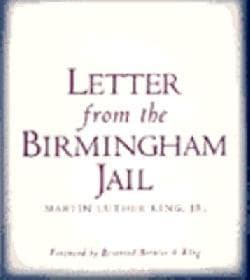
Letter from the Birmingham Jail cover
Archivist's Choice

Letter from the Birmingham Jail

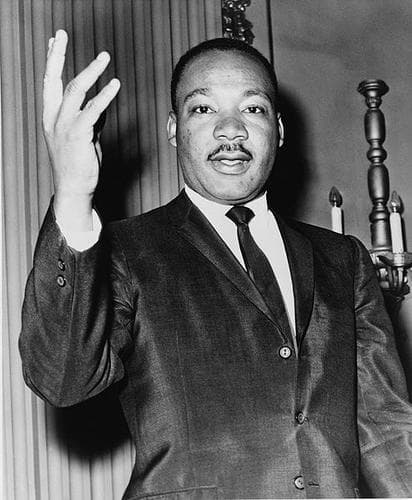
Martin Luther King Jr. (1963)

Genre

Politics / History / Philosophy

Reading Time

35 min

Key Themes

See below

Track Your Reading

Sign in to track this book

From a Birmingham jail cell, Martin Luther King Jr. writes a powerful defense of nonviolent resistance, turning a critique into a lasting call for racial justice and human dignity.

Core Idea

Martin Luther King Jr.'s "Letter from Birmingham Jail" defends nonviolent direct action as a necessary and moral response to unjust laws and systemic racism. King argues that oppressors never freely grant freedom; the oppressed must demand it. He addresses criticisms from white moderates, stating that their call for patience denies justice. He believes that creating constructive tension through direct action forces negotiation and societal change. He stresses that all communities are connected and that people have a moral duty to disobey unjust laws, defining justice through natural and divine law.
Reading time
35 min
Difficulty
Medium
✓ Read this if...
You want to understand the philosophical and moral underpinnings of the Civil Rights Movement's nonviolent direct action, or are interested in the ethics of civil disobedience and the urgency of fighting injustice.
✗ Skip this if...
You are looking for a historical narrative of the Civil Rights Movement rather than a deep dive into its core philosophical defense, or prefer a less dense, argumentative text.

Core idea

The central argument and framework that powers the entire book.

Martin Luther King Jr.'s "Letter from Birmingham Jail" defends nonviolent direct action as a necessary and moral response to unjust laws and systemic racism. King argues that oppressors never freely grant freedom; the oppressed must demand it. He addresses criticisms from white moderates, stating that their call for patience denies justice. He believes that creating constructive tension through direct action forces negotiation and societal change. He stresses that all communities are connected and that people have a moral duty to disobey unjust laws, defining justice through natural and divine law.

At a glance

Reading time

35 min

Difficulty

Medium

Read this if...

You want to understand the philosophical and moral underpinnings of the Civil Rights Movement's nonviolent direct action, or are interested in the ethics of civil disobedience and the urgency of fighting injustice.

Skip this if...

You are looking for a historical narrative of the Civil Rights Movement rather than a deep dive into its core philosophical defense, or prefer a less dense, argumentative text.

Key Takeaways

1

The Urgency of Now

Justice delayed is justice denied.

Quote

Frankly, I have yet to engage in a direct-action campaign that was 'well timed' in the view of those who have not suffered unduly from the disease of segregation. For years now I have heard the word 'Wait!' It rings in the ear of every Negro with piercing familiarity. This 'Wait' has almost always meant 'Never.' We must come to see, with one of our distinguished jurists, that 'justice too long delayed is justice denied.'

King strongly disagrees with the idea that civil rights protests are poorly timed. He argues that those who do not directly experience oppression often do not understand its deep psychological and physical harm. The call to 'wait' is a hidden way to keep things as they are, meaning 'never' for those suffering. King emphasizes that basic human rights are not subject to convenient political schedules; denying them causes immediate and ongoing harm that needs urgent correction. Justice itself implies promptness, and delaying it is an act...

Supporting evidence

King's direct experience with the constant deferment of civil rights, the 'wait' that has been echoed for generations, and his appeal to the legal maxim 'justice too long delayed is justice denied.'

Apply this

When confronting injustice, recognize that the burden of proof for 'bad timing' often rests with those who benefit from the existing power structure. Do not allow calls for patience to derail necessary action, especially when fundamental rights are at stake. Prioritize the immediate needs of the oppressed over the comfort of the privileged.

justice-delayedurgency-of-justicenonviolent-resistance
2

The Morality of Disobedience

An unjust law is no law at all.

Quote

A just law is a man-made code that squares with the moral law or the law of God. An unjust law is a code that is out of harmony with the moral law. To put it in the terms of St. Thomas Aquinas: An unjust law is a human law not rooted in eternal law and natural law. Any law that uplifts human personality is just. Any law that degrades human personality is unjust.

King offers a clear philosophical reason for civil disobedience, separating just from unjust laws. He states that a just law aligns with moral, natural, and eternal law, upholding human dignity. An unjust law, conversely, lowers human personality and is immoral, thus having no true legal or moral authority. This difference is important: it not only allows but morally requires people to disobey fundamentally unjust laws. He argues that one has a moral duty to disobey unjust laws, just as one has a moral duty to obey just laws. This is ...

Supporting evidence

King references St. Thomas Aquinas's philosophy on natural law and eternal law, and applies it to the specific context of segregation laws, which he argues degrade human personality.

Apply this

Critically evaluate the moral basis of laws and policies. If a law degrades human dignity, it is morally imperative to challenge it through nonviolent means. This requires discernment and courage, prioritizing universal moral principles over legal codes that violate those principles.

civil-disobedienceunjust-lawsmoral-lawnatural-law
3

Four Steps to Nonviolent Action

Strategic preparation for moral confrontation.

Quote

In any nonviolent campaign there are four basic steps: collection of the facts to determine whether injustices exist; negotiation; self-purification; and direct action.

King details a structured process for nonviolent direct action, showing it is not impulsive. First, facts are gathered to objectively confirm the existence of injustices. Next is negotiation, a serious attempt to resolve issues through discussion. Importantly, 'self-purification' happens before direct action, preparing participants mentally and spiritually to endure potential violence without fighting back, committing to nonviolence. Only after these steps, when all other options are used, does direct action begin. This careful method...

Supporting evidence

King details the specific steps undertaken in Birmingham: fact-finding about racial injustice, failed negotiations with city leaders, and workshops on nonviolence for protestors.

Apply this

Before engaging in any form of protest or advocacy, ensure thorough research, attempt negotiation in good faith, and prepare oneself (and one's group) for the potential challenges and commitment to the chosen methodology. This structured approach increases effectiveness and moral authority.

nonviolent-campaigndirect-actionself-purificationnegotiation
4

The Myth of Moderation

The white moderate is a greater stumbling block to justice than the white supremacist.

Quote

I have almost reached the regrettable conclusion that the Negro's great stumbling block in his stride toward freedom is not the White Citizen's Counciler or the Ku Klux Klanner, but the white moderate, who is more devoted to 'order' than to justice; who prefers a negative peace which is the absence of tension to a positive peace which is the presence of justice; who constantly says: 'I agree with you in the goal you seek, but I cannot agree with your methods of direct action.'

King sharply criticizes the white moderate, arguing that their passive inaction and focus on 'order' over 'justice' harm the civil rights cause more than open bigotry. While an extremist's hatred is clear and can be faced, the moderate's mild acceptance and constant calls for patience or 'better timing' quietly hinder progress. They support the goal of freedom but reject the necessary methods of direct action, effectively maintaining the injustice they claim to oppose. This 'negative peace' (no tension) is a false peace, hiding de...

Supporting evidence

King's letter is a direct response to white clergymen who, while not overtly racist, criticized his methods and called for patience, exemplifying the 'white moderate' he describes.

Apply this

Be wary of those who claim to support a cause but consistently criticize the methods necessary to achieve it, especially when those methods challenge comfortable norms. True allyship requires active support of effective strategies, even if they create discomfort or tension, rather than merely endorsing abstract goals.

white-moderatenegative-peacepositive-peacefalse-allyship
5

Creating Constructive Tension

Nonviolent direct action as a catalyst for negotiation.

Quote

Nonviolent direct action seeks to create such a crisis and foster such a tension that a community which has constantly refused to negotiate is forced to confront the issue. It seeks so to dramatize the issue that it can no longer be ignored.

King explains that nonviolent direct action is not an end in itself, but a strategy to create a crisis and 'constructive tension.' This tension is not violence, but a disruption of the comfortable status quo, forcing a resistant community to acknowledge and address injustices it has long ignored. The aim is to create a situation where negotiation, previously refused, becomes unavoidable. By making the issue visible through peaceful protest, the movement makes the unseen suffering of the oppressed undeniable, compelling those in power ...

Supporting evidence

The Birmingham campaign itself, which, through direct action, drew national attention and forced the city to address its deeply entrenched segregation after years of inaction.

Apply this

When facing entrenched resistance to change, consider how to create a 'constructive tension' that compels engagement without resorting to violence. This might involve peaceful demonstrations, boycotts, or other visible actions that disrupt complacency and force dialogue.

constructive-tensionnonviolent-strategycrisis-creationforced-negotiation
6

The Interconnectedness of Justice

Injustice anywhere is a threat to justice everywhere.

Quote

I am cognizant of the interrelatedness of all communities and states. I cannot sit idly by in Atlanta and not be concerned about what happens in Birmingham. Injustice anywhere is a threat to justice everywhere. We are caught in an inescapable network of mutuality, tied in a single garment of destiny. Whatever affects one directly, affects all indirectly.

King powerfully states the basic principle of universal justice: that one community's suffering affects all others. He rejects the idea of isolated injustices, arguing that humanity is linked in an 'inescapable network of mutuality.' An injustice in Birmingham is not just a local problem; it weakens justice everywhere, threatening everyone's rights and dignity. This connection means no one can be an outsider when injustice happens, as it ultimately diminishes everyone. This call for unity goes beyond geographical and social limits, re...

Supporting evidence

King's own presence in Birmingham, a city not his primary residence, demonstrates his commitment to this principle, as well as the national impact of local civil rights struggles.

Apply this

Expand your understanding of justice beyond your immediate community. Recognize that issues far from your direct experience can still impact the broader moral landscape and ultimately affect you. Cultivate empathy and solidarity with those facing injustice, understanding that their struggle is, in a profound sense, also yours.

universal-justiceinterconnectednessnetwork-of-mutualitysolidarity
7

The Church's Lost Opportunity

From a thermostat of social change to a thermometer of public opinion.

Quote

I have heard many ministers say: 'Those are social issues, with which the gospel has no real concern.' And I have watched many churches commit themselves to a completely otherworldly religion which makes a strange, un-Biblical distinction between body and soul, between the sacred and the secular.

King expresses deep disappointment with the white church and its leaders, believing they have largely failed their prophetic role. Instead of actively shaping society's moral climate, many churches have simply reflected public opinion and upheld the status quo. He criticizes their separation from social justice issues, often dividing the spiritual from the everyday, and prioritizing 'order' over righteousness. King regrets that the church, once a strong force for change, has become a defender of the established order, losing its moral...

Supporting evidence

King directly addresses his fellow clergymen's letter, their calls for patience, and their reluctance to actively support the civil rights movement, contrasting this with the early Christian church's revolutionary spirit.

Apply this

For religious institutions and individuals, critically examine whether your actions align with your stated moral principles, especially regarding social justice. Actively challenge complacency and strive to be a force for change ('thermostat') rather than merely reflecting societal norms ('thermometer').

church-and-justicereligious-hypocrisysocial-gospelmoral-authority
8

The Peril of Silence

History's judgment on those who did nothing.

Quote

History is the long and tragic story of the fact that privileged groups seldom give up their privileges voluntarily. Individuals may see the moral light and voluntarily give up their unjust posture; but, as Reinhold Niebuhr has reminded us, groups tend to be more immoral than individuals.

King acknowledges that privileged groups rarely give up their advantages willingly. While individuals might have moral insights, groups, as Reinhold Niebuhr observed, often resist ethical change more. This idea shows why direct action is needed to disrupt the power structures that benefit from injustice. It also serves as a warning: those who stay silent or inactive in the face of oppression, especially privileged groups, risk being judged harshly by history for their part, even if passive. In this context, inaction itself is an actio...

Supporting evidence

King references Reinhold Niebuhr's theological and philosophical insights on group morality, applying it to the historical patterns of privileged groups resisting change.

Apply this

Understand that societal change often requires active pressure, as those in power rarely yield it voluntarily. Do not assume that moral persuasion alone will suffice. Recognize the moral imperative to speak out and act against injustice, understanding that silence can be complicity, and history judges both actions and inactions.

privilege-and-powermoral-responsibilityreinhold-niebuhrhistorical-judgment
9

Transforming Suffering into Strength

Unearned suffering is redemptive.

Quote

I have tried to make clear that it is wrong to use immoral means to attain moral ends. But now I must affirm that it is just as wrong, or perhaps even more so, to use moral means to preserve immoral ends.

King mentions the power of 'unearned suffering'—the pain and hardship civil rights activists faced through nonviolent resistance. While he strongly opposes using immoral means for moral ends, he suggests that suffering, endured with dignity and commitment to a higher cause, can be a strong moral force. This suffering reveals the brutality of oppressors and mobilizes public opinion, ultimately helping the movement achieve moral victory. It shows human resilience and is a strategic part of nonviolent resistance, turning apparent weaknes...

Supporting evidence

The suffering endured by King and countless activists in jail, during beatings, and through other forms of persecution, which ultimately drew national and international sympathy and support for the movement.

Apply this

When facing adversity or suffering for a just cause, seek to frame it not as a defeat, but as a potential catalyst for greater moral impact. Use the experience to deepen conviction, expose injustice, and inspire others, transforming personal hardship into a collective force for good.

redemptive-sufferingnonviolent-resiliencemoral-strengthactivist-suffering
10

The Extremism of Love and Justice

Be an extremist for love, not hate.

Quote

So the question is not whether we will be extremists, but what kind of extremists we will be. Will we be extremists for hate or for love? Will we be extremists for the preservation of injustice or for the extension of justice?

King boldly reclaims the label 'extremist,' arguing that the real moral question is not if one is an extremist, but what kind of extremism one shows. He challenges critics to consider if they are extremists for hate and injustice, or for love and justice. This move redefines the negative idea of 'extremism' by connecting it with universal moral good. He suggests that in a world full of injustice, a passionate, firm commitment to love and justice is not only justified but necessary. This is a call for radical moral courage, to be unw...

Supporting evidence

King cites historical figures like Abraham Lincoln and Thomas Jefferson, who were considered 'extremists' in their time for their revolutionary ideas, to normalize and dignify the concept of 'extremism' for a just cause.

Apply this

Do not shy away from passionate commitment to moral causes simply because it might be labeled 'extreme.' Instead, ensure that your 'extremism' is rooted in love, justice, and human dignity. Be unwavering in advocating for fundamental rights, even when it challenges prevailing norms or comfortable moderation.

extremism-of-loveradical-justicemoral-couragereclaiming-extremism

Critical analysis

Notable Quotes

Injustice anywhere is a threat to justice everywhere. We are caught in an inescapable network of mutuality, tied in a single garment of destiny. Whatever affects one directly, affects all indirectly.

Responding to the criticism that he is an 'outsider' interfering in Birmingham.

We know through painful experience that freedom is never voluntarily given by the oppressor; it must be demanded by the oppressed.

Explaining why direct action is necessary and negotiation alone is insufficient.

For years now I have heard the word 'Wait!' It rings in the ear of every Negro with piercing familiarity. This 'Wait' has almost always meant 'Never.'

Addressing the argument that civil rights activists should wait for a 'more convenient season.'

A just law is a man-made code that squares with the moral law or the law of God. An unjust law is a code that is out of harmony with the moral law.

Defining the difference between just and unjust laws as justification for civil disobedience.

Any law that uplifts human personality is just. Any law that degrades human personality is unjust.

Further elaborating on the distinction between just and unjust laws.

I have consistently preached that nonviolence demands that the means we use must be as pure as the ends we seek.

Defending the methods of the civil rights movement against accusations of extremism.

Shallow understanding from people of good will is more frustrating than absolute misunderstanding from people of ill will.

Expressing his disappointment with white moderates who prioritize order over justice.

We will have to repent in this generation not merely for the hateful words and actions of the bad people but for the appalling silence of the good people.

Critiquing the inaction of white moderates and the church.

There are two types of laws: just and unjust. I would be the first to advocate obeying just laws. One has not only a legal but a moral responsibility to obey just laws. Conversely, one has a moral responsibility to disobey unjust laws.

Laying out the philosophical basis for civil disobedience.

I have almost reached the regrettable conclusion that the Negro's great stumbling block in his stride toward freedom is not the White Citizen's Counciler or the Ku Klux Klanner, but the white moderate, who is more devoted to 'order' than to justice.

Expressing his deep frustration with the white moderate's inaction and prioritizing of 'order'.

But the judgment of God is upon the church as never before. If today's church does not recapture the sacrificial spirit of the early church, it will lose its authenticity, forfeit the loyalty of millions, and be dismissed as an irrelevant social club with no meaning for the twentieth century.

Warning the church about its failure to live up to its moral calling.

Was not Jesus an extremist for love? -- 'Love your enemies, bless them that curse you, pray for them which despitefully use you.' Was not Amos an extremist for justice? -- 'Let justice roll down like waters and righteousness like an ever-flowing stream.'

Embracing the label of 'extremist' by associating it with historical figures and moral virtues.

I have no fear about the outcome of our struggle in Birmingham, even if our motives are at present misunderstood. We will reach the goal of freedom in Birmingham and all over the nation, because the goal of America is freedom.

Expressing optimism about the eventual success of the civil rights movement.

I hope this letter finds you strong in the faith. I also hope that circumstances will soon make it possible for me to meet each of you, not as an integrationist or a civil rights leader but as a fellow clergyman and a Christian brother.

Concluding the letter with a personal appeal to the clergymen.

Quiz

Test Your Knowledge

Ready to see how well you understood this book? Take our interactive quiz with 10 questions.

10
Questions
~5
Minutes
?
Best Score

Key Questions (FAQ)

The letter serves as a powerful defense of nonviolent civil disobedience and a critique of the white moderate's inaction in the fight for racial equality. King explains the urgency of the civil rights movement and the moral imperative to challenge unjust laws directly.

About the author