BookBrief
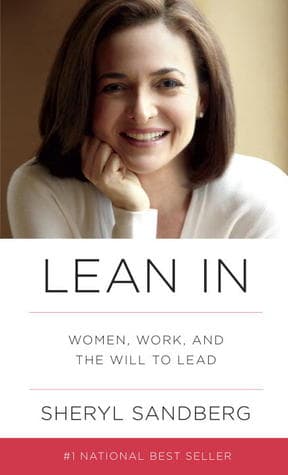
Lean In: Women, Work, and the Will to Lead cover
Archivist's Choice

Lean In: Women, Work, and the Will to Lead

Sheryl Sandberg (2013)

Genre

Business / Biography / Leadership / Memoir / Self-Help

Reading Time

12 Minutes

Key Themes

See below

Track Your Reading

Sign in to track this book

Sheryl Sandberg encourages women to overcome personal and external challenges to achieve leadership roles in their careers.

Core Idea

Sheryl Sandberg's "Lean In" argues that women are often held back in their careers not only by external societal barriers but also by internal factors, such as a lack of self-confidence, a tendency to underestimate their abilities, and a reluctance to take risks or seek leadership roles. Sandberg encourages women to actively pursue their ambitions, 'lean in' to opportunities, and challenge both personal and systemic obstacles to achieve professional success and equality. The book combines personal anecdotes, research, and practical advice to empower women to overcome these challenges and strive for leadership positions.
Difficulty
Easy

Core idea

The central argument and framework that powers the entire book.

Sheryl Sandberg's "Lean In" argues that women are often held back in their careers not only by external societal barriers but also by internal factors, such as a lack of self-confidence, a tendency to underestimate their abilities, and a reluctance to take risks or seek leadership roles. Sandberg encourages women to actively pursue their ambitions, 'lean in' to opportunities, and challenge both personal and systemic obstacles to achieve professional success and equality. The book combines personal anecdotes, research, and practical advice to empower women to overcome these challenges and strive for leadership positions.

At a glance

Difficulty

Easy

Key Takeaways

1

Sit at the Table

Women often underestimate their capabilities and shy away from leadership roles, literally and figuratively.

Quote

We need to encourage women to 'sit at the table,' to own their success, and to reach for opportunities rather than waiting to be asked.

Sandberg argues that women often hold back from opportunities. She uses the example of women choosing to sit on the sidelines of meetings, even when invited to the main table. This shows up as a lack of self-confidence, a tendency to credit success to luck, and a hesitation to ask for raises or promotions. She tells a story from her time at Google where senior women sat on the edge of a meeting, showing a common problem of women not asserting themselves. This argument is a strong part of the book, directly asking women to overcome the...

Supporting evidence

Observation of women choosing to sit on the periphery of meeting rooms at Google, even when senior.

Apply this

Actively seek out positions of influence, speak up in meetings, and confidently negotiate for what you deserve. Don't wait to be invited; make your presence known.

2

Make Your Partner a Real Partner

Achieving professional equality requires true equality in the division of labor at home.

Quote

The most important career choice you'll make is who you marry.

Sandberg says that the unequal sharing of housework and childcare stops women from moving up in their careers. She points to facts showing that women, even those working full-time, still do most of the household chores. This imbalance makes many women pull back from their careers, especially after having children. Her most important point here is that a truly supportive and equal partnership is key for a woman's career success. She shares personal stories about her late husband, Dave Goldberg, and how they made an effort to share resp...

Supporting evidence

Statistics on the unequal division of household labor and childcare; personal experience with her husband, Dave Goldberg.

Apply this

Have explicit conversations with your partner about sharing domestic and childcare responsibilities equally. Advocate for policies that support shared parenting, such as extended parental leave for fathers.

3

Don't Leave Before You Leave

Women often preemptively scale back their careers in anticipation of future family responsibilities.

Quote

Don't make decisions about your career until you have to. Don't 'leave before you leave.'

Sandberg notes that many women, even before having children, start making career choices that limit their potential. They might avoid challenging projects or turn down promotions because they expect future family demands. This 'leaving before you leave' idea means women often are not fully involved or advancing at key points in their careers, especially in their twenties and early thirties, precisely when men are moving ahead. She says that this early scaling back can really hurt long-term career growth, as it's harder to get momentum...

Supporting evidence

Observation of women declining opportunities or slowing down career progression in anticipation of motherhood.

Apply this

Stay fully engaged and ambitious in your career until a concrete reason necessitates a change. Don't preemptively limit your options; cross that bridge when you come to it.

4

The Jungle Gym, Not the Ladder

Career paths are rarely linear; embrace diverse experiences and lateral moves.

Quote

Careers are a jungle gym, not a ladder. There are many ways to get to the top of a jungle gym. The best way is to find a path that works for you.

Sandberg questions the old idea of a linear career 'ladder.' She suggests that a 'jungle gym' better shows how modern careers progress. This means valuing different experiences, moving sideways, and even taking temporary steps back if they lead to new skills or wider viewpoints. She shares her own varied path, from government to tech, showing how different roles built a strong set of skills. This idea is especially useful today, when adaptability and a wide range of skills are often more important than just moving up. It allows people...

Supporting evidence

Sandberg's own career path through diverse sectors (government, tech) and roles.

Apply this

Seek out roles that offer learning opportunities, even if they aren't direct promotions. Embrace lateral moves or temporary detours if they broaden your skill set or network.

5

It's a Marathon, Not a Sprint

Sustaining a career requires long-term planning, resilience, and recognizing phases of intense effort.

Quote

The professional journey is a marathon, not a sprint, and there will be times when you need to slow down, and times when you need to accelerate.

Sandberg stresses that a career, especially for women managing family duties, should be seen as a long-term effort with different levels of intensity. She admits there will be times when one might need to reduce work commitments, particularly around childbirth or early childcare, but highlights the importance of staying involved. The key is to manage expectations and understand that career growth is not always straight or constant. She argues that staying connected to the workforce, even with fewer hours, is vital for future re-entry ...

Supporting evidence

General observations on career longevity and the impact of life stages, particularly motherhood, on professional intensity.

Apply this

Plan your career with a long-term view, recognizing that there will be phases of acceleration and deceleration. Prioritize staying connected to your profession even during periods of reduced engagement.

6

Don't Be Afraid to Take Risks

Fear of failure or imperfection often holds women back from pursuing ambitious opportunities.

Quote

What would you do if you weren't afraid?

Sandberg argues that women are often more careful about risks than men, especially with career chances. This is partly due to a greater fear of failing or a need for perfection. She encourages women to take risks, even if it means stepping into roles where they do not feel 100% ready. She uses her own experience taking on the COO role at Facebook, a position she initially felt unprepared for, as an example of the rewards of pushing past self-doubt. This is a key point as it directly addresses the mental barriers that stop many women f...

Supporting evidence

Personal anecdote of taking the Facebook COO role despite initial feelings of being unqualified.

Apply this

Actively seek out challenging projects or roles that push you beyond your comfort zone. Frame potential failures as learning opportunities rather than definitive setbacks.

7

Seek and Speak Your Truth

Authenticity and honest communication are vital for effective leadership and personal well-being.

Quote

Authentic communication is not always easy, but it is always worth it.

Sandberg supports being real and open at work. She encourages women to 'bring their whole selves to work' instead of acting a certain way. She stresses the importance of honest talk, even when it is hard, and the value of showing vulnerability in building stronger relationships and better teams. She shares stories of being open about personal struggles, like crying at work, to show that showing emotion can be a strength, not a weakness. This argument challenges old company rules that often stop emotional expression, especially from wo...

Supporting evidence

Personal anecdotes about showing vulnerability and emotion at work, and the positive impact.

Apply this

Practice authentic communication, sharing your true thoughts and feelings (appropriately) in professional settings. Be open to vulnerability to build stronger connections with colleagues and direct reports.

8

Don't Let Perfection Be the Enemy of Good

The pursuit of unattainable perfection often paralyzes women from taking action or completing tasks.

Quote

Done is better than perfect.

This point talks about the tendency, especially among women, to aim for perfection. This can lead to putting things off, missing deadlines, and ultimately, missing chances. Sandberg says that 'done is better than perfect' and encourages women to accept 'good enough' rather than getting stuck in endless refining. She notes that men are often more comfortable turning in work that is 80% done, while women might wait until it is 100%, thereby losing out on speed and flexibility. This idea is very practical and connects with many who strug...

Supporting evidence

General observation of women's tendency towards perfectionism and its impact on productivity and opportunity.

Apply this

Focus on completing tasks and projects to a high standard, but avoid getting bogged down by the pursuit of absolute perfection. Embrace iterative progress.

9

Mentors Are Important, But Self-Advocacy Is Key

While mentorship is valuable, women must also actively advocate for themselves to advance their careers.

Quote

The best way to get a mentor is to be so good that people want to mentor you.

Sandberg acknowledges the value of mentors but warns against passively expecting a mentor to appear and solve all career problems. Instead, she stresses that women should focus on doing exceptionally well, which naturally attracts mentors. More importantly, she highlights the need for self-advocacy – actively looking for opportunities, making achievements known, and asking for what one wants. She argues that waiting to be 'discovered' or relying only on a mentor can limit one's progress. This idea is important as it empowers women to ...

Supporting evidence

Observation that women often over-rely on the idea of finding a 'perfect' mentor rather than focusing on performance and self-advocacy.

Apply this

Focus on excelling in your role to attract positive attention. Actively seek out opportunities, highlight your achievements, and confidently negotiate for your career goals.

10

Collective Action for Systemic Change

Individual 'leaning in' must be coupled with systemic efforts to dismantle gender inequality.

Quote

A truly equal world would be one where women ran half our countries and companies and men ran half our homes.

While much of the book focuses on individual action, Sandberg also directly calls for wider system change. She admits that individual women 'leaning in' can only do so much if workplaces and society stay the same. She supports policies like paid parental leave, flexible work options, and an end to gender bias in hiring and promotion. Her vision extends to a future where true equality means men are equally involved in home and family life, allowing women to fully take part in professional areas. This is an important detail, as it addre...

Supporting evidence

Advocacy for specific policies like paid parental leave and flexible work, and the broader vision of men's equal participation in home life.

Apply this

Beyond individual efforts, advocate for and support policies that promote gender equality in the workplace and at home, such as equal pay, parental leave, and flexible work options.

Critical analysis

Notable Quotes

Quiz

Test Your Knowledge

Ready to see how well you understood this book? Take our interactive quiz with 10 questions.

10
Questions
~5
Minutes
?
Best Score

Key Questions (FAQ)

The main message of Lean In is to encourage women to "lean in" to their ambitions and take on leadership roles. Sandberg argues that women often hold themselves back from advancing in their careers due to a combination of societal expectations and internal hesitations.

About the author