“The only reason people want to be first in life is so they can look back and see the others behind them.”
— A general observation on human ambition and competition.

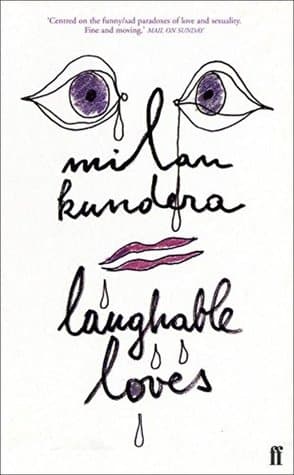
Milan Kundera (2023)
Genre
Philosophy / Romance
Reading Time
287 min
Key Themes
See below
Sign in to track this book
In a world where love is a game of strategy, Kundera shows the bittersweet irony and unexpected vanity, humiliation, and desperate search for reassurance beneath every calculated move.
Martin, a young man, and an older Doctor, known for chasing women, are driving when they see young women hitchhiking. The Doctor, always planning, suggests they pick them up, believing it will lead to an evening of conquests. They take the women to a pub, where the Doctor tries to charm them with his usual routine, while Martin feels more and more uncomfortable. The evening ends with a chaotic visit to the Doctor's apartment, where the women, especially a bold one named Alena, challenge the men's expectations and show how empty their pursuit is. Martin feels drawn to Alena, but their connection is brief and tinged with absurdity, highlighting the men's vanity and shallow desires.
A young, unnamed couple goes on a romantic trip. The girl wants something new, so she suggests they play a game: she will pretend to be a hitchhiker picked up by the boy, who will act as a stranger. At first, the game is exciting and freeing, letting them explore different parts of themselves and their desires. The girl takes on a provocative, uninhibited role, while the boy becomes more assertive and dominant. But as the game continues, the lines between their real selves and their characters blur. The boy becomes increasingly possessive and aggressive, and the girl finds herself stuck in a role she cannot control. This leads to a deep feeling of alienation and the realization that their relationship has been changed forever by the fake encounter, showing how fragile their closeness is.
Klíma, a young art historian, is visited by Mr. Zaturetsky, an old man who has made strange, amateur paintings. Zaturetsky insists that Klíma write an article about his work for a respected journal. Klíma, seeing no artistic merit, tries to politely refuse without offending Zaturetsky. However, Zaturetsky is relentlessly persistent, continually appearing at Klíma's apartment and workplace. Klíma's attempts to avoid him become more elaborate and desperate, involving lies, fake illnesses, and even hiding. The situation escalates to the point where Klíma's reputation and relationships are threatened, all to avoid a simple, honest rejection. The story satirizes intellectual fear and the absurd lengths people go to avoid confrontation, ending with Klíma's frustrated realization that he is stuck in a ridiculous situation with no graceful way out.
Dr. Havel, a middle-aged doctor, attends a symposion with his much younger and very beautiful wife, Eva. Dr. Havel, aware of his own aging and fading attractiveness, uses Eva's beauty to boost his social standing and to feel desirable by proxy. He encourages her to dress provocatively and to talk to other men, especially a younger, handsome colleague named Dr. Šebek. Havel watches with a mix of pride and a strange voyeuristic pleasure as Eva attracts others' attention, believing this attention reflects well on him. However, his carefully built facade begins to crack as Eva's interactions become more genuine and less controlled, leading to a subtle but clear tension between them. The story explores vanity, aging, and manipulation in relationships, as Havel tries to maintain his self-image through his wife's youth and beauty.
Professor Aschenbrenner, an aging and somewhat proud university lecturer, becomes infatuated with Alžběta, one of his young and attractive students. He sees her as a symbol of youth and energy, a sharp contrast to his own declining years and stagnant life. Aschenbrenner begins to pursue Alžběta, using his position and intellectual authority to draw her in. He invites her for private meetings, discusses philosophy, and tries to impress her with his knowledge and experience. However, Alžběta remains mostly indifferent to his advances, seeing him more as a mentor than a romantic interest. Aschenbrenner's obsession grows, leading him to increasingly desperate and manipulative tactics, including making up stories and creating situations to isolate her and make her dependent on him. The story looks at power dynamics in academia, the foolishness of aging desire, and the often-unrequited nature of infatuation, highlighting Aschenbrenner's pathetic attempts to regain his youth through a young woman.
Dr. Forman, a respected and seemingly well-adjusted man, feels an underlying emptiness and a lack of true identity in his life. He believes his existence is too predictable and lacks genuine experience. To fix this, he starts a series of anonymous sexual encounters, mainly with women he meets by chance, often through ads or brief talks. These encounters are not driven by love or deep connection, but by a desire for novelty, a fleeting sense of freedom, and an attempt to define himself outside his conventional life. Each encounter offers a temporary escape, but ultimately leaves him feeling more isolated and unfulfilled. He constantly analyzes his own reasons and the women's reactions, searching for a deeper meaning or confirmation of his existence that these encounters never provide. The story explores existential dread, the search for meaning, and the often-pointless pursuit of identity through external approval.
Eduard, a young and somewhat cynical teacher, becomes infatuated with Alice, a beautiful and very religious girl. Realizing that his atheism would be a barrier, he decides to pretend to be religious to win her over. He starts going to church, reading religious texts, and adopting the mannerisms of a devout Christian. Alice is genuinely impressed by his apparent conversion, and their relationship grows. However, Eduard's deception becomes harder to maintain as he finds himself caught between his true beliefs and the elaborate facade he has built. He struggles with guilt and the fear of being exposed, while also enjoying the affection and moral approval he receives from Alice and her religious community. The story explores the complexities of faith, hypocrisy, and the moral compromises people make for love, ultimately questioning the authenticity of relationships built on lies and the possibility of real connection when one's true self is hidden.
The Supporting
Martin remains largely unchanged, serving more as a foil and observer to the Doctor's antics, experiencing fleeting desires without significant personal transformation.
The Protagonist/Supporting
The Doctor's arc is largely circular; he consistently employs the same tactics, leading to predictable outcomes that reinforce his cynical worldview without true growth.
The Protagonist
She transforms from a playful initiator to a victim, experiencing the painful realization that her identity and relationship have been fractured by a game gone wrong.
The Protagonist
Klíma's arc is one of escalating entrapment, learning the painful lesson that avoiding a small discomfort can lead to a much larger one.
The Supporting
Eva's arc is subtle; she remains an object of desire and manipulation, her inner thoughts largely unexplored, suggesting the limited agency granted to her by her husband.
The Protagonist
Aschenbrenner descends further into self-delusion and manipulation, failing to achieve his desires and reinforcing his own isolation.
The Protagonist
Forman's arc is one of continuous, unfulfilled searching, never quite finding the identity or meaning he seeks, highlighting the futility of his approach.
The Protagonist
Eduard experiences growing internal conflict as his deception deepens, forcing him to confront the moral cost of his actions and the fragility of a relationship built on lies.
The Supporting
Mr. Zaturetsky remains steadfast in his delusional self-belief, serving as a static force that drives Klíma's narrative.
Many stories in 'Laughable Loves' show how human sexual attraction and romantic pursuits often become elaborate, even ridiculous, games. Characters, especially men, use complex strategies driven by vanity, a need for approval, or a desire to control. In 'The Golden Apples of Eternal Desire,' the Doctor's practiced womanizing is shown to be hollow and old-fashioned, while Martin's awkwardness highlights the absurdity of the chase. 'The Symposion' shows Dr. Havel using his wife's beauty to boost his ego, turning a relationship into a social prop. These games rarely lead to real connection, instead revealing insecurity, self-deception, and the often-funny lengths people go to for brief satisfaction.
“For the one who plays, the game is reality. For the one who looks on, it is an illusion.”
Several stories explore how easily personal identity can be shaken, especially when characters deceive or play roles. 'The Hitchhiking Game' is the clearest example, where a couple's playful pretense shatters their true selves and their relationship. The girl loses control of her fake persona, and the boy becomes a stranger. Similarly, Eduard in 'Eduard and God' builds an entire false identity based on religious belief, leading to deep internal conflict and questioning the nature of his love for Alice. Dr. Forman's search for identity through anonymous encounters shows how hard it is to find a stable self in a world of brief connections.
“And the word 'love' had come to seem to her to be full of irony, a trap.”
Kundera consistently examines the subtle and clear power imbalances between people, especially in romantic and social settings. Age, gender, and social status often determine who has influence. Professor Aschenbrenner in 'Let the Old Dead Make Room for the Young Dead' misuses his academic authority to pursue a student, highlighting the younger person's vulnerability. The Doctor in 'The Symposion' controls his wife's public image to serve his own vanity. These dynamics often lead to manipulation, exploitation, and a lack of true understanding, showing how personal desires can connect with societal power structures.
“He knew that in the relations between man and woman, there is always a hunter and a prey, and that the hunter's pleasure is in the chase.”
Characters often find themselves trapped by the need to keep up appearances or fulfill social duties, often at great personal cost. Klíma in 'Nobody Will Laugh' perfectly shows this theme; his desire to avoid hurting a talentless artist's feelings leads him into an escalating nightmare of avoidance and stress, ruining his peace of mind and relationships. The pressure to conform, to be polite, or to project a certain image often leads to hypocrisy, anxiety, and hiding true feelings. This theme critiques the superficiality of social interaction and the absurdities that come from prioritizing outside perceptions over inner honesty.
“He knew that a man who has once said 'yes' will go on saying 'yes' for the rest of his life.”
The collection often explores the worries and desires linked to aging, especially for men. The older male characters often deal with their fading youth and attractiveness, leading them to pursue younger partners or to do things to compensate. The Doctor, Dr. Havel, and Professor Aschenbrenner all fit this pattern, desperately trying to regain or prove their virility through superficial means. They are often haunted by memories of past conquests or a longing for a youth they can no longer have, resulting in pathetic and often cruel attempts to manipulate those around them. This theme highlights the human struggle against death and the often-unsuccessful attempts to defy time.
“Youth is a precious thing, not because it is beautiful, but because it is fleeting.”
Characters adopt false identities or engage in elaborate pretense, often with destructive consequences.
This device is central to several stories, most notably 'The Hitchhiking Game' and 'Eduard and God.' It allows characters to explore forbidden desires or to achieve goals they couldn't otherwise. However, the pretense often blurs the lines between reality and fiction, leading to a loss of authentic self, psychological distress, and the unraveling of relationships. It highlights the dangers of inauthenticity and the inherent instability of identities built on lies, exposing the vulnerability of human connection when truth is sacrificed for desire or social gain.
The reader often sees events through the biased, self-deceiving, or incomplete perspective of a character.
Kundera frequently uses the limited and often self-serving perspectives of his characters, particularly the male protagonists, to shape the narrative. This device allows for an exploration of subjective reality, vanity, and self-deception. The reader is often privy to the characters' internal justifications and rationalizations, which may contradict their actions or the implied reality of the situation. This creates a sense of irony and invites the reader to critically evaluate the characters' motives and perceptions, revealing the gap between how characters see themselves and how they truly are.
Outcomes are often the opposite of what is expected, creating a sense of the absurd or tragicomic.
Irony is a pervasive element, often highlighting the gap between characters' intentions and the actual results of their actions. In 'Nobody Will Laugh,' Klíma's attempt to avoid a minor discomfort leads to a major crisis. In 'The Hitchhiking Game,' what starts as a playful way to enhance intimacy ends up destroying it. This device underscores the unpredictable nature of human interaction and the frequent failure of rational planning in emotional matters, emphasizing the inherent absurdity and often cruel humor of human existence and relationships.
Recurring motif of aging men pursuing or manipulating younger women.
This is a prominent and repeated motif throughout the collection, seen with the Doctor, Dr. Havel, and Professor Aschenbrenner. It serves to explore themes of aging, vanity, power dynamics, and the desperate attempts to cling to youth and virility. The interactions often expose the manipulative and self-serving nature of the older men, who view the younger women as objects for validation or conquest rather than individuals. This trope highlights the generational and gendered aspects of erotic games and the often-unrequited or exploitative nature of such relationships.
“The only reason people want to be first in life is so they can look back and see the others behind them.”
— A general observation on human ambition and competition.
“If a man has no imagination, he has no wings.”
— A reflection on the importance of imagination in human experience.
“Love is not a matter of counting the days, but making the days count.”
— A poignant thought on the quality versus quantity of love.
“The struggle of man against power is the struggle of memory against forgetting.”
— A famous line from another Kundera work, often associated with his broader philosophical themes present here.
“The heaviest of burdens is therefore simultaneously the image of life's most intense fulfillment. The heavier the burden, the closer our lives come to the earth, the more real and truthful they become.”
— A paradoxical view on the meaning and weight of existence.
“I often think about the day when there will be no more books, just screens. It will be a sad day for humanity.”
— A lament on the potential loss of physical books in the digital age.
“Humor is a declaration of freedom.”
— A statement on the liberating power of humor in life.
“The first step in liquidating a people is to erase its memory. Destroy its books, its culture, its history. Then have somebody write new books, manufacture a new culture, invent a new history. Before long the nation will begin to forget what it is and what it was.”
— A chilling observation on the methods of cultural annihilation.
“Kitsch causes two tears to flow in quick succession. The first tear says: How nice to see children running on the grass! The second tear says: How nice to be moved, together with all mankind, by children running on the grass!”
— A critical definition of kitsch and its appeal.
“Man is a creature that cannot stand silence.”
— A reflection on humanity's need for noise and distraction.
“Every man is a king in his own house, until the queen arrives.”
— A humorous take on marital dynamics and the balance of power in relationships.
“The absolute absence of love is not hate, but indifference.”
— A profound distinction between hate and indifference in human relationships.
“There is a secret bond between slowness and memory, between speed and forgetting.”
— An observation on the relationship between the pace of life and the ability to remember.
“Life is elsewhere.”
— A phrase that encapsulates the longing for a different, more fulfilling existence.
Ready to see how well you understood this book? Take our interactive quiz with 10 questions.
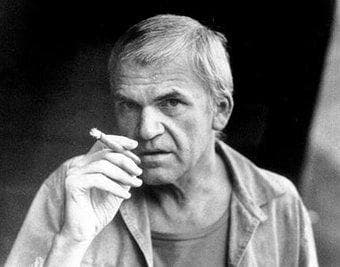
Milan Kundera is a Czech-born French writer. Kundera went into exile in France in 1975, acquiring citizenship in 1981. His Czech citizenship was revoked in 1979 and restored in 2019. He "sees himself as a French writer and insists his work should be studied as French literature and classified as such in book stores".

Jeff Olson
4.4
Thomas Sowell
4.4
Walter Brueggemann
4.3

Rhonda Byrne
4.3

Robin Wall Kimmerer
4.3
George S. Clason
4.3

Elliot Aronson
4.3

Joseph Campbell
4.3