BookBrief
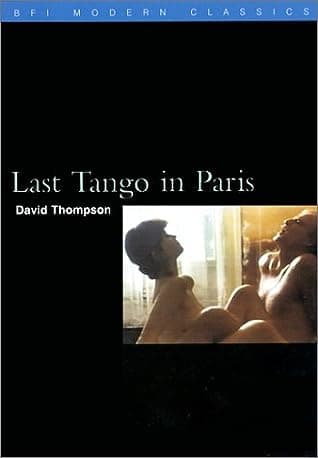
Last Tango in Paris cover
Archivist's Choice

Last Tango in Paris

David Thompson (1998)

Genre

General

Reading Time

90 min

Key Themes

See below

Track Your Reading

Sign in to track this book

David Thompson's 'Last Tango in Paris' examines the making of Bernardo Bertolucci's controversial and emotionally devastating film, showing its artistic start, the real toll on its stars, and its lasting effect on cinema and how we understand human obsession.

Core Idea

David Thompson's "Last Tango in Paris" examines the film's controversial power. He argues its lasting effect comes from a deliberate, though risky, search for raw, direct truth in performance and theme. Thompson says Bertolucci combined European art-house thought with Hollywood star power, pushing film boundaries by exploring sexual freedom, existential anxiety, and the destructive side of human connection. The book highlights how the film's notorious scenes, more than just sensationalism, redefined onscreen eroticism and challenged audience views, even as they caused significant personal and professional problems for its creators, especially Marlon Brando.
Reading time
90 min
Difficulty
Medium
✓ Read this if...
You are a film student, cinephile, or anyone interested in the history of controversial cinema, the intersection of art and ethics, or the psychological demands of method acting.
✗ Skip this if...
You are looking for a light, superficial overview of the film, or if you prefer to avoid in-depth analysis of challenging and explicit cinematic works.

Core idea

The central argument and framework that powers the entire book.

David Thompson's "Last Tango in Paris" examines the film's controversial power. He argues its lasting effect comes from a deliberate, though risky, search for raw, direct truth in performance and theme. Thompson says Bertolucci combined European art-house thought with Hollywood star power, pushing film boundaries by exploring sexual freedom, existential anxiety, and the destructive side of human connection. The book highlights how the film's notorious scenes, more than just sensationalism, redefined onscreen eroticism and challenged audience views, even as they caused significant personal and professional problems for its creators, especially Marlon Brando.

At a glance

Reading time

90 min

Difficulty

Medium

Read this if...

You are a film student, cinephile, or anyone interested in the history of controversial cinema, the intersection of art and ethics, or the psychological demands of method acting.

Skip this if...

You are looking for a light, superficial overview of the film, or if you prefer to avoid in-depth analysis of challenging and explicit cinematic works.

Key Takeaways

1

The Price of Rawness

Unveiling the emotional toll of artistic extremism on its creators.

Quote

Last Tango left me depleted and exhausted. Some of the pain I was experiencing was my very own. Thereafter I decided to make my living in a way that was less devastating emotionally.

The making of 'Last Tango in Paris' was not just a performance for Marlon Brando, but a deeply draining personal experience. His memory of feeling 'depleted and exhausted' and experiencing 'his very own' pain shows how character and self blurred, especially when a director like Bertolucci pushes for such strong truth. This film shows the possible psychological cost artists pay when they explore extreme emotional areas, leading Brando to rethink his acting approach. It is a clear reminder that while art can change an audience, its crea...

Supporting evidence

Marlon Brando's personal reflection in his autobiography, stating the film left him 'depleted and exhausted' and prompted him to seek less emotionally devastating work.

Apply this

For artists, recognize the boundaries between personal well-being and artistic pursuit. Implement self-care practices and establish clear emotional boundaries during intense creative projects to prevent burnout and psychological harm. For consumers of art, consider the human cost behind the raw emotion on display.

artistic-extremismemotional-laboractor-psychology
2

Controversy as Catalyst

How scandal and censorship amplify a film's cultural impact and critical discourse.

Quote

Controversy and censorship dogged the film, but it was a great commercial and critical success.

'Last Tango in Paris' is a good example of how strong controversy and legal fights, instead of harming a film, can raise its status and reach. The film's charge for obscenity in Italy, which led to convictions for Bertolucci, Brando, Schneider, and Grimaldi, along with armed guards taking its print to screenings, created a clear mystique. This notoriety, fueled by public outcry and some critical condemnation, drew great curiosity and secured its place in film history. The scandal ensured it was discussed, debated, and ultimately seen ...

Supporting evidence

The film's indictment on obscenity charges in Italy, the conviction of key personnel, and the detail about armed guards escorting the print to the New York Film Festival.

Apply this

When evaluating the impact of art, look beyond immediate public reception or moral outrage. Consider how initial controversy can shape a work's long-term legacy and contribute to its critical relevance. For creators, understand that pushing boundaries often invites backlash, which can, in turn, generate significant attention and discourse.

censorshipcultural-impactart-controversy
3

Eroticism Redefined

Challenging conventional notions of sexuality on screen through raw vulnerability.

Quote

The most powerfully erotic movie ever made.

Pauline Kael's statement that 'Last Tango in Paris' is 'the most powerfully erotic movie ever made' highlights its new approach to showing sexuality. The film went beyond mere titillation, instead showing a raw, unpolished picture of sexual obsession mixed with grief and psychological breakdown. Its eroticism was not about glamour or idealized romance, but about the messy, sometimes desperate, and often uncomfortable truths of human desire and vulnerability. Bertolucci avoided traditional film methods, making audiences face the uncomf...

Supporting evidence

Pauline Kael's review in The New Yorker, calling it 'the most powerfully erotic movie ever made,' and the film's graphic portrayal of sexual acts within a narrative of grief and psychic breakdown.

Apply this

When analyzing art depicting sexuality, look beyond surface-level explicitness. Evaluate how a work uses eroticism to explore deeper psychological themes, power dynamics, or emotional states. For creators, consider how to use intimate scenes to reveal character and advance narrative rather than solely for shock value.

cinematic-eroticismsexual-politicspsychological-drama
4

Bertolucci's Synthesis

A director's ability to weave diverse intellectual interests into a cohesive cinematic vision.

Quote

Thompson shows how the film crystallized Bertolucci's interest in art, literature, and psychoanalysis.

David Thompson's analysis shows Bernardo Bertolucci's skill in combining his interests in art, literature, and psychoanalysis into the complex structure of 'Last Tango in Paris.' The film is more than a story; it is a deeply layered exploration of Freudian ideas, existential anxiety, and artistic expression. Bertolucci's control allowed him to fill every frame with intellectual weight, using visual metaphors and character psychology from his wide knowledge. This combination created a film that works on many levels, inviting both emoti...

Supporting evidence

David Thompson's detailed account, drawing on an extensive interview with Bertolucci, highlighting the crystallization of the director's interests in art, literature, and psychoanalysis within the film.

Apply this

For aspiring filmmakers and artists, cultivate a broad range of intellectual interests beyond your immediate medium. Understand how diverse fields like psychology, philosophy, and art history can inform and enrich your creative work, allowing for deeper thematic exploration and unique narrative approaches.

auteur-theorypsychoanalytic-filminterdisciplinary-art
5

Brando's Unraveling

The film as a crucial lens for understanding a legendary actor's complex psyche.

Quote

Ending with a discussion of how important this film is for an understanding of Brando, Schneider, and Jean-Pierre Leaud.

'Last Tango in Paris' is not just a part of Marlon Brando's career; it is an important document for understanding the actor at a key, and perhaps most vulnerable, time of his life. Thompson stresses its importance in explaining Brando's complex mind, showing how the role of Paul demanded an unmatched level of emotional exposure, blurring the lines between actor and character. The film became a test, showing Brando's ability for raw, direct performance while also reflecting his personal struggles and disappointment. It offers a clear l...

Supporting evidence

Thompson's concluding discussion, highlighting the film's importance for understanding Brando, Schneider, and Leaud, implying its revelatory nature regarding their personal and professional selves.

Apply this

When studying an actor's filmography, identify specific projects that seem to profoundly intersect with their personal life or mark a significant turning point. Use these 'crucible' roles to gain deeper insight into their craft, emotional range, and evolution as an artist. Consider the biographical context alongside the performance.

method-actingactor-biographypsychological-performance
6

The Perils of 'Authenticity'

Questioning the ethical boundaries when directors push actors to extreme personal limits.

Quote

Some of the pain I was experiencing was my very own.

Brando's admission about experiencing his 'very own' pain during the filming of 'Last Tango in Paris' raises important questions about the ethical duties of directors. Bertolucci's search for extreme truth, while producing strong film results, arguably crossed a line into psychological manipulation, particularly concerning the 'butter scene' with Maria Schneider. This pursuit of raw, unsimulated emotion, often achieved by not giving information or creating real distress, shows a dark side of artistic ambition. It makes us confront whe...

Supporting evidence

Marlon Brando's quote and the historical controversy surrounding the treatment of Maria Schneider on set, particularly regarding the 'butter scene,' which was later revealed to have been filmed without her full, informed consent regarding the nature of the act.

Apply this

For filmmakers, prioritize the well-being and informed consent of your cast and crew above all else. Establish clear boundaries and open communication to ensure that the pursuit of authenticity does not become exploitative. For audiences, critically examine the production ethics behind 'raw' performances and question the cost of such realism.

filmmaking-ethicsactor-exploitationconsent-in-art
7

Beyond the Taboo

How the film's shocking elements serve a deeper narrative purpose, transcending mere shock value.

Quote

graphic and harrowing account of sexual obsession, grief, psychic breakdown, and murder

While 'Last Tango in Paris' is known for its graphic and controversial content, Thompson's analysis reminds us that these elements are not pointless but essential to its 'difficult account of sexual obsession, grief, psychic breakdown, and murder.' The film uses its shocking depictions of sex and violence to explore deep ideas of human despair, the destructive nature of grief, and the search for connection when isolated. The taboo acts help to strip away societal pretenses, showing the raw, often ugly core of human emotion and behavio...

Supporting evidence

Thompson's description of the film as a 'graphic and harrowing account' that encompasses deep themes like 'sexual obsession, grief, psychic breakdown, and murder.'

Apply this

When encountering art that pushes boundaries or contains explicit content, strive to look beyond initial reactions of shock or discomfort. Analyze how these elements contribute to the overall narrative, character development, or thematic exploration. Ask what deeper truths the artist is attempting to convey through challenging imagery.

taboo-in-filmnarrative-purposepsychological-realism
8

The Power of Non-Verbal Communication

The film's mastery in conveying profound emotion through gesture, gaze, and silence.

Quote

Thompson unravels the brilliance of Last Tango in Paris' depiction of human behavior and emotion.

A key part of 'Last Tango in Paris'' brilliance is its deep depiction of human behavior and emotion, often shown without words. With Brando's character, Paul, largely going into a primal, almost animalistic state, the film depends heavily on his physicality, his sounds, and the intense, often silent, interactions between him and Jeanne (Schneider). The camera stays on their bodies, their expressions, and the charged silences, communicating layers of desire, despair, and vulnerability that dialogue alone could not achieve. This masterf...

Supporting evidence

Thompson's general praise for the film's 'brilliance' in depicting human behavior and emotion, particularly through the performances of Brando and Schneider, which often rely on raw physicality and intense, non-dialogue scenes.

Apply this

For storytellers, explore the immense power of non-verbal communication in conveying character and emotion. Experiment with extended silences, meaningful glances, and specific body language to deepen the audience's understanding and connection to your characters, rather than relying solely on dialogue.

nonverbal-communicationcinematic-performanceemotional-expression
9

A Time Capsule of Artistic Ferment

The film as a reflection of 1970s counter-culture and cinematic innovation.

Quote

Bernardo Bertolucci's graphic and harrowing account... premiered in 1972 at the New York Film Festival.

Premiering in 1972, 'Last Tango in Paris' clearly reflects its time, a strong mirror of the artistic and social changes of the early 1970s. It appeared during an era when cinema was pushing limits, challenging old rules, and exploring previously forbidden subjects with new openness. The film's willingness to explore raw sexuality, psychological breakdown, and existential despair connected with a generation questioning societal structures and personal freedoms. It captured the mood of counter-culture, where traditional morality was bei...

Supporting evidence

The film's premiere year (1972) and its immediate, intense reception, including obscenity charges and critical acclaim for its groundbreaking nature, placing it firmly within a period of cultural upheaval.

Apply this

When studying films, always consider their historical and cultural context. Understand how the social, political, and artistic climate of its creation influenced its themes, style, and reception. Recognize how a film can both reflect and shape the era it belongs to.

70s-cinemacounter-culturecinematic-history
10

The Enduring Power of Discomfort

How art that unsettles can leave the most indelible mark.

Quote

Last Tango left me depleted and exhausted.

Marlon Brando's strong reaction to 'Last Tango in Paris' – feeling 'depleted and exhausted' – says much about the film's lasting power, not just on its creators but on its audience. The film's brilliance is in its refusal to offer easy answers or comforting endings; instead, it puts viewers into a deeply unsettling and emotionally difficult experience. This discomfort is exactly what makes it so memorable and effective. By deliberately challenging common ideas of romance, grief, and sexual politics, Bertolucci created a work that make...

Supporting evidence

Brando's personal account of being 'depleted and exhausted' by the film, and the general critical and public reaction noting its harrowing and graphic nature.

Apply this

Actively seek out art that challenges your comfort zone and preconceived notions. Embrace the discomfort as an opportunity for growth and deeper understanding. For creators, don't shy away from difficult subjects; recognize that the most impactful art often emerges from confronting uncomfortable truths.

challenging-artemotional-impactartistic-legacy

Critical analysis

Notable Quotes

The tango is not just a dance; it is a conversation between two souls, spoken with the body.

Describing the emotional depth of tango dancing.

In Paris, every cobblestone whispers secrets of love and loss.

Reflecting on the romantic and melancholic atmosphere of Paris.

We danced as if the world outside had vanished, leaving only the rhythm of our hearts.

A moment of intense connection during a tango performance.

Love, like the tango, requires both passion and precision.

Comparing the dynamics of love to the technical aspects of tango.

The city of lights holds shadows too deep for any lamp to illuminate.

Commenting on the hidden sorrows beneath Paris's glamorous surface.

In the silence between steps, we found our truest selves.

Emphasizing the introspective moments in tango dancing.

A last tango is not an ending, but a memory etched in motion.

Philosophizing about the significance of final moments in dance.

Paris taught me that beauty often walks hand in hand with heartbreak.

A personal reflection on the bittersweet nature of Parisian life.

To dance the tango is to embrace both the fire and the frost within.

Describing the contrasting emotions evoked by tango.

We were strangers in a city of lovers, yet in that dance, we were one.

Capturing a fleeting yet profound connection between dancers.

The music of the tango is a language without words, understood by the heart alone.

Highlighting the non-verbal communication in tango music.

In the end, all we have are the echoes of dances past.

A melancholic reflection on memory and transience.

Paris does not judge; it simply watches, a silent witness to countless stories.

Personifying Paris as an observer of human experiences.

Quiz

Test Your Knowledge

Ready to see how well you understood this book? Take our interactive quiz with 10 questions.

10
Questions
~5
Minutes
?
Best Score

Key Questions (FAQ)

'Last Tango in Paris' is a 1972 film directed by Bernardo Bertolucci that explores themes of sexual obsession, grief, psychic breakdown, and murder. It follows an anonymous sexual relationship between a middle-aged American widower (played by Marlon Brando) and a young French woman (played by Maria Schneider) in a Paris apartment.

About the author

David Thompson is a writer known for his work in non-fiction. His notable book, 'Last Tango in Paris,' explores [briefly describe the book's subject matter or impact if known]. Thompson's writing is characterized by [mention a key aspect of his style, e.g., meticulous research, engaging narrative].