BookBrief
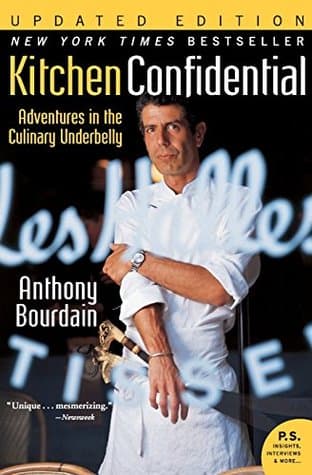
Kitchen Confidential: Adventures in the Culinary Underbelly cover
Archivist's Choice

Kitchen Confidential: Adventures in the Culinary Underbelly

Anthony Bourdain (2000)

Genre

Lifestyle / Biography / Memoir

Reading Time

12 Minutes

Key Themes

See below

Track Your Reading

Sign in to track this book

Dive into the chaotic, exhilarating, and often gritty world behind the kitchen doors of a seasoned chef, where drugs, sex, and fine cuisine meet in a no-holds-barred memoir.

Core Idea

Anthony Bourdain's "Kitchen Confidential" rips back the curtain on the glamorous facade of high-end restaurant kitchens, revealing a gritty, chaotic, and often morally ambiguous world fueled by adrenaline, drugs, and a relentless pursuit of culinary perfection. It's a raw, uncensored memoir that explores the intense camaraderie, cutthroat competition, and the unique, often dark, personalities that inhabit the professional cooking industry, arguing that this hidden world, despite its excesses, is a crucible for genuine passion and skill. The book serves as both a confessional and an exposé, detailing Bourdain's own journey from a young, ambitious cook to a seasoned chef, while simultaneously dissecting the systemic issues, unwritten rules, and unglamorous realities of kitchen life. It's a love letter to the craft of cooking and the characters who dedicate their lives to it, while also being a stark warning about its demanding nature and the personal sacrifices it entails.
Difficulty
Easy

Core idea

The central argument and framework that powers the entire book.

Anthony Bourdain's "Kitchen Confidential" rips back the curtain on the glamorous facade of high-end restaurant kitchens, revealing a gritty, chaotic, and often morally ambiguous world fueled by adrenaline, drugs, and a relentless pursuit of culinary perfection. It's a raw, uncensored memoir that explores the intense camaraderie, cutthroat competition, and the unique, often dark, personalities that inhabit the professional cooking industry, arguing that this hidden world, despite its excesses, is a crucible for genuine passion and skill.

The book serves as both a confessional and an exposé, detailing Bourdain's own journey from a young, ambitious cook to a seasoned chef, while simultaneously dissecting the systemic issues, unwritten rules, and unglamorous realities of kitchen life. It's a love letter to the craft of cooking and the characters who dedicate their lives to it, while also being a stark warning about its demanding nature and the personal sacrifices it entails.

At a glance

Difficulty

Easy

Key Takeaways

1

The Brutal Ballet of the Professional Kitchen

Beyond the pristine dining room lies a chaotic, high-pressure world fueled by adrenaline and often, illicit substances.

Quote

Your body is an amusement park, and the kitchen is where all the rides are broken and the carny is a meth-addicted ex-con.

Bourdain's strongest insight is his direct look at the professional kitchen as a high-stakes, high-stress place. He details the fast pace, the constant pressure under heat and tight deadlines, and the culture of machismo and instant gratification. This setting often leads to substance abuse, especially cocaine and alcohol, used as a way to cope and socialize among cooks, dishwashers, and chefs who work with little sleep and constant demands. The book destroys any romantic ideas of culinary work, showing it as a physically and mentally...

Supporting evidence

Bourdain recounts numerous personal anecdotes of drug use among kitchen staff, working 16-hour shifts, and the intense verbal abuse commonplace in many kitchens, particularly under demanding head chefs.

Apply this

For aspiring chefs, understanding this reality is crucial; it's not just about cooking skill, but about mental fortitude and resilience. For diners, it offers a deeper appreciation for the effort and often, personal sacrifice, behind every plate.

2

The Unsung Heroes: Dishwashers and Prep Cooks

The foundational roles in a kitchen are often filled by immigrants, providing the essential, thankless labor that keeps the operation running.

Quote

They are the backbone, the essential workers, the ones who make it all possible. Without them, we are nothing.

Bourdain consistently highlights the essential role of immigrant labor in American restaurants, especially in the most difficult and least glamorous jobs: dishwashers, prep cooks, and line cooks. He calls them the 'engine room' of the kitchen, noting their strong work ethic, dedication, and often, their cleverness and quiet self-respect. This point offers important social commentary, as Bourdain shows these individuals not as interchangeable workers, but as vital, skilled people whose often-unseen efforts support the entire dining exp...

Supporting evidence

He dedicates significant passages to describing the lives and contributions of his Mexican and Salvadoran kitchen staff, detailing their long hours and crucial roles in maintaining kitchen hygiene and preparing ingredients.

Apply this

This takeaway encourages a more empathetic and informed view of the service industry's labor force. It prompts consumers to consider the human cost and often-exploited labor that enables affordable dining experiences.

3

The Chef's Code: Loyalty, Honor, and Obsession

Professional kitchens are governed by an unwritten code of conduct, emphasizing loyalty, respect, and an almost religious devotion to food and craft.

Quote

We were a family, a unit, a dysfunctional, drug-addled, knife-wielding family, but a family nonetheless.

Bourdain reveals that despite the chaos and harsh realities, a strong sense of teamwork, loyalty, and an almost tribal honor exists within kitchen teams. This loyalty extends to fellow cooks, the chef, and, importantly, to the food itself. Chefs appear as obsessive perfectionists, driven by a commitment to quality and a desire to create memorable dishes. This professional standard guides everything from how ingredients are handled to how colleagues are treated, creating a unique subculture separate from the outside world. This point s...

Supporting evidence

Bourdain recounts instances of cooks defending each other, sharing resources, and displaying intense dedication to their craft, often working without complaint through injuries or personal hardships.

Apply this

Understanding this code can help anyone working in a high-pressure team environment appreciate the value of shared purpose and mutual respect, even when conditions are challenging.

4

The Dark Side of Restaurant Economics

Restaurants are precarious businesses, often cutting corners in ways diners rarely suspect to survive.

Quote

Never eat fish on a Monday. Never order the special on a Saturday night. And for God's sake, don't ask for 'well done'.

This is one of the book's most impactful and useful insights for the average diner. Bourdain explains the economic pressures that cause restaurants to make questionable choices about food handling, freshness, and menu prices. He famously advises against ordering fish on Mondays (because it usually comes from Friday's delivery), and warns that 'specials' might be a way to sell ingredients nearing their expiration date. This argument exposes the tension between making money and ensuring food safety/quality, reminding us that not all res...

Supporting evidence

Bourdain details how kitchens manage inventory, the practice of repurposing ingredients, and the economic necessity of moving product before it spoils, leading to specific menu recommendations/warnings.

Apply this

This takeaway empowers diners to make more informed choices, encouraging them to be discerning and questioning about what they order and when they dine.

5

The Evolution of a Chef: From Dishwasher to Dragon

Bourdain's personal journey illustrates the transformative power of the kitchen, shaping identity and ambition through relentless trial by fire.

Quote

I was a punk, a screw-up, a lost soul. The kitchen saved me, then devoured me, then spit me out, slightly better, slightly worse.

The book is a memoir, tracing Bourdain's journey from a young, rebellious dishwasher to a seasoned, world-weary chef. His story shows how the intense professional kitchen environment can both build and break people. He describes his early struggles with drugs and lack of direction, and how the kitchen's discipline, hierarchy, and demands gave him a structure and purpose he lacked. This personal growth is engaging, showing the kitchen as a place where character is tested and refined, often through hard lessons and personal change. It s...

Supporting evidence

He meticulously details his rise through the ranks, from low-level prep work to sous chef and eventually head chef, including the mistakes, triumphs, and profound personal changes he experienced at each stage.

Apply this

This offers a powerful lesson on perseverance and finding one's calling, even if that path is unconventional and fraught with challenges.

6

The Cult of the Celebrity Chef

Bourdain critiques the rise of the 'rock star chef,' arguing it often distracts from the true craft and reality of kitchen work.

Quote

The ones you see on TV, with their perfect hair and their perfect smiles, they're not the ones actually cooking your food, not anymore.

While Bourdain himself became a celebrity chef, in 'Kitchen Confidential,' he expresses a nuanced doubt about the rising phenomenon. He subtly criticizes the commercialization of the chef, arguing that focusing on media presence and brand building can distract from the essential, often tough, work of cooking. This point is a limitation of the book in hindsight, as Bourdain became a prime example of what he discussed. However, when he wrote it, it was a warning about the potential gap between culinary art and media spectacle, suggestin...

Supporting evidence

He contrasts the romanticized image of chefs with the reality of their daily grind, and implicitly critiques the emerging trend of chefs leaving the kitchen for media opportunities.

Apply this

This takeaway encourages a critical perspective on media portrayals of any profession, reminding us that public image often differs significantly from lived reality.

7

The Power of Fear and Respect in Management

Effective kitchen leadership often relies on a potent blend of intimidation, skill, and earning unwavering respect.

Quote

You lead by example, by showing them you can do it better, faster, and cleaner. And sometimes, you lead with a well-placed obscenity.

Bourdain illustrates that the traditional kitchen hierarchy is often maintained through a mix of fear and deep respect. Chefs, especially the 'dragon' figures he admires, command loyalty not just through authority, but through proven skill, strong work ethic, and an uncompromising demand for perfection. While he acknowledges the often-abusive language and high-pressure tactics, he also suggests that in this environment, such methods can sometimes create stronger teams and higher standards. This argument is controversial, as it implies...

Supporting evidence

He describes numerous chefs who ruled their kitchens with an iron fist, yet were revered by their staff for their talent and dedication, such as the legendary 'Bigfoot' from his early career.

Apply this

This takeaway prompts reflection on different leadership styles and their effectiveness in various high-stakes, high-pressure environments, without necessarily endorsing the more extreme examples.

8

The Allure and Danger of the Fast Lane

The culinary world offers intense highs and lows, attracting individuals drawn to its dangerous, exhilarating pace.

Quote

We were pirates, outlaws, adrenaline junkies, all of us drawn to the flame, knowing it might burn us.

Bourdain conveys that the restaurant industry, especially its high-end parts, attracts a certain type of person: thrill-seekers, outsiders, and those who thrive on instant gratification and intense pressure. The long hours, constant demands, access to substances, and the immediate reward of a perfect plate create an intoxicating, almost addictive, lifestyle. This is the book's strongest insight into the psychology of those who choose this demanding career. It's a world where work and life blend, and where the constant pursuit of perfe...

Supporting evidence

Bourdain's own narrative is replete with examples of his and his colleagues' hedonistic lifestyles, drug use, and the intense, almost spiritual satisfaction derived from a successful service.

Apply this

This takeaway helps understand the unique motivations and challenges faced by individuals in high-octane, high-pressure professions, and the potential for both profound satisfaction and self-destruction.

9

The Art of the 'Mise en Place'

Beyond cooking, the meticulous organization and preparation ('mise en place') is the fundamental discipline of the professional kitchen.

Quote

Mise en place is the religion of the professional kitchen. If you don't have it, you're dead.

Bourdain consistently highlights the importance of 'mise en place'—the French culinary term for 'everything in its place.' This concept is more than just having ingredients prepped; it's a philosophy of careful organization, foresight, and readiness that supports all successful kitchen operations. Without a perfectly executed mise en place, a kitchen falls into chaos, unable to handle a busy service. This emphasis on preparation is a basic discipline, showing that cooking is not just about creativity, but also about careful planning a...

Supporting evidence

He describes the daily ritual of setting up one's station, the consequences of poor preparation during service, and the almost sacred respect given to a well-organized workspace.

Apply this

This principle can be applied to any aspect of life or work: thorough preparation and organization are essential for managing stress and achieving efficiency and success.

10

The Enduring Romance with Food

Despite the grime and grit, an undeniable passion for food and the act of cooking remains at the heart of the culinary world.

Quote

For all the ugliness, the noise, the madness, there was always the food. And that was enough.

Even amidst the shocking revelations about drug use, abuse, and the industry's cutthroat nature, Bourdain's deep, lasting love for food and the craft of cooking shines through. His descriptions of ingredients, techniques, and the joy of creating a perfect dish show a deep respect. This underlying passion sustains chefs through the grueling hours and intense pressure. It's the ultimate paradox of the book: the brutal honesty about the industry's flaws is always balanced by an almost poetic appreciation for culinary art itself. This is ...

Supporting evidence

His vivid descriptions of the sensory experience of food, from the smell of frying garlic to the taste of perfectly seared scallops, convey a genuine, deep-seated passion.

Apply this

This takeaway inspires readers to reconnect with their own passions and appreciate the dedication required to excel in any craft, regardless of the challenges.

Critical analysis

Notable Quotes

Quiz

Test Your Knowledge

Ready to see how well you understood this book? Take our interactive quiz with 10 questions.

10
Questions
~5
Minutes
?
Best Score

Key Questions (FAQ)

Kitchen Confidential is a memoir by Anthony Bourdain that offers a raw and often humorous look into the realities of working in professional kitchens. It details his experiences with drugs, sex, and the intense pressures of the culinary world over his career.

About the author

Anthony Bourdain

Anthony Bourdain was a renowned chef, author, and television personality. His breakout book, Kitchen Confidential: Adventures in the Culinary Underbelly, offered a no-holds-barred look into the restaurant industry. Through his popular shows like No Reservations and Parts Unknown, Bourdain explored global cuisine and cultures, becoming a celebrated voice for adventurous eaters and travelers.