“Every time you jump, you risk falling. But every time you jump, you also risk flying.”
— A recurring thought about the nature of taking chances, particularly with parkour and relationships.

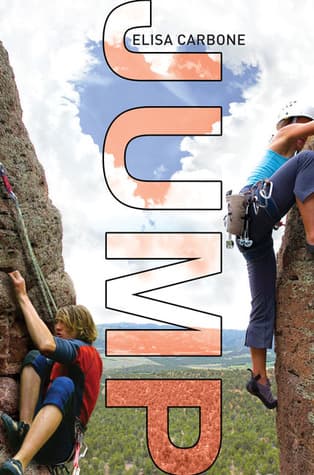
Elisa Carbone (2010)
Genre
Lifestyle / Young Adult / Romance
Reading Time
270 min
Key Themes
See below
Sign in to track this book
A sheltered teen's escape into rock-climbing and romance in national parks turns terrifying when her new boyfriend becomes the target of an arrest warrant, forcing her to choose between her heart and her safety.
P.K. (Patricia Kelly) makes a sudden decision to leave her structured and restrictive life in New York, controlled by her overprotective parents. Wanting freedom and adventure, she meets Doug, an experienced rock climber, at a gym. Despite knowing little about him, P.K. is drawn to his free spirit and the promise of an exciting life. She packs a bag, leaves a note, and impulsively joins Doug on a cross-country road trip to climb in national parks, heading west into the unknown.
As P.K. and Doug travel in his van, they visit climbing spots like Zion and Yosemite. P.K. quickly loves the climbing lifestyle, the parks' beauty, and Doug. He is patient and encouraging, teaching her climbing and helping her overcome fears. Their shared passion and nomadic life create a strong, romantic bond. P.K. feels a sense of belonging and freedom she has never known, believing she has found herself and her soulmate in Doug.
While camping, P.K. and Doug have an uncomfortable encounter with a park ranger. The ranger shows unusual interest in Doug, asking about his identity and travel plans. Doug becomes agitated and defensive, quickly dismissing the ranger and rushing P.K. away. P.K. notices Doug's behavior and feels a flicker of unease, but she attributes it to distrust of authority or a desire for privacy. This incident is the first sign of trouble in P.K.'s view of Doug.
The journey takes a dramatic turn when police officers confront P.K. and Doug in a campground. The officers present an arrest warrant for Doug, identifying him as 'David' and accusing him of murder—specifically, his previous climbing partner. P.K. is stunned, unable to believe the man she loves could be a dangerous criminal. Doug denies everything, pleading with P.K. to trust him and claiming it's a misunderstanding.
After the arrest warrant, Doug evades the police, urging P.K. to come with him. Despite her shock and the accusations, P.K.'s strong feelings for Doug and her desire to believe him lead her to flee. They go on the run, abandoning their van and hitchhiking. P.K. is now a reluctant accomplice, torn between her love for Doug and the growing fear that she might be wrong about him. The escape makes her complicit and isolates her from help.
As P.K. and Doug hide in remote places, their relationship strains. P.K. starts to notice inconsistencies in Doug's stories and details about his past. His accounts of his previous climbing partner, who he said died in an accident, sound less convincing. He avoids certain topics, becomes irritable when questioned, and shows paranoia. P.K.'s trust erodes, replaced by a suspicion that Doug is not who he seems and that his story is a lie.
While Doug is away scouting their next hiding spot, P.K. searches his belongings, needing answers. She finds an old photo album and other items that reveal a shocking truth: Doug's previous climbing partner was a woman, not a man. She also finds news clippings detailing suspicious circumstances of the woman's death during a climb, implying foul play and naming Doug (or David) as the prime suspect. This evidence shatters P.K.'s last doubts, confirming the police's claims and exposing Doug's deception.
Realizing her danger, P.K. knows she must escape Doug. She can no longer deny the truth: he is a murderer, and she is trapped with him. She plans her escape, waiting for an opportunity when Doug is distracted or asleep. Fear for her life overrides her lingering feelings. She knows confronting him is too risky, so she plans a stealthy departure, hoping to create distance before he notices she's gone. Her heart pounds with terror, but her resolve is firm.
P.K. takes her chance to escape, slipping away from their camp one morning. She runs through unfamiliar wilderness, driven by adrenaline and terror. Soon, Doug realizes she's gone and pursues her. The chase is harrowing, with P.K. using her climbing skills to evade him. She scrambles over rocks and through dense trees, constantly looking back. The landscapes, once symbols of freedom, now feel threatening, and the man she loved is now her hunter.
The pursuit ends in a confrontation on a treacherous rock face. P.K. is cornered, with Doug closing in. He tries to manipulate her, begging her to return, but his words carry a dangerous intensity. P.K., remembering the evidence, stands firm, refusing to be swayed. In a desperate struggle, she uses her climbing expertise and understanding of his methods against him. The high-stakes encounter on the cliff edge becomes a battle for her survival and independence, where she must literally and figuratively climb away from his grasp.
Just as P.K.'s situation seems dire, park rangers and police, who were tracking Doug, rescue her. Doug is apprehended, and P.K. is safe, but shaken. She is debriefed by authorities and begins processing the trauma. The initial thrill of her 'jump' has given way to a harsh reality. She reflects on her impulsiveness, naivety, and the dangerous consequences of trusting a stranger. While relieved, she is left with deep emotional scars and a changed view on freedom and trust.
P.K. eventually returns home to her anxious parents. The reunion is emotional, but also brings new understanding. Her parents, having experienced the terror of her disappearance, are more willing to listen and allow her more independence. P.K., having faced true danger, is no longer the naive girl who ran away. She has grown, gaining maturity and self-awareness. She begins to mend her relationships, works through her trauma, and starts to envision a future where she can pursue her passions, including climbing, but with more caution and a deeper appreciation for genuine connection.
The Protagonist
P.K. transforms from a naive, impulsive girl seeking an escape to a mature, self-aware woman who understands the true meaning of freedom and trust.
The Antagonist
Doug's true nature is gradually exposed, revealing him as a murderer and manipulator, rather than the adventurous hero P.K. believed him to be.
The Supporting
They evolve from controlling figures to more understanding and supportive parents, learning to trust P.K.'s growing maturity.
The Supporting
They serve as a persistent force of justice, ultimately apprehending the antagonist and ensuring the protagonist's safety.
The novel explores P.K.'s initial pursuit of freedom, which she connects with escaping her restrictive home life and embracing an adventurous existence with Doug. This 'freedom,' however, proves to be an illusion, as she soon becomes trapped in a more dangerous situation with a manipulative person. The true freedom she finds comes not from escape, but from self-discovery, facing hard truths, and making brave choices to save herself, as shown in her escape from Doug on the cliff face.
“She had thought freedom was leaving everything behind, but it turned out to be finding herself, even if it was in the most terrifying way.”
A main theme is the danger of blind trust and the impact of deception. P.K. trusts Doug, a charismatic stranger, based on superficial charm and shared adventure. This trust blinds her to warning signs and puts her in extreme danger. Doug's deception, especially his fake past and lies about his previous partner, shows how easily innocence can be exploited. The novel illustrates P.K.'s painful process of learning to tell truth from lies, ending with her discovery of news clippings that reveal Doug's true, murderous nature.
“How could someone you trusted with your life, with your very breath, be capable of such a lie?”
P.K.'s journey is a coming-of-age story, intensified by extreme hardship. Her initial 'jump' is an impulsive act of rebellion, but her experiences with Doug force her to confront harsh realities about human nature, danger, and her own strength. She changes from a naive, sheltered girl into a more mature, self-reliant young woman capable of making life-or-death decisions. Her growth is clear in her escape plan and her ability to stand up to Doug during their final confrontation, showing new inner strength.
“The girl who had left New York was gone, replaced by someone sharper, harder, and infinitely more aware.”
The story shows both the appeal and risks of venturing into the unknown. P.K. is drawn to the excitement and unpredictability of life on the road and rock climbing, seeing it as an escape from her predictable life. This initial attraction, however, hides the dangers that lie beneath, especially in the form of a charismatic stranger with an unknown past. The beautiful, wild landscapes, initially symbols of freedom, become terrifying backdrops for her pursuit, showing that the unknown can hold both wonder and terror.
“The wide-open spaces she had craved now felt like a trap, every shadow a potential threat.”
Subtle hints and unsettling events that predict future danger.
Foreshadowing is used effectively to build suspense and hint at Doug's true nature. The park ranger's unusual interest in Doug, Doug's agitated reaction, and his evasiveness about his past are early indicators that something is amiss. These moments create a growing sense of unease for P.K. and the reader, signaling that the idyllic adventure will inevitably take a dark turn. This device deepens the reader's engagement as they anticipate the reveal of the truth.
An initial motivating factor that sets the plot in motion but takes on new meaning.
P.K.'s 'jump' is initially presented as her impulsive decision to leave her old life and embrace adventure. While it serves as the catalyst for the entire plot, the concept of 'jumping' evolves throughout the story. It later refers to the literal jumps and climbs during their adventures, and ultimately, to P.K.'s desperate leap of faith to escape Doug and reclaim her life. The 'jump' transforms from an act of rebellion into an act of survival and self-preservation.
The audience knows more about Doug's true identity and danger than P.K. does for a significant portion of the story.
Dramatic irony is employed once the police reveal Doug's past and the arrest warrant. The reader becomes aware of Doug's criminal identity and the danger P.K. is in, while P.K. herself struggles to believe it, clinging to her idealized image of him. This creates tension and anxiety, as the reader watches P.K. slowly piece together the truth, knowing the horrifying reality she is facing before she fully accepts it. This device heightens the sense of peril and her vulnerability.
The act of rock climbing represents both freedom and the challenges of life.
Rock climbing serves as a powerful symbol throughout the novel. Initially, it represents freedom, adventure, and P.K.'s ability to overcome physical and emotional barriers. Doug's expertise in climbing initially makes him appear as a guide to this new, exciting life. However, climbing later symbolizes the perilous challenges P.K. faces, both in her relationship with Doug and in her desperate escape. The final confrontation on the cliff face literally and metaphorically represents her struggle to climb away from danger and reclaim her life.
“Every time you jump, you risk falling. But every time you jump, you also risk flying.”
— A recurring thought about the nature of taking chances, particularly with parkour and relationships.
“The city isn't just buildings and streets. It's a playground, if you know how to see it.”
— Lily's initial realization about parkour and how it changes her perception of her urban environment.
“Sometimes the biggest leaps aren't the ones you make with your body, but the ones you make with your heart.”
— Lily reflecting on her growing feelings for Jason and the emotional risks involved.
“Fear can be a good thing. It tells you where the edge is. But it shouldn't stop you from going to the edge.”
— Jason's advice to Lily about overcoming her hesitations during parkour training.
“You can't always control where you land, but you can control how you prepare for the jump.”
— A lesson learned about planning and preparation, applicable to both parkour and life.
“Being strong isn't about never falling. It's about getting back up every single time you do.”
— Lily's internal monologue after a difficult fall during parkour, relating it to her personal struggles.
“The world looks different when you're upside down. Sometimes, that's exactly what you need.”
— Lily's feeling of exhilaration and altered perspective after mastering a new parkour move.
“Trust isn't given, it's earned. And sometimes, you have to jump first to see if someone will catch you.”
— Lily contemplating the nature of trust in her relationships, especially with Jason.
“There's a rhythm to the city, a flow that you can tap into if you just listen.”
— Jason explaining the meditative and immersive aspects of parkour and its connection to the urban environment.
“Don't let what you can't do stop you from doing what you can.”
— A piece of encouragement from a friend when Lily is feeling frustrated by her limitations.
“Gravity isn't the enemy. It's just a constant, and you learn to work with it.”
— Jason's philosophical view on the fundamental forces of nature in relation to parkour.
“Sometimes the longest way around is the shortest path to where you're meant to be.”
— Lily realizing that her unexpected journey into parkour led her to new insights and people.
“The best view comes after the hardest climb.”
— Lily's feeling of accomplishment after reaching a high vantage point during a parkour session.
Ready to see how well you understood this book? Take our interactive quiz with 10 questions.