“The thing to remember about democracy, he said, is that it is a tool. Like a hammer. And like a hammer it can be used to build a house or to smash a skull.”
— Joe Bonham's father discussing democracy.

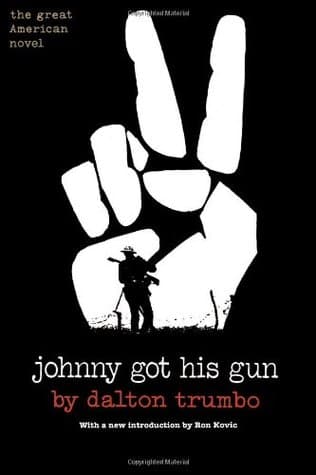
Dalton Trumbo (1939)
Genre
Politics / Historical Fiction
Reading Time
6-8 hours
Key Themes
See below
Sign in to track this book
Blinded, deafened, and limbless, World War I casualty Joe Bonham is a prisoner in his own mind, a symbol of war's brutal cost and a soldier's ultimate sacrifice.
Joe Bonham, a young American soldier, slowly wakes in a hospital bed, but finds himself in complete darkness and silence. He cannot move or feel his limbs. Initially, he thinks he is dreaming, remembering parts of his pre-war life and the moments before his injury. He recalls being hit by an artillery shell on the Western Front during World War I. As he tries to understand his surroundings, a realization comes: he cannot see, hear, speak, or move. He is a torso with a brain, a living prisoner in his own body, cut off from all senses except touch on his back and the bed's vibrations.
Trapped in his body, Joe's mind becomes his only escape. He begins to recall his past life, reliving childhood memories in Shale City, Colorado. He remembers his family: his kind father, his loving mother, and his girlfriend, Kareen. He recalls ordinary but precious details: fishing trips, his job at the bakery, school days, and moments with Kareen. These memories are clear, providing a sharp contrast to his current, horrifying existence. He holds onto these parts of his former self, as they are the only proof he has of a life beyond the darkness and silence that now surrounds him.
Through deduction and the faint sensations he can perceive, Joe gradually understands the full extent of his injuries. He realizes his arms and legs have been amputated, his face destroyed, leaving him without eyes, nose, or mouth. His ears are gone, too, explaining the silence. He is a mere trunk, a brain in a body kept alive by medical technology. This realization is a shock, leading to despair and terror. He struggles to understand how he can continue to exist in such a state, stripped of all human abilities and connections.
After a long period of isolation, Joe discovers he can feel subtle vibrations from people touching his bed. He learns to tell the difference between the heavy steps of doctors and the lighter touch of a nurse. Through willpower and repeated tries, he finds a way to communicate. He begins to tap his head against the pillow in Morse code. His first message is 'MERRY CHRISTMAS,' a desperate attempt to show he is conscious and intelligent. To his relief, a kind nurse eventually understands his tapping, signaling back with her finger. This breakthrough offers a glimmer of hope and a connection to the outside world.
With the nurse's help, Joe tries to communicate his most urgent desire: to be taken out of the hospital and shown to the world as a living example of war's horrors. He wants to be a warning, to prevent future generations from suffering the same fate. He spells out messages like 'PUT ME ON EXHIBITION' and 'SHOW THE PEOPLE WHAT WAR DOES.' The nurse, at first sympathetic, becomes distressed and confused by his demands. She understands his words but struggles with their implications and the potential consequences of fulfilling such a request.
The doctors learn of Joe's communication attempts. They are fascinated and disturbed by his awareness, having previously thought him a vegetable. A medical board meets to discuss his case. Some doctors see him as a medical miracle, while others question the ethics of keeping him alive in such a state. They debate the meaning of his messages and the implications of his request to be publicly displayed. The military, represented by a general, is hesitant to allow such a display, fearing it would harm morale and become an anti-war symbol, going against their propaganda efforts.
Despite Joe's desperate pleas, conveyed through the nurse, the military general refuses his request. The general argues that Joe, as a symbol of war's devastation, would hurt the war effort and public perception. He insists that Joe's existence must remain a secret, a hidden tragedy. The military's decision highlights the conflict between individual suffering and the perceived needs of the state. Joe learns of the refusal through the nurse's taps, a crushing blow that ends his last hope of making his suffering meaningful.
Crushed by the refusal, Joe falls into despair. He realizes he is condemned to a perpetual, silent existence in his dark room. He tries to commit suicide by holding his breath, but his body's automatic reflexes force him to breathe. In his desperation, he tries to bang his head against the bed frame, hoping to end his life, but he is too weak to cause fatal damage. This period marks his lowest point, yet it also sparks a new resolve. If he cannot die, he will find another way to fight, even if it means disrupting the hospital's peace.
Joe, with a renewed sense of purpose, begins to tap out a new message, more urgent and defiant than before. He taps 'S.O.S.' repeatedly, hoping to alert anyone beyond his immediate caretakers. He then tries to convey a message of warning and protest against war, trying to reach a wider audience. He wants to tell the world that 'THERE ARE THOUSANDS LIKE ME' and 'WAR IS A LIE.' He keeps tapping, even when ignored, a relentless rhythm of protest against his imprisonment and the forces that put him there.
As Joe continues to tap his defiant messages, the hospital staff, under military orders, takes steps to silence him. The nurse who understood him is removed, and new staff is brought in who do not engage with his tapping. Eventually, a new form of restraint or medication is given, which seems to prevent him from communicating effectively. The vibrations stop, the subtle touches cease to convey meaning, and Joe is again plunged into the profound, unyielding darkness and silence that defined his initial awakening. He is left alone, his mental protests unheard, forever a prisoner in his own mind, a forgotten casualty of a war he barely understood.
The Protagonist
Joe transforms from an ordinary, healthy young man into a living testament to war's destruction, finding a voice of protest despite his physical incapacitation.
The Supporting
Kareen remains a static, idealized memory, representing the unchanging innocence and love Joe lost.
The Supporting
She initially acts as Joe's savior, but ultimately succumbs to institutional pressure, becoming a conduit for his silencing.
The Supporting
They shift from viewing Joe as a medical curiosity to a complex ethical problem, ultimately prioritizing institutional control over his individual desires.
The Antagonist
The General remains a static figure of authority, prioritizing military objectives over individual human rights and suffering.
The Mentioned
He remains a static, guiding memory, a moral anchor from Joe's past.
The Mentioned
She remains a static, comforting memory, symbolizing lost innocence and maternal love.
The main theme of 'Johnny Got His Gun' is the devastating and dehumanizing impact of war. Joe Bonham's extreme injuries—blind, deaf, mute, and limbless—are a metaphor for how war strips individuals of their humanity and control. The novel challenges glorified stories of patriotism and sacrifice, instead showing war as a senseless slaughter that leaves behind broken bodies and shattered lives. Joe's internal monologue questions the purpose of such suffering, especially when his government refuses to let him become a living warning against future conflicts, effectively silencing his message. This theme is explored through Joe's sensory deprivation and his desperate attempts to communicate the truth of his condition.
“What the hell are they fighting for? Did they know? Did any of them know? Or did they just think they knew?”
Through Joe's isolation and loss of sensory input, the novel shows the immense value of basic human abilities and connections. His clear memories of sight, sound, taste, and touch, especially with Kareen and his family, highlight how precious these ordinary experiences are. His struggle to communicate, first through Morse code and then through desperate tapping, emphasizes the basic human need for connection and interaction. The moments he successfully communicates with the nurse are filled with emotional weight, showing that even a flicker of connection can bring hope in the darkest times. Conversely, the forced silence at the end reinforces the cruelty of severing these vital ties.
“He knew that if he could only touch somebody and somebody could only touch him then he would be all right.”
The conflict between Joe's individual suffering and the state's political agenda is a key theme. Joe, as an individual, wants to use his horrific condition to warn the world about war's true cost. However, the military, through the General, denies his request, fearing his public display would harm morale and the war effort. This shows how the state prioritizes its own interests—propaganda, recruitment, and maintaining public support for war—over the rights, wishes, and humanity of its soldiers. Joe's ultimate silencing is a grim comment on how individuals can be sacrificed and their suffering exploited or hidden for political reasons.
“He was a thing and they were treating him like a thing. He was a piece of meat and they were going to keep him like a piece of meat.”
Without external stimuli and physical self, Joe's identity depends almost entirely on his memories. His constant recollection of his past life—his family, Kareen, his job, childhood events—is not just a way to pass time, but an act of self-preservation. These memories allow him to keep a sense of who he was, contrasting sharply with his present, unrecognizable state. They are the only proof he has of a life lived, a person he once was. The fragility of this identity, battling against the overwhelming reality of his present, shows how deeply our experiences and connections shape who we are.
“He knew who he was because he remembered who he was. He was Joe Bonham and he came from Shale City, Colorado.”
The entire narrative is conveyed through Joe Bonham's thoughts.
This device immerses the reader entirely within Joe's mind, making his sensory deprivation and internal struggles intensely personal and claustrophobic. Since Joe cannot see, hear, or speak, his thoughts, memories, and deductions become the sole source of information and narrative progression. This forces the reader to experience his isolation directly, amplifying the horror and pathos of his condition. The monologue shifts between past memories and present realizations, creating a powerful contrast between Joe's vibrant past and his grim reality.
Joe's complete loss of sight, hearing, smell, and taste.
The device of sensory deprivation is central to the novel's impact. By stripping Joe of all his senses except a vague sense of touch and proprioception, Trumbo forces both Joe and the reader to confront the essence of human existence. It highlights how much we rely on our senses to perceive reality, connect with others, and define ourselves. The absence of these senses creates a profound, terrifying isolation, making Joe's internal world the only accessible reality and underscoring the dehumanizing effects of his injuries.
Joe's method of tapping his head to communicate.
The use of Morse code is a crucial plot device that provides Joe with a means of agency and hope. It is his only way to break through his profound isolation and connect with the outside world. This device creates immense tension and relief, first when he realizes he can communicate, and later when the nurse understands him. It represents a desperate human need for expression and connection, even under the most extreme circumstances. Its eventual silencing by the authorities underscores the novel's theme of the individual being crushed by the state.
Joe's recurring recollections of his life before the war.
These sequences are vital for establishing Joe's character, providing context for his past, and creating a stark contrast with his present condition. The vivid, often nostalgic memories of his family, girlfriend, and everyday life in Shale City allow the reader to understand what Joe has lost. They also serve as a mental escape for Joe, a way to maintain his sanity and identity in the face of his horrific reality. These flashbacks make his current suffering all the more poignant by showing the vibrant life that was destroyed.
“The thing to remember about democracy, he said, is that it is a tool. Like a hammer. And like a hammer it can be used to build a house or to smash a skull.”
— Joe Bonham's father discussing democracy.
“It was a good war even if it was a bad war. It was a good war because it was the last war. It was a good war because it was a war to end all wars.”
— Reflecting on the propaganda surrounding World War I.
“How can you die when you're already dead?”
— Joe's internal monologue about his living death.
“And the people who own the factories and the banks and the land and the ships and the mines and the oil wells are the same people who own the newspapers and the radio stations and the moving picture studios and the schools and the churches.”
— Joe's realization about the interconnectedness of power.
“He was a boy who had lost his arms and his legs and his eyes and his ears and his mouth and his nose. He was a boy who had lost everything but his brain.”
— Description of Joe Bonham's physical state.
“If they give you a gun they want you to use it and if you use it they want you to use it on somebody they dont like and if you use it on somebody they dont like you are a hero.”
— Joe's cynical view on military service and heroism.
“The greatest thing in the world is to be alive and the next greatest thing is to be dead and the worst thing is to be neither one nor the other.”
— Joe's profound suffering in his trapped state.
“Freedom is a big word. It's a word that means a lot of things. It's a word that means different things to different people.”
— Joe's contemplation of the meaning of freedom.
“He wondered what it would be like to be a bird and fly away to some other place where there were no wars and no people who wanted to kill each other.”
— Joe's longing for escape and peace.
“They say that war is hell. But hell is a place where you can die. This is not hell. This is worse than hell.”
— Joe's comparison of his state to hell.
“The only way to make sure that there wouldn't be any more wars was to make sure that there wouldn't be any more soldiers.”
— Joe's ultimate conclusion about ending war.
“He tried to remember what it was like to walk and to run and to jump and to dance and to feel the sun on his face and the wind in his hair.”
— Joe's nostalgic memories of his former life.
“He wanted to tell them that he was still alive and that he wanted to be seen and heard and understood.”
— Joe's desire to communicate with the outside world.
“There was no such thing as a good war or a bad war. There was only war.”
— Joe's ultimate cynical view on the nature of war.
Ready to see how well you understood this book? Take our interactive quiz with 10 questions.
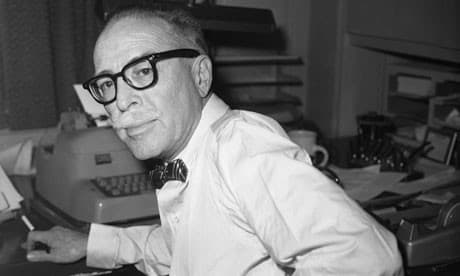
Dalton Trumbo was a celebrated novelist, screenwriter, and a member of the Hollywood Ten. His novel *Johnny Got His Gun* is a powerful anti-war statement, later adapted into a film he also directed. Trumbo's prolific career included Oscar-winning screenplays, often written under pseudonyms during the Hollywood blacklist era.

Brett Casper
5.0

Dirk Uffelmann
4.7

Winston S. Churchill
4.5

Chimamanda Ngozi Adichie
4.5

Will Durant
4.4

Thomas Sowell
4.4
W.E.B. Du Bois
4.3
Alan Moore
4.3