BookBrief
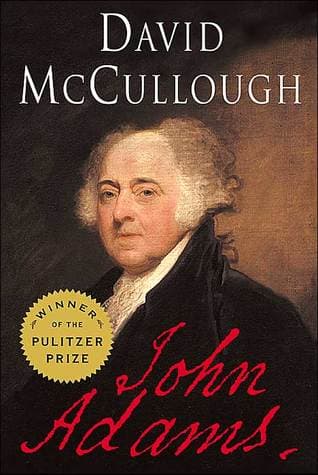
John Adams cover
Archivist's Choice

John Adams

David McCullough (2001)

Genre

Politics / Biography / History

Reading Time

15-20 hours

Key Themes

See below

Track Your Reading

Sign in to track this book

Explore the life of John Adams, a determined patriot whose commitment helped build a nation, and whose marriage to Abigail shows the personal cost of revolution.

Core Idea

David McCullough's "John Adams" is a biography of one of America's important but often overlooked Founding Fathers. The book argues that Adams, through his dedication to public service and the rule of law, was essential to American independence and the early republic, despite facing many personal and political difficulties. McCullough highlights Adams's sharp mind, his challenging diplomatic work, and his strong partnership with his wife, Abigail, as key to his lasting influence. The book shows Adams as a complex, sometimes contradictory, but ultimately principled figure whose contributions were fundamental to the nation's identity.
Reading time
15-20 hours
Difficulty
Medium
✓ Read this if...
You are deeply interested in the American Revolution, the early days of the United States, or desire a meticulously researched, character-driven biography of a key historical figure.
✗ Skip this if...
You prefer concise histories, are looking for a critical analysis over a largely admiring portrayal, or have little patience for extensive detail on political machinations and personal correspondence.

Core idea

The central argument and framework that powers the entire book.

David McCullough's "John Adams" is a biography of one of America's important but often overlooked Founding Fathers. The book argues that Adams, through his dedication to public service and the rule of law, was essential to American independence and the early republic, despite facing many personal and political difficulties. McCullough highlights Adams's sharp mind, his challenging diplomatic work, and his strong partnership with his wife, Abigail, as key to his lasting influence. The book shows Adams as a complex, sometimes contradictory, but ultimately principled figure whose contributions were fundamental to the nation's identity.

At a glance

Reading time

15-20 hours

Difficulty

Medium

Read this if...

You are deeply interested in the American Revolution, the early days of the United States, or desire a meticulously researched, character-driven biography of a key historical figure.

Skip this if...

You prefer concise histories, are looking for a critical analysis over a largely admiring portrayal, or have little patience for extensive detail on political machinations and personal correspondence.

Key Takeaways

1

The Colossus of Independence

John Adams's unwavering commitment to American liberty defined his early career.

Quote

He was 'the colossus of independence,' as Thomas Jefferson called him.

John Adams was a central figure in the American Revolution. His legal skill and strong desire for independence provided important intellectual and rhetorical leadership. He worked hard for separation from Britain, often against much opposition and personal risk. His part in writing key documents and his arguments in the Continental Congress helped build support for the Declaration of Independence. This time established him as a man of strong beliefs, willing to risk comfort and safety for self-governance and liberty, a quality that ma...

Supporting evidence

McCullough details Adams's relentless efforts in the Continental Congress, particularly his arguments for independence and his instrumental role in shaping the Declaration of Independence, despite his not being the primary author. Jefferson's famous epithet 'colossus of independence' underscores Adams's vital contribution.

Apply this

When facing significant challenges or advocating for a deeply held belief, draw inspiration from Adams's unwavering resolve. Understand that true leadership often requires persistence and conviction, even when the path is unpopular or fraught with danger. Cultivate a strong intellectual foundation to support your arguments.

2

A Partnership of Equals

The extraordinary intellectual and emotional bond between John and Abigail Adams was a cornerstone of his success.

Quote

The more than one thousand surviving letters between John and Abigail Adams... provide extraordinary access to their private lives and make it possible to know John Adams as no other major American of his founding era.

The relationship between John and Abigail Adams was a deep intellectual and emotional partnership that shaped John Adams's character and career. Their many letters show a partnership built on mutual respect, shared political ideas, and deep affection. Abigail was not just a supportive wife but a smart intellectual, a trusted advisor, and a capable manager of their home and affairs. She provided stability and important insights during John's frequent, long absences. Her independent mind and direct opinions often challenged and strength...

Supporting evidence

The book heavily relies on the extensive correspondence between John and Abigail Adams, highlighting their intellectual exchanges, Abigail's management of the family estate during his diplomatic missions, and her astute political observations.

Apply this

Foster relationships that are intellectually stimulating and emotionally supportive. Seek partners who challenge your thinking and provide a different perspective. Recognize the immense strength and resilience that can come from a true partnership, allowing both individuals to thrive.

3

Diplomacy's Lonely Path

Adams's arduous and often unappreciated diplomatic service was crucial for securing American independence and stability.

Quote

His courageous voyage on the frigate Boston in the winter of 1778 and his later trek over the Pyrenees are exploits that few would have dared.

Before his presidency, Adams spent years in demanding and often lonely diplomatic service in Europe, representing the new United States in France, the Netherlands, and Great Britain. These missions involved personal danger, financial difficulty, and diplomatic challenges. He navigated European courts, secured vital loans from the Dutch, and negotiated peace treaties, all while dealing with skepticism from established powers and disagreements among his American counterparts. His endurance and dedication during these years were essentia...

Supporting evidence

McCullough vividly describes Adams's perilous journey across the Atlantic on the frigate Boston, his difficult trek over the Pyrenees, and his persistent efforts to secure recognition and loans from European powers, particularly in the Netherlands.

Apply this

Understand that significant achievements often require prolonged periods of unglamorous, difficult work. Cultivate resilience and self-reliance, especially when working in isolation or facing skepticism. Recognize the importance of international relations and the personal sacrifices required to build global trust and alliances.

4

The Burden of the Presidency

Adams's presidency was marked by difficult decisions, personal attacks, and a profound commitment to national unity over party.

Quote

He saved the country from blundering into an unnecessary war.

John Adams's presidency was a time of great challenge, as the new nation struggled to define itself amid internal political divisions and outside threats. His most important achievement was likely his decision to avoid war with France. This move, though unpopular with many in his own Federalist party, saved the young republic from potentially damaging conflict. He faced constant personal attacks and the rise of partisan politics, which upset him deeply. Adams, though often difficult, put national interest and peace above personal popu...

Supporting evidence

McCullough highlights Adams's unpopular but ultimately prescient decision to send a peace delegation to France to avert war, despite intense pressure from the 'High Federalists,' including Alexander Hamilton. The vicious election of 1800 is also detailed.

Apply this

Leaders must be prepared to make unpopular decisions when they believe it is in the long-term best interest of the group. Prioritize principles and long-term stability over short-term political gain or personal popularity. Understand that true leadership often involves enduring criticism and personal sacrifice.

5

A Man of Contradictions

Adams was a complex individual: brilliant yet insecure, principled yet irascible, a champion of liberty who struggled with public perception.

Quote

He was learned beyond all but a few and regarded by some as 'out of his senses.'

McCullough's biography portrays John Adams as a human figure, full of contradictions. He had an extraordinary intellect, a great desire for knowledge, and a clear moral compass. Yet, he was also prone to temper, could be vain, and often felt overlooked, especially compared to figures like Washington and Jefferson. His honesty, while a good quality, sometimes appeared as bluntness that alienated allies. This portrayal reminds us that even the most important historical figures were flawed individuals, and their humanity, with all its co...

Supporting evidence

The book details Adams's extensive reading and intellectual pursuits, juxtaposed with accounts of his temperamental outbursts, his sensitivity to criticism, and his often-strained relationships with other political figures due to his bluntness.

Apply this

Embrace the complexity of human nature, both in yourself and others. Recognize that great strengths often come with corresponding weaknesses. Strive for self-awareness and self-improvement, but also understand that perfection is an elusive goal. Practice empathy when evaluating historical figures or contemporary leaders.

6

The Power of the Pen

Adams's prolific letter writing and intellectual discourse were central to his influence and legacy.

Quote

Much of it drawn from an outstanding collection of Adams family letters and diaries.

Adams wrote a great deal, and his letters, essays, and diaries are valuable sources for understanding the founding era. His correspondence with Abigail, Jefferson, and many others not only recorded daily life and political events but also served as a place for deep philosophical and political discussion. Through his writing, Adams explored fundamental questions of government, human nature, and the republic's future. This commitment to writing down his thoughts allowed him to shape public opinion, influence policy, and leave an unmatch...

Supporting evidence

McCullough extensively quotes from Adams's personal letters, particularly those to Abigail and Jefferson, to reveal his thoughts, fears, and political philosophies. The sheer volume and depth of these writings are emphasized.

Apply this

Cultivate the habit of writing to clarify your thoughts, document your experiences, and communicate effectively. Understand that well-articulated ideas, preserved in writing, can have a lasting impact far beyond your immediate sphere. Engage in thoughtful correspondence to deepen relationships and intellectual understanding.

7

The Unlikely Friendship

The complex, evolving relationship between Adams and Jefferson mirrored the early republic's political divisions and ultimate reconciliation.

Quote

At first they were ardent co-revolutionaries, then fellow diplomats and close friends. With the advent of the two political parties, they became archrivals, even enemies... Then, amazingly, they became friends again, and ultimately, incredibly, they died on the same day.

The relationship between John Adams and Thomas Jefferson reflects early American political development. Starting as close collaborators in the Revolution, their friendship broke apart with the rise of partisan politics, leading to a bitter rivalry for the presidency in 1800. Yet, in their later years, through a remarkable exchange of letters, they renewed their friendship, reflecting on their lives, the Revolution, and the nation's future. Their eventual reconciliation and their synchronized deaths on July 4, 1826, symbolize the poten...

Supporting evidence

The book meticulously traces the arc of their relationship, from their early collaboration in the Continental Congress, through their diplomatic service in Europe, their fierce rivalry in the 1800 election, and their eventual reconciliation through correspondence in their retirement.

Apply this

Recognize that political differences, however profound, do not have to be permanent. Seek opportunities for reconciliation and dialogue, especially with those who share a fundamental commitment to a common good. Understand that shared history and a willingness to reflect can bridge even the widest divides.

8

Virtue and Public Service

Adams embodied a classical republican ideal of public service, prioritizing civic virtue over personal gain or popularity.

Quote

He spared nothing in his zeal for the American Revolution.

For John Adams, public service was not a way to gain wealth or fame, but a serious duty requiring sacrifice and adherence to virtue. He often showed disdain for demagoguery and factionalism, believing that leaders should act according to conscience and the long-term good of the republic, even if it meant losing popularity. His willingness to defend the British soldiers after the Boston Massacre, a very unpopular act, shows this commitment to principle and the rule of law. This classical republican ideal, though challenged by the rise ...

Supporting evidence

McCullough recounts Adams's defense of the British soldiers in the Boston Massacre trial, a highly unpopular decision that showcased his commitment to justice and legal principles over public opinion. His consistent financial struggles despite holding high office also underscore his lack of personal gain from public service.

Apply this

Approach leadership and public service with a strong ethical compass, prioritizing the greater good over personal ambition or popularity. Be prepared to defend unpopular but principled stands. Cultivate a sense of civic duty and responsibility in your community.

9

The Enduring Legacy of Ideas

Adams's intellectual contributions to American constitutionalism and governance remain profoundly relevant.

Quote

This is history on a grand scale -- a book about politics and war and social issues, but also about human nature, love, religious faith, virtue, ambition, friendship and betrayal, and the far-reaching consequences of noble ideas.

Beyond his political actions, John Adams left an important intellectual legacy. His writings on government, especially 'Thoughts on Government' and 'A Defence of the Constitutions of Government of the United States of America,' were foundational texts for American constitutional thought. They argued for checks and balances, separation of powers, and a strong executive. He understood the dangers of unchecked power and the need for a balanced government to protect liberty. His ideas, often insightful, continue to influence discussions a...

Supporting evidence

McCullough discusses Adams's extensive writings on political theory, including 'Thoughts on Government' and 'A Defence of the Constitutions,' and their influence on the framing of state constitutions and the federal Constitution.

Apply this

Engage deeply with foundational ideas and principles in your field, understanding their historical context and ongoing relevance. Recognize that intellectual contributions can have a profound and lasting impact on the evolution of systems and societies. Strive to articulate your own ideas clearly and thoughtfully for future generations.

10

The Human Scale of History

McCullough's biography emphasizes that grand historical events are shaped by abundantly human individuals.

Quote

It is both a riveting portrait of an abundantly human man and a vivid evocation of his time, much of it drawn from an outstanding collection of Adams family letters and diaries.

McCullough’s 'John Adams' brings history to life by focusing on the human aspects of its main character. Rather than presenting a distant, idealized figure, the book explores Adams's emotions, insecurities, triumphs, and failures, making the major events of the founding era feel personal. By using many private letters and diaries, McCullough humanizes Adams, showing him as a husband, father, friend, and a man dealing with his own flaws while aiming for greatness. This approach reminds us that history is not just a series of events, bu...

Supporting evidence

The narrative's reliance on Adams's personal letters and diaries, detailing his anxieties, his love for Abigail, his frustrations, and his moments of joy, consistently portrays him as a complex, relatable human being rather than a stoic historical icon.

Apply this

When studying history or analyzing contemporary events, seek to understand the human motivations and emotions behind decisions and actions. Practice empathy and recognize that individuals, even those in positions of power, are complex beings. Avoid oversimplifying historical narratives and appreciate the rich tapestry of human experience.

Critical analysis

Notable Quotes

The very definition of a republic is 'an empire of laws, and not of men.'

Adams reflecting on the ideal form of government and the rule of law.

Facts are stubborn things; and whatever may be our wishes, our inclinations, or the dictates of our passions, they cannot alter the state of facts and evidence.

Adams's closing argument in the Boston Massacre trial, defending the British soldiers.

Power always thinks it has a great soul and vast views beyond the comprehension of the weak; and that it is doing God's service when it is violating all His laws.

Adams's observations on the nature of power and its potential for corruption.

I must study politics and war that my sons may have liberty to study mathematics and philosophy. My sons ought to study mathematics and philosophy, geography, natural history, naval architecture, navigation, commerce, and agriculture, in order to give their children a right to study painting, poetry, music, architecture, statuary, tapestry, and porcelain.

Adams expressing his hopes for future generations and the progress of society.

The people have a right, an indisputable, unalienable, indefeasible, divine right to that most dreaded and envied kind of knowledge—I mean of the characters and conduct of their rulers.

Adams advocating for transparency and the public's right to know about their leaders.

The longer I live, the more I read, the more I see, the more I reflect, the more I am convinced that the honor, the glory, the splendor, the majesty of the people, and the happiness of human life, depends upon morality.

Adams emphasizing the importance of morality for a thriving society.

A desire to be observed, considered, esteemed, praised, beloved, and admired by his fellows, is one of the strongest and most active principles in the human mind.

Adams's insights into human psychology and the drive for recognition.

Posterity! You will never know how much it cost us to preserve your freedom. I hope you will make a good use of it.

Adams reflecting on the sacrifices made for independence and the responsibility of future generations.

Property is surely a right of mankind as really as liberty.

Adams discussing fundamental rights, linking property with liberty.

Fear is the foundation of most governments.

Adams's cynical view on the underlying basis of governmental control.

Liberty, according to my metaphysics, is an intellectual quality, an attribute of mind alone.

Adams's philosophical musings on the true nature of liberty.

The happiness of society is the end of government.

Adams stating the ultimate purpose and goal of any government.

Great designs are not accomplished without great men.

Adams reflecting on the role of exceptional individuals in historical achievements.

Quiz

Test Your Knowledge

Ready to see how well you understood this book? Take our interactive quiz with 10 questions.

10
Questions
~5
Minutes
?
Best Score

Key Questions (FAQ)

McCullough's 'John Adams' is a powerful biography that chronicles the adventurous life of John Adams, a key figure in the American Revolution and the second U.S. President. It delves into his political career, personal struggles, and his significant marriage to Abigail Adams, often drawing from their extensive correspondence.

About the author

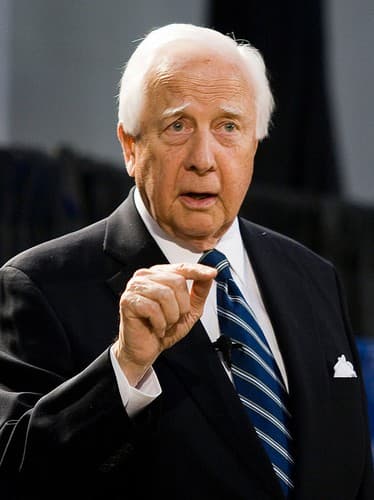
David McCullough

David McCullough was a two-time Pulitzer Prize winner and a recipient of the Presidential Medal of Freedom, celebrated for his vivid historical narratives. His notable works, including "1776," "John Adams," and "Truman," brought American history to life for millions of readers. McCullough's masterful storytelling and meticulous research made him one of the nation's most beloved and respected historians.