BookBrief
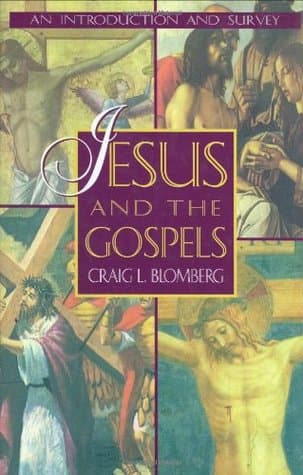
Jesus and the Gospels cover
Archivist's Choice

Jesus and the Gospels

Craig L. Blomberg (1997)

Genre

Reference / Spirituality

Reading Time

15-20 hours (it's a dense textbook)

Key Themes

See below

Track Your Reading

Sign in to track this book

This book surveys the eyewitness accounts of Matthew, Mark, Luke, and John, reconstructing the life and ministry of Jesus with historical and theological depth.

Core Idea

Craig Blomberg's "Jesus and the Gospels" defends the historical reliability of the Gospels, combining critical scholarship with an evangelical viewpoint. The book addresses issues like the Synoptic Problem, John's distinctiveness, and Jesus' socio-historical context. It argues that the biblical accounts offer a trustworthy picture of Jesus as both divine and human, the Messiah and Son of God. Blomberg shows how internal and external evidence supports the history of Jesus' life, teachings, miracles, passion, and resurrection. He also explores the theological diversity and unity within the Gospel narratives. The main idea is that a careful reading of the Gospels, considering their ancient literary conventions and historical background, shows them to be credible sources for understanding Jesus. Blomberg navigates complex critical discussions, responding to common challenges to Gospel reliability and presenting a clear case for their truthfulness for contemporary readers.
Reading time
15-20 hours (it's a dense textbook)
Difficulty
Hard
✓ Read this if...
You are a serious student of the New Testament, pastor, or layperson seeking a robust academic defense of the Gospels' historical reliability from an evangelical viewpoint, or if you want to delve deeply into source criticism, the Synoptic Problem, and the unique contributions of each Gospel author.
✗ Skip this if...
You are looking for a devotional read, a highly simplified introduction to Jesus' life, or a book that avoids detailed academic discussions of textual criticism and historical methodology. Also, if you are firmly convinced the Gospels are historically unreliable and are not open to a scholarly defense of their credibility.

Core idea

The central argument and framework that powers the entire book.

Craig Blomberg's "Jesus and the Gospels" defends the historical reliability of the Gospels, combining critical scholarship with an evangelical viewpoint. The book addresses issues like the Synoptic Problem, John's distinctiveness, and Jesus' socio-historical context. It argues that the biblical accounts offer a trustworthy picture of Jesus as both divine and human, the Messiah and Son of God. Blomberg shows how internal and external evidence supports the history of Jesus' life, teachings, miracles, passion, and resurrection. He also explores the theological diversity and unity within the Gospel narratives.

The main idea is that a careful reading of the Gospels, considering their ancient literary conventions and historical background, shows them to be credible sources for understanding Jesus. Blomberg navigates complex critical discussions, responding to common challenges to Gospel reliability and presenting a clear case for their truthfulness for contemporary readers.

At a glance

Reading time

15-20 hours (it's a dense textbook)

Difficulty

Hard

Read this if...

You are a serious student of the New Testament, pastor, or layperson seeking a robust academic defense of the Gospels' historical reliability from an evangelical viewpoint, or if you want to delve deeply into source criticism, the Synoptic Problem, and the unique contributions of each Gospel author.

Skip this if...

You are looking for a devotional read, a highly simplified introduction to Jesus' life, or a book that avoids detailed academic discussions of textual criticism and historical methodology. Also, if you are firmly convinced the Gospels are historically unreliable and are not open to a scholarly defense of their credibility.

Key Takeaways

1

Historical Reliability of the Gospels

The Gospels are not mere theological treatises but historically grounded documents.

Quote

The Gospels present themselves as history, and they stand up remarkably well to historical scrutiny when compared to other ancient biographies.

Blomberg argues for the historical reliability of the Gospels, challenging the idea that they are only faith-based stories without factual basis. He uses historical-critical methods common for other ancient texts, showing that the Gospels' accounts fit with what we know about first-century Palestine. This includes looking at archaeological finds, non-biblical historical sources (like Tacitus, Pliny the Younger, and Josephus), and the internal consistency of the narratives. He notes that small differences between accounts do not underm...

Supporting evidence

Blomberg cites the consistency of the Gospels with archaeological findings concerning cities, customs, and political figures of the era, alongside corroborating references to Jesus in secular historical writings by Josephus and Tacitus.

Apply this

Approach the Gospels with an open mind to their historical claims, recognizing that their ancient context and literary genre differ from modern historical writing but still offer reliable information. Engage with scholarly resources that address apparent discrepancies rather than dismissing the texts outright.


historical-criticismeyewitness-testimonyancient-biography
2

Synoptic Problem and Source Criticism

Understanding the literary relationships between Matthew, Mark, and Luke unlocks deeper insights.

Quote

The Synoptic Problem, while complex, is not an insurmountable obstacle but a fascinating puzzle that, when addressed, enhances our appreciation for the distinct contributions of each Gospel writer.

The 'Synoptic Problem' refers to explaining the similarities and differences among Matthew, Mark, and Luke. Blomberg explores the main scholarly idea: Markan priority (Mark was written first) and the existence of a hypothetical 'Q' source (a collection of Jesus' sayings shared by Matthew and Luke, but not Mark). He also discusses 'M' and 'L' sources, which are unique to Matthew and Luke. Understanding these literary relationships helps explain why passages are similar or different, and how each evangelist shaped their narrative for th...

Supporting evidence

Blomberg details the 'two-source hypothesis' (Mark and Q), citing examples of verbal agreements and disagreements, as well as the order of events in the Synoptics, to support the proposed literary dependency.

Apply this

When reading Matthew, Mark, and Luke, pay attention to parallel passages. Consider how each author might be emphasizing different aspects of an event or teaching, understanding that their choices are often informed by their sources and intended audience.

markan-priorityq-sourcesynoptic-gospelssource-criticism
3

John's Unique Contribution

The Fourth Gospel offers a distinct theological lens and supplemental narratives.

Quote

John's Gospel, while stylistically and structurally distinct from the Synoptics, does not contradict them but rather complements and illuminates Jesus' identity and mission with a profound theological depth.

Blomberg focuses on the Gospel of John, pointing out its unique features compared to the Synoptics. John contains much material not in Matthew, Mark, or Luke, including longer speeches, different miracle accounts, and a distinct timeline for Jesus' ministry (e.g., multiple Passovers). While some scholars see a conflict, Blomberg argues that John's goal is not to rewrite history. Instead, it offers a theological interpretation of Jesus' identity as the divine Son of God, using carefully chosen events and teachings. He sees John as givi...

Supporting evidence

Blomberg points to John's unique 'I Am' statements, the absence of parables, and the focus on Jerusalem ministry early in Jesus' public life, contrasting these with the Synoptics but arguing for complementarity.

Apply this

Read John's Gospel not as a replacement for the Synoptics, but as a profound theological meditation that unveils different facets of Jesus' identity and purpose. Look for how John's unique narratives and discourses illuminate or expand upon themes found elsewhere.

johnnine-gospeltheological-interpretationi-am-statements
4

The Portrait of Jesus: Messiah, Son of God, Human

The Gospels collectively present a multifaceted, yet coherent, image of Jesus' identity.

Quote

Across all four Gospels, a consistent and compelling portrait emerges: Jesus is the promised Messiah, the divine Son of God, yet fully human, experiencing life's realities.

Blomberg analyzes how each Gospel contributes to the overall picture of Jesus. Matthew presents Jesus as the Jewish Messiah fulfilling Old Testament prophecy. Mark portrays him as the suffering servant and powerful Son of God. Luke highlights his universal role as savior and compassion for the marginalized. John clearly states his divine nature and pre-existence. Despite these different focuses, Blomberg shows that the Gospels together present a consistent, non-contradictory image of Jesus as both fully divine and fully human. He expl...

Supporting evidence

Blomberg compares the genealogies in Matthew (tracing through Abraham and David) and Luke (tracing through Adam), showing how they emphasize Jesus' messianic and universal humanity respectively, alongside John's opening declaration of Jesus' pre-existence and divinity.

Apply this

When studying the Gospels, intentionally consider how each author's unique perspective contributes to your overall understanding of Jesus' identity as Messiah, Son of God, and human. Synthesize these perspectives to form a richer, more complete picture.

christologymessiahson-of-goddivinity-of-christ
5

Jesus' Teachings and Parables

The Kingdom of God is the central theme, communicated through relatable yet challenging parables.

Quote

Jesus' parables were not merely illustrative stories; they were provocative calls to decision, revealing the nature of the Kingdom of God and challenging his hearers to respond.

Blomberg examines the content and purpose of Jesus' teachings, especially the parables and the Kingdom of God. He explains that the Kingdom of God is not just a future heavenly realm but a present reality that Jesus started, requiring a new way of life. The parables, often misunderstood as simple moral lessons, are literary tools designed to both reveal and hide truth, challenging listeners to think and choose a response. Blomberg highlights their socio-cultural context, showing how understanding first-century Jewish life clarifies th...

Supporting evidence

Blomberg analyzes specific parables like the Sower, the Prodigal Son, and the Good Samaritan, explaining their original context and how they subvert expectations while revealing truths about God's character and the Kingdom.

Apply this

When encountering Jesus' parables, move beyond surface-level interpretation. Research their first-century context and consider the challenging, transformative message they convey about the Kingdom of God and your own life.

kingdom-of-godparables-of-jesussermon-on-the-mountethical-teachings
6

Miracles as Signs and Demonstrations

Jesus' miracles were not arbitrary displays of power but purposeful signs of God's Kingdom.

Quote

Jesus' miracles are not merely proof-texts for his divinity; they are integral to his message, demonstrating the inbreaking of God's Kingdom and offering a foretaste of its ultimate restoration.

Blomberg treats Jesus' miracles as key parts of his ministry, not just isolated events to be debated. He argues that the Gospels present miracles as 'signs' (especially in John) that point to Jesus' identity and God's active presence. They are demonstrations of God's power over sickness, nature, and death, validating Jesus' claims and showing the Kingdom of God entering human history. Blomberg addresses common skeptical arguments, suggesting that the volume, variety, and public nature of Jesus' miracles, attested by both supporters an...

Supporting evidence

Blomberg discusses the healing of the paralytic, the feeding of the five thousand, and the raising of Lazarus, highlighting how these specific miracles connect to Old Testament prophecies and Jesus' claims about himself and the Kingdom.

Apply this

When reading about Jesus' miracles, consider not only the 'what' but the 'why.' Reflect on how each miracle serves as a sign or demonstration of God's character, Jesus' identity, and the nature of the Kingdom of God.

miracles-of-jesussigns-and-wonderskingdom-inaugurationsupernatural
7

The Passion and Resurrection

The climax of the Gospel narrative, foundational to Christian faith and historically attested.

Quote

The death and resurrection of Jesus are not merely the conclusion of his earthly ministry, but the pivotal events upon which the entire Christian message stands or falls, attested by a surprising array of evidence.

Blomberg states that Jesus' Passion (suffering and death) and Resurrection are the clear climax of all four Gospel narratives and the core of Christian faith. He examines the Gospel accounts of Jesus' trial, crucifixion, and post-resurrection appearances. He notes their internal consistency while acknowledging small variations that support, rather than diminish, their credibility as independent testimonies. He presents the empty tomb and the many eyewitness accounts of the risen Jesus as strong historical evidence, challenging other t...

Supporting evidence

Blomberg details the accounts of the women at the tomb, the appearances to the disciples, and Paul's early creedal statement in 1 Corinthians 15, arguing these provide strong cumulative evidence for the historicity of the resurrection.

Apply this

Engage deeply with the Passion and Resurrection narratives, recognizing their theological and historical weight. Consider the implications of these events for your understanding of life, death, and hope, and how they transformed the early disciples.

passion-narrativeresurrection-of-jesusempty-tombeyewitness-accounts
8

Theological Diversity within Unity

Each Gospel writer presents a unique theological perspective, contributing to a unified message.

Quote

The four Gospels, though distinct in their emphases and literary styles, are not competing narratives but complementary voices, each offering an indispensable perspective on the singular reality of Jesus Christ.

Blomberg argues against seeing the Gospels as all the same or contradictory. Instead, he supports 'theological diversity within unity.' Each evangelist—Matthew, Mark, Luke, and John—had a specific audience, purpose, and literary strategy, leading to distinct theological focuses. Matthew focuses on Jesus as the Jewish Messiah. Mark focuses on Jesus as the suffering Son of God. Luke focuses on Jesus as the universal Savior. John focuses on Jesus as the divine Word incarnate. Blomberg shows that these differences are not flaws but intent...

Supporting evidence

Blomberg illustrates this by comparing the opening chapters of each Gospel: Matthew's genealogy from Abraham, Mark's abrupt beginning with John the Baptist, Luke's birth narrative focusing on Mary, and John's cosmic prologue.

Apply this

When studying the Gospels, consciously identify the unique theological themes and literary styles of each author. Read them comparatively to gain a richer, more nuanced understanding of Jesus and his significance.

gospel-authorshiptheological-themesliterary-stylegospel-harmonization
9

Jesus' Jewish Context

Understanding first-century Judaism is crucial for interpreting Jesus and the Gospels accurately.

Quote

To truly understand Jesus, one must understand the rich tapestry of first-century Judaism within which he lived, taught, and was ultimately rejected and embraced.

Blomberg consistently emphasizes the importance of understanding Jesus within his first-century Jewish context. He explains various Jewish groups (Pharisees, Sadducees, Essenes, Zealots), their beliefs, and their relationship with Roman occupation. He clarifies how Jesus' teachings and actions—such as his interpretation of the Law, his use of parables, and his claims about the Kingdom of God—would have been understood (and often misunderstood) by his Jewish contemporaries. Blomberg shows that Jesus was not introducing a completely new...

Supporting evidence

Blomberg explains the significance of concepts like 'Son of Man,' 'Messiah,' and 'Kingdom of Heaven' within Jewish eschatological expectations, and how Jesus both fulfilled and subverted these expectations.

Apply this

Actively seek to learn about first-century Jewish culture, customs, and religious beliefs when reading the Gospels. This will illuminate the nuances of Jesus' teachings and the reactions of his audience.

first-century-judaismphariseessadduceesold-testament-fulfillment
10

Application for Contemporary Readers

The Gospels remain profoundly relevant, offering timeless wisdom for faith and life.

Quote

The Gospels are not dusty ancient texts but living documents that continue to challenge, inspire, and transform those who engage with them thoughtfully and prayerfully.

Beyond historical analysis, Blomberg guides the reader toward the contemporary relevance of the Gospels. He argues that understanding their historical and literary context is not an end in itself, but a way to a deeper, more informed faith and practical application. Jesus' teachings on ethics, relationships, justice, and the Kingdom of God remain challenging and transformative. The story of Jesus' life, death, and resurrection offers hope, purpose, and a model for discipleship. Blomberg encourages readers to move beyond intellectual a...

Supporting evidence

While not a specific 'study,' Blomberg's entire approach throughout the book is to bridge the gap between ancient text and modern reader, consistently drawing out the implications of his scholarly findings for faith and practice.

Apply this

After studying the historical and theological aspects of a Gospel passage, intentionally reflect on its personal implications: How does this challenge my assumptions? How can I apply this teaching to my life today? What does it reveal about God and myself?

discipleshipspiritual-formationbiblical-applicationcontemporary-relevance

Critical analysis

Notable Quotes

The Gospels are not biographies in the modern sense, but ancient biographies designed to persuade their readers of the truth about Jesus.

Explaining the genre of the Gospels.

Miracles in the Gospels are not merely displays of power, but intentional acts that reveal God's character and purposes.

Discussing the theological significance of Jesus's miracles.

To interpret the parables correctly, one must first understand their original historical and cultural context.

Providing guidance on interpreting Jesus's parables.

The Sermon on the Mount presents an ethic that is radical, demanding, and ultimately achievable only through divine empowerment.

Analyzing the ethical teachings of Jesus.

The resurrection is the linchpin of Christian faith; without it, the entire edifice collapses.

Emphasizing the centrality of the resurrection.

While there are differences in the Gospel accounts, these are best understood as complementary perspectives rather than irreconcilable contradictions.

Addressing apparent discrepancies among the Gospels.

Jesus's 'I Am' statements in John's Gospel are profound claims to divinity, echoing Yahweh's self-revelation in the Old Testament.

Examining the Christological claims in John's Gospel.

The kingdom of God is both a present reality to be experienced and a future hope to be anticipated.

Defining the concept of the Kingdom of God.

The Synoptic Problem, while complex, has yielded significant insights into the literary relationships among Matthew, Mark, and Luke.

Discussing the scholarly challenge of the Synoptic Problem.

Jesus's compassion for the marginalized and outcast is a consistent theme across all four Gospels.

Highlighting a key aspect of Jesus's character and ministry.

The passion narratives are not merely historical reports but theological interpretations of the saving significance of Jesus's death.

Analyzing the meaning of Jesus's suffering and death.

Understanding the Jewish background of Jesus and the Gospels is indispensable for proper interpretation.

Emphasizing the Jewish context of early Christianity.

The Great Commission is not just for a select few, but a mandate for all followers of Jesus to participate in spreading the Gospel.

Reflecting on the implications of Jesus's final command.

Quiz

Test Your Knowledge

Ready to see how well you understood this book? Take our interactive quiz with 10 questions.

10
Questions
~5
Minutes
?
Best Score

Key Questions (FAQ)

'Jesus and the Gospels' offers an intensive guide to the four Gospels, surveying them as the most significant source of eyewitness information regarding Jesus' life and ministry. It delves into the accounts of the apostles who directly interacted with Jesus during his earthly time.

About the author

Craig L. Blomberg is a distinguished New Testament scholar and author. He is widely recognized for his seminal work, "Jesus and the Gospels: An Introduction and Survey," a foundational text in biblical studies. Blomberg's extensive research and prolific writing focus on the historical Jesus and the Gospels, making him a leading voice in evangelical scholarship.