BookBrief
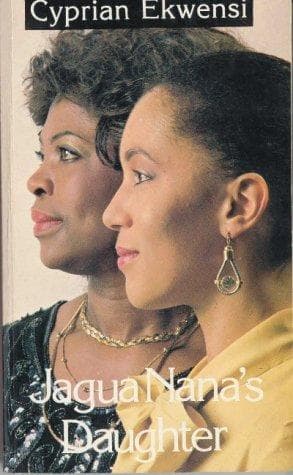
Jagua Nana's Daughter cover
Archivist's Choice

Jagua Nana's Daughter

Cyprian Ekwensi (2000)

Genre

General

Reading Time

240 min

Key Themes

See below

Track Your Reading

Sign in to track this book

In the busy city of Lagos, a young woman deals with her mother's past and her own desire for independence, navigating love, betrayal, and self-discovery.

Core Idea

Cyprian Ekwensi's "Jagua Nana's Daughter" looks at how a mother's controversial past affects her daughter, Liza. The novel shows that even if people try to make their own way and avoid judgment, their family history—both genes and reputation—shapes their choices, relationships, and future. Through Liza's move from a convent to Lagos, the book examines the link between personal goals, finding love, and family influence, especially for women in a society run by men.
Reading time
240 min
Difficulty
Medium
✓ Read this if...
You are interested in post-colonial Nigerian literature, stories about mother-daughter dynamics, or narratives exploring themes of identity, societal judgment, and the challenges faced by women seeking independence in rapidly changing urban environments.
✗ Skip this if...
You prefer fast-paced thrillers or books with straightforward, unambiguously happy endings.

Core idea

The central argument and framework that powers the entire book.

Cyprian Ekwensi's "Jagua Nana's Daughter" looks at how a mother's controversial past affects her daughter, Liza. The novel shows that even if people try to make their own way and avoid judgment, their family history—both genes and reputation—shapes their choices, relationships, and future. Through Liza's move from a convent to Lagos, the book examines the link between personal goals, finding love, and family influence, especially for women in a society run by men.

At a glance

Reading time

240 min

Difficulty

Medium

Read this if...

You are interested in post-colonial Nigerian literature, stories about mother-daughter dynamics, or narratives exploring themes of identity, societal judgment, and the challenges faced by women seeking independence in rapidly changing urban environments.

Skip this if...

You prefer fast-paced thrillers or books with straightforward, unambiguously happy endings.

Key Takeaways

1

The Weight of Inheritance

How parental legacy, even when distant, shapes a child's destiny.

Quote

Angela, though separated by distance and upbringing, could not entirely escape the shadow of her mother's reputation.

Angela's life shows how identity is passed down. Even though she grew up in a convent, away from her mother Jagua Nana's reputation, Angela constantly faces how society views her family. Her efforts to make her own way are often hurt by what people know about her mother. This is not just about genetics; it's about the social and psychological impact of a parent's past. It shows how a community's memory and judgment can strongly influence a child's choices, relationships, and self-image. The novel suggests that while we want to be indi...

Supporting evidence

Her eventual return to Lagos and the direct confrontation with her mother's world, which she had so long avoided.

Apply this

Reflect on how your family's history or societal perceptions of your background might be subtly influencing your current decisions or opportunities. Are you actively working to define your own identity, or unconsciously fulfilling an inherited narrative? Consider intentional actions to break free from unhelpful inherited perceptions.

2

The Illusion of Escape

Running from one's past often leads to a cyclical return.

Quote

She had thought the convent walls would protect her, but the world outside eventually found a way to remind her of her origins.

Angela's journey shows that it is hard to escape the past without facing it. Her early life in the convent was a clear attempt to cut ties with Jagua Nana's world of nightlife. Yet, the past eventually catches up. Every step she takes away from her mother's influence seems to bring her closer to a similar fate or a direct meeting with what she wanted to avoid. This shows a common human belief: that moving or changing surroundings can erase deep-seated problems. Ekwensi suggests that real escape is not about changing location but about...

Supporting evidence

Her relationships often mirror the transactional nature she wished to avoid.

Apply this

Instead of avoiding difficult aspects of your past, actively engage with them. Seek understanding, forgiveness (for yourself or others), or closure. Recognize that unresolved issues will likely resurface until they are addressed head-on. Journaling or therapy can be useful tools for this internal reckoning.

3

Mother-Daughter Reckoning

The complex dance of love, resentment, and understanding between generations.

Quote

The gap between them was not just years, but a lifetime of unspoken words and contrasting experiences.

The relationship between Jagua Nana and Angela is the emotional center of the novel, showing the complexities of mother-daughter connections. It is a relationship built on absence, anger, and a deep, often unacknowledged, desire for connection. Angela resents her mother's choices and the shame they brought, while Jagua Nana, in her own way, tries to protect Angela from her world, though not always well. Their eventual meeting is less about blame and more about a fragile attempt to understand each other despite very different lives. Ek...

Supporting evidence

Their eventual, uneasy cohabitation and the gradual, unspoken shifts in their understanding of each other.

Apply this

Seek to understand the motivations and circumstances of your parents or older generations, especially regarding choices you might judge. Initiate conversations, listen actively, and try to see their past through their eyes. This can foster empathy and heal long-standing family wounds, even if perfect agreement isn't reached.

4

The Price of Independence for Women

Navigating societal expectations and personal freedom in a patriarchal world.

Quote

In a world that offered women so few paths to self-sufficiency, Jagua had carved her own, though at a cost.

Both Jagua Nana and Angela, in their own ways, deal with the limits placed on women seeking independence in a society with strict gender roles. Jagua Nana chose a path that offered financial freedom, though through questionable means. Angela, wanting a more 'respectable' independence, constantly fights against the limits imposed by her gender and her mother's reputation. The novel subtly criticizes the double standards women face: praised for being pure and domestic, but often denied ways to be financially independent without big comp...

Supporting evidence

Angela's difficulties in securing employment and stable relationships without facing sexual advances or judgment based on her perceived availability.

Apply this

Reflect on how societal expectations for your gender might influence your career choices, relationships, or personal ambitions. Identify areas where you can challenge or redefine these expectations for yourself, asserting your agency in a way that aligns with your values. Support other women in their pursuit of independence, recognizing the unique challenges they face.

5

The Allure and Peril of City Life

Urban centers as crucibles of opportunity, corruption, and moral ambiguity.

Quote

Lagos, with its glittering lights and hidden dangers, promised everything and demanded a heavy toll.

Lagos is more than just a place; it is a character itself, a busy, chaotic, and morally complex entity that shapes the lives of its residents. For Jagua Nana, it is where she rises and rules; for Angela, it is a force that pulls her back into its complex world. Ekwensi shows the city as a place of great opportunity, where money can be made, but also a place of vice, where innocence is easily lost and morals are often flexible. The city's anonymity allows for new beginnings but also for exploitation. This portrayal shows the common exp...

Supporting evidence

Angela's encounters with various characters in Lagos, from morally upright individuals to those engaged in illicit activities, all shaped by the city's environment.

Apply this

When navigating new environments, especially urban ones, be acutely aware of the cultural and moral landscape. Identify both the opportunities and the potential pitfalls. Maintain a strong sense of personal values and boundaries, as external pressures can subtly erode them. Seek out communities that align with your principles.

6

Redemption in Unlikely Places

Finding grace and purpose amidst a life of perceived sin.

Quote

Even in the twilight of her life, Jagua Nana found a new path, a quiet dignity she had not known before.

One of the deepest themes is the chance for redemption, not through traditional religious ways, but through a change in purpose and a quiet acceptance of one's past. Jagua Nana, a character often judged harshly, eventually finds a form of peace and meaning by returning to her roots and helping her community. This is not a sudden change, but a subtle growth, suggesting that redemption can be found in small acts of kindness, responsibility, and connection. Ekwensi challenges the simple idea that a 'sinner' cannot find a meaningful end, ...

Supporting evidence

Her quiet contentment and sense of purpose in her later years, a stark contrast to her earlier tumultuous life.

Apply this

Consider what 'redemption' means to you, beyond conventional definitions. Identify areas in your life where you might seek to make amends, contribute positively, or simply find peace with past choices. Focus on actions that bring you a sense of purpose and connection, rather than seeking external absolution.

7

The Elusive Nature of Love

Love manifests in diverse, often flawed, and transactional forms.

Quote

Love, in their world, was rarely simple, often mixed with desire, ambition, or the need for security.

The novel presents a complex, often cynical, view of love, especially in the city. For Jagua Nana, love is often tied to money, status, or short-term passion. For Angela, her search for real affection is repeatedly blocked by men who see her as an object or a means to an end. Ekwensi shows how societal pressures, economic realities, and individual histories twist the ideal of romantic love. He suggests that while pure love might exist, it often struggles to survive amid the complexities of human desire, self-interest, and the transact...

Supporting evidence

Angela's unfortunate experiences with men who promise love but deliver exploitation or abandonment, such as her relationship with Dennis.

Apply this

Examine your own relationships and identify the various components beyond pure affection (e.g., security, status, convenience). Strive for authenticity and clear communication about expectations. Be wary of relationships where the exchange feels imbalanced or where your intrinsic worth is not recognized and respected.

8

The Cycle of Judgment

How societal condemnation perpetuates the very behaviors it seeks to eradicate.

Quote

The world had judged her mother, and by extension, had already judged Angela before she had a chance to speak.

Both Jagua Nana and Angela are victims of constant societal judgment. Jagua Nana is condemned for her lifestyle, and Angela, despite trying to live well, is always judged by association. This constant condemnation, instead of stopping 'immoral' behavior, often traps people in a cycle where they are denied chances for change or respect, reinforcing their current paths. Ekwensi highlights the hypocrisy of a society that moralizes while also creating conditions that push people into marginalized roles. The novel argues that harsh judgmen...

Supporting evidence

The way Jagua Nana is ostracized by 'respectable' society even as her charisma still draws people to her.

Apply this

Before judging others, especially based on their past or family, consider the full context of their circumstances and the potential impact of your judgment. Practice empathy and offer opportunities for growth and redemption. Challenge societal narratives that demonize individuals without understanding the systemic factors at play.

9

Education as a Double-Edged Sword

While offering escape, education can also create new forms of alienation.

Quote

Her convent education had given her a shield, but also a barrier between herself and the world she was born into.

Angela's convent education is first shown as her salvation, a way to raise her above her mother's world. However, Ekwensi reveals its complex nature. While it gives her a moral guide and a sense of refinement, it also separates her from her culture and the realities of her society. Her 'gentle' upbringing leaves her unprepared for the harsh realities of Lagos, making her vulnerable and naive. The novel subtly questions the idea that Western education is a cure-all, showing how it can create a disconnect, making individuals feel foreig...

Supporting evidence

Her struggle to connect with men and opportunities in Lagos due to her perceived 'difference' and lack of street smarts compared to others.

Apply this

When pursuing education or new experiences, consciously work to integrate them with your existing identity and cultural context. Don't let new knowledge alienate you from your roots or practical realities. Seek a balance between intellectual growth and grounded, real-world understanding. Actively bridge gaps between different aspects of your life.

10

The Persistence of Hope

Despite hardships, a flicker of optimism for a better future endures.

Quote

Even after all she had endured, a quiet hope for peace and a meaningful life remained within her.

Despite the often difficult lives of its characters, 'Jagua Nana's Daughter' ultimately offers a message of lasting hope. Both Jagua Nana, in her later years, and Angela, through her resilience, show a human ability to find meaning, peace, and strive for a better future, even after big problems and disappointment. This hope is not naive; it is a hard-earned, practical optimism that acknowledges life's difficulties but refuses to be put out by them. Ekwensi suggests that even when facing societal judgment, personal failures, and diffic...

Supporting evidence

Angela's continued efforts to find love and build a stable life, even after repeated heartbreaks and disappointments, and her eventual reconciliation with her mother.

Apply this

In times of difficulty, actively cultivate and protect your sense of hope. Focus on small, actionable steps towards your goals, rather than being overwhelmed by the bigger picture. Remind yourself of past challenges you've overcome and the resilience you possess. Connect with sources of inspiration and support that reinforce a positive outlook.

Critical analysis

Notable Quotes

The city was a great beast, and it was always hungry. It swallowed up the young and spat out the old, broken and forgotten.

Reflecting on Lagos and its impact on individuals.

She had come to Lagos seeking a dream, but the city had offered her a nightmare instead.

Recounting Liza's initial experiences in the bustling city.

Money was a god in this city, and those who had it were worshipped. Those who didn't, starved.

A commentary on the stark economic realities of Lagos.

Love, like everything else in Lagos, was a commodity. It could be bought, sold, or traded for a better deal.

Observing the transactional nature of relationships in the city.

The past was a shadow that followed you, no matter how fast you ran.

Liza trying to escape her mother's reputation and her own past.

A woman's beauty was her power, but it was also her curse.

Considering the double-edged sword of attractiveness for women in their society.

Life in the city was a constant struggle, a fight for survival, where only the strongest or the most cunning could hope to win.

Describing the competitive and challenging environment of urban living.

She wanted to be different, to carve her own path, but the weight of her mother's legend was heavy upon her shoulders.

Liza's internal conflict regarding her identity versus her mother's shadow.

The night held secrets, and Lagos never slept. It hummed with a thousand stories, some joyous, many tragic.

Evoking the vibrant and often dark atmosphere of Lagos at night.

Hope was a dangerous thing in a place like this. It could lift you up, only to drop you harder.

A cynical view on the perils of optimism in a harsh environment.

Every man had a price, and every woman knew how to find it.

A jaded perspective on human nature and relationships.

To forget was a luxury she could not afford, for forgetting meant repeating the same mistakes.

Liza's determination to learn from her experiences and not repeat past errors.

The drums of the city beat a rhythm of life and death, success and failure, all intertwined.

A poetic description of the relentless energy and contrasts of Lagos.

She learned that to survive, sometimes you had to be as hard as the city itself.

Liza's adaptation to the harsh realities of urban life.

Quiz

Test Your Knowledge

Ready to see how well you understood this book? Take our interactive quiz with 10 questions.

10
Questions
~5
Minutes
?
Best Score

Key Questions (FAQ)

'Jagua Nana's Daughter' by Cyprian Ekwensi continues the story of Jagua Nana through the experiences of her daughter, Liza. The novel delves into Liza's life as she navigates urban Lagos, exploring themes of identity, ambition, and the challenges faced by young women in a rapidly changing Nigerian society.

About the author

Cyprian Ekwensi

Cyprian Ekwensi was a Nigerian novelist and journalist. He is best known for his novels 'Jagua Nana,' 'Jagua Nana's Daughter,' and 'People of the City,' which explored urban life and social issues in post-colonial Nigeria. Ekwensi's vibrant prose and realistic portrayals of Nigerian society made him a significant figure in African literature.