“The explorer looked at the officer, expecting some explanation, but the officer did not seem to be in a hurry to give any.”
— Early in the story, the explorer observes the officer and the machine for the first time.

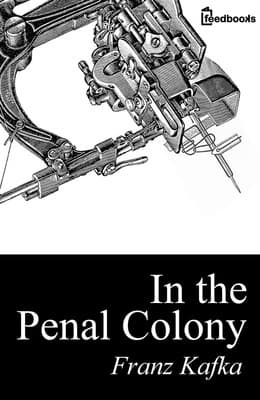
Franz Kafka (2018)
Genre
Philosophy
Reading Time
50 min
Key Themes
See below
Sign in to track this book
In a desolate penal colony, a traveler witnesses a horrific execution machine that embodies a chilling, self-justifying system of justice, forcing him to confront the dark heart of power and the terrifying absence of due process.
“The explorer looked at the officer, expecting some explanation, but the officer did not seem to be in a hurry to give any.”
— Early in the story, the explorer observes the officer and the machine for the first time.
“Justice is always on the side of the stronger argument.”
— The officer explains his judicial philosophy and the lack of defense for the condemned.
“Guilt is never to be doubted.”
— The officer's fundamental principle for administering justice in the colony.
“His guiding principle was: 'The sentence is always just.'”
— Describing the old Commandant's unwavering belief in the machine's judgments.
“A peculiar machine, isn't it?”
— The officer's initial remark to the explorer about the apparatus.
“It's a wonder that the machine can do its work without any noise.”
— The explorer's observation of the machine's operation, highlighting its unsettling efficiency.
“But how quiet it is! How quiet it is!”
— The officer's repeated exclamations about the machine's silent operation, emphasizing its disturbing nature.
“The condemned man was standing there as if he were a stone.”
— Describing the condemned man's stoic, almost lifeless, demeanor before the execution.
“The explorer felt a certain unease, a certain disgust, but he kept it to himself.”
— The explorer's internal reaction to witnessing the execution process.
“You see, it's not a complicated machine.”
— The officer's explanation of the apparatus, attempting to demystify its gruesome function.
“The explorer thought to himself: 'What a strange way to die!'”
— The explorer's internal thought as he observes the condemned man's fate.
“For our machine is not merely a machine; it is a monument.”
— The officer's profound statement about the apparatus, elevating its status beyond mere technology.
“It was impossible to resist the conviction that the justice administered here was not only inhuman but also absurd.”
— The explorer's growing realization about the nature of justice in the penal colony.
“The time for this machine is past.”
— The explorer's internal judgment on the apparatus, indicating its obsolescence.
Ready to see how well you understood this book? Take our interactive quiz with 10 questions.
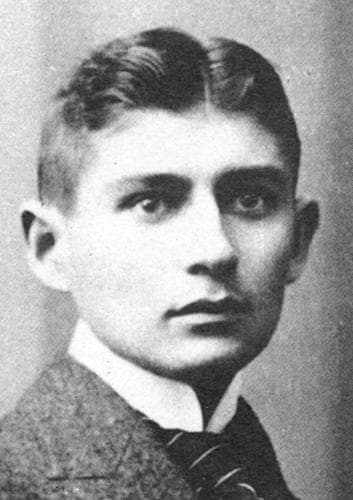
Franz Kafka was a German-speaking Bohemian novelist and short-story writer based in Prague, who is widely regarded as one of the major figures of 20th-century literature. His work fuses elements of realism and the fantastic. It typically features isolated protagonists facing bizarre or surrealistic predicaments and incomprehensible socio-bureaucratic powers. It has been interpreted as exploring themes of alienation, existential anxiety, guilt, and absurdity. His best known works include the novella The Metamorphosis and novels The Trial and The Castle. The term Kafkaesque has entered English to describe absurd situations like those depicted in his writing.

Jeff Olson
4.4
Thomas Sowell
4.4
Walter Brueggemann
4.3

Rhonda Byrne
4.3

Robin Wall Kimmerer
4.3
George S. Clason
4.3
Elliot Aronson
4.3
Joseph Campbell
4.3