BookBrief
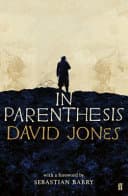
In Parenthesis cover
Archivist's Choice

In Parenthesis

David Jones (2018)

Genre

General

Reading Time

180 min

Key Themes

See below

Track Your Reading

Sign in to track this book

Through the fragmented view of a World War I soldier, David Jones connects the muddy trenches to ancient battlefields of Roman Britain and Arthurian legend, exploring myth and memory.

Core Idea

David Jones's 'In Parenthesis' is a Modernist epic poem that shows the experience of a British soldier in the trenches of World War I, specifically during the Battle of the Somme. It argues that this brutal, mechanized conflict, while new in some ways, is closely tied to an old European tradition of war, myth, and ritual. Through language that blends Cockney slang, Arthurian legend, Welsh poetry, and liturgical Latin, Jones explores the soldier's existence as both an individual facing death and a part of a timeless group story. The book states that art, by witnessing and shaping events, can find meaning and sacredness in the everyday horrors of war, offering a 'parenthesis' – a temporary pause in reality – to hold and understand what is otherwise too hard to express.
Reading time
180 min
Difficulty
Hard
✓ Read this if...
You are interested in experimental Modernist literature, World War I from a soldier's perspective, the intersection of myth and modern conflict, or the capacity of language to convey profound trauma and tradition.
✗ Skip this if...
You prefer straightforward narrative prose, are unfamiliar with or disinclined towards poetic language and literary allusions, or seek a conventional historical account of the war.

Core idea

The central argument and framework that powers the entire book.

David Jones's 'In Parenthesis' is a Modernist epic poem that shows the experience of a British soldier in the trenches of World War I, specifically during the Battle of the Somme. It argues that this brutal, mechanized conflict, while new in some ways, is closely tied to an old European tradition of war, myth, and ritual. Through language that blends Cockney slang, Arthurian legend, Welsh poetry, and liturgical Latin, Jones explores the soldier's existence as both an individual facing death and a part of a timeless group story. The book states that art, by witnessing and shaping events, can find meaning and sacredness in the everyday horrors of war, offering a 'parenthesis' – a temporary pause in reality – to hold and understand what is otherwise too hard to express.

At a glance

Reading time

180 min

Difficulty

Hard

Read this if...

You are interested in experimental Modernist literature, World War I from a soldier's perspective, the intersection of myth and modern conflict, or the capacity of language to convey profound trauma and tradition.

Skip this if...

You prefer straightforward narrative prose, are unfamiliar with or disinclined towards poetic language and literary allusions, or seek a conventional historical account of the war.

Key Takeaways

1

The Soldier as a Living Tradition

Warfare is a continuity of ancient rituals and narratives, not just modern mechanics.

Quote

And the mind of the officer, like the mind of the soldier, is filled with the immemorial things.

Jones skillfully blends the WWI soldier with ancient warriors, suggesting that war is deeply rooted in human history and myth. He shows a basic connection, where the 'Tommy' in the trenches takes part in the same struggle as a Roman soldier or an Arthurian knight. This is more than poetic license; it is a deep statement on the lasting nature of human violence, fellowship, and the mental burdens of combat. The book argues that understanding the soldier means looking beyond the immediate conflict to the vast, inherited cultural and spir...

Supporting evidence

Jones's frequent allusions to the Mabinogion, Arthurian legends (like the wounded king), and Roman military formations directly overlaying descriptions of WWI trenches and movements. For instance, the 'dolmen-like' qualities of a bunker or the 'ancient cult' feeling of a trench ritual.

Apply this

When analyzing conflict or the human experience within it, consider the deeper historical and cultural resonances. Look for how ancient narratives or archetypes manifest in contemporary situations, providing a richer, more empathetic understanding.


archetypal-warfaremythic-continuityhistorical-memory
2

Language as a Battlefield and Sanctuary

The text itself is a layered excavation of meaning, reflecting the chaos and sanctity of the soldier's world.

Quote

For the mind of the writer, like the mind of the soldier, is filled with the immemorial things, and he must find the words for them.

Jones does not just write about the war; he creates a language experience that reflects the war's confusing and profound nature. His use of old language, Latin phrases, Welsh mythology, Cockney slang, and military terms creates a dense, layered text. This is not just a style choice; it is a deliberate way to represent the war. The fragmentation and sudden changes in tone show the soldier's fragmented view, the constant danger, and how different parts of culture and immediate experience clash in the mind. Reading the book becomes an im...

Supporting evidence

The abrupt shifts from highly poetic, almost liturgical prose to stark, realistic descriptions of trench life, often within the same sentence or paragraph. The inclusion of untranslated Latin or Welsh phrases, demanding the reader engage with the text on multiple levels.

Apply this

When communicating complex, multi-faceted experiences, especially those involving trauma or deep cultural resonance, consider employing a diverse linguistic palette. Allow the form and language to reflect the content's inherent complexity rather than simplifying it.

linguistic-complexitypoetic-fragmentationmultilingualism
3

The Sacredness of the Mundane

In the horror of war, ordinary objects and actions acquire profound, almost ritualistic significance.

Quote

And the common things were made uncommon, and the familiar strange, because of the extremity.

Jones raises the ordinary details of trench life — eating canned meat, cleaning a rifle, sharing a cigarette — into moments of deep, almost religious, importance. In a place without normal comforts and meaning, these simple acts of survival and friendship become sacred rituals. The shared meal is a communion, the weapon a holy tool, the shared moment of rest a fragile peace. This is not about making war seem romantic; it is about showing how the human spirit, under extreme pressure, finds and gives meaning to the smallest parts of exi...

Supporting evidence

Detailed descriptions of the preparation and consumption of rations, the precise handling of equipment, and the shared glances or gestures between soldiers, all imbued with an almost ceremonial weight. For example, the careful cleaning of a rifle is described with a reverence usually reserved for religious artifacts.

Apply this

In any challenging or dehumanizing environment, look for and appreciate the small, routine acts that people elevate to significance. Recognize how these 'mundane' rituals contribute to resilience, community, and the maintenance of identity.

ritual-of-survivalsacred-mundanetrench-life-meaning
4

The Paradox of Belonging and Annihilation

War fosters intense bonds of brotherhood even as it threatens individual existence.

Quote

And the fellowship of the thing, the shared burden, made them one.

A powerful part of In Parenthesis is its portrayal of war's contradictory nature: the intense, almost spiritual, bonds formed between soldiers facing death. The shared suffering, the complete reliance on each other, and the collective experience of terror create a unique and strong fellowship. This sense of belonging is deep, offering protection against the overwhelming threat of annihilation, yet it comes directly from that threat. The individual self is both absorbed into the group 'we' and also made more aware of its own fragile ...

Supporting evidence

The recurring motif of 'the company' or 'the section' acting as a single entity, often with collective thoughts and feelings. The descriptions of soldiers looking out for each other, sharing scarce resources, and experiencing grief as a shared burden when one falls.

Apply this

In situations of high stress or collective challenge, observe how group identity forms and supports individuals. Recognize the double-edged nature of such bonds – providing strength while potentially demanding the suppression of individual identity.

collective-identitycombat-brotherhoodindividual-annihilation
5

The Landscape as a Character

The physical environment of the battlefield is not merely a setting but an active participant and repository of history.

Quote

The land itself remembers, and the ditches and the mounds speak of older battles.

Jones fills the Western Front landscape with a deep sense of history and influence. The trenches, shell holes, and destroyed fields are not just inert backgrounds; they are scarred, living things that have witnessed countless generations of conflict. He suggests that the land itself holds the memory of past battles, from Roman invasions to medieval fights, making the WWI soldier's experience part of an ongoing, geological story. This view raises the physical terrain beyond mere geography, turning it into a character that influences, a...

Supporting evidence

Descriptions of specific geographic features (ridges, woods, rivers) that are repeatedly linked to historical events or mythological sites. The way the mud, the rain, and the earth itself are personified as active forces shaping the soldiers' fates.

Apply this

When analyzing historical events or human endeavors, consider the deeper role of the physical environment. Explore how the landscape itself might shape events, retain memory, or influence human perception and action beyond its immediate utility.

landscape-memorygeospatial-historypersonified-environment
6

The Artist's Act of Witnessing and Shaping

The creative process is a struggle to articulate the ineffable, to give form to overwhelming experience.

Quote

For the artist also is of the company, and he must bear witness.

Jones, as a writer and artist (he also painted), is deeply interested in the act of creation itself. In Parenthesis is not just a war memoir; it shows the artist's struggle to deal with an experience so vast and horrific that it defies normal language. He uses his unique literary style — its allusions, its fragmentation, its shifts in tone — to 'make present' the past, to give form to the formless chaos of war. This highlights art's role in processing trauma, preserving memory, and making sense of the human condition. The book itsel...

Supporting evidence

Jones's frequent self-referential comments within the text, acknowledging the difficulty of his task and his role as a 'maker' or 'poet.' The very structure of the book, moving from mundane details to mythic grandeur, reflects a deliberate artistic construction.

Apply this

Recognize that creative expression, especially after traumatic events, is not merely documentation but a profound act of processing and meaning-making. Support and value diverse artistic approaches to difficult subjects, understanding that the form itself can carry significant meaning.

artistic-witnesstrauma-and-artcreative-process
7

The Enduring Power of Myth and Story

Ancient tales provide a framework for understanding and surviving modern horrors.

Quote

And the old tale was made new, for the same dark forces were at work.

Jones does not just add references to Arthurian legend or Roman history to his story; he argues that these myths provide important ways for the WWI soldier (and the reader) to understand their experience. The chaos of the trenches becomes a new chapter in an old epic, the suffering of the individual a re-enactment of archetypal heroes. This mythic framework offers a sense of order and continuity in an otherwise senseless world, connecting the soldiers to a grander story of human struggle and endurance. It suggests that humans naturall...

Supporting evidence

The explicit and pervasive parallels drawn between the soldiers and figures from the Mabinogion, such as the wounded King Arthur or the warriors of the ancient Britons. The 'dolorous blow' of a shell is linked to the mythical blow that wounds the land.

Apply this

When facing overwhelming or seemingly unique challenges, look for parallels in ancient myths, legends, or historical narratives. These stories can offer frameworks for understanding, coping, and finding meaning in complex situations.

mythic-frameworknarrative-sense-makingcultural-inheritance
8

The 'Parenthesis' of War

The war is a temporary, yet profoundly transformative, suspension from normal life.

Quote

For the duration, they were in parenthesis, outside the normal syntax of things.

The title In Parenthesis is key to understanding Jones's main idea. He sees the war as a deep interruption, a 'parenthesis' in the soldiers' lives. This is not just about being away from home; it is about being suspended from the normal rules, ethics, and rhythms of civilian life. Within this 'parenthesis,' a new, intense, and often brutal reality forms, operating by its own rules. This temporary suspension, however, has lasting effects; it permanently changes those who experience it, making a true return to the 'normal syntax' of l...

Supporting evidence

The narrative's focus almost entirely on the immediate experiences within the war zone, with only fleeting references to the world outside. The sense of detachment and altered perception experienced by the characters, indicating a shift from ordinary reality.

Apply this

When analyzing significant life-altering events (e.g., pandemics, natural disasters, personal crises), consider how they create a 'parenthetical' period. Explore the unique rules and psychological states that emerge within this suspended reality and their long-term effects.

suspended-realitypsychological-interruptionliminal-experience
9

The Soundscape of Combat

Aural experience is central to the soldier's perception and the narrative's intensity.

Quote

And the sound came, the sound of their undoing.

Jones carefully details the sounds of the Western Front, making sound a main cause of fear, tension, and even a strange kind of beauty. The precise descriptions of shellfire, machine-gun chatter, the whistle of bullets, the cries of the wounded, and the silence between are not just background details; they are central to the soldiers' experience and the reader's immersion. This focus on sound highlights the constant sensory attack of war and how sounds dictate survival, fear, and the very rhythm of life and death. It shows how Jones u...

Supporting evidence

Frequent and vivid onomatopoeic descriptions of various sounds of battle ('whizz-bangs,' 'crumping,' 'rat-a-tat-tat,' 'hissing'), often followed by detailed accounts of their impact on the soldiers' physical and psychological state.

Apply this

When describing or analyzing intense experiences, pay close attention to the soundscape. Consider how specific sounds contribute to atmosphere, tension, emotional impact, and the overall perception of an event.

auditory-experiencesensory-immersionsound-of-war
10

The 'Otherness' of the Enemy

While focusing on the Allied experience, the book subtly explores the shared humanity and symbolic 'otherness' of the foe.

Quote

And the enemy, though unseen, was ever present, a dark mirror.

While In Parenthesis is deeply rooted in the view of a British soldier, Jones's portrayal of the enemy is subtle. The Germans are often a faceless, distant threat, a source of danger and destruction, but there are also brief moments that suggest their shared humanity, or at least their shared part in the same old, tragic drama. They are 'the other,' but an other who is closely tied to the protagonist's own identity through the shared act of war. This subtle exploration avoids simple demonization, instead suggesting a more complex, a...

Supporting evidence

Brief, almost incidental mentions of German soldiers' movements, their own suffering, or the shared experience of specific horrors like gas attacks, which implicitly connect both sides. The enemy is often referred to in mythic terms, like a 'dark host' or 'adversary,' rather than purely as a political foe.

Apply this

When examining conflicts, look beyond overt portrayals of 'us vs. them.' Seek out subtle cues that might reveal a more complex, symbolic, or even shared humanity between opposing sides, even when the narrative is heavily biased towards one perspective.

enemy-perceptionshared-humanity-in-warsymbolic-adversary

Critical analysis

Notable Quotes

Quiz

Test Your Knowledge

Ready to see how well you understood this book? Take our interactive quiz with 10 questions.

10
Questions
~5
Minutes
?
Best Score

Key Questions (FAQ)

'In Parenthesis' is a modernist epic poem by David Jones, chronicling the experiences of a Welsh soldier, Private John Ball, during the First World War. It delves into the brutal reality of trench warfare while interweaving rich allusions to British history, mythology, and literature.

About the author

David Jones

David, Dafydd, Dai, Dave, Davy, or Di Jones may refer to: