BookBrief
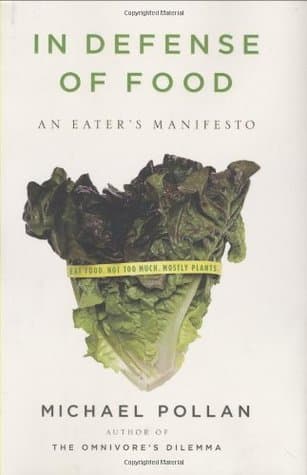
In Defense of Food: An Eater's Manifesto cover
Archivist's Choice

In Defense of Food: An Eater's Manifesto

Michael Pollan (2007)

Genre

Lifestyle / Health / Science

Reading Time

12 Minutes

Key Themes

See below

Track Your Reading

Sign in to track this book

Michael Pollan argues that returning to simple, whole foods is the key to a healthier and more pleasurable life, urging us to "eat food. not too much. mostly plants."

Core Idea

Michael Pollan argues that much of what we consume today isn't food in the traditional sense, but rather "edible foodlike substances" created by the food industry. He challenges the prevailing "nutritionism" paradigm, which focuses on isolated nutrients rather than whole foods, and asserts that this scientific reductionism has led to a decline in public health and a distorted understanding of eating. Pollan advocates for a return to traditional eating practices, emphasizing whole, unprocessed foods and the cultural and social aspects of meals over the scientific analysis of their components. The central thesis is simple: "Eat food. Not too much. Mostly plants." This encapsulates his call to abandon the Western diet, which is characterized by highly processed foods, refined grains, and an abundance of meat and sugar, and instead embrace a diet rich in vegetables, fruits, and whole grains, prepared and eaten with awareness and pleasure.
Difficulty
Easy

Core idea

The central argument and framework that powers the entire book.

Michael Pollan argues that much of what we consume today isn't food in the traditional sense, but rather "edible foodlike substances" created by the food industry. He challenges the prevailing "nutritionism" paradigm, which focuses on isolated nutrients rather than whole foods, and asserts that this scientific reductionism has led to a decline in public health and a distorted understanding of eating. Pollan advocates for a return to traditional eating practices, emphasizing whole, unprocessed foods and the cultural and social aspects of meals over the scientific analysis of their components.

The central thesis is simple: "Eat food. Not too much. Mostly plants." This encapsulates his call to abandon the Western diet, which is characterized by highly processed foods, refined grains, and an abundance of meat and sugar, and instead embrace a diet rich in vegetables, fruits, and whole grains, prepared and eaten with awareness and pleasure.

At a glance

Difficulty

Easy

Key Takeaways

1

The Tyranny of Nutritionism

Focusing on isolated nutrients, not whole foods, has led us astray.

Quote

The problem with nutritionism is that it is, first and foremost, an ideology, and it is the ideology of nutritionism that has done more than anything else to worsen the American diet.

Pollan argues that "nutritionism" has twisted our relationship with food. This idea, that food is just a collection of chemical nutrients, encourages food companies to add isolated nutrients to processed items. This makes people think these engineered products are healthier than whole foods. It also creates an anxious way of eating, where we check labels instead of enjoying our meals. This mindset, pushed by science and industry, makes processed foods seem better, even though they lack the full benefits of natural ingredients. This is...

Supporting evidence

Pollan points to the rise of 'low-fat' or 'high-fiber' processed foods in the 1980s and 90s, often loaded with sugar or refined carbohydrates to compensate for flavor, as a direct consequence of nutritionism, ultimately failing to improve public health.

Apply this

Be skeptical of health claims on processed food packaging, especially those touting specific nutrients. Prioritize whole, recognizable foods over products engineered to deliver isolated nutritional benefits.

2

Eat Food: The Simple Manifesto

If it came from a plant and hasn’t been messed with, it's probably food.

Quote

Eat food. Not too much. Mostly plants.

This three-part rule is the main point of Pollan's argument. It offers a simple answer to today's confusing diet advice. 'Eat food' means choosing whole, unprocessed items, things your great-grandmother would recognize as food. This cuts out most items in the middle aisles of a supermarket. 'Not too much' deals with eating too much and consuming too many calories, which contributes to many modern health problems. 'Mostly plants' highlights the benefits of a plant-focused diet. It doesn't demand strict vegetarianism, recognizing that m...

Supporting evidence

Pollan refers to various traditional diets (e.g., Mediterranean, Okinawan) that inherently follow these principles, demonstrating their historical efficacy in promoting health and longevity, long before the advent of nutritional science.

Apply this

Before buying something, ask: 'Would my great-grandmother recognize this as food?' Prioritize fresh produce, whole grains, and legumes, and practice mindful eating to recognize satiety cues.

3

The Western Diet's Fatal Flaws

Refined carbs, sugar, and industrial fats are the true culprits, not just 'fat'.

Quote

The Western diet is characterized by four pillars: lots of processed foods, lots of sugar and refined grains, lots of industrial seed oils, and lots of animal products from animals fed industrial diets.

Pollan shows how the "Western diet" causes chronic illnesses like obesity, type 2 diabetes, and heart disease. He states that focusing on fat, especially saturated fat, distracted from the more harmful effects of refined carbohydrates, added sugars, and industrial seed oils (like corn and soy oil, which are high in omega-6s). These ingredients, common in processed foods, disrupt the body's processes, cause inflammation, and lead to insulin resistance. This view challenges common diet advice that often oversimplifies nutrition. It poin...

Supporting evidence

Pollan cites studies comparing indigenous populations consuming traditional diets with those who adopt the Western diet, consistently showing a dramatic increase in 'diseases of civilization' (e.g., heart disease, diabetes, certain cancers) in the latter group.

Apply this

Minimize consumption of products containing high-fructose corn syrup, refined flours, and industrial seed oils. Opt for whole grains, natural sweeteners in moderation, and healthy fats from sources like avocados, nuts, and olive oil.

4

The Wisdom of Traditional Food Cultures

Our ancestors' dietary patterns offer profound insights into healthy eating.

Quote

People eating a traditional diet, one that has been passed down through generations, are generally healthier than people eating a modern, Western diet.

Pollan highlights that for most of history, cultures worldwide have thrived on varied, local, and mostly unprocessed diets. These traditional eating styles, developed over thousands of years, naturally follow the "eat food, not too much, mostly plants" rule. He explains that these diets are not only healthy but also linked to social customs, cooking skills, and a complete view of well-being. By studying these patterns, we can learn practical rules like eating many different foods, choosing fermented products, and recognizing when food...

Supporting evidence

The book references studies on the diet of the French paradox, the Mediterranean diet, and various indigenous diets, all of which demonstrate superior health outcomes compared to the modern Western diet, despite varying specific food compositions.

Apply this

Explore traditional recipes from diverse cultures. Prioritize seasonal, local produce. Reintroduce cooking from scratch and shared meals into your routine, fostering a deeper connection to your food and community.

5

The Ecology of Eating

Our food choices impact not just our bodies, but the planet too.

Quote

The industrial food system is a system designed to produce cheap calories, not health, and it does so at tremendous cost to the environment and to public health.

This book looks beyond personal health to the wider environmental effects of our food system. Pollan connects industrial agriculture—like single crops, chemical fertilizers, pesticides, and factory farming—to both environmental damage and the creation of unhealthy foods that lack nutrients. He argues that choosing whole, locally grown, and sustainably produced food helps personal health, supports healthier ecosystems, lowers carbon footprints, and increases biodiversity. This complete view shows that 'eating well' is not just about pe...

Supporting evidence

Pollan touches on the energy-intensive nature of industrial agriculture, the depletion of topsoil, and the pollution caused by synthetic inputs, contrasting it with sustainable farming practices that regenerate soil and reduce reliance on fossil fuels.

Apply this

Support local farmers and farmers' markets. Choose organic and sustainably raised produce and meats when possible. Advocate for policies that promote ecological farming practices.

6

The Pleasure Principle

Eating should be a joyous and communal experience, not an anxious calculation.

Quote

The greatest pleasure in eating is not in the nutrient, but in the food itself.

Pollan notes that modern nutritionism has taken the joy out of eating, turning it into something filled with worry, guilt, and calculations. He suggests we return to seeing food as a source of happiness, connection, and cultural heritage. This means slowing down, enjoying meals, cooking with fresh ingredients, and sharing food with others. He believes that when we eat mindfully and with appreciation, we naturally eat less and choose better quality foods. This focus on the psychological and social sides of eating offers a strong contra...

Supporting evidence

Pollan contrasts the hurried, solitary eating habits in many Western societies with the communal, leisurely meals found in cultures known for their health and longevity, such as the Mediterranean region.

Apply this

Turn off screens during meals. Cook and eat with family and friends. Focus on the taste, texture, and aroma of your food. Cultivate culinary skills as a source of pleasure and empowerment.

7

Cook: Reclaiming Agency in the Kitchen

Cooking from scratch is a revolutionary act against the industrial food system.

Quote

Cooking is one of the most important things you can do to improve your diet. It's also one of the most effective ways to push back against the industrial food system.

Pollan argues that letting corporations handle our cooking has made us lose control over what we eat. This has greatly contributed to the rise of processed foods and poorer diets. By cooking from scratch, even simple meals, people regain control, understand their ingredients, and avoid the hidden sugars, unhealthy fats, and additives common in convenience foods. Cooking also builds a deeper connection to food, encourages mindful eating, and can be a source of pleasure and creativity. This simple act becomes a strong way to resist a sy...

Supporting evidence

The steady decline in home cooking over recent decades directly correlates with the rise of processed food consumption and associated health issues. Pollan suggests that investing time in cooking is an investment in health.

Apply this

Start with simple recipes. Dedicate specific times each week to cooking. Involve family members in meal preparation. View cooking not as a chore, but as a fundamental life skill and a path to better health.

8

Don't Eat Anything Your Great-Grandmother Wouldn't Recognize

A practical heuristic for identifying real food amidst modern innovations.

Quote

Don't eat anything your great-grandmother wouldn't recognize as food.

This simple rule helps to sort through the confusing world of modern food. It immediately flags highly processed items, ingredients with hard-to-pronounce names, and products that look little like their original form. The rule promotes whole, minimally processed ingredients that have been staples in human diets for generations. While it might miss some good modern items (like certain healthy fermented foods or new fruits), its strength is its simplicity and how well it weeds out most unhealthy 'food products' that pretend to be real f...

Supporting evidence

Pollan illustrates this by contrasting traditional foods like apples or carrots with modern inventions like 'yogurt-flavored breakfast bars' or 'cheese food product,' which are unrecognizable as their constituent parts.

Apply this

When grocery shopping, stick to the perimeter of the store where fresh produce, meats, and dairy are typically found. Read ingredient labels and avoid products with long lists of unfamiliar or artificial ingredients.

9

The Pitfalls of Scientific Reductionism

Science alone cannot fully grasp the complexity of food and health.

Quote

The science of nutrition, alas, is a very young science, and it has a tendency to reduce the complexities of food to a handful of nutrients, often missing the forest for the trees.

Pollan questions the limits of nutritional science. He argues that its approach of isolating nutrients often fails to capture the complex interactions within whole foods and the broader context of human diets. He points out how scientific findings can conflict, change often, and be easily used by the food industry. This leads to public confusion and a cycle of diet fads. While acknowledging science's importance, Pollan suggests that relying only on it for diet advice is not enough and can be misleading. He advocates for combining trad...

Supporting evidence

The shifting advice on dietary fat and cholesterol over decades, and the subsequent rise of low-fat, high-sugar processed foods, serves as a prime example of how reductionist science can lead to unintended negative consequences when applied broadly.

Apply this

Approach new nutritional 'breakthroughs' with skepticism. Don't rely solely on nutrient labels for food choices. Prioritize a diverse diet of whole foods, understanding that their benefits often extend beyond what current science can fully quantify.

10

Rethinking 'Healthy'

Health is a holistic state, not just the absence of disease or optimal nutrient intake.

Quote

Eating well is not just about avoiding illness; it's about pursuing a richer, more engaged, and more pleasurable life.

Pollan encourages readers to expand their idea of 'healthy eating' beyond just preventing disease or optimizing nutrients. He argues that true health includes physical energy, mental well-being, social connections, and caring for the environment. A diet that is 'healthy' in Pollan's view supports all these areas—it's enjoyable, sustainable, culturally rich, and nourishing. This view challenges the medical approach to food, where it's often seen as medicine or poison. Instead, it makes food a main part of a good life. By redefining 'he...

Supporting evidence

Pollan contrasts the modern obsession with 'superfoods' and dietary supplements with the balanced, diverse diets of long-lived populations who view food as central to their cultural and social fabric, not just a source of nutrients.

Apply this

Consider the broader impacts of your food choices—on your mood, your community, and the environment. Prioritize foods that bring you joy and contribute to a sense of well-being, not just those with specific health claims.

Critical analysis

Notable Quotes

Quiz

Test Your Knowledge

Ready to see how well you understood this book? Take our interactive quiz with 10 questions.

10
Questions
~5
Minutes
?
Best Score

Key Questions (FAQ)

Michael Pollan's central argument is that the modern Western diet, characterized by highly processed "food-like substances," is detrimental to our health. He advocates for a return to eating whole, unprocessed foods, preferably plant-based, in moderation.

About the author