BookBrief
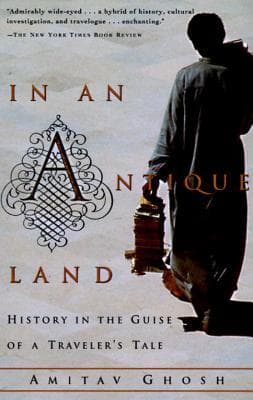
In an Antique Land cover
Archivist's Choice

In an Antique Land

Amitav Ghosh (1992)

Genre

Lifestyle / Biography / Memoir / History

Reading Time

10-12 hours

Key Themes

See below

Track Your Reading

Sign in to track this book

Amitav Ghosh searches for a medieval Indian slave in Egypt, only to find himself connected to a modern Egyptian village's life and customs.

Core Idea

Amitav Ghosh's "In an Antique Land" explores historical and current connections between India and Egypt. He reconstructs these links by living as an anthropologist in a rural Egyptian village. The book combines Ghosh's experiences and observations from the 1980s with his research into the medieval life of Bomma, a twelfth-century Indian slave, and his Jewish merchant master, Abraham Ben Yiju. It argues that history is not a static academic pursuit but a living thing, found in oral traditions, local customs, and shared human experiences across centuries and cultures. Ghosh criticizes the divisions made by modern nation-states and academic fields, showing the lasting impact of trade, cultural exchange, and human bondage that shaped the Indian Ocean world long before today's ideas of globalization. The main idea is that understanding the past requires living in the present. The lives of ordinary people, often left out of grand historical stories, hold the key to deeper truths about human connection, suffering, and strength. By placing his own outsider status in a contemporary Egyptian village next to the fragmented records of a medieval slave, Ghosh shows the arbitrary nature of social hierarchies, the power dynamics in cross-cultural meetings, and how historical echoes appear in today's realities. This challenges readers to rethink their ideas of identity, belonging, and the links between human destinies across time and geography.
Reading time
10-12 hours
Difficulty
Medium
✓ Read this if...
You are fascinated by the intricate tapestry of history, anthropology, and memoir, and enjoy narratives that seamlessly blend personal experience with rigorous historical investigation. Ideal for those interested in the cultural and historical connections between India and the Middle East, the legacy of slavery in the Indian Ocean world, and the challenges of historical reconstruction through fragmented sources and oral traditions.
✗ Skip this if...
You prefer straightforward historical accounts without personal narrative, or if you are looking for a fast-paced plot-driven story. The book's strength lies in its contemplative, layered approach, which might feel slow to readers seeking a more conventional narrative arc or purely academic historical analysis.

Core idea

The central argument and framework that powers the entire book.

Amitav Ghosh's "In an Antique Land" explores historical and current connections between India and Egypt. He reconstructs these links by living as an anthropologist in a rural Egyptian village. The book combines Ghosh's experiences and observations from the 1980s with his research into the medieval life of Bomma, a twelfth-century Indian slave, and his Jewish merchant master, Abraham Ben Yiju. It argues that history is not a static academic pursuit but a living thing, found in oral traditions, local customs, and shared human experiences across centuries and cultures. Ghosh criticizes the divisions made by modern nation-states and academic fields, showing the lasting impact of trade, cultural exchange, and human bondage that shaped the Indian Ocean world long before today's ideas of globalization.

The main idea is that understanding the past requires living in the present. The lives of ordinary people, often left out of grand historical stories, hold the key to deeper truths about human connection, suffering, and strength. By placing his own outsider status in a contemporary Egyptian village next to the fragmented records of a medieval slave, Ghosh shows the arbitrary nature of social hierarchies, the power dynamics in cross-cultural meetings, and how historical echoes appear in today's realities. This challenges readers to rethink their ideas of identity, belonging, and the links between human destinies across time and geography.

At a glance

Reading time

10-12 hours

Difficulty

Medium

Read this if...

You are fascinated by the intricate tapestry of history, anthropology, and memoir, and enjoy narratives that seamlessly blend personal experience with rigorous historical investigation. Ideal for those interested in the cultural and historical connections between India and the Middle East, the legacy of slavery in the Indian Ocean world, and the challenges of historical reconstruction through fragmented sources and oral traditions.

Skip this if...

You prefer straightforward historical accounts without personal narrative, or if you are looking for a fast-paced plot-driven story. The book's strength lies in its contemplative, layered approach, which might feel slow to readers seeking a more conventional narrative arc or purely academic historical analysis.

Key Takeaways

1

The Ghost of the Slave

Uncovering history through a forgotten individual

Quote

The past is not a foreign country; it is a house we have lived in, and whose walls still echo with our voices.

Ghosh shows how even obscure historical figures can offer insights into entire eras. His search for an unnamed Indian slave, mentioned in 12th-century Geniza documents, becomes a personal journey. This effort highlights the links between ancient trade routes and the human stories often lost in grand historical accounts. The slave, a silent observer of the medieval Indian Ocean world, helps us understand the economic, social, and cultural exchanges between India and Egypt. It shows how individual lives, no matter how marginalized, are ...

Supporting evidence

Ghosh's meticulous research into the Cairo Geniza documents, specifically the letters of Abraham Ben Yiju, which mention an Indian slave, 'Bomma,' who served as a physician.

Apply this

When researching or analyzing historical periods, actively seek out the lives of ordinary or marginalized individuals. Their experiences often provide a more nuanced and humanizing perspective than those of kings and conquerors. Use fragmented records as starting points for imaginative, yet evidence-based, reconstruction.
geniza-documentsindian-ocean-tradesubaltern-history
2

Living History: The Egyptian Village

Ancient traditions persist in modern life

Quote

In Lataifa, the past was not a buried city, but a living presence, breathing alongside the present.

Ghosh's time with the villagers of Lataifa, Egypt, shows the lasting nature of tradition and the complex interplay between old and new. He sees how medieval customs, social structures, and even ways of thinking continue in modern life, often unacknowledged. The villagers' relationship with the land, their oral traditions, their superstitions, and their strong community bonds mirror practices documented centuries ago. This comparison shows that history is not a straight line but a layered reality where different times exist together. G...

Supporting evidence

His detailed descriptions of village life, including the practice of 'zar' (exorcism), the structure of family feuds, the cultivation of land, and the villagers' oral storytelling traditions, which resonate with historical accounts of rural Egypt.

Apply this

When studying or engaging with cultures different from your own, look beyond superficial modernizations to identify underlying historical continuities. Recognize that what might appear 'backward' or 'traditional' often represents a profound and adaptive wisdom that has sustained communities for generations.

cultural-continuityanthropologyrural-egypt
3

The Burden of the Outsider

Navigating identity and perception in a foreign land

Quote

To be a stranger is to be a mirror, reflecting back to those around you their own assumptions and anxieties.

Ghosh's story gains much from his experience as an 'outsider' in the Egyptian village. As an Indian, he holds a unique position, both foreign and different from a Western viewpoint. He deals with the villagers' views of him — as a 'Christian,' a 'doctor,' or simply a 'mysterious foreigner' — which often reflect their limited understanding of the world beyond their community. This points to the biases and assumptions that arise when cultures meet. Ghosh's self-awareness about his own position, his attempts to bridge cultural gaps, and ...

Supporting evidence

His personal anecdotes about being mistaken for a Christian, his struggles with Arabic, the villagers' questions about India and its customs, and his internal reflections on his own identity and purpose in the village.

Apply this

When interacting with unfamiliar cultures, cultivate self-awareness about your own biases and how your presence shapes interactions. Be prepared to be misunderstood and to challenge your own preconceived notions. Embrace humility and recognize that genuine understanding requires effort and vulnerability.

ethnographycultural-relativismidentity-formation
4

The Power of Oral Tradition

Stories as keepers of history and identity

Quote

In a land where writing was often a luxury, stories were the true archives, passed from mouth to ear, shaping memory and meaning.

Ghosh's story celebrates the lasting power of oral tradition, contrasting it with the written records he examines. In the Egyptian village, he finds history not just in old archives but in the lively, often conflicting, stories told by the villagers. These stories, whether personal anecdotes, local legends, or religious tales, are important stores of communal memory, social norms, and historical understanding. He observes how these stories change, adapt, and reflect the community's changing realities, yet always keep a core truth abou...

Supporting evidence

The vivid accounts of the villagers' storytelling sessions, their explanations of local superstitions, their recounting of family histories, and the 'zar' ceremonies, all of which rely on spoken word and communal participation.

Apply this

When seeking to understand a culture or historical period, actively engage with oral histories and traditions. Recognize that written accounts are often partial and biased, and that spoken narratives offer invaluable, often more personal, perspectives. Learn to listen deeply and critically to these stories.

oral-historyfolklorecollective-memory
5

The Illusion of Progress

Modernity's mixed blessings and unintended consequences

Quote

The gifts of modernity often came wrapped in the anxieties of displacement and the loss of what was once familiar.

Ghosh offers a critical, yet empathetic, view of 'modernity's' impact on traditional societies. While acknowledging some benefits of advancements, he consistently points out the disruptive and often isolating effects of imported technologies and ideas. The villagers' adoption of consumer goods, their exposure to global media, and the changing economic landscape bring both convenience and unhappiness. He observes the decline of traditional crafts, the shift in social hierarchies, and the growing desires that often clash with limited op...

Supporting evidence

His observations of the villagers' engagement with television, their desire for Western goods, the decline of traditional weaving, and the economic pressures that push young men to seek work in the Gulf states.

Apply this

When evaluating development initiatives or technological changes, consider their full spectrum of impacts, not just the intended benefits. Be mindful of potential cultural erosion, economic displacement, and the psychological effects on communities. Advocate for development that is culturally sensitive and community-led.

modernizationcultural-dislocationglobalization
6

The Intertwined Destinies of India and Egypt

Uncovering ancient connections and shared histories

Quote

In the dusty archives of Cairo, I found not just an Indian slave, but a mirror reflecting the ancient, shared destinies of two distant lands.

A main point of Ghosh's journey is the deep and often overlooked historical connection between India and Egypt. Through the Geniza documents, he uncovers a busy medieval trade network that moved not just goods but also people, ideas, and cultural exchanges. The presence of an Indian slave who became a physician in Egypt is not unusual but shows this dynamic relationship. Ghosh shows that the 'antique land' refers not just to Egypt, but to a wider, connected Indian Ocean world where cultural borders were more fluid than modern nation-s...

Supporting evidence

The specific details from the Geniza documents about Indian merchants, goods, and individuals like the slave 'Bomma,' alongside Ghosh's discussions of the historical flow of spices, textiles, and knowledge between the two regions.

Apply this

When studying history, actively seek out connections and influences between seemingly disparate cultures and regions. Challenge the notion of isolated historical trajectories and explore the networks of trade, migration, and cultural exchange that have shaped human civilization globally.

indian-ocean-worldtransculturalismcomparative-history
7

The Arbitrariness of Slavery

A stark reminder of human vulnerability across eras

Quote

The conditions of bondage, it seemed, were less about race and more about the cruel caprice of power and circumstance.

Ghosh's research into the Indian slave reveals the complex and often arbitrary nature of slavery in the medieval period, different from the racialized chattel slavery of the transatlantic trade. The slave's journey from India to Egypt, his medical training, and his integration (though limited) into Abraham Ben Yiju's household, show a system where individuals could move between freedom and bondage, and where their skills could sometimes give them some control. This does not lessen the horror of slavery but broadens our understanding o...

Supporting evidence

The details from the Geniza documents indicating the slave's purchase, his role as a physician, and the broader context of Mamluk Egypt where slaves from various ethnic backgrounds served in different capacities.

Apply this

When examining historical injustices like slavery, avoid monolithic interpretations. Understand the specific historical, economic, and social contexts that shaped different forms of bondage. This allows for a more nuanced and accurate understanding of human rights issues throughout history.

medieval-slaverysocial-mobilityhuman-rights-history
8

The Historian as Detective

The art and challenge of reconstructing the past from fragments

Quote

To piece together a life from a handful of dusty parchments is to become a detective of the deepest kind, sifting through silence for echoes of truth.

Ghosh shows the historian as a careful detective, demonstrating the intellectual rigor and imaginative empathy needed to reconstruct the past from fragmented evidence. His journey is an example of source criticism, inference, and the careful weaving of different pieces of information — from ancient letters to modern ethnographic observations — into a coherent story. He shows how historical research is not just about gathering facts, but about interpreting silences, understanding context, and making informed guesses. This process is in...

Supporting evidence

Ghosh's detailed explanations of how he interprets the letters of Abraham Ben Yiju, cross-references them with other historical records, and uses his anthropological observations in the Egyptian village to infer aspects of medieval life.

Apply this

When engaging with historical narratives, critically evaluate the sources, methods, and interpretations presented. Recognize that history is often a reconstruction, not a simple recounting of facts. Develop your own skills in critical thinking, research, and synthesizing disparate information.

historiographysource-criticismhistorical-methods
9

The Enduring Human Condition

Shared anxieties and aspirations across time and culture

Quote

Beneath the superficial differences of time and place, the human heart beats with a remarkably similar rhythm of hopes, fears, and desires.

Perhaps the most important point from Ghosh's work is the strong affirmation of the lasting human condition. Despite the seven centuries separating him from the Indian slave, and the large cultural differences between himself and his Egyptian neighbors, Ghosh finds fundamental commonalities. He finds shared worries about livelihood, family, death, and the search for meaning. The villagers' humor, their hospitality, their disagreements, and their spiritual beliefs connect with universal human experiences. This supports the idea that wh...

Supporting evidence

The detailed accounts of the villagers' daily lives, their conversations about marriage, children, illness, and local politics, which reveal universal human concerns despite the specific cultural context.

Apply this

Cultivate empathy and seek to understand the underlying human experiences that drive people, regardless of their cultural background or historical period. Recognize that common ground often exists beneath surface-level differences, fostering greater understanding and connection.

universal-human-experienceempathycross-cultural-understanding
10

Beyond the Exotic

Challenging orientalist perspectives through intimate engagement

Quote

True understanding begins when one moves beyond the spectacle of difference and recognizes the deeper currents of shared humanity.

Ghosh consciously works to dismantle orientalist ideas, moving beyond a superficial interest in the 'exotic' Middle East. By immersing himself deeply in the daily lives of the Egyptian villagers and researching their history, he presents a nuanced and humanized portrait that resists easy classification. He criticizes the tendency to see non-Western cultures as static, unchanging, or merely as backgrounds for Western stories. Instead, he portrays a dynamic society with its own internal complexities, contradictions, and agency. His work...

Supporting evidence

His detailed, non-judgmental descriptions of village customs, his respectful engagement with local beliefs (even those he doesn't share), and his explicit critiques of how 'modernity' is often imposed rather than organically developed.

Apply this

When encountering unfamiliar cultures, actively resist the urge to exoticize or romanticize. Seek out multiple perspectives, engage with local voices, and challenge your own assumptions. Strive for a deep, nuanced understanding rather than a superficial appreciation of difference.

orientalismpostcolonial-studiescultural-critique

Critical analysis

Notable Quotes

The past is not a foreign country; it is a family reunion where all the relatives are slightly out of focus.

Reflecting on the nature of historical inquiry and the challenges of understanding past lives.

Living in a foreign country is like being born again, only this time without the excuse of infancy.

Describing the experience of an outsider navigating a new culture and society.

The past exists only as a narrative, a story we tell ourselves to make sense of the present.

Examining the subjective nature of historical accounts and their relationship to contemporary understanding.

The difference between an anthropologist and a tourist is that the anthropologist has a notebook.

A humorous observation on the distinction between academic study and casual observation.

To forget is to remember in a different way.

Pondering the complexities of memory, loss, and the persistence of the past.

The world is full of stories, and if you listen carefully, they will tell you who you are.

Highlighting the interconnectedness of individual identity and collective narratives.

History is not just about kings and battles; it is about the everyday lives of ordinary people.

Arguing for a more inclusive and nuanced approach to historical research.

The past is never dead. It's not even past.

A powerful statement on the enduring influence of historical events and their impact on the present.

Language is not just a tool for communication; it is a way of seeing the world.

Reflecting on the role of language in shaping perception and cultural understanding.

Every journey is a journey into oneself.

Emphasizing the transformative power of travel and exploration on personal growth.

The silence of history is often more eloquent than its clamor.

Suggesting that what is omitted or unsaid in historical records can be as significant as what is documented.

The world is a book, and those who do not travel read only one page.

Encouraging exploration and exposure to diverse cultures and experiences.

We are all strangers in a strange land, even in our own homes.

A philosophical musing on the universal experience of otherness and the search for belonging.

The stories we tell about ourselves are the truest things about us.

Highlighting the importance of personal narratives in defining identity and understanding.

Quiz

Test Your Knowledge

Ready to see how well you understood this book? Take our interactive quiz with 10 questions.

10
Questions
~5
Minutes
?
Best Score

Key Questions (FAQ)

'In an Antique Land' by Amitav Ghosh is a non-fiction book that blends memoir, history, and ethnography. It chronicles Ghosh's journey to an Egyptian village in search of the story of an Indian slave from the 12th century, while also documenting his experiences and observations of modern Egyptian life.

About the author