BookBrief
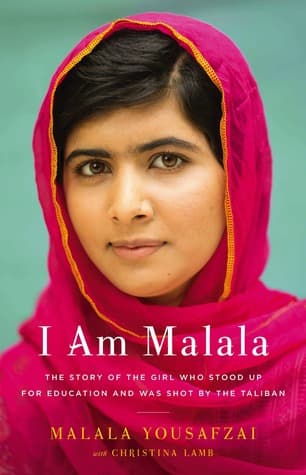
I Am Malala: The Story of the Girl Who Stood Up for Education and Was Shot by the Taliban cover
Archivist's Choice

I Am Malala: The Story of the Girl Who Stood Up for Education and Was Shot by the Taliban

Malala Yousafzai (2012)

Genre

Politics / Biography / Memoir / History

Reading Time

360 min

Key Themes

See below

Track Your Reading

Sign in to track this book

A teenage girl from a Taliban-controlled valley refuses to give up her books, becoming a global voice for education even after an assassination attempt.

Core Idea

Malala Yousafzai's memoir, "I Am Malala," argues that education is a basic human right and the strongest defense against oppression. Her personal story from Pakistan's Swat Valley shows how the Taliban took away freedoms, especially for women, by stopping them from going to school. Malala's account, supported by her father's early vision and her own commitment, shows that individual bravery, when spoken clearly, can start a global movement for change, even after violence. The book's main point is that education empowers people, strengthens communities, and helps create peace and progress worldwide. The book also says that local human rights struggles affect everyone globally. It asks readers to see how human dignity connects across cultures and borders. Malala's survival and activism prove that hope, chosen deliberately, can beat terror, and that writing can be stronger than violence, inspiring people to protect the right to learn.
Reading time
360 min
Difficulty
Medium
✓ Read this if...
You are interested in understanding the human cost of extremism, the empowering role of education, and the extraordinary courage of a young activist who defied oppression. This book is for anyone seeking inspiration from a real-life story of resilience and global advocacy for human rights.
✗ Skip this if...
You prefer a purely academic analysis of geopolitical conflicts or are not moved by personal narratives of struggle and triumph. Readers looking for an objective, detached historical account rather than a deeply personal memoir might find it less engaging.

Core idea

The central argument and framework that powers the entire book.

Malala Yousafzai's memoir, "I Am Malala," argues that education is a basic human right and the strongest defense against oppression. Her personal story from Pakistan's Swat Valley shows how the Taliban took away freedoms, especially for women, by stopping them from going to school. Malala's account, supported by her father's early vision and her own commitment, shows that individual bravery, when spoken clearly, can start a global movement for change, even after violence. The book's main point is that education empowers people, strengthens communities, and helps create peace and progress worldwide.

The book also says that local human rights struggles affect everyone globally. It asks readers to see how human dignity connects across cultures and borders. Malala's survival and activism prove that hope, chosen deliberately, can beat terror, and that writing can be stronger than violence, inspiring people to protect the right to learn.

At a glance

Reading time

360 min

Difficulty

Medium

Read this if...

You are interested in understanding the human cost of extremism, the empowering role of education, and the extraordinary courage of a young activist who defied oppression. This book is for anyone seeking inspiration from a real-life story of resilience and global advocacy for human rights.

Skip this if...

You prefer a purely academic analysis of geopolitical conflicts or are not moved by personal narratives of struggle and triumph. Readers looking for an objective, detached historical account rather than a deeply personal memoir might find it less engaging.

Key Takeaways

1

The Power of a Father's Vision

Malala's father, Ziauddin Yousafzai, defied cultural norms to champion his daughter's education.

Quote

My father always said, 'Malala will be free as a bird.' He never clipped my wings.

Malala's story is tied to her father's commitment to education and gender equality. This was a challenging view in a Pashtun society that often valued sons over daughters. Ziauddin Yousafzai, a poet and school owner, encouraged Malala to go to school, speak out, and learn. His own experiences with a stutter and a belief in the power of knowledge made him defy traditional expectations. He named her after a Pashtun heroine, showing his high hopes for her from birth. This family support, based on his progressive views, shaped Malala's ac...

Supporting evidence

Ziauddin's decision to open schools for both boys and girls, his public speeches advocating for education, and his active encouragement of Malala to write a blog for the BBC under a pseudonym, 'Gul Makai'.

Apply this

Parents can foster an environment of intellectual curiosity and gender equality at home, even in the face of societal pressures, by actively championing their children's voices and educational pursuits. Educators can recognize and support parents who are challenging norms for the betterment of their children's future.

gender-equalityparental-supporteducational-advocacy
2

The Pen as a Sword

Malala's early activism began with writing, demonstrating the potent force of words against oppression.

Quote

We realized the power of the media. We spoke to journalists from Pakistan and around the world, and shared our story.

Before global recognition, Malala's fight for education began with writing. At age eleven, she started blogging for the BBC Urdu under a fake name, writing about life under the Taliban in Swat Valley. This act of writing, simple but brave, expressed the fear, hope, and strength of a generation. Her diary entries showed the daily unfairness — girls' schools banned, public whippings, and constant threats of violence. Through these words, the world started to see the harsh reality of the Taliban's rule. Her personal experiences became a ...

Supporting evidence

Her anonymous blog for BBC Urdu, titled 'I Am Gul Makai,' which detailed the closure of schools and the impact of the Taliban on daily life from January to March 2009.

Apply this

Individuals can leverage digital platforms and writing to document injustices, raise awareness, and advocate for change, even when direct confrontation is too dangerous. Recognizing the power of personal narratives to humanize complex political issues.

freedom-of-speechjournalismdigital-activism
3

The Erosion of Freedoms

The Taliban's rise in Swat Valley illustrates how extremist ideologies dismantle civil liberties systematically.

Quote

First they came for the music, then they came for the television, then they came for the girls' schools.

Malala's memoir gives a firsthand account of how extremist groups slowly take away civil liberties. The Taliban's takeover of Swat Valley was not sudden but a gradual imposition of their strict ideas. They started with seemingly 'minor' rules — banning music, television, then moved to more basic rights, ending with the ban on girls' education. This slow removal of freedoms shows a dangerous pattern common to many extremist groups: they make their control normal by targeting cultural expressions, then move to essential human rights, us...

Supporting evidence

The book details the Taliban's public pronouncements via radio, their destruction of TVs and DVDs, the banning of music, and ultimately the closure of girls' schools and the public floggings of those who defied them.

Apply this

Societies must remain vigilant against the gradual erosion of rights, recognizing that seemingly small restrictions can pave the way for more severe forms of oppression. Supporting free expression and education are critical bulwarks against extremism.

extremismhuman-rightsauthoritarianismcivil-liberties
4

Education as Resistance

For Malala, attending school was not just a right, but an act of defiance against oppression.

Quote

Education is not a privilege, but a right. It is a powerful weapon to change the world.

When the Taliban explicitly banned girls' education, Malala and her friends continued to attend school secretly. This was a quiet but strong form of resistance. For them, every day in the classroom was an act of courage, a direct challenge to an idea that wanted to keep women at home and deny them knowledge. This defiance shows how important education is, not just for personal growth, but as a basic tool for empowerment, critical thinking, and social change. By valuing their education over the threat of violence, Malala and her classm...

Supporting evidence

Malala's description of her and her friends hiding their school books, attending classes in secret, and her father's determination to keep his school open despite Taliban threats.

Apply this

Support initiatives that provide education in conflict zones and for marginalized communities, understanding that access to learning is a crucial component of peacebuilding and human development. Advocate for policies that protect and promote the right to education globally.

right-to-educationempowermentsocial-justice
5

The Global Ripple Effect of Local Struggles

A personal fight for education in a remote valley resonated across the world, inspiring global action.

Quote

One child, one teacher, one book, one pen can change the world.

Malala's story goes beyond its local beginnings in Swat Valley. It became a strong symbol for the global fight for human rights and education. The attempt on her life, meant to silence her, instead made her voice much louder. Her survival and advocacy brought international attention to the struggles of millions of girls denied education and the larger issue of global terrorism. This shows how individual acts of courage, with media attention and continued advocacy, can start global movements and change international discussions. Her jo...

Supporting evidence

The international outcry following her shooting, the subsequent 'I Am Malala' campaign, her address to the United Nations, and her co-founding of the Malala Fund.

Apply this

Recognize that supporting local activists and human rights defenders can have far-reaching global impacts. Engage with international advocacy campaigns that champion universal rights, understanding that no struggle is truly isolated.

global-activismhumanitarianisminternational-relations
6

Courage in the Face of Terror

Malala's defiance, even after being shot, epitomizes extraordinary bravery.

Quote

The terrorists thought they would change my aims and stop my ambitions, but nothing changed in my life except this: weakness, fear and hopelessness died. Strength, power and courage were born.

The attempt on Malala's life was a brutal act meant to silence her and create fear. Yet, instead of breaking her spirit, it strengthened her resolve. Her refusal to give up her cause after life-threatening injuries and constant threats shows immense courage. This bravery is not just the absence of fear, but the decision to act despite it, driven by a strong belief in justice and the right to education. Her story challenges the idea that violence can stop truth, showing that sometimes, persecution only strengthens belief and empowers t...

Supporting evidence

Her unwavering commitment to education advocacy immediately upon recovery, her continued public speaking, and her establishment of the Malala Fund despite ongoing threats from the Taliban.

Apply this

Draw inspiration from Malala's resilience when facing personal or societal challenges. Support and protect individuals who speak truth to power, especially those who risk their lives for fundamental rights.

resilienceactivismperseverance
7

The Complexities of Identity

Malala navigates her Pashtun, Muslim, and global identity amidst cultural and political conflict.

Quote

I am Malala. This is my world. And I want to say to all the girls in the world: I am with you.

Malala's memoir explores her identity: a proud Pashtun, a devout Muslim, and a global advocate. She challenges Western ideas that often mix Pashtun culture or Islam with extremism. Instead, she highlights the traditions of hospitality, honor, and faith that define her heritage. She separates the cultural norms she values from the extremist ideas of the Taliban, which she sees as a distortion of her religion and culture. Her journey makes her balance her deep roots in Swat Valley with her new role as an international symbol. This shows...

Supporting evidence

Her detailed descriptions of Pashtun customs, her explanations of Islamic teachings, and her consistent efforts to clarify that the Taliban's actions do not represent the majority of Muslims or Pashtuns.

Apply this

Seek to understand the nuances of different cultures and religions, avoiding generalizations and stereotypes. Support voices from within communities that challenge extremist narratives and promote inclusive interpretations of their traditions.

cultural-identityislamophobiastereotypesmulticulturalism
8

The Power of a Single Voice

Malala's story proves that one individual's conviction can ignite a worldwide movement.

Quote

I spoke for the right of girls to go to school. It was my right. It was my duty.

Malala's journey from a young girl speaking out in her valley to a Nobel Peace Prize winner shows the great power of one determined voice. She was not a military leader or a politician, but a child with a strong belief in education. Her courage to state her simple truth — that every child deserves to go to school — resonated globally because it touched a universal human right. This story inspires individuals to see their own ability to create change. It shows that moral clarity and persistence, even from unexpected sources, can challe...

Supporting evidence

Her initial blog entries, her interviews with local and international media, her speeches at the UN, and her Nobel Peace Prize acceptance speech.

Apply this

Encourage and empower young people to find and use their voices on issues they care about. Never underestimate the potential impact of speaking out against injustice, even if you feel like a small voice in a big world.

individual-agencyadvocacymoral-courage
9

The Unseen Sacrifices of Activism

Beyond the headlines, activism demands profound personal and familial sacrifices.

Quote

We were exiled from our country. We lost our home, our friends, our whole life.

While Malala's story is a triumph, it also shows the deep and often hidden sacrifices activism demands. The Yousafzai family lost their home, community, and familiar life in Swat Valley. They faced exile, constant threats, and the heavy psychological burden of living with the threat of violence. Malala's recovery was difficult, and her family had to adapt to a new life in a foreign country, adjusting to unfamiliar customs and constant vigilance. This highlights that standing up for what is right often comes with a high personal cost, ...

Supporting evidence

The family's forced relocation to Birmingham, UK, Malala's extensive medical treatments, and her parents' struggles to adapt to a new country and cope with the trauma.

Apply this

When celebrating activists, also acknowledge and support the personal sacrifices they and their families make. Provide practical and emotional support to those displaced or endangered by their advocacy.

exiletraumarefugee-crisisactivist-support
10

Hope as an Act of Will

Despite enduring immense hardship, Malala maintains an unwavering belief in a better future.

Quote

Even if I am the only one, I will speak for the right of every child to go to school.

Throughout her difficult experiences, Malala consistently chooses hope over despair. From the initial fear of the Taliban to the trauma of being shot and the challenges of displacement, her story is filled with lasting optimism. This is not naive hope, but a deliberate act of will — a conscious decision to believe in the possibility of change and to keep fighting for it. Her steady belief that education can change lives and counter extremism is a strong reminder that even in the darkest times, keeping a vision for a better future is e...

Supporting evidence

Her continued global advocacy for girls' education, her persistent calls for peace, and her dedication to the Malala Fund's mission, even after winning the Nobel Peace Prize.

Apply this

Cultivate a mindset of hopeful action, recognizing that sustained effort towards positive change often requires an optimistic outlook. Support initiatives that foster education and dialogue as pathways to peace and understanding.

optimismresiliencesocial-changepeace-building

Critical analysis

Notable Quotes

We realize the importance of our voices only when we are silenced.

Reflecting on the Taliban's ban on girls' education in Swat Valley.

One child, one teacher, one book, one pen can change the world.

Speech at the United Nations on her 16th birthday.

When the whole world is silent, even one voice becomes powerful.

Discussing the importance of speaking out against injustice.

I don't want to be remembered as the girl who was shot. I want to be remembered as the girl who stood up.

Expressing her desire to be defined by her activism, not her trauma.

Education is education. We should learn everything and then choose which path to follow.

Arguing against extremist views that limit education for girls.

The Taliban could take our pens and books, but they couldn't stop our minds from thinking.

Describing how she continued to learn secretly under Taliban rule.

I told myself, Malala, you have already faced death. This is your second life. Don't be afraid.

After surviving the assassination attempt, resolving to continue her work.

In some parts of the world, students are going to school every day. It's their normal life. But in other parts of the world, we are starving for education.

Highlighting global inequalities in access to education.

My father always said, 'Malala will be free as a bird.'

Recalling her father's encouragement and support for her education.

Let us pick up our books and our pens. They are our most powerful weapons.

Urging children worldwide to fight for education through learning.

I am not a lone voice, I am many. I am Malala.

Emphasizing that her story represents millions of girls denied education.

The terrorists thought they would change my aims and stop my ambitions, but nothing changed in my life except this: weakness, fear and hopelessness died. Strength, power and courage was born.

Reflecting on how the attack strengthened her resolve.

We were scared, but our fear was not as strong as our courage.

Describing the community's response to Taliban threats in Swat.

Some people only ask others to do something. I believe that, why should I wait for someone else? Why don't I take a step and move forward?

Explaining her proactive approach to activism and change.

Quiz

Test Your Knowledge

Ready to see how well you understood this book? Take our interactive quiz with 10 questions.

10
Questions
~5
Minutes
?
Best Score

Key Questions (FAQ)

'I Am Malala' is the memoir of Malala Yousafzai, detailing her life in Pakistan's Swat Valley under Taliban rule, her advocacy for girls' education, the assassination attempt against her in 2012, and her recovery and global activism. It highlights her family's support and her journey to becoming the youngest Nobel Peace Prize laureate.

About the author