BookBrief
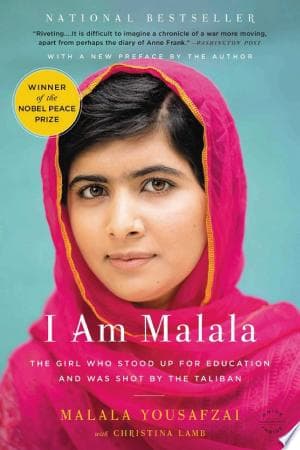
I Am Malala cover
Archivist's Choice

I Am Malala

Malala Yousafzai (2013)

Genre

General

Reading Time

240 min

Key Themes

See below

Track Your Reading

Sign in to track this book

Shot for seeking an education, Malala Yousafzai's memoir tells of her survival and her rise as a global symbol for peace and girls' rights against Taliban rule in Pakistan.

Core Idea

Malala Yousafzai's autobiography, "I Am Malala," argues that education, especially for girls, is the strongest defense against ignorance, poverty, and extremism. It follows her life from a young girl in Pakistan's Swat Valley, inspired by her father's support for schooling, to a global figure after the Taliban shot her for attending school and speaking out. The book shows how individual voices, when heard widely, can start international movements for human rights. It also shows how one person's courage can challenge oppressive ideas and push for everyone to have access to knowledge and opportunity.
Reading time
240 min
Difficulty
Easy
✓ Read this if...
You want to understand the human cost of extremism, the transformative power of education, and the resilience of the human spirit in the face of immense adversity, especially concerning girls' rights.
✗ Skip this if...
You are looking for an academic treatise on geopolitics or a detached analysis of terrorism; this is a deeply personal narrative focusing on a specific individual's experience and advocacy.

Core idea

The central argument and framework that powers the entire book.

Malala Yousafzai's autobiography, "I Am Malala," argues that education, especially for girls, is the strongest defense against ignorance, poverty, and extremism. It follows her life from a young girl in Pakistan's Swat Valley, inspired by her father's support for schooling, to a global figure after the Taliban shot her for attending school and speaking out. The book shows how individual voices, when heard widely, can start international movements for human rights. It also shows how one person's courage can challenge oppressive ideas and push for everyone to have access to knowledge and opportunity.

At a glance

Reading time

240 min

Difficulty

Easy

Read this if...

You want to understand the human cost of extremism, the transformative power of education, and the resilience of the human spirit in the face of immense adversity, especially concerning girls' rights.

Skip this if...

You are looking for an academic treatise on geopolitics or a detached analysis of terrorism; this is a deeply personal narrative focusing on a specific individual's experience and advocacy.

Key Takeaways

1

The Power of a Father's Belief

Malala's father, Ziauddin Yousafzai, defied societal norms to champion his daughter's education.

Quote

My father always said, 'Malala will be free as a bird.'

Malala's story is tied to her father's modern views. In a Pashtun society where daughters are often seen as a burden, Ziauddin Yousafzai pushed Malala to get an education and speak publicly. He named her after a famous Afghan hero, which was unusual for a girl, and gave her a strong sense of self-worth and purpose. His own struggles and dedication to education, shown by him starting schools despite little money, created the right environment for Malala's activism to grow. This strong support from her father was important, showing how ...

Supporting evidence

Ziauddin Yousafzai's decision to open schools, his public championing of Malala's right to education, and his refusal to clip her wings, unlike many fathers in his society, are central to the narrative.

Apply this

Parents can actively dismantle gender stereotypes by fostering an environment of equality and intellectual curiosity for all their children, regardless of gender. Support their passions, provide opportunities, and speak out against discriminatory practices.

gender-equalityparental-supporteducation-advocacy
2

Education as the Ultimate Weapon

Malala's unwavering belief in education as a tool for liberation and progress.

Quote

One child, one teacher, one book, one pen can change the world.

For Malala, education is not just about learning; it is a basic human right and the strongest force for social change. She understood early that denying girls education was a purposeful act to keep power structures and stop disagreement. Her activism came from believing that educated people are powerful people, able to think for themselves, be financially independent, and challenge oppression. The Taliban's attack on her showed their fear of this power. It also accidentally brought her message to a global audience, proving her point a...

Supporting evidence

Malala's continued insistence on attending school despite Taliban decrees, her blogging for the BBC about the importance of education, and her global speeches advocating for girls' right to learn.

Apply this

Support initiatives that provide access to education, especially for marginalized communities. Advocate for robust educational policies and recognize that investing in education is investing in peace and prosperity.

human-rightssocial-justiceempowerment
3

The Cost of Speaking Truth to Power

Malala faced brutal violence for her advocacy, highlighting the dangers faced by activists.

Quote

The Taliban shot me on the left side of my forehead. They thought that the bullet would silence us, but they failed.

Malala's story reminds us that standing up for human rights often costs a lot personally. Her shooting was not just a terror act but a deliberate try to silence a strong voice and scare others who dared to go against the Taliban's harsh ideas. This sad event shows the dangers activists face, especially women and children, in war zones and places with strict rulers. Her surprising survival and later global work made her a symbol of strength. However, it also shows how far people will go to stop freedom and progress.

Supporting evidence

The detailed account of the assassination attempt on the school bus, her critical injuries, and the subsequent medical journey and threats from the Taliban.

Apply this

Recognize and support human rights defenders globally. Speak out against violence and intimidation aimed at silencing peaceful activism. Understand that freedom of speech is a privilege often paid for by the bravery of others.

activismfreedom-of-speechterrorismresilience
4

The Global Interconnectedness of Local Struggles

Malala's personal fight for education became a universal call for justice.

Quote

I tell my story not because it is unique, but because it is the story of many girls.

What started as a local fight for girls' education in the Swat Valley quickly gained global attention. Malala's story highlighted the common problems faced by millions of children, especially girls, who cannot get an education because of poverty, conflict, and cultural barriers. Her nearly fatal attack and recovery brought international focus, making her a strong voice for global change. This shows how individual experiences, when shared widely, can cross borders and start group action, proving that local unfairness often points to bi...

Supporting evidence

Her address to the United Nations, her meetings with world leaders, and the global media attention her story garnered, leading to the Malala Fund.

Apply this

Understand how local issues can have global implications. Engage with international causes and support organizations working on universal human rights. Recognize shared humanity and collective responsibility.

global-advocacyhumanitarianisminternational-relations
5

The Role of Media in Activism

Malala effectively leveraged media platforms to amplify her message and rally support.

Quote

I started writing a diary for the BBC about life under the Taliban.

Malala first became known through her anonymous blog for the BBC, where she wrote about life under Taliban rule. This early use of media, even with a fake name, showed she understood its power to inform, persuade, and get people moving. After she was shot, global media made her an international icon. Her willingness to speak openly and clearly, even as a young girl, showed how important accessible platforms and good stories are in modern activism. It shows how brave individuals with a clear message can use media to challenge popular i...

Supporting evidence

Her BBC blog 'Diary of a Pakistani Schoolgirl' (under the pseudonym Gul Makai), her subsequent interviews, and her speeches at international forums.

Apply this

Utilize modern communication tools responsibly to advocate for causes you believe in. Understand media literacy and the importance of accurate, compelling storytelling in activism.

media-literacypublic-relationsdigital-activism
6

Resilience in the Face of Trauma

Malala's journey of recovery and continued advocacy exemplifies extraordinary mental fortitude.

Quote

I am Malala. My world has changed but I have not.

Surviving a point-blank gunshot to the head, multiple surgeries, and long recovery shows Malala's physical and mental strength. Beyond healing physically, her steady dedication to her cause, despite the trauma and ongoing threats, is remarkable. She did not let the attack break her spirit or stop her mission; instead, it made her more determined. Her story shows that true strength is not just about getting through hardship, but about turning bad times into a reason for even greater purpose and impact.

Supporting evidence

Her detailed account of the medical treatment in Pakistan and the UK, her rehabilitation, and her immediate return to advocacy once she was able.

Apply this

Cultivate mental resilience by focusing on purpose and finding strength in adversity. Seek support when facing trauma and understand that recovery is a process, but purpose can be a powerful motivator.

trauma-recoverymental-strengthperseverance
7

The Nuance of Culture vs. Extremism

Malala distinguishes between the rich traditions of her Pashtun heritage and the perversion of extremism.

Quote

The Taliban were not Pashtuns. They were monsters.

Malala is careful to separate her Pashtun heritage, with its strong values of hospitality, honor, and family, from the Taliban's brutal, anti-women extremism. She criticizes the fundamentalist way of seeing Islam and Pashtunwali that seeks to oppress women and deny education, rather than condemning the whole culture or religion. This difference is key to understanding the conflict and avoiding easy generalizations. Her story emphasizes that extremism often uses cultural and religious symbols to justify its goals, and that real progres...

Supporting evidence

Her descriptions of traditional Pashtun life, family gatherings, and the beauty of Swat Valley, contrasted with the fear and oppression imposed by the Taliban, who she explicitly states do not represent her people.

Apply this

Avoid generalizations about entire cultures or religions based on the actions of extremist groups. Seek to understand the nuances and internal diversity within communities. Support voices within cultures that advocate for progressive interpretations of tradition.

cultural-understandingreligious-extremismstereotyping
8

Hope in the Face of Despair

Despite immense suffering, Malala's story is ultimately one of enduring optimism and belief in a better future.

Quote

I believe in the power of my voice, the power of a single person to change the world.

Even after going through war, being forced from her home, and a nearly fatal attack, Malala's story is full of hope. She always talks about a world where all children can get an education and peace exists. This hope is not naive but comes from her belief in people's basic goodness and what group action can do. Her ability to keep hope, even when facing great unfairness, is inspiring, reminding readers that even in the darkest times, working for a better world is a goal worth having and can be reached.

Supporting evidence

Her continued advocacy, the establishment of the Malala Fund, and her persistent message of peace and education in all her public appearances.

Apply this

Cultivate a hopeful outlook by focusing on actionable solutions and the positive impact of individual and collective efforts. Recognize that hope is a powerful force for change and resilience.

optimismpeace-advocacyfuture-vision
9

The Universality of Girls' Rights

Malala's experience underscores that the fight for girls' education is a global imperative.

Quote

We realize the importance of our voices only when we are silenced.

Malala's story makes it clear that denying girls education is not a single issue but a widespread global problem affecting millions. Whether because of poverty, conflict, cultural norms, or unfair practices, girls in many parts of the world are regularly denied their right to learn. Her work has widened the discussion, showing that investing in girls' education is not just charity but a smart step for global development, peace, and gender equality. Her personal sacrifice has given a voice to those who had none, making the fight for ev...

Supporting evidence

The statistics she frequently cites about girls out of school globally, and the Malala Fund's work in various countries beyond Pakistan.

Apply this

Support policies and organizations that champion girls' education and gender equality worldwide. Advocate for equal opportunities for girls in your own community and beyond. Challenge discriminatory practices wherever they exist.

gender-equalitychild-rightsglobal-development

Critical analysis

Notable Quotes

I was a child, and I had to tell the world what it meant to be a child in a country where the Taliban had banned girls from going to school.

Reflecting on her early activism and the immense responsibility she felt.

When the whole world is silent, even one voice becomes powerful.

Malala's realization about the impact of her own voice amidst widespread fear.

We realized the importance of our voices only when we were silenced.

Describing the period when the Taliban shut down girls' schools in Swat Valley.

Education is not a privilege, it is a right.

A core belief that underpins her entire mission.

Let us remember: One book, one pen, one child, and one teacher can change the world.

From her speech to the United Nations, emphasizing the simple tools of change.

The Taliban could take our pens and books, but they could not stop our minds from thinking.

Her resilience in the face of the Taliban's attempts to suppress education.

I told myself, Malala, you have already faced death. This is your second life. Don't be afraid. If you are afraid, you can't move forward.

Her internal monologue after recovering from the shooting, steeling herself to continue her fight.

I truly believe the only way we can create global peace is through not only educating our minds, but our hearts and our souls.

Advocating for a holistic approach to education that includes empathy and compassion.

I had a dream of a world where every girl could go to school.

Expressing her fundamental aspiration for all girls globally.

The terrorists thought they would change my aims and stop my ambitions, but nothing changed in my life except this: weakness, fear and hopelessness died. Strength, power and courage were born.

Her transformation after the assassination attempt, feeling stronger than ever.

I speak not for myself but for those without voice... those who have fought for their rights... their right to live in peace, their right to be treated with dignity, their right to equality of opportunity, their right to be educated.

From her Nobel Peace Prize lecture, emphasizing her role as an advocate for others.

We human beings don't realize how important a thing is until we lose it. Same was the case with our schools.

Reflecting on the value of education after the Taliban closed schools.

It was then I knew I had a choice. I could live a life of fear and silence, or I could stand up and be heard.

Her moment of decision to continue her activism despite the dangers.

Peace in every home, every street, every village, every country – this is my dream.

Her overarching vision for global harmony and stability.

Quiz

Test Your Knowledge

Ready to see how well you understood this book? Take our interactive quiz with 10 questions.

10
Questions
~5
Minutes
?
Best Score

Key Questions (FAQ)

'I Am Malala' is the memoir of Malala Yousafzai, chronicling her life in Pakistan's Swat Valley, her fight for girls' education under Taliban rule, and the assassination attempt that transformed her into a global advocate for peace and education.

About the author