BookBrief
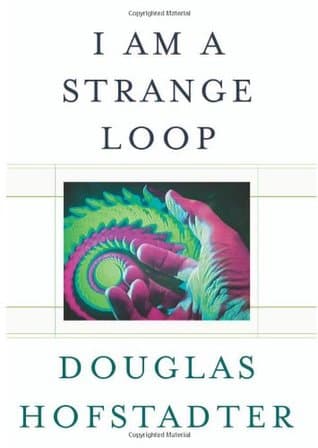
I Am a Strange Loop cover
Archivist's Choice

I Am a Strange Loop

Douglas R. Hofstadter (2007)

Genre

Psychology / Science / Philosophy

Reading Time

1200 min

Key Themes

See below

Track Your Reading

Sign in to track this book

Douglas R. Hofstadter explores the 'strange loop' of self, arguing that consciousness comes from the paradoxical, self-referential feedback in our brains, where an abstract 'I' appears to defy the particles that create it.

Core Idea

Douglas Hofstadter argues that the 'I' or self is a phenomenon that arises from a 'strange loop' of self-referential activity in the brain. This loop is not physical; it is a complex, high-level pattern of information processing where symbols, including the symbol for 'I,' manipulate themselves recursively. The book says that consciousness, free will, and the subjective experience of being a self are results of this self-entwined, paradoxical loop. This loop allows the system to refer to, categorize, and act on its own internal states and representations, creating a strong, yet abstract, sense of individuality. Hofstadter uses analogies, thought experiments, and explorations of systems like phonographs and computer programs to show how complex, meaningful patterns can come from simpler, 'meaningless' parts. He also shows how this recursive self-reference leads to paradoxes and the subjective feeling of 'I-ness'. He says this 'I' is a 'real abstraction' – not reducible to any single neuron, but a powerful, causal force in the world. It can influence its own future and share aspects with other 'I's through empathy and shared patterns. The book considers what this strange loop means for our understanding of mortality, identity, and existence.
Reading time
1200 min
Difficulty
Hard
✓ Read this if...
You're fascinated by the nature of consciousness, the self, and how the mind arises from the brain, and you enjoy deep, philosophical, and sometimes abstract explorations with a scientific underpinning.
✗ Skip this if...
You prefer straightforward explanations of psychological or scientific concepts, or you find abstract analogies and recursive arguments more confusing than enlightening.

Core idea

The central argument and framework that powers the entire book.

Douglas Hofstadter argues that the 'I' or self is a phenomenon that arises from a 'strange loop' of self-referential activity in the brain. This loop is not physical; it is a complex, high-level pattern of information processing where symbols, including the symbol for 'I,' manipulate themselves recursively. The book says that consciousness, free will, and the subjective experience of being a self are results of this self-entwined, paradoxical loop. This loop allows the system to refer to, categorize, and act on its own internal states and representations, creating a strong, yet abstract, sense of individuality.

Hofstadter uses analogies, thought experiments, and explorations of systems like phonographs and computer programs to show how complex, meaningful patterns can come from simpler, 'meaningless' parts. He also shows how this recursive self-reference leads to paradoxes and the subjective feeling of 'I-ness'. He says this 'I' is a 'real abstraction' – not reducible to any single neuron, but a powerful, causal force in the world. It can influence its own future and share aspects with other 'I's through empathy and shared patterns. The book considers what this strange loop means for our understanding of mortality, identity, and existence.

At a glance

Reading time

1200 min

Difficulty

Hard

Read this if...

You're fascinated by the nature of consciousness, the self, and how the mind arises from the brain, and you enjoy deep, philosophical, and sometimes abstract explorations with a scientific underpinning.

Skip this if...

You prefer straightforward explanations of psychological or scientific concepts, or you find abstract analogies and recursive arguments more confusing than enlightening.

Key Takeaways

1

The Self as a Strange Loop

Consciousness arises from a paradoxical feedback loop in the brain.

Quote

A strange loop is a phenomenon where, in traversing the levels of some hierarchically organized system, one eventually finds oneself back where one started, but at a different level.

Hofstadter says our 'I' — our sense of self and consciousness — is not one thing but a property that comes from a 'strange loop' in the brain. This loop is a self-referential feedback system that happens at different levels of abstraction, from the electrochemical firing of neurons to the symbolic representation of thoughts. Instead of a simple cause-and-effect, the strange loop means a recursive structure where the 'top' level (our abstract 'I') seems to influence the 'bottom' level (neural activity), even though it is made of it. Th...

Supporting evidence

Hofstadter frequently references Kurt Gödel's incompleteness theorems as a primary analogy for strange loops, where a system can refer to itself within its own framework, leading to paradoxical truths or self-undermining statements. He extends this mathematical concept to the neurological and psychological realm.

Apply this

When considering personal agency or consciousness, recognize that your 'self' is not a homunculus pulling levers, but a dynamic, self-referential pattern. This perspective can foster both humility about our physical origins and awe at the complexity of emergent consciousness. It encourages a shift from viewing the self as a fixed entity to an active, self-sustaining process.
strange-loopemergenceself-referenceconsciousness
2

Mind as a 'Seething Soup'

The brain's lowest level is chaotic, yet order and self emerge.

Quote

Deep down, a human brain is a chaotic seething soup of particles, on a higher level it is a jungle of neurons, and on a yet higher level it is a network of abstractions that we call 'symbols.'

Hofstadter talks about the brain's many layers, starting with a 'seething soup' of particles controlled by physics, going up to a 'jungle of neurons,' and then to a 'network of abstractions' or symbols. The challenge is to understand how the ordered, meaningful, and unified experience of 'I' can come from such basic chaos. The book argues against a dualistic view, instead saying that the 'I' is not separate from the physical brain but is its most sophisticated organizational pattern. This movement from micro-level chaos to macro-level...

Supporting evidence

He draws parallels to complex systems in physics and mathematics, where emergent properties arise from the interactions of countless simpler components. While not citing specific neuroscientific studies, the conceptual framework aligns with the understanding of neural networks as highly interconnected, non-linear systems.

Apply this

Appreciate the incredible complexity underlying simple acts of thought or perception. When faced with seemingly intractable problems, consider how emergent solutions might arise from the interaction of simpler, chaotic elements. This framework encourages looking for patterns and feedback loops in complex systems, rather than searching for a single 'cause.'

emergent-propertiesreductionismneural-networkslevels-of-abstraction
3

Flipping Causality Upside Down

Our 'I' seems to push particles, not just be pushed by them.

Quote

The 'I' is the nexus in our brain where the levels feed back into each other and flip causality upside down, with symbols seeming to have free will and to have gained the paradoxical ability to push particles around, rather than the reverse.

One counter-intuitive part of the strange loop is its apparent reversal of causality. We know our thoughts (symbols) are products of physical processes (particles), but our subjective experience is that our 'I' makes decisions and starts actions, seeming to 'push particles around.' Hofstadter says this is not against physics but a result of the strange loop's self-referential nature. The 'I' is a high-level pattern that, once set up, influences downwards through the feedback systems that created it. This 'upside-down causality' gives ...

Supporting evidence

Hofstadter uses the analogy of a computer program that can modify its own code or a self-referential statement that asserts its own truth or falsehood. The 'meaning' of the program or statement (the 'symbol') appears to exert control over its underlying bits (the 'particles').

Apply this

When you feel you are making a conscious choice, acknowledge the powerful subjective experience of agency. While recognizing its physical basis, don't dismiss the 'reality' of your 'I's' influence. This perspective can help bridge the gap between deterministic physics and our lived experience of free will, allowing for a more nuanced understanding of personal responsibility and decision-making.

causalityfree-willagencytop-down-causation
4

The 'I' as a Real Abstraction

Our self, though abstract, is the most real thing we know.

Quote

For each human being, this 'I' seems to be the realest thing in the world. But how can such a mysterious abstraction be real — or is our 'I' merely a convenient fiction?

Hofstadter considers how 'real' the 'I' is. If it is an emergent pattern, an abstraction, how can it be so real to us? He argues that the 'I' is not a convenient story but a real, though abstract, entity. Its reality comes from its causal effect within the strange loop. The 'I' is not a ghost in the machine but the machine's most complex and self-aware pattern, able to influence its own future states. This view avoids both simple dualism and overly reductive materialism, affirming the subjective reality of consciousness while connecti...

Supporting evidence

He often refers to 'epiphenomena' but insists the 'I' is more than that. He might use an analogy of a chess program: the 'desire to win' is an abstraction, but it profoundly influences the program's 'moves' (its physical computations), making it a real and causally potent aspect of the system.

Apply this

Embrace the reality of your subjective experience and your 'I.' Don't let a purely reductionist view diminish the profound truth of self-awareness. Recognize that abstract concepts can have real-world consequences and influences. This helps validate personal experience and meaning, even if their underlying mechanisms are complex and physically based.

abstractionsubjective-realityepiphenomenonmetaphysics
5

The Loop's Inevitable Paradox

Self-awareness inherently leads to a paradoxical sense of being and non-being.

Quote

The 'I' is a symbol that, by its very nature, attempts to transcend its own symbolic nature, leading to an inherent paradox.

The strange loop of the 'I' is paradoxical. It is a symbol that refers to itself, a system that tries to understand itself, and in doing so, it creates a basic tension. The 'I' is both the observer and the observed, the subject and the object, and this self-referential act leads to a feeling of both strong existence and elusive ungraspability. This paradox is not a flaw but a feature of consciousness, a direct result of the strange loop's design. It explains why we can feel so 'real' yet struggle to say what that 'realness' is, or whe...

Supporting evidence

This concept is deeply rooted in Gödel's incompleteness theorems, where mathematical systems, when allowed to refer to themselves, reveal inherent limitations or truths that cannot be proven within the system. Hofstadter sees the 'I' as a living, breathing instantiation of such a theorem.

Apply this

When contemplating your own existence, embrace the inherent paradox. Don't be frustrated by the inability to fully grasp or define your 'I' in simple terms; understand that this elusiveness is part of its nature. This perspective can foster a deeper appreciation for the mystery of consciousness, rather than demanding a simplistic, reductionist answer.

paradoxself-awarenessreflexivitygodel's-theorems
6

Analogy of the Phonograph

Consciousness is a pattern, not a fixed physical thing.

Quote

The 'I' is like the groove in a record, a pattern that guides the needle, but it is not the needle itself, nor the plastic of the record.

Hofstadter uses the phonograph record analogy to show the 'I' as a pattern. The 'I' is not the physical brain matter (the plastic of the record), nor a specific neuron (the needle). Instead, it is the 'groove' — the complex, dynamic pattern of information and interaction that comes from and guides the physical parts. Just as music is not 'in' any single atom of the record but is a pattern made by its physical structure, so too is the 'I' a pattern of neural activity. This analogy helps explain how something not physical in substance c...

Supporting evidence

The phonograph analogy is a recurring metaphor in Hofstadter's work, emphasizing that information and patterns can have a reality distinct from their physical substrate, yet wholly dependent on it for instantiation.

Apply this

Shift your perspective from searching for a physical 'location' of consciousness to understanding it as an emergent pattern. This can help demystify phenomena like memory, personality, and even the self. When thinking about identity, consider it less as a static 'thing' and more as a dynamic, evolving pattern maintained by ongoing processes.

pattern-recognitioninformation-theoryembodied-cognitionmetaphor
7

The 'I' as a Symbol-Manipulator

Our self is defined by its ability to create and manipulate symbols.

Quote

The most central and complex symbol in your brain or mine is the one we both call 'I.'

At a higher level of abstraction, the brain works as a symbol-manipulating system, and the 'I' is the most central and complex of these symbols. This 'I'-symbol is not just a label; it is a dynamic, self-representing entity that can refer to itself, reflect on itself, and interact with other symbols (thoughts, concepts, memories). This ability to manipulate symbols, especially self-referential symbol manipulation, creates our unique form of consciousness. Through this symbolic structure, we can form beliefs about ourselves, plan, imag...

Supporting evidence

Hofstadter draws heavily on the concept of 'symbols' as used in artificial intelligence and cognitive science, where symbols represent abstract concepts that can be processed and combined according to rules. The 'I' is the ultimate symbol in this framework.

Apply this

Recognize the power of language and symbols in shaping your understanding of self and the world. Engage in self-reflection and introspection, understanding that these are acts of your 'I'-symbol manipulating itself. Cultivate clear and precise language to better define and understand your own internal states and experiences.

symbolic-representationcognitive-sciencelanguageself-reflection
8

Shared 'I's and Empathy

Our capacity for empathy suggests a shared architecture of consciousness.

Quote

Part of what it means to be an 'I' is to be able to recognize other 'I's and to imagine what it is like to be them.

Hofstadter extends the strange loop idea to explain empathy. If our 'I' is a specific kind of self-referential pattern, then recognizing similar patterns in others allows us to simulate or 'mirror' their internal states. Empathy, then, is not just an emotional response but a cognitive act of pattern recognition and simulation. It suggests that the basic design of consciousness, the 'strange loop' itself, is universal enough among humans to allow for this connection. This shared 'I'-architecture lets us project our own subjective exper...

Supporting evidence

While not directly citing neurological studies on mirror neurons (which were more prominent later), Hofstadter's conceptual framework strongly aligns with the idea that our brains have mechanisms for simulating the states of others, which is foundational to empathy and social cognition.

Apply this

Cultivate empathy by actively trying to understand the 'strange loop' of others. Recognize that their subjective experience, though unique, likely operates on similar underlying principles as your own. This can foster greater compassion and communication, understanding that differing perspectives arise from different inputs into a fundamentally similar system.

empathytheory-of-mindsocial-cognitioninter-subjectivity
9

Mortality and the Fading Loop

Death is the dissolution of the 'I's strange loop.

Quote

When the brain dies, the strange loop that is the 'I' dissolves, just as a melody vanishes when the record player breaks.

Hofstadter addresses what the strange loop theory means for mortality. If the 'I' is an emergent pattern, then death means the pattern breaks down. There is no lasting 'soul' separate from the physical brain; the 'I' stops existing when the neural system that supports its strange loop fails. This view, while possibly unsettling, gives a coherent, non-supernatural explanation for what happens to consciousness after death. It shows the connection between mind and body, saying that our subjective reality is linked to our biological exist...

Supporting evidence

The phonograph analogy is again relevant here: when the record or player is destroyed, the music (the pattern) ceases to exist, even though the physical components (plastic, electrical parts) might still be present in some form.

Apply this

Embrace the finite nature of your conscious existence. This perspective can inspire a greater appreciation for the present moment and the unique opportunity of being a 'strange loop.' It encourages focusing on the impact and legacy of your 'I' while it exists, rather than hoping for an afterlife. It can also help to process grief by understanding death as the cessation of a complex, beautiful process.

mortalityconsciousness-after-deathmaterialismfinitude
10

The 'I' as a Self-Predicting System

Our consciousness is deeply tied to our ability to predict our own future states.

Quote

A self, at its core, is a system that tries to predict its own future states, and in doing so, influences them.

A key part of the strange loop, and thus the 'I,' is its ability to self-predict. Our consciousness is not just about experiencing the present; it is about anticipating the future and modeling our own possible actions and reactions in that future. This self-prediction is a feedback system: by predicting what 'I' will do, 'I' often does it, which strengthens the loop. This ability to simulate future selves and situations is basic to planning, decision-making, and even the feeling of free will. The 'I' constantly builds and improves a m...

Supporting evidence

While not explicitly citing neuroscience on predictive coding, Hofstadter's concept aligns with modern theories that view the brain as a prediction machine, constantly generating hypotheses about sensory input and future events. The 'I' is the ultimate self-predictive model.

Apply this

Reflect on how much of your conscious thought is dedicated to future-oriented planning and self-modeling. Use this awareness to intentionally shape your self-predictions towards positive outcomes. Understand that your conscious intentions and expectations play a powerful role in guiding your actions and shaping your future 'I'.

predictionfuture-selfdecision-makingself-modeling

Critical analysis

Notable Quotes

I am a strange loop.

Central thesis of the book, defining selfhood.

The 'I' in 'I am a strange loop' is a strange loop.

A meta-statement about the nature of the self-referential 'I'.

The brain is a moist, white, three-pound universe.

Emphasizing the complexity and wonder of the human brain.

Each of us is a kind of 'ghost in the machine' - not a real ghost, but a self-perceiving, self-creating pattern of information.

Redefining the 'ghost in the machine' concept in terms of information patterns.

The feeling of 'I' is not a substance, but a consequence of certain kinds of self-referential activity in the brain.

Explaining the emergent nature of selfhood from neural processes.

Our brains are not just hardware running software; they are hardware that *is* the software, and the software *is* the hardware.

Rejecting a simple hardware-software dichotomy for the brain.

To be an 'I' is to have a set of beliefs about oneself, including the belief that one is an 'I'.

Highlighting the recursive and belief-based nature of self-awareness.

A 'strange loop' is a phenomenon where, by moving up or down through a hierarchical system, one eventually finds oneself back where one started.

Defining the core concept of a strange loop with hierarchical systems.

The magic of consciousness is not a magic substance, but a magic organization.

Attributing consciousness to organizational complexity rather than a mystical element.

Meaning is not something that exists 'out there' waiting to be discovered; it is something that is created by strange loops in brains.

Asserting the brain's active role in constructing meaning.

What does it feel like to be a strange loop? It feels like being me.

Directly connecting the abstract concept of a strange loop to personal, subjective experience.

The greatest paradox of all is that the brain, a physical object, can give rise to the subjective experience of being 'I'.

Posing the fundamental paradox that the book attempts to address.

Our sense of free will, our ability to make choices, is an emergent property of the complex interplay of strange loops within our brains.

Explaining free will as an emergent phenomenon, not a separate entity.

To understand consciousness, we must understand how symbols can come to represent themselves, and how these self-representing symbols can form a loop.

Suggesting a path to understanding consciousness through symbolic self-representation.

Quiz

Test Your Knowledge

Ready to see how well you understood this book? Take our interactive quiz with 10 questions.

10
Questions
~5
Minutes
?
Best Score

Key Questions (FAQ)

The book proposes that our sense of 'I' or consciousness arises from a 'strange loop'—a unique abstract feedback loop within our brains. This loop allows symbols and higher-level abstractions to emerge from the underlying physical matter of neurons and particles, creating the illusion of a self with free will.

About the author

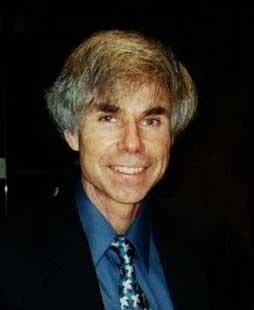
Douglas R. Hofstadter

Douglas R. Hofstadter is an American scholar of cognitive science, philosophy, and comparative literature. He is best known for his Pulitzer Prize-winning book 'Gödel, Escher, Bach: An Eternal Golden Braid' and his later work 'I Am a Strange Loop,' which explore consciousness, self-reference, and the nature of intelligence. Hofstadter is a professor of cognitive science and comparative literature at the University of Michigan.