The Dueling Brains: Emotion vs. Reason
Effective decision-making hinges on knowing when to engage your emotional brain and when to rely on pure reason.
Quote
Our best decisions are a finely tuned blend of both feeling and reason—and the precise mix depends on the situation.
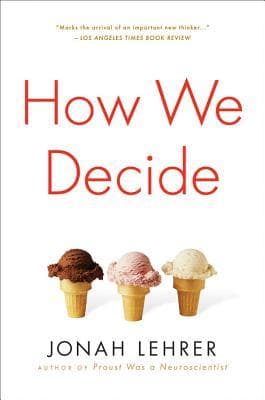
Lehrer breaks down the old idea that decisions come from either pure logic or pure emotion. He shows that neither approach alone consistently leads to good choices. Instead, the brain constantly shifts between its prefrontal cortex (for rational thought) and its limbic system (for emotions and intuition). The main point is that these systems don't always clash; working together, or knowing when to use one over the other, is key. When we understand what each system does well and poorly, we can pick the right thinking tool for the situa...
Supporting evidence
Lehrer references the famous case of Phineas Gage, whose severe frontal lobe damage impaired his rational decision-making despite intact cognitive abilities, highlighting the prefrontal cortex's role in executive function and emotional regulation.
Apply this
Before making a significant decision, pause to consider whether the problem benefits more from analytical processing (e.g., complex financial models) or from rapid, pattern-matching intuition (e.g., social interactions, highly practiced skills).