BookBrief
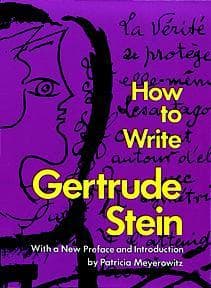
How to Write cover
Archivist's Choice

How to Write

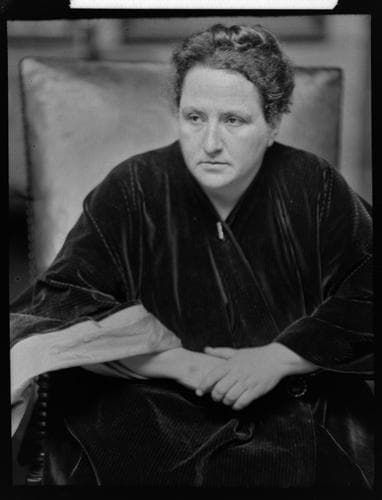
Gertrude Stein (1931)

Genre

Reference / Creativity

Reading Time

414 min

Key Themes

See below

Track Your Reading

Sign in to track this book

Explore Gertrude Stein's thoughts on writing as she takes apart and reassembles the act itself, offering a playful, rhythmic, and unique guide to crafting prose that stands out.

Core Idea

Gertrude Stein's "How to Write" proposes that good writing comes from a deep engagement with language. It treats words not as symbols but as real things with their own weight and rhythm. The book promotes a continuous present, where meaning develops through starting over and over, free from usual story structures, plots, and strict rules of punctuation and grammar. It supports an intuitive way of using language, encouraging writers to develop a personal vocabulary and use repetition to create a fresh, immediate language experience.
Reading time
414 min
Difficulty
Hard
✓ Read this if...
You are a writer, artist, or thinker interested in experimental approaches to language, deconstructing traditional narrative, and understanding the philosophical underpinnings of modernism and avant-garde literature.
✗ Skip this if...
You are looking for a practical, step-by-step guide to conventional writing, or prefer clear, linear prose over abstract and repetitive exploration of linguistic theory.

Core idea

The central argument and framework that powers the entire book.

Gertrude Stein's "How to Write" proposes that good writing comes from a deep engagement with language. It treats words not as symbols but as real things with their own weight and rhythm. The book promotes a continuous present, where meaning develops through starting over and over, free from usual story structures, plots, and strict rules of punctuation and grammar. It supports an intuitive way of using language, encouraging writers to develop a personal vocabulary and use repetition to create a fresh, immediate language experience.

At a glance

Reading time

414 min

Difficulty

Hard

Read this if...

You are a writer, artist, or thinker interested in experimental approaches to language, deconstructing traditional narrative, and understanding the philosophical underpinnings of modernism and avant-garde literature.

Skip this if...

You are looking for a practical, step-by-step guide to conventional writing, or prefer clear, linear prose over abstract and repetitive exploration of linguistic theory.

Key Takeaways

1

The Continuous Present

Writing must exist in an eternal now, free from past or future tenses.

Quote

A sentence is not a sentence if it is not a present sentence.

Stein argues against the usual linear flow of time in writing. For her, true writing and living happen in a 'continuous present,' where each moment is new, without the past or future. This is more than a grammar choice; it is a philosophical view of perception. When we write, we should aim to create a text that unfolds in a constant 'now.' The reader experiences the language as it appears, not just follows a story. This approach frees language from representing a fixed reality, letting it become a reality itself, immediate and alive.

Supporting evidence

Her own experimental prose, which often eschews traditional narrative structures and chronological sequencing, instead focusing on the immediate impact and sound of words as they appear on the page.

Apply this

Experiment with writing without explicit time markers. Focus on the sensory details and the immediate experience of the words, rather than building a plot. Try writing a scene where every sentence feels like a fresh start, independent of the one before it, yet connected by an underlying rhythm.
continuous-presentexperimental-prosetemporal-dislocation
2

Words as Things, Not Symbols

Detach words from their conventional meanings to discover their intrinsic value.

Quote

A rose is a rose is a rose.

Stein questions the idea that words mainly point to outside realities. Instead, she urges writers to treat words as 'things' themselves—objects with their own sound, shape, and presence, not just clear windows to meaning. This view lets the writer play with language, appreciate its physical qualities, and create new connections based on rhythm and repetition, rather than only on standard definitions. By removing words' usual 'significance,' Stein believes one can reach a deeper, more direct experience of language, allowing for fresh, ...

Supporting evidence

Her famous line, 'A rose is a rose is a rose,' which, through repetition, seeks to strip the word 'rose' of its accumulated cultural and poetic associations, returning it to its essential 'thingness.'

Apply this

Practice 'word defamiliarization.' Take common words and repeat them aloud, or write them down repeatedly, until their meaning begins to dissolve, and you start to hear their sound or see their shape anew. Use words for their sonic qualities or visual impact as much as for their dictionary definitions.

word-as-objectdefamiliarizationmateriality-of-language
3

The Power of Repetition

Repetition isn't redundancy; it's a tool for emphasis, rhythm, and re-seeing.

Quote

Everything is the same except composition and the time of the composition.

Unlike common advice to avoid repetition, Stein embraces it as a basic writing principle. For her, repeating words or phrases is not sloppy style but a deliberate way to create rhythm, emphasize ideas, and let the reader experience the word or concept anew each time. Every repetition, though seemingly the same, occurs in a slightly different 'time of the composition,' gaining new shades of meaning within the changing text. It is a way to explore a word's essence more deeply, rather than moving past it quickly. This creates a hypnotic,...

Supporting evidence

Her extensive use of refrains and repeated phrases throughout her work, such as in 'Tender Buttons' or 'The Making of Americans,' where patterns of words create a musicality and an evolving perception of meaning.

Apply this

In your writing, identify a key word or phrase and intentionally repeat it, varying its context or surrounding sentences slightly. Observe how the meaning or feeling of the phrase changes with each repetition, rather than becoming stale. Use it to build rhythm and emphasis.

repetition-as-stylerhythm-in-proseincantation
4

Punctuation's Tyranny

Liberate the sentence from conventional punctuation, especially the comma.

Quote

Commas are servile.

Stein had a strong dislike for traditional punctuation, especially the comma. She saw punctuation marks as interruptions, artificial stops that break the natural flow and rhythm of thought and speech. For Stein, writers should capture the continuous stream of consciousness. Commas, periods, and question marks impose an external, often arbitrary, logic on this organic process. By using less or no punctuation, she aimed for a more direct connection between the writer's thought and the reader's experience, letting the words' inherent rhy...

Supporting evidence

Her own distinctive style, characterized by long, run-on sentences, a scarcity of commas, and often a period only at the very end of a paragraph or even a longer section, allowing the reader to find their own breath and pace.

Apply this

Experiment with writing a paragraph or a short story without using any commas. Rely on sentence structure, word choice, and natural pauses in rhythm to guide the reader. Observe how this changes the pace and the reader's engagement with the text.

anti-punctuationstream-of-consciousnesssyntactic-freedom
5

The Importance of 'Beginning Again'

Each sentence, each word, offers an opportunity for a fresh start.

Quote

To begin again and again and again to write.

Stein highlights the constant act of 'beginning again' not just as a starting point for a new work, but as an ongoing process within writing. Every word and sentence is a chance to approach language with fresh eyes, rediscover its potential, and avoid predictable patterns or clichés. This mindset encourages a playful, exploratory way of writing, where composition is less about following a plan and more about continuous discovery. It is a commitment to staying present with language, not taking anything for granted, and always seeking n...

Supporting evidence

Her chapter titles like 'Saving the Sentence' imply a need to constantly refresh and revitalize the basic units of writing, rather than letting them become stale conventions.

Apply this

When you feel stuck or your writing feels dull, try to mentally 'erase' everything you've written and approach the next sentence as if it's the very first one you're composing. Ask yourself how you can make each new phrase surprising or unexpected.

creative-renewalfresh-perspectiveiterative-writing
6

Grammar as Instinct, Not Rule

Embrace a natural, intuitive sense of language over rigid grammatical rules.

Quote

Arthur a Grammar.

Stein's unusual chapter title, 'Arthur a Grammar,' hints at her personal and organic view of grammar. For her, grammar is not a set of external rules to follow strictly, but an inherent, almost instinctive understanding of how words relate to each other to create meaning and rhythm. It is a 'grammar' that comes from the act of writing itself, rather than being forced upon it. This view frees the writer from strict rules and encourages a deep listening to language's internal logic and musicality. It suggests that a writer should trust ...

Supporting evidence

Her own prose often bends or breaks traditional grammatical rules, yet maintains a distinct internal coherence and rhythm that is uniquely Steinian, demonstrating a 'grammar' built on intuition.

Apply this

Write a short piece where you consciously break a common grammatical rule (e.g., subject-verb agreement, pronoun reference) if it feels more natural or creates a desired effect. Pay attention to how the altered grammar impacts the rhythm and meaning, and whether it serves your artistic intent.

intuitive-grammarorganic-languagestylistic-deviation
7

Narrative Without Plot

A story can unfold through observation and presence, rather than dramatic events.

Quote

Regular Regularly in Narrative.

Stein's approach to 'narrative' differs greatly from traditional storytelling. She cares less about plot, character growth, or drama, and more about the continuous flow of observation and the unfolding of language itself. Her 'narrative' exists in the 'regular, regularly' return of words, phrases, and perceptions. This creates a textual space the reader inhabits rather than a linear journey they follow. This allows for a deeper look into the present moment and the inner workings of consciousness, rather than an external sequence of ev...

Supporting evidence

Her long, meditative works like 'The Making of Americans,' which are less about a conventional story and more about an exhaustive, repetitive exploration of character types and their internal states, creating a narrative through accumulation.

Apply this

Try writing a 'narrative' where nothing explicitly 'happens.' Focus instead on describing a scene, a person, or a feeling through repeated observations and variations of language, allowing the reader to experience the texture of the moment.

plotless-narrativenarrative-of-beingobservational-prose
8

The Writer's Unique Vocabulary

Cultivate a personal lexicon and let words resonate with individual meaning.

Quote

Finally George a Vocabulary.

The playful title 'Finally George a Vocabulary' suggests that a writer's vocabulary is not just a collection of dictionary definitions, but a very personal, almost unique, set of tools. Stein implies that each writer must 'own' their words, giving them their unique resonance and history, rather than just using them as generic placeholders. This is not about making up new words, but about finding a fresh relationship with existing ones. It lets them gather new layers of meaning within a specific writer's work. It is about developing a ...

Supporting evidence

Stein's own distinct and often challenging vocabulary choices and combinations, which, though using common words, often create new and unexpected meanings through their arrangement and repetition.

Apply this

Select a few common words you use frequently. Spend time writing about them, exploring their various connotations, sounds, and potential new uses in your personal lexicon. Try to use them in ways that challenge their conventional associations, making them uniquely 'yours.'

personal-lexiconauthorial-voiceidiosyncratic-language
9

The Humorous Undercurrent

Beneath the experimental surface lies a distinct strain of American humor.

Quote

I like to write and I like to read and I like to listen to what is said and I like to like what I like.

Despite the intellectual depth and experimental nature of her work, Stein's writing has a distinct, often dry, American humor. This humor is not always obvious; it often appears in unexpected word pairings, playful challenges to grammar rules, and the sheer boldness of her style choices. Critics often point to her use of repetition, which can become absurdly funny, or her straightforward statements on deep subjects, as sources of this humor. This humor makes her work more approachable than it might first seem, inviting readers to enjo...

Supporting evidence

The very titles of her chapters, like 'Saving the Sentence' or 'Arthur a Grammar,' carry an inherent wit and playful subversion of academic expectations, immediately signaling a departure from serious, conventional discourse.

Apply this

When writing, don't be afraid to embrace absurdity or unexpected turns of phrase. Look for opportunities to introduce subtle humor through repetition, understatement, or the juxtaposition of disparate ideas, even in serious topics. Trust that your reader will find the playfulness.

literary-humorabsurdist-proseplayful-language

Critical analysis

Notable Quotes

A rose is a rose is a rose is a rose.

Often cited as an example of Stein's use of repetition and her theory of the object.

Begin again.

A recurring theme in her advice on writing, emphasizing process and re-evaluation.

Anything one does is a beginning.

Encouraging a continuous approach to creative work.

The thing that is important is that there is no past.

Reflecting her focus on the 'continuous present' in writing and perception.

Writing is writing is writing is writing.

Similar to her rose quote, emphasizing the inherent nature and act of writing itself.

One must have a mind of one's own.

Advocating for individuality and originality in thought and expression.

Composition is not there, it is going to be there and it is being there.

Describing the dynamic and ongoing nature of the creative act.

If you can do it then why do it.

A challenge to push beyond the easy and familiar in creative pursuits.

The business of art is to live in the actual things.

Underlining the importance of direct experience and engagement with reality.

Nothing is the same as anything else.

A statement on the uniqueness of every moment and object, influencing her writing style.

Let me listen to me and let me speak.

An assertion of the writer's inner voice and the importance of self-expression.

A sentence is not made by what it says but by what it means.

Suggesting a deeper, more resonant meaning beyond literal interpretation in writing.

To write is to write is to write.

A concise summary of her belief in the continuous, essential act of writing.

The time to write is when you have something to say.

A straightforward piece of advice on the impetus for writing.

Quiz

Test Your Knowledge

Ready to see how well you understood this book? Take our interactive quiz with 10 questions.

10
Questions
~5
Minutes
?
Best Score

Key Questions (FAQ)

'How to Write' is a non-fiction book by Gertrude Stein that explores her unique perspective on the craft of writing. It delves into her experimental theories and practices, offering insights into her unconventional approach to language and composition.

About the author

Gertrude Stein

Gertrude Stein was an American novelist, poet, playwright, and art collector. Born in Allegheny, Pennsylvania, and raised in Oakland, California, Stein moved to Paris in 1903, and made France her home for the remainder of her life. She hosted a Paris salon, where the leading figures of modernism in literature and art, such as Pablo Picasso, Ernest Hemingway, F. Scott Fitzgerald, Sinclair Lewis, Ezra Pound, Sherwood Anderson and Henri Matisse, would meet.