BookBrief
How to Live on 24 Hours a Day cover
Archivist's Choice

How to Live on 24 Hours a Day

Arnold Bennett (1900)

Genre

Business / Psychology / Productivity / Philosophy / Self-Help

Reading Time

90 min

Key Themes

See below

Track Your Reading

Sign in to track this book

Master your 24 daily hours to build health, joy, and spiritual growth.

Core Idea

Arnold Bennett argues that saying 'no time' is a mistake. He believes everyone, no matter their daily duties, has a lot of free time—especially the hours between dinner and bedtime—that they often waste. He suggests that by taking back this 'after-dinner interval' and using it for serious learning or self-improvement, people can grow a lot, train their minds, and live better lives than just going through the motions. His main point is that life quality depends not on how long the day is, but on how we carefully use the time we often overlook.
Reading time
90 min
Difficulty
Easy
✓ Read this if...
You feel overwhelmed by daily demands and believe you lack time for personal growth, or if you're looking for a timeless, philosophical perspective on productivity and self-mastery.
✗ Skip this if...
You prefer modern, data-driven productivity hacks, or if you're looking for a book with actionable, step-by-step exercises rather than a foundational shift in mindset.

Core idea

The central argument and framework that powers the entire book.

Arnold Bennett argues that saying 'no time' is a mistake. He believes everyone, no matter their daily duties, has a lot of free time—especially the hours between dinner and bedtime—that they often waste. He suggests that by taking back this 'after-dinner interval' and using it for serious learning or self-improvement, people can grow a lot, train their minds, and live better lives than just going through the motions. His main point is that life quality depends not on how long the day is, but on how we carefully use the time we often overlook.

At a glance

Reading time

90 min

Difficulty

Easy

Read this if...

You feel overwhelmed by daily demands and believe you lack time for personal growth, or if you're looking for a timeless, philosophical perspective on productivity and self-mastery.

Skip this if...

You prefer modern, data-driven productivity hacks, or if you're looking for a book with actionable, step-by-step exercises rather than a foundational shift in mindset.

Key Takeaways

1

The Daily Miracle

Recognize and value the inherent wealth of 24 hours.

Quote

You have to live on twenty-four hours of daily time. Out of it you have to spin health, pleasure, money, content, respect, and the evolution of your immortal soul.

Bennett's main idea is that everyone, rich or poor, gets the same 24 hours each day. Most people waste this daily gift without thinking. He argues that we fail to reach our goals not because we lack time, but because we don't manage this resource carefully. The book challenges the common complaint of 'not enough time,' changing it to a failure to prioritize and use the time we already have. This shift helps create a mindset of abundance rather than scarcity about one's daily schedule, moving the focus from wishing for more time to mak...

Supporting evidence

The entire book is built upon the foundational metaphor of 24 hours as a fixed, universal capital, equally distributed to all individuals, rich or poor.

Apply this

Start each day by consciously acknowledging the 24 hours as a valuable, finite resource. Before complaining about lack of time, perform an audit of how the previous day's hours were actually spent, identifying areas of unintentional waste.
time-managementdaily-auditresource-allocation
2

The 'After-Dinner' Opportunity

Leverage the often-overlooked hours between work and sleep for personal growth.

Quote

The great point is that the man who has a daily task of eight or nine hours, and who is not a 'lightening' worker, can, by simply using his brains for a few minutes, daily acquire a vast amount of knowledge, or achieve a considerable amount of self-development, in the course of a year.

Bennett points out that the hours after work—usually from 6 PM to midnight—are full of unused potential. He says many people, tired from work, let these hours disappear into passive entertainment or aimless activities. Instead, he suggests setting aside a specific, firm block of time during this period (even just 90 minutes) for serious self-improvement, learning, or creative work. This 'after-dinner' time, free from work demands, becomes a place for intellectual and personal growth. The key is to be consistent and choose to do challe...

Supporting evidence

Bennett specifically suggests that dedicating 1 hour and 30 minutes, three evenings a week, to a serious pursuit can yield significant results over a year.

Apply this

Identify a consistent 90-minute block on 3-4 evenings a week, immediately after your workday or dinner. Dedicate this time exclusively to a single, challenging personal development goal, such as learning a language, reading a complex book, or practicing a skill. Treat this appointment with yourself as non-negotiable.

evening-routinepersonal-developmenthabit-formation
3

The Tyranny of the Immediate

Resist impulsive decisions and the allure of trivial distractions.

Quote

The chief beauty of the day is that it is a day. It is not a year, not a month, not a week. It is a day. And it has to be lived on its own terms.

Bennett shows how easily we let urgent things control us—reacting to every impulse, email, or social invitation, losing control of our schedule. This tendency to drift through the day, letting outside forces guide our actions, stops us from making progress on our deeper, more important goals. He stresses that true productivity is about careful choice and steady focus, not just being busy. Overcoming this requires planning ahead, saying 'no' to distractions, and protecting chosen activities from interruptions. It means taking charge of...

Supporting evidence

Bennett critiques the common habit of 'doing nothing' or merely 'killing time' without any deliberate intention, often succumbing to fleeting impulses.

Apply this

Before starting your day, identify 1-3 key tasks that align with your long-term goals. Actively schedule these tasks and defend their allocated time from interruptions. Practice saying 'no' to non-essential requests or delaying them until your priority tasks are complete.

prioritizationdistraction-managementfocus-blocks
4

Cultivate Mental Discipline

Train your mind to focus and direct thought, even amidst routine.

Quote

The average person does not use his mind at all, but merely allows it to be used. He does not think; he merely remembers.

Beyond just setting aside time, Bennett emphasizes the importance of mental discipline. It's not enough to spend an hour reading; one must actively engage the mind, fighting off wandering thoughts and shallow engagement. He suggests that many people let their minds be passive receivers of outside information rather than active tools for thought and creation. This mental laziness extends even to seemingly 'idle' moments, when the mind could be productively reflecting, planning, or solving problems. Developing this discipline turns mere...

Supporting evidence

Bennett advocates for 'mental exercises' during mundane activities like commuting or waiting, using these moments to reflect or plan, rather than letting the mind drift aimlessly.

Apply this

During routine, passive activities (commuting, waiting in line, walking), consciously direct your thoughts towards a specific problem, a book you're reading, or a goal you're pursuing. Practice 'active reading' by pausing to summarize or question what you've just read. Avoid mindless scrolling during these moments.

mindfulnesscognitive-controlactive-learning
5

The Power of Starting Small

Don't wait for large blocks of time; even brief, consistent efforts accumulate.

Quote

The greatest mistake in the treatment of the mind is to suppose that it is a thing to be treated with sugar and spice, and everything nice. It is a thing to be treated with iron.

Bennett argues against waiting for ideal conditions or large blocks of time to start important work. He believes that even short, consistent efforts, when done carefully and with focus, bring great results over time. This 'starting small' approach makes ambitious goals less daunting and more achievable within a busy schedule. The combined effect of these small, regular efforts is much greater than occasional, intense bursts of activity. It's about building momentum and habit, showing that even a few minutes daily, consistently used, c...

Supporting evidence

Bennett's suggestion of 90 minutes, three times a week, for serious study or self-development exemplifies this 'starting small' principle, emphasizing consistency over heroic but unsustainable efforts.

Apply this

Identify a goal you've been procrastinating on due to perceived lack of time. Commit to working on it for just 15-30 minutes daily, or even just three focused sessions a week. Track your progress to see how these small efforts accumulate.

micro-habitsconsistencyincremental-progress
6

Embrace Discomfort for Growth

Meaningful self-improvement often requires engaging with challenging material.

Quote

The mind is not a plaything. It is a tool, and it has to be sharpened and used.

Bennett is clear: real intellectual and spiritual growth is not always pleasant or easy. He warns against only choosing 'easy' reading or light entertainment during dedicated self-improvement time. Instead, he suggests engaging with 'tough' books and challenging subjects that truly stretch the mind. This discomfort is not a sign of failure but a necessary part of growth, like strength training for the mind. By purposefully choosing demanding material, one strengthens mental abilities, broadens understanding, and develops a deeper appr...

Supporting evidence

Bennett explicitly advises against reading 'easy' novels or superficial content during one's dedicated self-improvement time, urging readers to tackle challenging literature.

Apply this

For your dedicated self-improvement time, choose a book or subject that you find genuinely challenging or outside your comfort zone. Resist the urge to switch to easier material when you encounter difficulty; instead, push through and grapple with the concepts.

deliberate-practicecognitive-loadintellectual-rigor
7

The Myth of 'No Time'

Most complaints about time scarcity mask a lack of clear intention.

Quote

The supply of time, for any one of us, is a daily miracle. We are always grumbling that we have to live on 24 hours a day, as if it were a ridiculously small amount. But when we look back, we realize that we have had all the time there was.

Bennett examines the common excuse of 'no time,' showing it is often a sign of poor planning, indecision, or a basic misunderstanding of how time adds up. He argues that people who truly want to achieve something important always 'find' the time, often by reallocating hours previously spent on less meaningful activities. The problem is not the fixed 24 hours, but the lack of a clear, strong purpose that motivates one to protect and use those hours well. By challenging this common complaint, Bennett helps readers take responsibility fo...

Supporting evidence

Bennett's entire argument hinges on the idea that everyone has the same 24 hours, and the difference lies in how they are managed, not in their inherent quantity.

Apply this

When you catch yourself saying 'I don't have time for X,' rephrase it to 'I am not prioritizing X,' and then honestly assess why. This reframing can reveal your true priorities and help you align your actions with your stated goals.

time-scarcity-mindsetintentionalityself-accountability
8

Guard Against Mental Inertia

Combat the tendency to let your mind drift into unproductive states.

Quote

The greatest enemy of a good plan is the illusion that it can be carried out without effort.

Bennett identifies mental laziness as a big hurdle to good time management and personal growth. This is the mind's tendency, when left undirected, to fall into passive states, thinking about worries, or aimlessly daydreaming instead of purposeful thought. He suggests that just as physical exercise takes effort, so does mental engagement. To overcome this laziness, one must actively direct the mind, giving it tasks, whether reflecting on a problem, planning a future activity, or remembering details from a book. This conscious effort st...

Supporting evidence

Bennett refers to the 'uncontrolled' mind, which tends to 'run away with itself' or merely 'remember' rather than actively 'think' or 'reason.'

Apply this

When you find your mind wandering or feeling mentally sluggish, consciously choose a topic to reflect on, a problem to solve, or a plan to refine. Keep a small notebook or digital memo handy to capture these thoughts and prevent them from becoming mere distractions.

mental-lazinesscognitive-dissonancefocused-thinking
9

The Habit of Seriousness

Approach personal growth with the same rigor as professional duties.

Quote

The chief beauty of the day is that it is a day. It is not a year, not a month, not a week. It is a day. And it has to be lived on its own terms.

Bennett argues that many people fail in their personal development because they treat it as an optional, casual pursuit rather than a serious commitment. He suggests developing a 'habit of seriousness' toward one's self-improvement goals, approaching them with the same discipline, punctuality, and dedication typically used for work duties. This means scheduling personal development activities, protecting them from interruption, and holding oneself accountable for doing them. By making personal growth a crucial 'appointment,' one build...

Supporting evidence

Bennett's insistence on setting aside specific, non-negotiable time blocks for serious reading or study, treating them as important as any business meeting.

Apply this

Schedule your personal development time in your calendar as if it were a work meeting. Communicate to family or housemates that this time is sacred and not to be interrupted. Review your progress weekly to maintain accountability.

self-disciplinecommitmentgoal-setting
10

Beyond Mere Existence

Utilize time not just for survival, but for the 'evolution of the immortal soul.'

Quote

Out of it you have to spin health, pleasure, money, content, respect, and the evolution of your immortal soul.

Bennett raises time management beyond simple productivity tips, seeing it as a philosophical need. The goal of making the most of one's 24 hours is not just to earn more money or succeed professionally, but to support overall human flourishing, including health, pleasure, contentment, respect, and, importantly, the 'evolution of the immortal soul.' This deep perspective encourages readers to consider the higher purpose of their daily efforts, urging them to invest time in activities that nourish their inner life, expand their understa...

Supporting evidence

The opening quote of the book explicitly lists 'the evolution of your immortal soul' alongside other tangible life goals, setting a high bar for what time should be used for.

Apply this

Regularly reflect on whether your daily activities contribute to your overall well-being and personal growth beyond just material gains. Dedicate time not just to 'doing' but also to 'being' – reflection, contemplation, or activities that nourish your spirit.

holistic-livingpurpose-drivenspiritual-growth

Critical analysis

Notable Quotes

You will never have any more time.

Introducing the fundamental truth about time's scarcity.

The supply of time, fortunately, is a daily miracle.

Emphasizing the fresh start each morning offers for time utilization.

To live we must daily do something which is not immediately useful, but which is ultimately useful.

Advocating for activities that build long-term value, even if not urgent.

The man who is master of his time is master of his destiny.

Connecting effective time management with overall control of one's life.

All we have to do is to decide what we want to do with the day, and then do it.

Simplifying the process of seizing the day through clear decision and action.

The chief beauty about the constant supply of time is that you cannot waste it in advance.

Highlighting the reassuring fact that each new day brings a full, unspent allocation of time.

No man can be a master of his time until he has ceased to be a slave to his moods.

Pointing out the importance of emotional discipline for effective time use.

The sense of having done your best, and having got the utmost out of your time, is a great joy.

Describing the satisfaction derived from purposeful and efficient living.

Most people think they are thinking when they are merely rearranging their prejudices.

A critical observation on the quality of thought and the need for genuine intellectual effort.

The moment is the key to life.

Emphasizing the importance of living fully in the present, rather than dwelling on past or future.

Leisure is a beautiful garment, but it will not do for constant wear.

Cautioning against excessive idleness and advocating for a balance with productive activity.

Beginning, of course, is not the difficulty. It is continuing.

Acknowledging the common struggle of maintaining momentum after starting a new habit or project.

The price of anything is the amount of life you exchange for it.

A profound statement on the true cost of choices, measured in one's limited time.

Concentration is the root of all the higher abilities in man.

Highlighting the foundational role of focus in developing any skill or achieving any goal.

Quiz

Test Your Knowledge

Ready to see how well you understood this book? Take our interactive quiz with 10 questions.

10
Questions
~5
Minutes
?
Best Score

Key Questions (FAQ)

The book's central message is that everyone, regardless of their daily obligations, possesses sufficient time to pursue self-improvement and personal fulfillment. It emphasizes conscious time management to cultivate health, pleasure, wealth, and spiritual growth.

About the author

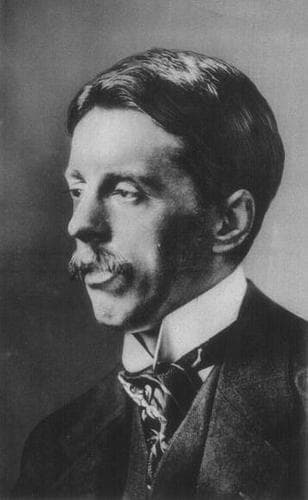
Arnold Bennett

Enoch Arnold Bennett was an English author, best known as a novelist who wrote prolifically. Between the 1890s and the 1930s he completed 34 novels, seven volumes of short stories, 13 plays, and a daily journal totalling more than a million words. He wrote articles and stories for more than 100 newspapers and periodicals, worked in and briefly ran the Ministry of Information in the First World War, and wrote for the cinema in the 1920s. Sales of his books were substantial and he was the most financially successful British author of his day.