BookBrief
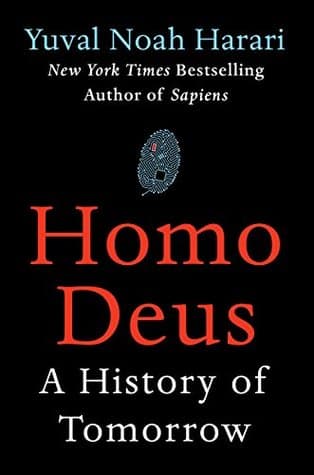
Homo Deus: A History of Tomorrow cover
Archivist's Choice

Homo Deus: A History of Tomorrow

Yuval Noah Harari (2017)

Genre

Politics / History / Technology / Science / Philosophy

Reading Time

12 Minutes

Key Themes

See below

Track Your Reading

Sign in to track this book

Yuval Noah Harari charts humanity's ambitious, potentially risky journey from overcoming famine, disease, and war to upgrading ourselves into god-like beings through technology and bioengineering.

Core Idea

Yuval Noah Harari's "Homo Deus" argues that humanity, having largely overcome the ancient problems of famine, plague, and war, is now setting its sights on new, ambitious goals: immortality, happiness, and divinity. Drawing on insights from history, biology, and computer science, Harari suggests that the algorithms governing both biological organisms and artificial intelligence are becoming increasingly sophisticated, potentially leading to a future where humans are either upgraded into a new species of 'data-gods' or rendered obsolete by superior algorithms. The book explores the ethical, social, and political implications of these emerging technologies, questioning the future of humanism and consciousness in a data-driven world. Harari posits that the major religions and ideologies of the past, including humanism, may not be equipped to handle the challenges and opportunities presented by biotechnology and artificial intelligence. He predicts the rise of new 'data religions' or 'dataism,' where information flow becomes the ultimate value, potentially leading to a world where individual human experience and free will are re-evaluated or even diminished in favor of the overall data processing capacity of the universe. The book challenges readers to critically examine the narratives and values that will shape the 21st century and beyond.
Difficulty
Medium

Core idea

The central argument and framework that powers the entire book.

Yuval Noah Harari's "Homo Deus" argues that humanity, having largely overcome the ancient problems of famine, plague, and war, is now setting its sights on new, ambitious goals: immortality, happiness, and divinity. Drawing on insights from history, biology, and computer science, Harari suggests that the algorithms governing both biological organisms and artificial intelligence are becoming increasingly sophisticated, potentially leading to a future where humans are either upgraded into a new species of 'data-gods' or rendered obsolete by superior algorithms. The book explores the ethical, social, and political implications of these emerging technologies, questioning the future of humanism and consciousness in a data-driven world.

Harari posits that the major religions and ideologies of the past, including humanism, may not be equipped to handle the challenges and opportunities presented by biotechnology and artificial intelligence. He predicts the rise of new 'data religions' or 'dataism,' where information flow becomes the ultimate value, potentially leading to a world where individual human experience and free will are re-evaluated or even diminished in favor of the overall data processing capacity of the universe. The book challenges readers to critically examine the narratives and values that will shape the 21st century and beyond.

At a glance

Difficulty

Medium

Key Takeaways

1

The New Human Agenda: Immortality, Happiness, Divinity

Having conquered famine, plague, and war, humanity's next grand projects will be the pursuit of eternal life, universal bliss, and god-like powers.

Quote

Having secured unprecedented levels of prosperity, health, and peace, humankind's new agenda will focus on upgrading Homo Sapiens into Homo Deus, seeking to overcome death, suffering, and limitations.

Harari says that for thousands of years, people mostly fought against famine, disease, and war. While these problems still exist, they are much smaller and more manageable now. This success means our focus will change. The new main goals will be to defeat death, achieve universal happiness by engineering emotions, and upgrade human abilities with technology. This idea is key to understanding the book and how future technologies and beliefs will fit with these new goals.

Supporting evidence

Harari cites statistics showing more deaths from obesity than starvation, more from old age than infectious disease, and more from suicide than violence, illustrating the shift in global challenges.

Apply this

Individuals and societies should recognize these emerging agendas to critically evaluate technological advancements and political movements. Understanding these drivers allows for proactive ethical discussions about genetic engineering, AI, and bio-enhancements.

2

Dataism: The Rise of a New Religion

As humanism wanes, Dataism emerges as a compelling new ideology, viewing the universe as a flow of data and human experience as algorithms to be optimized.

Quote

Dataism declares that the universe consists of data flows, and the value of any phenomenon or entity is determined by its contribution to data processing.

This is the book's strongest and most original idea. Harari suggests that just as humanism replaced old religions, Dataism could become the main belief system of the 21st century. Dataism claims that all living things, including humans, are just data processors, and the universe's ultimate goal is to create a massive data-processing system. Under Dataism, individual human experiences and feelings become less important; what matters is how efficiently data is processed and moves. This view has big effects on privacy, freedom, and what ...

Supporting evidence

Harari points to the proliferation of smart devices, personalized algorithms, and the 'big data' revolution as practical manifestations of Dataist principles, where data collection and analysis drive innovation and decision-making across all sectors.

Apply this

Reflect on how much data you willingly contribute to online platforms and smart devices. Consider the ethical implications of a society where data flow is prioritized over individual autonomy and privacy, and how this might shape future governance and economic systems.

3

The Obsolescence of Humanity

As AI and algorithms surpass human capabilities in many domains, large segments of humanity risk becoming economically and militarily irrelevant.

Quote

What will happen to society, politics and daily life when algorithms know us better than we know ourselves, and can make better decisions on our behalf?

Harari suggests that the biggest danger from AI isn't robots taking over, but creating a 'useless class' of people. As AI and automation get better, they will replace not only manual jobs but also complex thinking tasks done by doctors, lawyers, and artists. This could lead to huge social and economic gaps, where a small group of 'upgraded' humans or algorithm owners control vast resources, while most people struggle to find purpose and support. The problem is not just losing jobs, but potentially losing meaning and social value for b...

Supporting evidence

Harari references examples like self-driving cars replacing professional drivers, AI diagnostics outperforming human doctors, and algorithmic trading systems dominating financial markets, projecting these trends into the future.

Apply this

Policy makers must proactively consider universal basic income, re-education programs, and new social structures to address potential mass unemployment and disenfranchisement. Individuals should focus on developing uniquely human skills like creativity, emotional intelligence, and critical thinking that are harder for AI to replicate.

4

The End of Free Will

Modern neuroscience and big data suggest that free will is an elaborate illusion, with our choices determined by biochemical algorithms that can be predicted and manipulated.

Quote

Free will is a myth. Our choices are determined by biochemical processes, and algorithms will soon be able to predict and manipulate them with unprecedented accuracy.

Harari questions the Western idea of free will, saying that science, especially neuroscience and behavioral economics, increasingly shows our decisions are products of complex biochemical processes, not conscious choices. He thinks our feeling of 'choosing' is just our brain explaining decisions already made by underlying neural processes. This has big effects on laws, ethics, and our idea of responsibility. If free will is an illusion, then punishment, reward, and even democracy (based on informed individual choices) are challenged, ...

Supporting evidence

Harari cites experiments demonstrating that brain activity can predict decisions milliseconds before conscious awareness, and how marketing algorithms can effectively nudge consumer behavior through data analysis.

Apply this

Individuals should cultivate a deeper understanding of cognitive biases and algorithmic influences on their decisions. Societies must reconsider legal frameworks and ethical guidelines in light of a diminishing belief in absolute free will, exploring concepts of 'algorithmic responsibility' and 'data-driven manipulation'.

5

The Humanist God: Shifting Authority from Cosmos to Self

Humanism elevated human feelings and experiences as the ultimate source of meaning and authority, a paradigm that is now being challenged by Dataism.

Quote

Humanism replaced the great cosmic drama with a human drama, claiming that our feelings, desires, and choices are the supreme source of meaning and authority.

Before humanism, meaning and authority came from divine laws or natural order. Humanism shifted this authority to individual human experience, focusing on 'what feels right' or 'what I want.' This led to liberal humanism (individual feelings), socialist humanism (group feelings), and evolutionary humanism (species feelings). While a powerful force that drove much modern progress, Harari says this focus on subjective feelings makes humanism vulnerable to Dataism. If feelings are just biochemical processes, then external algorithms, wit...

Supporting evidence

Harari traces the historical rise of humanism through the Enlightenment, democratic revolutions, and the emphasis on individual rights and self-expression in modern culture.

Apply this

Critically examine your own sources of authority and meaning. Are your decisions driven by internal feelings, or are you increasingly relying on external algorithms (e.g., Netflix recommendations, GPS, health trackers)? Understand the historical context of humanism to better appreciate its strengths and weaknesses in the face of new ideologies.

6

The Myth of Consciousness vs. Intelligence

Harari distinguishes sharply between intelligence (the ability to solve problems) and consciousness (the ability to feel), arguing that AI can achieve super-intelligence without consciousness.

Quote

We often confuse intelligence with consciousness, but they are very different. AI can be vastly more intelligent than humans without being conscious in the slightest.

This difference is important for understanding AI's future. Harari says our fear of AI often comes from thinking machines have human-like consciousness. However, AI's power is its intelligence – its ability to process data and solve problems – not necessarily its ability to feel or experience. A super-intelligent AI could manage economies, fight wars, and create art without any subjective experience, making it very different from human intelligence. This argument has limits, as the link between intelligence and consciousness is still ...

Supporting evidence

Harari uses examples like Google's AlphaGo, which defeated human Go champions through sheer computational power and pattern recognition, not by 'feeling' the game or having subjective experiences.

Apply this

When evaluating AI advancements, focus on their functional intelligence and problem-solving capabilities rather than whether they 'think' or 'feel' like humans. This helps in designing ethical guidelines and safety protocols that address real risks rather than speculative ones.

7

The Algorithmic Dictatorship of Health

Future health systems will rely on biometric sensors and AI to monitor our bodies constantly, potentially leading to a benevolent but inescapable algorithmic control over our lives.

Quote

Imagine a health system where algorithms constantly monitor your biometric data, knowing your body better than you do, and nudging you toward optimal health choices.

Harari describes a future where sensors and implanted bio-chips constantly gather vast amounts of data about our health, mood, and even thoughts. AI will analyze this 'biometric data cloud,' predicting illnesses before symptoms, recommending personalized diets, and suggesting career changes based on genes. While this promises great health and long life, it also means a big loss of privacy and control. The algorithms, knowing us well, could make decisions 'for our own good' that we might not consciously choose, creating a benevolent al...

Supporting evidence

Harari points to current trends in fitness trackers, personalized medicine, and genetic testing as precursors to this future, where data-driven health interventions are becoming increasingly common.

Apply this

Consider the trade-offs between privacy and health benefits when adopting new health technologies. Engage in public discourse about the ethical boundaries of biometric surveillance and the potential for 'health fascism' where individual liberty is sacrificed for collective well-being.

8

The Disintegration of the Liberal Story

The core tenets of liberalism – individual freedom, free will, and rational choice – are being undermined by scientific discoveries and technological advancements.

Quote

The liberal story, which has dominated global politics for centuries, is facing an existential crisis as science reveals that humans are not free, rational agents but rather biochemical algorithms.

Harari says the liberal worldview, which supports individual rights, elections, and market economies, depends on the belief in human free will and rational decision-making. However, as neuroscience, behavioral economics, and big data increasingly show our choices are determined by algorithms (biological or computational), this foundation weakens. If algorithms can 'know us better' and make superior decisions, then the basis of democratic elections (voters making rational choices) or free markets (consumers making rational choices) bec...

Supporting evidence

Harari highlights the rise of 'filter bubbles' and targeted advertising that manipulate individual choices, as well as the increasing reliance on algorithms in judicial and financial systems, eroding the liberal ideal of unbiased human judgment.

Apply this

Actively seek diverse information sources to challenge algorithmic biases and echo chambers. Participate in discussions about the future of governance and democracy in an age where human agency is increasingly questioned. Support research into ethical AI and transparent algorithms.

9

The Question of Power and Control

The central question of the 21st century will be who owns the data and the algorithms that will increasingly govern our lives.

Quote

The most important political question of the 21st century will not be 'Who owns the means of production?' but 'Who owns the data?'

While not directly stated as a new point in the summary, a strong theme in Harari's work, especially in Homo Deus, is the importance of power dynamics. In a world where data is valuable and algorithms are powerful, control over these resources will shape future wealth, influence, and even survival. Harari warns that if data and algorithmic power are held by a few companies or governments, it could lead to extreme inequality and totalitarian control, far beyond past oppression. This is an important point for leaders and citizens to u...

Supporting evidence

The dominance of tech giants like Google, Facebook, and Amazon, whose business models are built on data collection and algorithmic analysis, serves as a real-world example of this emerging power dynamic.

Apply this

Advocate for data privacy regulations, data ownership rights, and open-source AI initiatives to prevent monopolization of algorithmic power. Support policies that promote equitable access to and control over data resources, ensuring a more democratic and less centralized future.

10

Beyond the Human-Centric Worldview

Harari invites readers to consider a future where human experiences and concerns are no longer the ultimate measure of value, challenging our anthropocentric biases.

Quote

We need to ask not only 'What will happen to humans?' but 'What will happen to consciousness, intelligence, and life in general?'

Throughout the book, Harari pushes against our human-centered view. He says that as we move toward a future with super-intelligent algorithms and possibly post-human beings, our traditional human values and stories might become irrelevant. The book encourages readers to look beyond human experience and consider the wider effects on life, consciousness, and the universe. This is a deep philosophical challenge, asking us to question whether human happiness or survival should remain the ultimate goal, especially if it means harming other...

Supporting evidence

The entire trajectory of the book, from the rise of Homo Sapiens to the potential emergence of Homo Deus and Dataism, implicitly critiques our species' self-importance and limited perspective.

Apply this

Engage in philosophical reflection about the nature of existence, value, and purpose beyond human experience. Cultivate empathy for non-human life and consider the ethical implications of creating artificial intelligences that might surpass us in every conceivable way.

Critical analysis

Notable Quotes

Quiz

Test Your Knowledge

Ready to see how well you understood this book? Take our interactive quiz with 10 questions.

10
Questions
~5
Minutes
?
Best Score

Key Questions (FAQ)

Homo Deus: A History of Tomorrow explores humanity's future and our quest to upgrade humans into gods. It examines how we've overcome historical challenges like famine, plague, and war, and contemplates what new agendas and quests will define the 21st century.

About the author