BookBrief
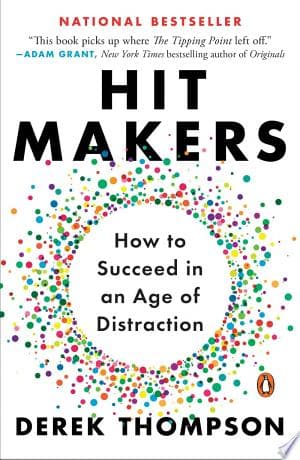
Hit Makers cover
Archivist's Choice

Hit Makers

Derek Thompson (2018)

Genre

General

Reading Time

240 min

Key Themes

See below

Track Your Reading

Sign in to track this book

This book explores the hidden networks, psychological triggers, and economic forces that turn an idea, song, or movie into a cultural phenomenon, revealing that overnight success is an illusion.

Core Idea

Hit Makers examines the mechanisms behind cultural popularity and commercial success. It argues that hits are not random viral events but come from a balance between novelty and familiarity, strategic exposure, and the human desire for shared experiences and individual expression. Thompson shows how technology, social networks, and the economics of attention shape what becomes popular. Success is less about inherent quality and more about the interaction of psychological biases, market dynamics, and engineered distribution.
Reading time
240 min
Difficulty
Medium
✓ Read this if...
You are curious about the mechanics of fame, marketing, and how products, ideas, or art become popular in a crowded marketplace. Great for anyone in media, marketing, product development, or just a curious consumer of culture.
✗ Skip this if...
You are looking for a prescriptive 'how-to' guide to create your own hit, as the book is more analytical than instructional. Also, if you prefer fiction or very light reading, the sociological and economic analysis might feel dense.

Core idea

The central argument and framework that powers the entire book.

Hit Makers examines the mechanisms behind cultural popularity and commercial success. It argues that hits are not random viral events but come from a balance between novelty and familiarity, strategic exposure, and the human desire for shared experiences and individual expression. Thompson shows how technology, social networks, and the economics of attention shape what becomes popular. Success is less about inherent quality and more about the interaction of psychological biases, market dynamics, and engineered distribution.

At a glance

Reading time

240 min

Difficulty

Medium

Read this if...

You are curious about the mechanics of fame, marketing, and how products, ideas, or art become popular in a crowded marketplace. Great for anyone in media, marketing, product development, or just a curious consumer of culture.

Skip this if...

You are looking for a prescriptive 'how-to' guide to create your own hit, as the book is more analytical than instructional. Also, if you prefer fiction or very light reading, the sociological and economic analysis might feel dense.

Key Takeaways

1

Familiar Surprise

The sweet spot of novelty and recognition drives mass appeal.

Quote

People love a familiar surprise: a product that is bold, yet sneakily recognizable.

Hits come from a balance between originality and imitation. The 'familiar surprise' principle suggests that audiences like novelty presented within a recognizable framework. This makes new ideas easier to process while still offering discovery. It means finding an existing mental model or cultural reference and then subtly changing it or adding an unexpected element. This makes the new idea feel both fresh and accessible, helping it spread because it doesn't require a complete change in tastes or understanding.

Supporting evidence

Thompson cites the Impressionist movement, initially radical yet rooted in familiar landscape painting, and the enduring appeal of sequels and adaptations in Hollywood. Star Wars, for instance, blended classic mythological archetypes with groundbreaking special effects.

Apply this

When creating something new, identify the established tropes, genres, or styles in your field. Then, introduce one or two genuinely novel elements that twist or elevate the familiar, rather than completely abandoning it. Think of it as a remix with a fresh beat.


familiarity-biascognitive-fluencynovelty-seeking
2

The Myth of Viral

True 'virality' is a statistical anomaly; hits are engineered through targeted networks.

Quote

How data scientists proved that “going viral” is a myth.

The idea of something 'going viral' — spreading spontaneously through organic word-of-mouth — is mostly a myth. Thompson argues that most supposed viral hits are actually the result of deliberate, strategic distribution through specific, often hidden, networks of influence. These networks might include 'dark broadcasters' (influencers whose reach is underestimated) or tight-knit communities. The appearance of spontaneous spread often comes from rapid adoption within these existing structures, rather than a truly random, exponential ex...

Supporting evidence

Thompson discusses how early radio hits were 'broadcast' through a network of jukebox operators and local DJs, not just random listeners. He also references data scientists who analyze sharing patterns, showing that most 'viral' events are actually cascades through specific social graphs, not true random diffusion.

Apply this

Instead of aiming for a mythical viral explosion, identify and engage the specific networks and influencers most relevant to your audience. Focus on concentrated distribution to key 'broadcasters' rather than diffuse, untargeted outreach. Think 'network effect' over 'random luck.'

network-effectsinfluence-marketingdark-broadcasters
3

Exposure is Everything

Quality is secondary; sustained exposure through various channels is paramount for success.

Quote

Quality is insufficient for success, nobody has 'good taste,' and some of the most popular products in history were one bad break away from utter failure.

While quality is good, Thompson argues it is not the main reason for a hit. Instead, consistent and varied exposure across multiple channels drives popularity. People are creatures of habit and familiarity; the more we encounter something, the more likely we are to prefer it, even if our first reaction wasn't great. This 'mere-exposure effect' means that even a mediocre product, if seen enough, can gain traction, while a brilliant one, if unseen, will fail. The goal is not just to be seen, but to be seen repeatedly and in different wa...

Supporting evidence

Thompson points to the history of music, where certain songs became hits not necessarily because they were objectively 'best,' but because they received heavy rotation on radio stations, in movies, or on jukeboxes. He also highlights how the same song might be a hit in one region due to local radio play but unknown elsewhere.

Apply this

Don't just launch and hope. Design a multi-channel exposure strategy that ensures your product or idea is encountered repeatedly by your target audience across different platforms (social media, traditional media, word-of-mouth, partnerships). Repetition builds familiarity and, eventually, preference.

mere-exposure-effectmedia-saturationattention-economy
4

The Power of Scarcity

Controlled distribution and artificial scarcity can amplify desire and perceived value.

Quote

The French collector who accidentally created the Impressionist canon.

Sometimes, less is more when creating a hit. Thompson explores how limiting access or creating artificial scarcity can increase an item's perceived value and desirability. When something is not widely available, or only for a select few, it becomes more sought after. This applies to cultural products, not just luxury goods. Controlled release schedules, exclusive previews, or limited editions can create buzz and urgency, prompting people to seek out what they might otherwise ignore. This tactic uses psychological principles of loss av...

Supporting evidence

The Impressionist movement gained significant traction when early collectors and dealers, like Paul Durand-Ruel, carefully managed their exhibitions and sales, creating an aura of exclusivity and artistic rebellion. Similarly, early Disney films were re-released periodically, making each viewing a special event.

Apply this

Consider how to introduce elements of scarcity or controlled access to your product or idea. This could involve beta programs, limited-time offers, exclusive content, or staggered releases. The goal is to make the audience feel privileged to access it, thereby increasing its perceived value.

scarcity-principleloss-aversionFOMOgatekeeping
5

The Audience of Your Audience

Focus on the influencers and their networks, not just direct consumers.

Quote

The consumers that matter most aren't the early adopters, but rather their friends, followers, and imitators—the audience of your audience.

Thompson emphasizes a shift in focus: it is not just about reaching your initial target audience, but about understanding and using 'the audience of your audience.' This refers to the secondary and tertiary networks influenced by early adopters and key opinion leaders. Mass appeal comes from engaging a smaller, influential group who then promote the product to their networks. These networks amplify the product, extending its reach beyond what direct marketing alone could achieve. Identifying and nurturing these 'super-spreaders' is mo...

Supporting evidence

Thompson highlights how the success of early rock and roll hits, like 'Rock Around the Clock,' was significantly boosted by teenagers (the early adopters) who then influenced their peers and broader youth culture, often through informal channels like dance parties and schoolyards.

Apply this

Identify the key influencers and early adopters within your target market. Instead of solely marketing to end-consumers, develop strategies to empower and incentivize these influencers to share and promote your product to their own audiences. Focus on creating shareable experiences.

influencer-marketingnetwork-theoryword-of-mouthsocial-proof
6

Cultural Lag & Echoes

Today's hits are often echoes of past successes, adapted for a new generation.

Quote

Why almost all Hollywood blockbusters are sequels, reboots, and adaptations.

Cultural products rarely appear from nowhere. Thompson argues that many hits are 'echoes' of past successes, using established frameworks, stories, or musical structures. This 'cultural lag' means that what was popular in one era often provides the blueprint for future hits, with modern updates. This explains why sequels, reboots, remakes, and samples are common in entertainment. Audiences find comfort and familiarity in these echoes, while creators benefit from a proven formula and existing fan bases. Innovation often comes from rein...

Supporting evidence

Thompson notes the consistent success of Hollywood reboots and sequels, which tap into existing nostalgia and proven storylines. He also explores how certain musical structures or lyrical themes from past eras reappear in modern pop, often subconsciously.

Apply this

When developing new content, analyze past successful works in your domain. Identify their core elements, themes, or structures. How can these be reinterpreted, updated, or combined with contemporary trends to create something that feels fresh yet familiar? Don't be afraid to build on what has worked before.

cultural-evolutionnostalgiaremix-culturezeitgeist
7

The Power of the Medium

The platform and technology of distribution fundamentally shape what becomes a hit.

Quote

What Taylor Swift, the printing press, and the laugh track have in common.

The medium is not just the message; it also determines what becomes a hit. Thompson shows how technology and changes in distribution platforms alter cultural consumption and creation. The printing press allowed mass literacy and new literature; radio created the 'hit song'; television birthed sitcoms with laugh tracks; and digital platforms like Spotify or YouTube have made creation easier but also fragmented attention. Understanding your chosen medium's capabilities and limits is essential for creating content that can succeed within...

Supporting evidence

Thompson connects the rise of the printing press to the standardization of language and the spread of new ideas. He links the laugh track to the need for cues in early TV broadcasts. He also discusses how streaming services have changed how music is consumed, favoring shorter, more repetitive songs.

Apply this

Deeply understand the mechanics and user behaviors associated with your distribution channels. Tailor your content to fit the medium – its typical consumption patterns, audience expectations, and technical capabilities. A YouTube short is different from a Netflix series, which is different from a podcast.

media-ecologytechnological-determinismplatform-affordancesdistribution-channels
8

Attention as Currency

In the modern economy, capturing and sustaining attention is the ultimate goal.

Quote

The most valuable currency of the twenty-first century—people’s attention.

In an age of too much information and endless content, attention is the most valuable resource. Thompson argues that a 'hit maker' aims not just to create something good, but to capture and hold human attention amid fierce competition. This means understanding the psychology of engagement, how habits form, and strategies for cutting through the noise. Success is no longer only about quality or innovation, but about winning the battle for limited cognitive resources. This requires content that is 'sticky' or strategically promoted to a...

Supporting evidence

Thompson discusses how platforms like Facebook and ESPN engineer their content and algorithms to maximize user engagement and time spent on platform, effectively monetizing user attention. He also touches on how catchy choruses in music are designed to grab and hold attention.

Apply this

Design your product or content to be inherently attention-grabbing and attention-sustaining. Employ techniques like compelling storytelling, emotional resonance, interactive elements, or frequent updates. Think about how to create 'hooks' and 'loops' that encourage repeated engagement.

attention-economycognitive-overloadengagement-metricssticky-content
9

The Power of Prediction

Understanding historical patterns and human psychology allows for 'predictive' hit-making.

Quote

How advertising critics predicted Donald Trump.

While hits often seem unpredictable, Thompson suggests that by analyzing historical patterns, cultural trends, and human psychology, one can develop some 'predictive' ability. This is not clairvoyance, but recognizing recurring themes, effective communication strategies, and shifts in audience desires. By studying what has resonated in the past, and understanding the underlying psychological triggers (like the need for familiarity, status, or belonging), creators can strategically position their work for future success. It is about in...

Supporting evidence

Thompson mentions how advertising critics, by understanding the psychology of persuasion and media manipulation, could foresee the appeal of figures like Donald Trump. He also discusses how data scientists can analyze trends in music or film to identify commonalities among successful works.

Apply this

Regularly analyze successful products/ideas in your field and beyond. Look for underlying psychological drivers, recurring structural elements, and consistent communication strategies. Use data and historical context to inform your creative and distribution decisions, rather than relying solely on intuition.

data-driven-insightstrend-analysisconsumer-psychologycultural-forecasting
10

Amateurs and the Future

While established players dominate, the future of hits lies with savvy, individual creators.

Quote

How Disney conquered the world—but the future of hits belongs to savvy amateurs and individuals.

Despite the power of large corporations and media empires like Disney, Thompson believes that individuals and 'amateurs' will increasingly drive hit-making. Digital platforms have greatly lowered the barrier to entry for content creation and distribution, allowing talented individuals to bypass traditional gatekeepers. While these individuals may lack the marketing budgets of big companies, they can use authenticity, niche appeal, direct audience engagement, and 'the audience of your audience' to build significant followings and creat...

Supporting evidence

Thompson contrasts the top-down, industrial hit-making of Disney with the rise of independent creators on platforms like YouTube or Etsy, who build passionate communities and achieve success without traditional media backing.

Apply this

Embrace direct-to-consumer models and community building. Focus on creating authentic connections with your audience and empowering them to become advocates. Learn to leverage digital tools and platforms to distribute your work and gather feedback, even if you don't have a large institutional budget.

creator-economydemocratization-of-medianiche-marketsauthentic-marketing

Critical analysis

Notable Quotes

The things we like are a mysterious brew, and we can’t say exactly why we like them.

Introducing the complexity of taste and the challenge of predicting hits.

Familiarity is a necessary precondition for liking.

Explaining the Mere Exposure Effect and its role in human preference.

The greatest hits are often the perfect blend of novelty and familiarity.

Describing the 'MAYA' (Most Advanced Yet Acceptable) principle.

The adjacent possible is a kind of shadow future, a map of all the ways the present can reinvent itself.

Discussing how new ideas and innovations arise from existing ones.

The story of hits is often the story of the right thing at the right time.

Emphasizing the importance of timing and cultural context for success.

Most ideas are bad. The trick is to have a lot of ideas.

Highlighting the importance of quantity in the creative process.

People don't know what they want until you show it to them.

Attributed to Steve Jobs, this quote reflects the challenge of market research for truly innovative products.

The internet didn't kill gatekeepers; it just changed who they were and how they operated.

Debunking the myth that the internet completely democratized content distribution.

Success is often a function of what you don't do as much as what you do.

Discussing the power of focus and strategic choices in achieving impact.

The search for hits is a search for patterns in chaos.

Summarizing the core challenge of understanding and predicting cultural success.

Culture is a lagging indicator. It reflects society, rather than creating it.

Arguing against the idea that culture solely drives societal change, suggesting a more reciprocal relationship.

The greatest hits are not just good; they are good at being popular.

Distinguishing between objective quality and the specific attributes that make something widely appealing.

Innovation is not just about creating new things; it's about making new things familiar.

Reiterating the MAAY principle, emphasizing the integration of novelty into existing frameworks.

The story of hit makers is not just about individuals, but about networks, institutions, and the flow of information.

Broadening the perspective on how hits are made, beyond individual genius.

Quiz

Test Your Knowledge

Ready to see how well you understood this book? Take our interactive quiz with 10 questions.

10
Questions
~5
Minutes
?
Best Score

Key Questions (FAQ)

Hit Makers investigates the hidden psychology and economics behind why certain products, ideas, and cultural phenomena become massively popular while others fade into obscurity. It delves into the secret histories of blockbusters across various fields, from art and music to film and technology.

About the author

Derek Thompson is a staff writer at The Atlantic and a New York Times bestselling author. His book "Hit Makers: The Science of Popularity in an Age of Distraction" explores the principles behind cultural success. Thompson is also a regular commentator on "Marketplace" and has been recognized for his insightful analysis of business, technology, and culture.