BookBrief
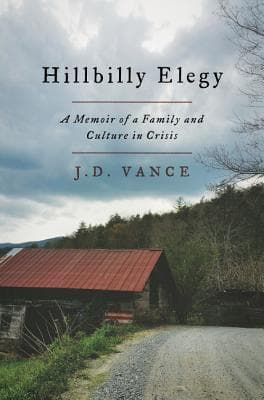
Hillbilly Elegy: A Memoir of a Family and Culture in Crisis cover
Archivist's Choice

Hillbilly Elegy: A Memoir of a Family and Culture in Crisis

J.D. Vance (2016)

Genre

Politics / Biography / Memoir / History

Reading Time

12 Minutes

Key Themes

See below

Track Your Reading

Sign in to track this book

A Yale Law graduate's memoir of his chaotic Rust Belt upbringing shows the ingrained struggles of family, class, and the fading American dream for the white working class.

Core Idea

J.D. Vance's "Hillbilly Elegy" offers a deeply personal and sociological examination of the white working class in Appalachia, specifically focusing on the challenges, cultural norms, and economic decline that have shaped generations of his family and community. Vance argues that while external factors like globalization and automation have undoubtedly impacted these communities, there are also significant internal cultural forces—such as a pervasive sense of fatalism, a distrust of institutions, and a struggle with social mobility—that contribute to the ongoing crisis. Through his own journey from poverty to Yale Law School, Vance explores the complex interplay of class, culture, and identity in contemporary America, providing an insider's perspective on a demographic often misunderstood or overlooked in national discourse. The book serves as both a memoir of Vance's tumultuous upbringing in rural Kentucky and Ohio, marked by poverty, addiction, and domestic instability, and a broader analysis of the societal issues facing the 'hillbilly' culture. Vance seeks to bridge the gap between his origins and his present, explaining the resilience and flaws within his family's culture, and ultimately attempting to shed light on the economic and social anxieties that he believes contributed to the political shifts seen in the 21st century.
Difficulty
Medium

Core idea

The central argument and framework that powers the entire book.

J.D. Vance's "Hillbilly Elegy" offers a deeply personal and sociological examination of the white working class in Appalachia, specifically focusing on the challenges, cultural norms, and economic decline that have shaped generations of his family and community. Vance argues that while external factors like globalization and automation have undoubtedly impacted these communities, there are also significant internal cultural forces—such as a pervasive sense of fatalism, a distrust of institutions, and a struggle with social mobility—that contribute to the ongoing crisis. Through his own journey from poverty to Yale Law School, Vance explores the complex interplay of class, culture, and identity in contemporary America, providing an insider's perspective on a demographic often misunderstood or overlooked in national discourse.

The book serves as both a memoir of Vance's tumultuous upbringing in rural Kentucky and Ohio, marked by poverty, addiction, and domestic instability, and a broader analysis of the societal issues facing the 'hillbilly' culture. Vance seeks to bridge the gap between his origins and his present, explaining the resilience and flaws within his family's culture, and ultimately attempting to shed light on the economic and social anxieties that he believes contributed to the political shifts seen in the 21st century.

At a glance

Difficulty

Medium

Key Takeaways

1

The Intergenerational Cycle of Trauma

Poverty and social dysfunction are often rooted in deeply ingrained family trauma, not just economic factors.

Quote

Mamaw and Papaw never escaped the hold of the Scots-Irish honor culture, which meant that they didn’t just like to fight, they felt a sacred obligation to do so.

Vance shows how abuse, alcoholism, and instability were not just background elements in his family's life, but destructive forces passed down through generations. His grandparents, though they left Kentucky's poverty, brought with them a 'hillbilly' culture marked by quick tempers, a distrust of institutions, and a tendency toward self-sabotage. This goes beyond a lack of money; it's about a learned inability to handle stress, manage emotions, and build stable relationships, which then causes ongoing economic problems and social disor...

Supporting evidence

The frequent, violent arguments between Mamaw and Papaw, the numerous failed marriages of his mother, and Vance's own struggles with anger and instability directly stemming from his childhood experiences.

Apply this

Policy interventions must go beyond economic aid to address the underlying psychological and cultural factors that trap families in cycles of poverty and dysfunction. Community-based mental health services and family counseling could be as vital as job training.


2

The Two-Front War of Upward Mobility

Escaping poverty requires not only economic advancement but also a profound cultural and psychological transformation.

Quote

I may have escaped the worst of the hillbilly life, but I will never be rid of it entirely. I am a hillbilly, and I’ll always be one.

This is one of the book's best points. Vance's path to Yale Law School was not just about good grades; it was about learning new social rules, communication styles, and ways to control emotions. He felt like an outsider in both worlds—too 'hillbilly' for the elite, but too 'educated' to fully fit in his hometown. This 'two-front war' shows the huge mental cost of social mobility. People must shed old cultural habits while adopting new ones, often without clear guidance or emotional help. This highlights the identity crisis that can co...

Supporting evidence

Vance's discomfort and confusion during his first formal dinner at Yale, his struggles to articulate his background to privileged peers, and his internal conflict about his Appalachian identity even after achieving success.

Apply this

Mentorship programs and support systems for first-generation college students or those from disadvantaged backgrounds should explicitly address cultural navigation and identity formation, not just academic performance. Acknowledge and validate the emotional challenges of code-switching.

3

The Perils of 'Learned Helplessness'

A pervasive sense of powerlessness and fatalism can paralyze communities, even when opportunities exist.

Quote

We talked about the good old days, when the factories provided a living wage and a sense of dignity. But none of us seemed to know what to do about the present.

Vance notes a deep sense of fatalism in his community, a belief that outside forces (like globalization or government policies) are entirely to blame for their problems, and that individuals have little power. This 'learned helplessness' appears as a reluctance to get an education, a distrust of new ideas, and a tendency to blame others instead of taking personal responsibility. While acknowledging real economic shifts, Vance argues that this internal mindset blocks progress. This view, though possibly controversial, challenges the si...

Supporting evidence

His neighbors and relatives often expressed a sense of victimhood regarding job losses, but simultaneously resisted efforts to acquire new skills or relocate, preferring to reminisce about a bygone era.

Apply this

Community development initiatives should focus on fostering a sense of agency and empowerment, rather than just providing resources. This might involve local leadership training, skill-building workshops with immediate, tangible results, and celebrating individual successes to inspire others.

4

The Unsung Heroes: Resilient Grandparents

For many, stability and love come not from parents, but from often flawed but fiercely dedicated grandparents.

Quote

Mamaw was a force of nature, a woman who had seen more than her share of trouble but never let it break her.

A repeated point, and perhaps the most encouraging, is the role of Vance's grandparents, Mamaw and Papaw, in giving him what little stability and love he had. Despite their own faults—Mamaw's temper and Papaw's alcoholism—they offered a safe place from his mother's chaotic life. This points to a social safety net often overlooked: grandparents raising children when parents cannot. It also shows that even imperfect love and guidance can change lives, offering help in otherwise difficult times. This idea reflects the strength of family ...

Supporting evidence

Mamaw's intervention to protect Vance from his abusive stepfather, her financial sacrifices, and her consistent presence and tough love throughout his childhood, contrasting sharply with his mother's instability.

Apply this

Social welfare policies should recognize and support the vital role of kinship caregivers, particularly grandparents, offering resources, legal assistance, and financial aid to those raising grandchildren. Invest in programs that strengthen intergenerational bonds.

5

The Education-Work Ethic Disconnect

A strong work ethic doesn't always translate into educational attainment or career advancement in changing economies.

Quote

Our people were not lazy. They worked hard, often in dangerous jobs, and believed in the dignity of labor. But they didn't always value education in the same way.

Vance observes that while his community often valued hard work, especially manual labor, there was a cultural gap regarding the worth of formal education beyond high school. Many saw college as unnecessary or even snobbish, preferring immediate factory jobs that are now rare. This created a situation where people were willing to work very hard, but often in ways that did not fit the needs of a post-industrial economy. This explains why a 'pull yourself up by your bootstraps' attitude, without also focusing on skills for modern markets...

Supporting evidence

His family and neighbors often worked grueling hours in physically demanding jobs, yet there was a pervasive skepticism towards higher education, often seen as a path for 'other people.'

Apply this

Educational institutions and vocational training programs need to bridge this cultural gap by demonstrating the direct relevance and economic benefits of modern skills and higher education to working-class communities, perhaps through community outreach and mentorship from successful local individuals.

6

The Complexity of 'Hillbilly' Identity

The term 'hillbilly' encapsulates both a derogatory stereotype and a source of fierce, complicated pride.

Quote

To understand me, you have to understand where I come from. And where I come from is hillbilly country.

Vance looks at the many sides of the 'hillbilly' identity. On one hand, it is a negative label linked to ignorance, poverty, and backwardness. On the other, it represents a strong sense of community, loyalty, and a distinct culture based on Appalachian values. This creates a complex inner conflict for people like Vance, who both dislike the stereotypes and feel a strong tie to their roots. The book avoids making this identity seem either perfect or evil, instead offering a balanced picture of its strengths and weaknesses, which is imp...

Supporting evidence

Vance's own internal struggles with his identity, his defense of his people's virtues, and his candid critique of their destructive tendencies, all while acknowledging his indelible connection to the culture.

Apply this

When engaging with marginalized or misunderstood communities, it's crucial to acknowledge and respect their self-defined identities, understanding that internal pride can coexist with external stigma. Avoid simplistic labels and seek to understand the internal complexities.

7

The Role of Religion: Comfort and Contradiction

Religion offers solace and community but can also be intertwined with cultural insularity and judgment.

Quote

The church was the only institution that consistently offered any sort of stability or community in our lives.

Religion, especially evangelical Christianity, is prominent as both a comfort and a sign of cultural conflicts. For many in Vance's community, the church offers belonging, moral direction, and a way to understand life's difficulties. However, Vance also quietly questions how this strong religious identity can sometimes reinforce isolation, a distrust of outsiders, and judgment of those who do not conform. This point highlights the two sides of religious groups in struggling communities: a vital support system, but also possibly a barr...

Supporting evidence

His family's intermittent but significant involvement with various churches, the comfort his mother sought in faith during crises, and the community aspect of church gatherings.

Apply this

Community leaders and policymakers should recognize the central role of religious institutions in many working-class communities and seek collaboration rather than bypass them. However, also be aware of potential limitations or biases within these structures.

8

The Limitations of Individual Effort

While personal responsibility is vital, systemic issues often create insurmountable barriers without broader societal support.

Quote

No amount of grit or hard work can overcome the structural disadvantages that many of us face.

While Vance often focuses on personal responsibility and cultural factors, his own story shows the limits of individual effort when facing deep-seated systemic problems. His success, while showing his resilience, also relied on important help: the stability from his grandparents, the structure of the Marines, and the chances Yale offered. This suggests that while self-reliance is important, it is often not enough without outside support systems, clear paths, and some luck. This detail prevents the book from being a simple 'pull yourse...

Supporting evidence

Vance's near-failure in high school before Mamaw's intervention, his reliance on the military for discipline and a path forward, and the financial and social capital gained through Yale.

Apply this

Acknowledge that individual agency thrives within supportive structures. Policies should aim to create those structures (e.g., affordable education, robust social services, military pathways) that allow individuals to leverage their personal efforts for upward mobility.

9

The Decline of Trust in Institutions

A pervasive distrust of government, media, and even local authorities exacerbates social fragmentation.

Quote

Our people didn't trust the government, the media, or even the local police. We only trusted our own.

Vance points out a deep and widespread distrust of institutions in his community. This is not just about political parties; it is a basic skepticism toward anything outside the immediate family or close-knit community. This distrust makes effective government hard, complicates social programs, and keeps a sense of isolation going. While some of this distrust might come from past bad experiences or feeling ignored, it also stops communities from engaging with possible solutions and strengthens an 'us vs. them' way of thinking. This poi...

Supporting evidence

His family's skepticism towards social workers, the government assistance programs they utilized, and the media's portrayal of their lives, often seeing them as biased or out of touch.

Apply this

Rebuilding trust requires consistent, transparent engagement from institutions at the local level. Focus on demonstrable results, active listening, and involving community members in the design and implementation of programs rather than imposing solutions top-down.

10

The Personal Cost of Social Decline

Beyond statistics, social decline manifests as individual suffering, broken families, and profound emotional scars.

Quote

These are the stories of how a social, regional, and class decline feels when you were born with it hung around your neck.

Ultimately, the book reminds us that 'culture in crisis' is not an abstract idea; it is a lived experience marked by great personal pain. Vance does not just present facts; he shows the human side of poverty, addiction, and family breakdown. The chaotic home life, the constant fear of being left alone, the struggle with anger and self-worth—these are direct results of larger social and economic changes. This focus on the emotional and psychological cost makes the memoir so engaging and relatable, making readers face the human price of...

Supporting evidence

The vivid descriptions of his mother's drug addiction and numerous boyfriends, his own recurring nightmares, and the constant emotional volatility within his household.

Apply this

When discussing social problems, always center the human experience. Emphasize storytelling and personal narratives to foster empathy and ensure that policy discussions are grounded in the lived realities of those affected, not just abstract numbers.

Critical analysis

Notable Quotes

Quiz

Test Your Knowledge

Ready to see how well you understood this book? Take our interactive quiz with 10 questions.

10
Questions
~5
Minutes
?
Best Score

Key Questions (FAQ)

Hillbilly Elegy is a memoir by J.D. Vance that explores his personal journey growing up in a Rust Belt town and examines the struggles of the white working class in America. It delves into the cultural and social decline experienced by this demographic, offering an inside perspective on their challenges.

About the author