BookBrief
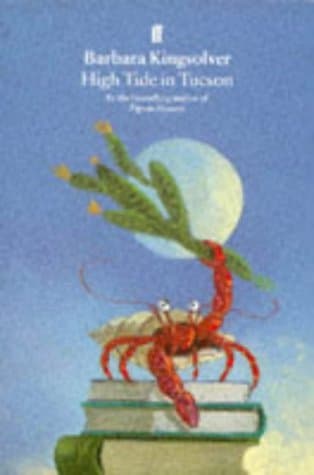
High Tide in Tucson cover
Archivist's Choice

High Tide in Tucson

Barbara Kingsolver (1995)

Genre

Lifestyle / Biography / Memoir

Reading Time

6-8 hours

Key Themes

See below

Track Your Reading

Sign in to track this book

Barbara Kingsolver, with the sharp eyes of a scientist and the lyrical voice of a poet, navigates family, community, and the natural world, all while relocating a desert tortoise named Buddy from Tucson to the Kentucky mountains.

Core Idea

Barbara Kingsolver's "High Tide in Tucson" explores the connection between humanity and nature, arguing that our identities and community health link to ecological processes. Through personal essays, Kingsolver discusses motherhood, finding 'home' in varied places from rural Arizona to the Canary Islands, and lessons from observing human and non-human life. The book promotes accepting imperfection and change, and the role of storytelling in understanding our place in the world.
Reading time
6-8 hours
Difficulty
Easy
✓ Read this if...
You appreciate reflective memoirs that blend personal narrative with sharp ecological observation and a touch of humor, or if you're seeking a deeper understanding of our connection to the natural world through a relatable, often witty, lens.
✗ Skip this if...
You prefer plot-driven narratives, dense academic prose, or strictly linear biographies. This book is a collection of essays, some more thematic than others, and it meanders rather than follows a singular storyline.

Core idea

The central argument and framework that powers the entire book.

Barbara Kingsolver's "High Tide in Tucson" explores the connection between humanity and nature, arguing that our identities and community health link to ecological processes. Through personal essays, Kingsolver discusses motherhood, finding 'home' in varied places from rural Arizona to the Canary Islands, and lessons from observing human and non-human life. The book promotes accepting imperfection and change, and the role of storytelling in understanding our place in the world.

At a glance

Reading time

6-8 hours

Difficulty

Easy

Read this if...

You appreciate reflective memoirs that blend personal narrative with sharp ecological observation and a touch of humor, or if you're seeking a deeper understanding of our connection to the natural world through a relatable, often witty, lens.

Skip this if...

You prefer plot-driven narratives, dense academic prose, or strictly linear biographies. This book is a collection of essays, some more thematic than others, and it meanders rather than follows a singular storyline.

Key Takeaways

1

The Ecological Self

Our identity is inextricably linked to the natural world around us.

Quote

The very fact that I am a part of an ecosystem, and that it is part of me, means that my well-being is tied to its well-being.

Kingsolver argues that human identity is not solitary but deeply ecological. We are part of nature, and our physical and mental health reflect the health of our environment. This idea challenges the human-centered view, suggesting that ignoring nature means ignoring a basic part of ourselves. Her essays often pair personal stories with observations of plants and animals, showing how environmental changes, even small ones like shifts in bird migration, affect us individually and collectively. This connection creates a sense of responsi...

Supporting evidence

Kingsolver's personal experience of moving from rural Kentucky to Tucson, Arizona, and observing the drastic differences in climate, wildlife, and plant life, which forced a re-evaluation of her own sense of 'home' and belonging.

Apply this

Spend time observing local ecosystems. Understand the native plants and animals in your area. Consider how your actions, from waste disposal to consumption, impact these local systems and, by extension, your own sense of place and well-being.

eco-identitybiophiliaenvironmentalism
2

The Unpredictable Journey of Motherhood

Parenting is a constant negotiation between control and surrender.

Quote

Motherhood is a high-wire act, where the wire keeps changing its tension and the wind never stops blowing.

Kingsolver approaches motherhood with humor, honesty, and insight. She breaks down the perfect parent image, showing the messy, unpredictable, and often funny reality of raising children. Her essays highlight constant contradictions: fierce protection alongside the need to let go, the desire for control clashing with a child's natural wildness. She accepts that children are not blank slates but independent beings with their own personalities and desires. This view encourages parents to find joy in the chaos and to learn from their chi...

Supporting evidence

Her humorous account of her daughter's attempts to 'train' a wild bobcat kitten, illustrating the clash between a child's innocent intentions and the realities of the natural world, and a mother's exasperated but loving supervision.

Apply this

Embrace the unexpected moments in parenting. Allow children space for their own explorations and mistakes, even if it means stepping back from the urge to constantly direct or correct. Find humor in the daily absurdities of family life.

parenting-challengeschild-rearingfamily-dynamics
3

Finding Home in Unfamiliar Places

Home is a state of mind, built through connection and adaptation.

Quote

Home is not where you were born, or where your parents live, or where you grew up. It is where you feel at home, which can be anywhere you learn to love.

Kingsolver's personal journey, especially her move to Tucson, Arizona, serves as a strong example of 'home.' She shows that home is not just a place but a mix of emotional connection, cultural understanding, and environmental adjustment. Initially feeling like an outsider in the desert, she gradually learns to appreciate its unique beauty and rhythms, forming new relationships with both people and nature. This process involves letting go of old ideas and engaging with the unfamiliar, proving that belonging can grow even in strange env...

Supporting evidence

Her detailed descriptions of the initial shock and subsequent gradual appreciation for the Sonoran Desert's flora and fauna, such as saguaro cacti and javelinas, and her efforts to understand the local culture and community in Tucson.

Apply this

When in a new place, actively seek out local stories, learn about the history and ecology, and engage with the community. Approach the unfamiliar with curiosity rather than judgment, allowing yourself to adapt and build new connections.

sense-of-placecultural-adaptationbelonging
4

The Power of Observation and Storytelling

Paying close attention to the world transforms it into meaningful narrative.

Quote

Everything in the world is a story, if you only pay enough attention to hear it.

Kingsolver's writing shows the power of observation. She demonstrates how a sharp eye and an open mind can turn everyday things into something significant. Whether describing turkey social dynamics, the toughness of a desert plant, or human quirks, her ability to notice details and make connections lifts her essays beyond simple stories. This careful observation is the source of her storytelling, letting her find universal truths in specific moments. It asks readers to slow down, engage with their surroundings, and see the stories in ...

Supporting evidence

Her essay on the social hierarchy and curious behaviors of wild turkeys in her yard, turning a common farm animal into a subject of complex social study and personal reflection.

Apply this

Practice daily observation: take five minutes to truly look at a plant, listen to sounds, or watch people without judgment. Journal your observations, attempting to find the 'story' or deeper meaning within them.

mindfulnessnarrative-craftattentiveness
5

The Humorous Side of Humanity

Laughter is a vital tool for coping with life's absurdities and challenges.

Quote

If you can't laugh at the ridiculousness of it all, you're going to cry a lot.

Kingsolver fills her essays with a dry, self-deprecating humor that makes even difficult topics approachable and relatable. She does not avoid life's absurdities, whether the struggles of co-parenting, small-town quirks, or the awkwardness of human interaction. Her humor is not just for fun; it is a coping mechanism, a way to gain perspective, and a tool for connecting with readers. By finding humor in daily situations, she encourages us to relax, forgive our imperfections, and embrace life's delightful messiness. This comedic view ul...

Supporting evidence

Her hilarious recounting of attempting to teach her daughter about the birds and the bees, and the unexpected, literal interpretations and questions that ensued, highlighting the comical miscommunications inherent in parenting.

Apply this

Seek out humor in everyday situations. Don't take yourself too seriously; practice self-deprecating humor. Share funny anecdotes with friends and family to build connection and lighten the mood during stressful times.

witresiliencecoping-mechanisms
6

Cultivating Connection and Community

Meaningful relationships are the bedrock of a fulfilling life.

Quote

We are not meant to live in isolation; our well-being is inextricably linked to the fabric of our community.

Kingsolver consistently emphasizes the importance of community for individual and collective well-being. Whether it is the close-knit group from her rural Kentucky childhood or the new connections she makes in Tucson, she shows how shared experiences, mutual support, and collective responsibility enrich lives. She explores the details of human interaction, from the awkwardness of new friendships to the comfort of old bonds. Her essays highlight the effort needed to build and keep these connections, advocating for active participation ...

Supporting evidence

Her detailed descriptions of the communal support systems in rural Kentucky, such as neighbors helping with harvests or childcare, contrasting with the initial challenge of establishing similar connections in a new, more urban environment like Tucson.

Apply this

Actively participate in local groups, volunteer, or initiate conversations with neighbors. Prioritize spending quality time with friends and family, and offer support to those in your immediate community.

social-bondsinterdependencecollective-wellbeing
7

The Language of Nature

Nature communicates profound lessons if we learn to listen.

Quote

The natural world speaks in a language that is subtle, profound, and utterly truthful.

For Kingsolver, nature is a primary teacher. She interprets the 'language' of the natural world, turning its patterns, cycles, and struggles into lessons for human living. From a desert flower's resilience to birds' migratory instincts, she finds metaphors and direct instruction for facing life's challenges, understanding our place, and even making ethical decisions. This view encourages deep respect for the non-human world, suggesting that by observing and respecting its processes, we can gain valuable insights into our own lives. It...

Supporting evidence

Her essay on the life cycle and purpose of the agave plant, which flowers spectacularly once in its lifetime before dying, illustrating the beauty of a singular, grand purpose and the natural cycle of life and death.

Apply this

Spend time in nature with an intention to learn. Observe a specific plant or animal over time. Reflect on what lessons its life cycle, behavior, or adaptations might offer about perseverance, change, or interconnectedness.

eco-wisdombiomimicrynatural-cycles
8

Embracing Imperfection and Change

Life's beauty often lies in its flaws and constant evolution.

Quote

Perfect is the enemy of good, and often, the enemy of real.

Kingsolver consistently champions the beauty of imperfection and the certainty of change. She rejects the pursuit of a flawless existence, finding richness and authenticity in life's unexpected turns and even failures. This applies to personal growth, relationships, and our connection with the environment. Her stories often show how adapting to unforeseen events, accepting personal limits, and letting things happen naturally lead to deeper understanding and greater resilience. This takeaway encourages readers to drop rigid expectation...

Supporting evidence

Her reflections on the challenges of gardening in a new climate, where previous methods failed, forcing her to adapt and learn new ways of coaxing life from the soil, ultimately leading to a different, but equally rewarding, outcome.

Apply this

Identify an area in your life where you're striving for perfection; consciously release that pressure and embrace the 'good enough.' Practice accepting unexpected changes gracefully, viewing them as opportunities for growth rather than setbacks.

resilienceadaptabilitygrowth-mindset
9

The Intergenerational Legacy

Our lives are shaped by, and contribute to, the stories of those who came before and after.

Quote

We are all walking, talking histories, carrying the echoes of our ancestors and the hopes of our children.

Kingsolver often reflects on her ancestry and future generations, showing how our lives are part of a larger story. She explores how family history, cultural traditions, and environmental care pass down through generations. This creates a deep sense of continuity and responsibility, reminding us that our actions have effects far beyond the present. By acknowledging this intergenerational legacy, Kingsolver urges us to consider our role as guardians of both personal and planetary heritage, inspiring us to live in a way that honors the ...

Supporting evidence

Her essays often refer to her Appalachian roots and the practical wisdom passed down from her grandparents, particularly concerning self-sufficiency and respect for the land, which she then attempts to instill in her own daughter.

Apply this

Research your own family history and cultural traditions. Consider how your daily actions and choices might impact future generations. Document your own stories and experiences for those who will come after you.

ancestryheritagelegacystewardship

Critical analysis

Notable Quotes

The very least you can do in your life is figure out what you hope for. And the most you can do is live inside that hope. Not admire it from a distance but live right in it, under its roof.

Reflecting on hope and living with purpose.

I often think that the night is more alive and more richly colored than the day.

Musing on the vibrancy and mystery of nighttime.

Sometimes the best you can do is just keep going. Just keep living.

Contemplating resilience in the face of difficulties.

It seems to me that the only way to be a person is to be in a place.

Exploring the deep connection between identity and environment.

The older I get, the more I believe that the only thing that separates us from the animals is our ability to make bad decisions.

A humorous observation on human nature and choice.

Living in the desert, I've learned that water is life, but also that life is tenacious, finding a way even in the harshest conditions.

Reflecting on the lessons learned from living in an arid environment.

You can't get rid of a problem by ignoring it. You have to face it, analyze it, and then act.

Offering practical advice on problem-solving.

The world is full of people who are trying to get you to buy something. Don't.

A critical take on consumerism and materialism.

The greatest gift you can give another person is your honest attention.

Emphasizing the importance of presence and genuine connection.

We are a species that needs to tell stories. They are as essential as food and water.

Highlighting the fundamental human need for narrative.

My own life is a story I am telling myself, and that is a story I am telling other people.

Reflecting on the personal narrative of one's life.

Every morning I get up and look out the window, and I think, 'Here we go again.' And then I smile.

A personal reflection on starting each day with a sense of acceptance and optimism.

There's a lot to be said for doing nothing. It gives you time to think.

Advocating for the value of idleness and contemplation.

Being a mother is not a job, it is a way of life.

Describing the profound and all-encompassing nature of motherhood.

Quiz

Test Your Knowledge

Ready to see how well you understood this book? Take our interactive quiz with 10 questions.

10
Questions
~5
Minutes
?
Best Score

Key Questions (FAQ)

'High Tide in Tucson' is a collection of essays by Barbara Kingsolver that explores themes of family, community, and the natural world through her unique perspective as both a scientist and a poet. It offers personal reflections, observations, and insights into her life and surroundings.

About the author

Barbara Kingsolver

Barbara Kingsolver is a Pulitzer Prize winning American novelist, essayist and poet. She was raised in rural Kentucky and lived briefly in the Congo in her early childhood. Kingsolver earned degrees in biology at DePauw University and the University of Arizona and worked as a freelance writer before she began writing novels. Her widely known works include The Poisonwood Bible, the tale of a missionary family in the Congo, and Animal, Vegetable, Miracle, a non-fiction account of her family's attempts to eat locally.