BookBrief
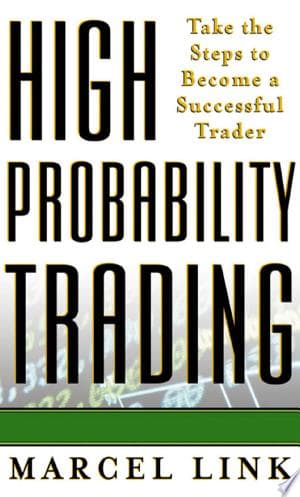
High-Probability Trading cover
Archivist's Choice

High-Probability Trading

Marcel Link (2003)

Genre

General

Reading Time

240 min

Key Themes

See below

Track Your Reading

Sign in to track this book

Marcel Link's "High-Probability Trading" gives new traders a practical plan to survive early financial challenges and become profitable, turning aspiring traders into lasting market participants.

Core Idea

Marcel Link's "High-Probability Trading" states that consistent trading profits come from sticking to a few good setups, managing risk strictly, and maintaining strong psychological control. The book argues that successful traders react to what the market does, rather than forcing their own views. They carefully manage their money to handle losses and develop the mental strength to follow their plan without emotions getting in the way. It stresses that long-term success comes from finding opportunities with good risk-reward ratios, cutting losses quickly, and letting winning trades run.
Reading time
240 min
Difficulty
Medium
✓ Read this if...
You are an aspiring or struggling trader looking for a no-nonsense, practical guide to developing a systematic and disciplined approach to trading, focusing on risk management and emotional control.
✗ Skip this if...
You are looking for specific, secret trading strategies or indicators that guarantee profits, or you prefer a more academic, theoretical approach to market analysis.

Core idea

The central argument and framework that powers the entire book.

Marcel Link's "High-Probability Trading" states that consistent trading profits come from sticking to a few good setups, managing risk strictly, and maintaining strong psychological control. The book argues that successful traders react to what the market does, rather than forcing their own views. They carefully manage their money to handle losses and develop the mental strength to follow their plan without emotions getting in the way. It stresses that long-term success comes from finding opportunities with good risk-reward ratios, cutting losses quickly, and letting winning trades run.

At a glance

Reading time

240 min

Difficulty

Medium

Read this if...

You are an aspiring or struggling trader looking for a no-nonsense, practical guide to developing a systematic and disciplined approach to trading, focusing on risk management and emotional control.

Skip this if...

You are looking for specific, secret trading strategies or indicators that guarantee profits, or you prefer a more academic, theoretical approach to market analysis.

Key Takeaways

1

The Brutal Reality of Trading

Trading is a zero-sum game often dominated by professionals; new traders face overwhelming odds.

Quote

The vast majority of new traders lose money and quit within six months. This isn't a hobby; it's a profession that demands respect and rigorous preparation.

Link is direct: trading is very hard, with odds against individuals. The market is not a quick wealth scheme but a place where experienced professionals with better resources often take advantage of those unprepared. New traders, driven by unrealistic hopes and a poor grasp of how markets work, often make emotional choices and manage risk poorly. This point stresses that aspiring traders must drop romantic ideas and accept the tough truths of constant competition, significant capital risk, and the mental strain trading causes. It sets...

Supporting evidence

Link frequently references the high failure rate of new traders within their first six months, a commonly cited statistic in the trading world, and contrasts it with the long careers of professional traders.

Apply this

Before even placing a trade, conduct a brutally honest self-assessment of your capital, time commitment, emotional resilience, and willingness to learn from inevitable losses. Understand that initial losses are 'tuition' for a demanding education.


2

Trade What You See, Not What You Think

Emotional bias and preconceived notions are deadly; objective analysis of price action is paramount.

Quote

The market doesn't care about your opinions, hopes, or fears. It only cares about price and volume.

One of Link's most important lessons is the need to trade based on actual market data, not personal biases, news, or 'gut feelings.' Human psychology is not naturally suited for trading; we tend to see what we want, confirm existing beliefs, and avoid admitting mistakes. This leads to holding losing trades too long and cutting winning trades too short. Link promotes a calm, objective approach, focusing only on price action, volume, and established technical patterns. This requires constant watchfulness against self-deception and the d...

Supporting evidence

Link often recounts scenarios where traders held onto losing positions because they 'believed' the stock would turn around, only to suffer catastrophic losses, contrasting it with traders who reacted unemotionally to price signals.

Apply this

Develop a clear trading plan with entry and exit rules based on objective technical analysis. When a trade is active, ignore all external noise and internal biases; execute the plan based on real-time price action, not your predictions.

3

The Power of High-Probability Setups

Focus on trades with a statistically higher chance of success, even if they are less frequent.

Quote

Don't try to trade every market move. Wait patiently for the setups that give you the highest statistical edge.

Link supports 'high-probability' trading, which means finding and making trades where past results suggest a good outcome. This involves patiently waiting for specific chart patterns, indicators to align, or market conditions to come together in a way that offers a clear advantage. It focuses on quality over quantity. Instead of chasing every small move, a high-probability trader learns to spot specific setups that, based on testing and experience, provide a better risk-reward profile. This method reduces overtrading, saves capital, a...

Supporting evidence

Link illustrates various technical analysis patterns (e.g., strong trends, breakouts, consolidations) that historically show a higher success rate when traded according to specific rules, emphasizing the importance of waiting for these to form.

Apply this

Identify 2-3 specific trading setups that you understand thoroughly and have backtested. Only trade when these precise conditions are met, ignoring all other market noise. Develop a checklist for each setup.

4

Risk Management: The Trader's Lifeline

Preserving capital is paramount; proper stop-loss placement and position sizing are non-negotiable.

Quote

Your first job as a trader is to protect your capital. If you don't have capital, you can't trade.

Link says risk management is not just important; it is the most critical part of consistent trading. Many new traders only focus on when to enter trades, ignoring where to exit a losing trade and how much money to risk per trade. Link emphasizes that a clear, disciplined stop-loss is essential to keep small losses from becoming huge. Position sizing is equally important, making sure no single trade can wipe out an account. He advises risking only a small percentage (e.g., 1-2%) of total capital on any trade, understanding that even go...

Supporting evidence

Link frequently uses examples of traders who blew up their accounts by failing to use stop-losses or by overleveraging, contrasting them with traders who, despite a lower win rate, remained profitable due to strict risk control.

Apply this

Before entering any trade, determine your exact stop-loss level and calculate your position size so that you never risk more than 1-2% of your total trading capital on that single trade. Stick to this rule without exception.

5

The Psychology of a Winning Trader

Mastering emotions and maintaining discipline are more crucial than perfect analysis.

Quote

Your biggest enemy in trading is often yourself. Fear and greed are powerful forces that will destroy your account if left unchecked.

Link spends much time on the psychological side of trading, arguing that even the best systems are useless without emotional control. Fear makes traders exit winning trades too soon or miss chances, while greed causes them to hold losing trades too long or trade too much. Discipline is the solution, allowing a trader to follow their plan consistently, even when facing losses or market changes. This involves developing a detached, almost robotic way of executing trades, separating personal feelings from market actions. Cultivating pati...

Supporting evidence

Link provides anecdotal stories of traders making irrational decisions due to fear after a series of losses, or becoming overly confident and reckless after a few wins, leading to eventual account depletion.

Apply this

Practice mindfulness and self-awareness during trading. After each trade, objectively review your emotional state and adherence to your plan. Develop rituals to manage stress and avoid impulsive decisions, such as stepping away from the screen after a significant loss or win.

6

Let Your Winners Run, Cut Your Losers Short

Maximize profit potential on successful trades while aggressively minimizing losses on unsuccessful ones.

Quote

The secret to making money in trading isn't having an incredibly high win rate; it's making more money on your winners than you lose on your losers.

This classic trading saying is a core part of Link's philosophy. Many amateur traders do the opposite, a psychological trap where they take small profits quickly out of fear of losing them, but hold onto losing trades hoping for a recovery. Link stresses that a profitable system does not need a high win rate, but rather a positive expectancy, meaning the average winning trade is much larger than the average losing trade. This requires the discipline to let profitable trades run, often using trailing stops, and the quick efficiency to ...

Supporting evidence

Link presents simple mathematical examples showing how a trading system with only a 40% win rate can be highly profitable if the average winner is 2-3 times larger than the average loser.

Apply this

For every trade, define both your stop-loss and a realistic profit target or trailing stop strategy. Once a trade is profitable, use trailing stops to protect gains while allowing for further upside. Never move your initial stop-loss further away from the entry point.

7

The Importance of a Trading Plan

A well-defined, written trading plan is your roadmap and rulebook for consistent execution.

Quote

Failing to plan is planning to fail. A robust trading plan removes subjectivity and provides a framework for every decision.

Link insists that a complete trading plan is a must for success. This is not just a vague idea; it is a detailed, written document outlining every part of your trading: chosen markets, trading strategy (entry/exit rules, indicators), risk management rules (position sizing, stop-loss methods), profit-taking strategies, daily routines, and even mental preparation. A trading plan acts as an objective guide, preventing impulsive decisions driven by emotion or market noise. It makes a trader think through scenarios beforehand and provides ...

Supporting evidence

Link frequently refers to the common pitfalls of new traders who trade haphazardly without any pre-defined rules, contrasting them with professional traders who meticulously follow their systems.

Apply this

Create a detailed trading plan document that covers your strategy, risk management, capital allocation, and daily routine. Review it before each trading session and rigorously adhere to its rules. Update it only after a thorough, objective review of your performance.

8

Journaling and Performance Review

Objectively analyzing past trades is essential for learning, adapting, and improving your strategy.

Quote

Every trade, win or loss, is a lesson. If you don't review your performance, you're throwing away valuable education.

Link highlights the important, yet often overlooked, practice of keeping a detailed trading journal and regularly reviewing performance. Simply tracking profit and loss is not enough. A good journal records every part of a trade: entry, exit, reasoning, market conditions, emotional state, and adherence to the trading plan. This data helps find patterns in your successes and failures, pinpoint psychological weaknesses, and refine your strategy. Objective self-assessment, free from ego, allows a trader to learn from mistakes, repeat suc...

Supporting evidence

Link describes how successful traders meticulously track their trades, noting not just the P&L but also the 'why' behind each decision, allowing them to identify and correct recurring errors.

Apply this

Maintain a comprehensive trading journal. After each trading day or week, review your trades, focusing on adherence to your plan, emotional state, and the effectiveness of your strategy. Use this data to identify areas for improvement and make data-driven adjustments.

9

The Market is Always Right

Never argue with price action; accept market signals and adapt without ego.

Quote

The market is the ultimate judge. Your opinion means nothing if the price action contradicts it.

This is a basic truth Link repeats: market price action is the final authority. Many traders fall into the trap of 'being right' about their prediction, even when the market clearly moves against them. This ego-driven resistance leads to holding losing positions, missing opportunities, and doubling down on bad trades. Link promotes humility and adaptability. When the market moves against your expectation, it is not a personal insult; it is a signal to re-evaluate, adjust, or exit. The ability to admit you are wrong quickly and without...

Supporting evidence

Link provides examples of traders who 'knew' a stock would go up, despite clear downtrends, leading to massive losses, contrasting it with those who simply reacted to the price action by cutting losses.

Apply this

When a trade goes against you and hits your stop-loss, exit without hesitation or rationalization. Never average down on a losing position. Always respect the current price action, regardless of your personal convictions or external news.

10

Patience and Persistence Pay Off

Trading success is a marathon, not a sprint, requiring continuous learning and unwavering discipline.

Quote

There are no shortcuts to trading success. It requires dedication, continuous learning, and the patience to wait for the right opportunities.

Link ends by stressing that trading is an ongoing process of improvement, not a single event. Instant riches are a myth; consistent profits come from years of dedicated study, practice, and emotional strength. This includes patiently waiting for good setups, patiently enduring losing streaks, and persistently improving one's strategy and mental approach. Many new traders give up too soon, expecting immediate results. Link's message is clear: trading success is earned through hard work, discipline, and a steady commitment to the proces...

Supporting evidence

Link often recounts the long learning curves of successful traders, including himself, who persevered through initial losses and continued to refine their methods over many years.

Apply this

Commit to treating trading as a serious profession. Set realistic expectations for your learning curve and profitability. Embrace continuous education, review your progress regularly, and understand that consistency over time is the ultimate goal, not overnight wealth.

Critical analysis

Notable Quotes

The market doesn't care what you think, what you hope, or what you need. It only cares about what you do.

Emphasizing the importance of action over emotion in trading.

Your worst enemy in trading is often yourself.

Highlighting the impact of self-sabotage and emotional biases.

The key to making money is to limit your losses and let your winners run.

A fundamental principle of risk management and profit maximization.

Never risk more than you are willing to lose on any single trade.

Stressing the importance of proper position sizing and capital preservation.

Trading is not about being right all the time; it's about making money when you are right and losing little when you are wrong.

Explaining the probabilistic nature of trading and the focus on overall profitability.

Have a plan before you enter a trade, and stick to it.

Underscoring the necessity of a defined trading strategy and discipline.

If you don't have a stop-loss, you don't have a trade.

Emphasizing the critical role of stop-losses in managing risk.

Small losses are part of the game; big losses are optional and result from poor discipline.

Distinguishing between acceptable trading losses and preventable catastrophic losses.

The market will always be there. Your capital might not if you don't protect it.

A reminder that capital preservation is paramount for long-term survival in trading.

Don't confuse activity with productivity. More trades do not necessarily mean more profits.

Warning against overtrading and emphasizing quality over quantity of trades.

Learn to love small losses. They are your tuition in the market.

Framing small losses as necessary learning experiences rather than failures.

Patience is a virtue, especially in trading. Wait for your setups.

Highlighting the importance of waiting for high-probability trading opportunities.

Emotion is the enemy of consistent profitability.

Explaining how emotional decisions undermine rational trading and consistent results.

Focus on the process, not just the outcome. A good process leads to good outcomes over time.

Encouraging traders to concentrate on executing their plan rather than fixating on immediate results.

Quiz

Test Your Knowledge

Ready to see how well you understood this book? Take our interactive quiz with 10 questions.

10
Questions
~5
Minutes
?
Best Score

Key Questions (FAQ)

High-probability trading refers to a strategic approach where traders aim to identify and execute trades that statistically have a higher chance of success. It emphasizes risk management and understanding market dynamics to minimize losses and maximize potential gains over time.

About the author