BookBrief
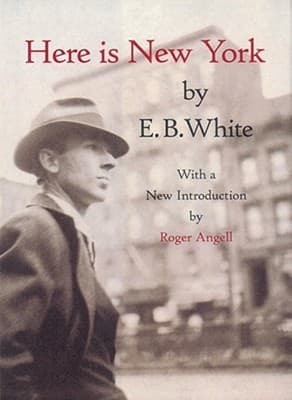
Here Is New York cover
Archivist's Choice

Here Is New York

E.B. White

Genre

Lifestyle / Memoir / History

Reading Time

45 min

Key Themes

See below

Track Your Reading

Sign in to track this book

E.B. White's 'Here Is New York' is a classic, witty, and personal tribute to New York City, capturing its spirit and lasting appeal through the eyes of a master essayist.

Core Idea

E.B. White's "Here Is New York" is a timeless reflection on what New York City truly is. He argues that the city's real character comes not from its buildings or statistics, but from the individual, often conflicting, experiences of its people. White identifies three distinct types of New Yorkers: those born there, commuters, and those who move there seeking something. Each group contributes to a lively, yet fragile, urban setting. He sees the city as a place that attracts ambition, a mix of anonymity and strong connections, and a place where constant change and sensory overload are not just features but essential parts of its lasting charm and human scale, even amid its large size.
Reading time
45 min
Difficulty
Easy
✓ Read this if...
You are fascinated by New York City, appreciate elegant prose and keen observation, or want a compact, poetic reflection on urban life and human aspiration.
✗ Skip this if...
You prefer data-driven analyses of cities, are looking for a comprehensive history, or dislike subjective, reflective essays.

Core idea

The central argument and framework that powers the entire book.

E.B. White's "Here Is New York" is a timeless reflection on what New York City truly is. He argues that the city's real character comes not from its buildings or statistics, but from the individual, often conflicting, experiences of its people. White identifies three distinct types of New Yorkers: those born there, commuters, and those who move there seeking something. Each group contributes to a lively, yet fragile, urban setting. He sees the city as a place that attracts ambition, a mix of anonymity and strong connections, and a place where constant change and sensory overload are not just features but essential parts of its lasting charm and human scale, even amid its large size.

At a glance

Reading time

45 min

Difficulty

Easy

Read this if...

You are fascinated by New York City, appreciate elegant prose and keen observation, or want a compact, poetic reflection on urban life and human aspiration.

Skip this if...

You prefer data-driven analyses of cities, are looking for a comprehensive history, or dislike subjective, reflective essays.

Key Takeaways

1

The Three New Yorks

New York is not a monolithic entity, but a composite of distinct experiences.

Quote

There are roughly three New Yorks. There is the New York of the man or woman who was born here, who takes the city for granted and accepts its size and turbulence as natural and inevitable. There is the New York of the commuter—the city that is a playground or a huge department store, a city to be visited, not lived in. And there is the New York of the person who was born elsewhere and came to New York in quest of something.

White divides New York into three main types of inhabitants, each experiencing a different city. The native New Yorker, born into its busy life, sees its wonders and chaos as normal. The commuter, a temporary visitor, uses the city for work, entertainment, or shopping, never fully joining its daily pace. The third, and perhaps most romanticized, is the transplant, drawn by a deep desire for opportunity, anonymity, or a new start. This distinction helps us understand the city's many identities, showing that 'New York' is more a collect...

Supporting evidence

White's opening argument categorizing the city's inhabitants into three distinct groups: the native, the commuter, and the transplant.

Apply this

When considering any major city, recognize that its identity is not uniform. Understand the different 'cities' that exist within it based on the resident's origin and purpose. This framework can be applied to understanding diverse urban experiences and motivations.


urban-identityresident-archetypessubjective-experience
2

The Magnetism of Aspiration

New York's true power lies in its ability to attract and fulfill the dreams of the ambitious.

Quote

The city makes up for its hazards and its discomforts by offering a spiritual reward: it is the center of the universe, the optimum arena for the display of talent.

For White, New York is more than a place; it is where ambition is tested and talent finds its stage. He believes the city's appeal comes from its promise of unique opportunities and recognition. Despite its dirt, noise, and anonymity, New York offers a special 'spiritual reward' to those who come seeking their future or their voice. This attraction is not just economic; it is deeply psychological, drawing people who believe their potential can only be fully realized in such a competitive and validating environment. White suggests that...

Supporting evidence

White's description of New York as 'the center of the universe' and 'the optimum arena for the display of talent,' specifically for those who come 'in quest of something.'

Apply this

Reflect on your own 'New York' – the place or environment that best fosters your ambitions and allows your talents to flourish. Actively seek out spaces that offer this kind of magnetic pull for your personal and professional growth, even if they come with their own challenges.

ambitionurban-opportunityself-reinventioncultural-magnet
3

The Paradox of Anonymity

In a city of millions, New York offers both profound loneliness and liberating freedom.

Quote

The city is a world of its own, a place where people can disappear and reappear at will, where they can be anonymous and yet feel a part of something larger than themselves.

White skillfully captures the two sides of anonymity in New York. On one hand, the large population can lead to deep feelings of isolation, where one is just another face in a crowd. This can feel overwhelming. Yet, White also celebrates the freedom that comes with this anonymity. It frees people from the scrutiny of small towns, letting them experiment, reinvent themselves, and follow unusual paths without immediate judgment. This freedom from social expectations strongly attracts many, allowing for a deep sense of self-discovery and...

Supporting evidence

White's observations on the vastness of the city and how individuals can feel both lost and liberated within its crowds, allowing for personal reinvention.

Apply this

Embrace the positive aspects of anonymity in your own life. Use moments of being 'just another face' to reflect, observe, and experiment without fear of judgment. Recognize that freedom often coexists with a degree of detachment.

urban-anonymityfreedom-in-crowdspersonal-reinventionisolation
4

The City's Perishable Beauty

New York's constant flux makes its beauty fleeting and its character eternally evolving.

Quote

The city is like a living organism, constantly changing, constantly growing, constantly renewing itself. It is a place where nothing stays the same for long.

White, with a touch of sadness, acknowledges New York's constant change. The city is always active, always building, always replacing the old with the new. This continuous flux means that any specific view, building, or even neighborhood character is temporary. What someone loves today might be gone tomorrow, replaced by something different. This impermanence gives the city a fragile beauty – a beauty to be enjoyed in the moment, for it will surely change. White's essay, written in 1948, shows this, as many specific details he describ...

Supporting evidence

The very nature of his essay, written at a specific point in time, implicitly contrasts with the city's continuous evolution and demolition/rebuilding cycles.

Apply this

Practice mindfulness and appreciation for the present moment in your surroundings, especially in dynamic environments. Understand that change is inevitable, and find beauty in impermanence rather than lamenting its passing. Document what you cherish.

urban-changeimpermanencenostalgiaurban-renewalfleeting-beauty
5

The Sensory Overload as Lifeblood

New York's overwhelming sensory input is not a flaw, but an essential part of its vitality.

Quote

The city is a place of noise and clamor, of constant movement and activity. It is a place that never sleeps, a place that is always alive.

White does not just describe New York's noise and activity; he sees it as a key part of its character and a sign of its endless energy. The sounds of traffic, the subway's rumble, the chatter of crowds, the constant hum of industry – these are not just nuisances, but the city's very pulse. This sensory overload, while potentially too much, signifies life, activity, and purpose. It is a constant reminder that something is always happening, that opportunities are being created, and that millions of lives are unfolding. For White, this c...

Supporting evidence

White's evocative descriptions of the sounds, sights, and movements of the city, such as the subway's rumble or the endless stream of taxis.

Apply this

Instead of always seeking quiet, learn to find energy and inspiration in dynamic, bustling environments. Practice observing and appreciating the 'symphony' of urban life around you, understanding that perceived chaos can often be a sign of vitality.

sensory-experienceurban-vitalitynoise-pollutioncity-pulsedynamic-environment
6

The Human Scale in the Colossus

Despite its immense size, New York fosters surprising moments of human connection.

Quote

No one should come to New York to live unless he is willing to be lucky. The luck of the city is in its millions, and in the fact that it is a city of neighborhoods, where a man can find his own village.

Beneath the tall buildings and many people, White subtly shows New York's lasting human scale. While the city can feel vast, it is essentially a collection of distinct neighborhoods, each with its own character, rhythms, and community. This 'village' aspect allows people to create personal spaces and build meaningful connections within the larger city. It is in these smaller areas – the local deli, the neighborhood park, the familiar faces on a specific block – that the city becomes less a dehumanizing giant and more a network of appr...

Supporting evidence

White's implicit observation that despite the city's size, people find ways to create personal spaces and communities within its diverse neighborhoods.

Apply this

In large or overwhelming environments, actively seek out and cultivate 'villages' or smaller communities. Focus on building relationships within your immediate surroundings, whether it's your workplace, apartment building, or local coffee shop, to create a sense of belonging.

neighborhood-communityurban-belonginghuman-connectionlocal-culturevillage-in-city
7

The Enduring Romance, Post-War

White's essay is a love letter written through the lens of post-war anxieties and hopes.

Quote

The city is a place of constant threat and constant renewal, a place where the past and the future are always intertwined.

It is important to remember White wrote 'Here Is New York' in 1948, just after World War II, a time of both relief and new worries, especially about the atomic age. This context gives his observations special meaning. His deep affection for the city is not just sentimental; it shows the enduring human spirit and the strength of urban life when faced with major threats. The essay, though celebratory, has a subtle sense of vulnerability, a quiet acknowledgment that even this seemingly strong city is part of a larger, uncertain world. Hi...

Supporting evidence

The essay's publication date (1948) and the implicit awareness of recent global events, though not explicitly stated, inform the underlying tone of appreciation for the city's resilience.

Apply this

When consuming any historical or cultural work, consider the specific socio-political context in which it was created. This can deepen your understanding of the author's perspective and the underlying messages, revealing layers beyond the surface narrative.

historical-contextpost-war-eraurban-resiliencecultural-significanceauthor-intent
8

The Observer's Eye

White's genius lies in his ability to distill the essence of a complex city through keen observation.

Quote

A man's life in New York is a series of small, intense experiences, each one a universe in itself.

White's essay is a model of observational writing. He does not just list facts or describe landmarks; he captures New York's intangible spirit through clear, almost poetic, sensory details and sharp psychological insights. His ability to notice the city's subtle rhythms, the nuanced expressions of its people, and the fleeting moments that define its character makes the essay so lasting. From the specific smell of the subway to the sight of a lone figure looking at the skyline, White's writing turns everyday observations into deep insi...

Supporting evidence

The entire essay is an example of White's observational prowess, from his descriptions of specific street scenes to the psychological profiles of the three New Yorks.

Apply this

Cultivate your own observational skills. Practice paying closer attention to your surroundings—the sounds, sights, and subtle interactions. This can deepen your understanding of people and places, enriching your experiences and creative output.

observational-writingsensory-detailsurban-narrativeauthorial-voicekeen-perception
9

The Vulnerability Beneath the Grandeur

Despite its perceived invincibility, New York remains fragile, susceptible to external forces.

Quote

The city is a place of constant threat and constant renewal, a place where the past and the future are always intertwined.

White, with a clear understanding, touches on New York's inherent vulnerability. While celebrating its grandeur and resilience, he subtly acknowledges that this large city, despite its power, is not immune to forces beyond its control. He hints at the instability of its existence, whether from natural disasters, technological threats, or societal changes. This underlying fragility adds a layer of sadness to his tribute, reminding the reader that even the most enduring cities depend on a delicate balance of human effort and external ci...

Supporting evidence

White's passing remarks about the city's dependence on certain systems or its susceptibility to external factors, though not explicitly detailing a specific disaster, hint at its inherent fragility.

Apply this

Recognize the interconnectedness and potential fragilities of complex systems, whether urban, economic, or social. Foster a sense of responsibility and foresight in contributing to their resilience and sustainability, rather than taking their robustness for granted.

urban-fragilitysystemic-riskresiliencevulnerability-assessmentfuture-proofing
10

The Universal City, Individually Experienced

New York is a global archetype, yet its meaning is deeply personal to each resident.

Quote

No one can know New York, for New York is not a city but a universe, and each man is his own cosmos within it.

Ultimately, White suggests that New York, while a globally recognized symbol, is fundamentally an individual experience. It is a 'universal city' in its broad appeal and influence, yet its true essence is understood through the personal view of each person who lives, works, or visits there. No two New Yorkers experience the exact same city; their paths, interactions, and emotional landscapes are unique. White's essay, while a shared story, implicitly asks the reader to consider their own connection with the city, whether New York or a...

Supporting evidence

The entire essay, by presenting his own subjective yet widely relatable experience of New York, exemplifies how a universal city is filtered through individual perception.

Apply this

Reflect on how your personal experiences and perspectives shape your perception of significant places or concepts. Understand that while shared narratives exist, individual interpretation adds crucial depth and meaning, making your unique viewpoint valuable.

subjective-perceptionuniversal-archetypepersonal-narrativeindividual-experienceurban-meaning

Critical analysis

Notable Quotes

New York is the concentrate of art and commerce and sport and religion and entertainment and the press, and is of a size that all elements are intimately involved with each other.

Describing the unique density and interconnectedness of the city's various facets.

There are roughly three New Yorks. There is the New York of the man or woman who was born here, knows the city as thoroughly as he knows his own hand, and has a certain pride in it but is seldom in awe of it. There is the New York of the commuter — the city that is a playground or a serious business but never a home. And there is the New York of the person who was born elsewhere and came to New York in quest of something.

Categorizing the different perspectives and relationships people have with New York.

The city makes up for its hazards and inconveniences by supplying its citizens with an incomparable array of opportunities.

Acknowledging the city's challenges while highlighting its vast potential.

No one should come to New York unless he is willing to be lucky.

Suggesting that success in New York often involves an element of chance and readiness.

It is a place of continuous arrival and departure, and the only constant is change.

Reflecting on the transient nature of the city and its perpetual evolution.

The city is a triumph of the human spirit, a place where people of every race and creed and color and condition are crammed together, each trying to carve out a place for himself in the sun.

Celebrating the diversity and ambition of New York's inhabitants.

The true New Yorker knows that the city is a living organism, forever changing, forever evolving, and that its spirit is resilient and indomitable.

Emphasizing the dynamic and enduring nature of New York.

It is to the nation what the white cork is to the champagne bottle, a place where the pressure is greatest, and where the fizz is most abundant.

Using a metaphor to describe New York's intense energy and vibrancy.

The city, for all its colossal size, is a place of infinite detail, and it is in these details that its true charm lies.

Highlighting the importance of observing the small intricacies of New York.

It is a miracle that New York works at all. The wonder is that it is not a total shambles.

Expressing amazement at the functional complexity of such a vast city.

The city is a poem, a drama, an adventure, a dream.

Using various literary forms to capture the essence and allure of New York.

New York is a city that is forever in motion, a place where the past and the present and the future are constantly colliding.

Describing the city's continuous movement and its temporal interconnectedness.

The city, for all its noise and grime, has a way of getting under your skin and staying there.

Illustrating the lasting impact and allure of New York despite its imperfections.

It is a city that is forever reinventing itself, a place where the old gives way to the new, but where the spirit of the city remains unchanged.

Discussing the continuous renewal of New York while asserting its enduring character.

Quiz

Test Your Knowledge

Ready to see how well you understood this book? Take our interactive quiz with 10 questions.

10
Questions
~5
Minutes
?
Best Score

Key Questions (FAQ)

'Here Is New York' is E.B. White's classic essay and memoir reflecting on the unique character and spirit of New York City. It captures his observations on the city's diverse inhabitants, its constant evolution, and the distinct experience of living in or visiting Manhattan, written with his characteristic wit and insight.

About the author

E.B. White

E.B. White was a celebrated American author renowned for his children's literature and essays. His most beloved works include the classic novels "Stuart Little" and "Charlotte's Web," alongside the poignant New York City portrait, "Here Is New York." White's clear, elegant prose and insightful observations earned him a lasting place in American literature.