“The past is a guidepost, not a hitching post.”
— A recurring theme emphasizing progress and not being bound by tradition.


James A. Michener (1959)
Genre
Lifestyle / Historical Fiction
Reading Time
1500 min
Key Themes
See below
Sign in to track this book
From volcanic origins to clashing cultures, Michener's saga tells Hawaii's story through millennia of struggle for identity.
The novel starts with a geological account of the Hawaiian Islands' formation, from volcanic eruptions on the Pacific Ocean floor. Michener describes the lava cooling, land emerging, and plants and animals arriving over millennia. This section establishes the islands' age and natural isolation before humans arrived, setting a grand scale for the story. It shows the raw power of nature that shaped this environment, a force that will influence the lives of all who live there.
Around 800 A.D., the first humans arrive in Hawaii: Polynesian voyagers led by the navigator, Tamatoa. They make a dangerous journey from Bora Bora in double-hulled canoes, guided by stars and ancient knowledge. After finding the fertile islands, they create a society based on their traditional kapu system, a set of laws and social rules. This section introduces the first inhabitants, their culture, their connection to the land and sea, and their beliefs, especially their worship of Pele, the volcano goddess, and their practice of human sacrifice, which supports their social order.
For centuries, Polynesian society in Hawaii thrives. It has a strict caste system with powerful ali'i (chiefs) like Kamehameha I, who unites the islands, and commoners (maka'ainana). The kapu system guides every part of life, from farming to marriage and war. The story follows various generations, showing their struggles, alliances, and their following or breaking of tradition. It shows how their culture developed, their strength, and their eventual weakness to outside influences, hinting at changes to come with Westerners. The balance between strong independence and community survival is a constant theme.
In 1820, American Calvinist missionaries, led by Reverend Abner Hale and his wife Jerusha, arrive in Lahaina, Maui. They are driven to convert the Hawaiians to Christianity. The missionaries, including Dr. John Whipple, a doctor, and Mr. and Mrs. Hewlett, a printer and his wife, face challenges: cultural clashes, Hawaiian resistance, the heat, and their own strict beliefs. Their arrival marks the start of major and often destructive changes for the islanders, challenging their old customs and way of life.
Reverend Abner Hale immediately works to end the kapu system, seeing Hawaiian customs like hula, polygamy, and communal living as sinful. He clashes with Queen Malama, a powerful ali'i who at first tolerates the missionaries but protects her people's traditions. The missionaries bring Western clothing, education, and medicine, leading to fast changes in Hawaiian society. While some Hawaiians accept the new religion and its benefits, many dislike the imposition of foreign values and the loss of their culture, causing deep divisions and setting the stage for ongoing conflict.
As the 19th century continues, Hawaii becomes an important port for American whaling ships. The arrival of whalers brings money but also more Western influence, including prostitution, alcohol, and diseases that kill many natives. The missionaries, especially Reverend Hale, try to keep moral order against the whalers' bad influence. Dr. Whipple, seeing the seriousness of the diseases, works to treat the sick. This period shows the Hawaiian people's vulnerability to outside forces, and the missionaries' limited power in controlling the wider effects of Western expansion.
With whaling declining, sugar cane becomes Hawaii's new economic base. This needs large areas of land and many workers. American business owners, often descendants of the missionaries, start large plantations. As the native Hawaiian population decreases due to disease, plantation owners, like the Bromley family, begin importing contract laborers from China, Japan, Portugal, and later the Philippines. This marks a big demographic shift, bringing new cultures and creating a complex, multi-ethnic society with its own tensions and hierarchies, mainly between the haole (white) owners and the diverse immigrant workers.
The novel details the experiences of various immigrant groups: the Chinese, represented by the Kee family; the Japanese, by the Sakagawa family; and the Portuguese, who brought their own traditions and Catholicism. Each group faces discrimination, harsh working conditions on the sugar plantations, and struggles to keep their culture while adapting to their new home. Over generations, these groups slowly intermarry and integrate, creating the multicultural mix of modern Hawaii, though often with underlying racial and economic tensions that remain between the haole ruling class and the various immigrant communities.
As American economic and political influence grows, especially among the haole plantation owners, pressure increases to annex Hawaii to the United States. The Hawaiian monarchy, represented by figures like Queen Liliʻuokalani, struggles to keep sovereignty but is overcome. In 1893, American business interests, supported by the U.S. Marines, overthrow the monarchy, leading to Hawaii's annexation in 1898. This event represents the success of Western expansion and the loss of Hawaiian independence, a moment that changes the political landscape and future of the islands, solidifying American control.
The story moves into the 20th century, covering events like the attack on Pearl Harbor, which further confirmed Hawaii's strategic importance to the U.S. The descendants of the original missionary and immigrant families continue to shape the islands, dealing with racial integration, labor rights, and political power. The novel ends with Hawaii becoming a state in 1959, showing its final integration into the United States. This period shows the ongoing development of Hawaii's unique identity, a mix of its Polynesian heritage, missionary influence, and the contributions of its diverse immigrant populations, creating a complex modern society.
Through the historical periods, Michener shows the theme of intermarriage and cultural blending. Characters from different backgrounds—Polynesian, American, Chinese, Japanese, Portuguese—form relationships and families, leading to new generations of Hawaiians with mixed heritage. This blending, while sometimes hard, creates a unique identity that goes beyond individual ethnic origins. The novel ends by reflecting on this rich mix, suggesting that despite historical conflicts, the people of Hawaii have formed a distinct, strong, and multicultural society, showing a spirit of aloha that combines all its diverse influences.
The Protagonist
Abner remains largely unchanged in his core beliefs throughout his life, though he gradually comes to appreciate the beauty of Hawaii, if not fully its culture.
The Supporting
Jerusha evolves from a submissive wife to a more independent and empathetic woman who questions her husband's rigid doctrines.
The Supporting
Malama struggles to adapt to the changes brought by Westerners while trying to protect her culture, ultimately witnessing its decline.
The Mentioned/Historical
His arc is historical, establishing the unified Hawaiian kingdom before the main narrative begins.
The Supporting
Whipple dedicates his life to improving the health of the Hawaiians, often clashing with his missionary colleagues over priorities.
The Supporting
The Kee family establishes roots, faces prejudice, and gradually achieves economic success, contributing to Hawaii's diverse culture.
The Supporting
The Sakagawa family endures hardship, builds community, and slowly integrates into the broader Hawaiian society, retaining aspects of their heritage.
The Supporting
The Bromley family consolidates wealth and power, shaping Hawaii's economic and political landscape.
The Supporting
Tamatoa successfully leads his people to Hawaii, establishing the first Polynesian settlement and founding the lineage of the ali'i.
This theme is central to the entire story, seen most clearly with the arrival of American missionaries led by Reverend Abner Hale. Their strict Calvinist beliefs and desire to 'civilize' the Hawaiians immediately clash with the old Polynesian kapu system, spiritual practices, and communal way of life. Scenes showing Abner's disapproval of hula and his efforts to impose Western clothing and monogamy highlight this conflict. Later, the arrival of diverse immigrant groups (Chinese, Japanese, Portuguese) further complicates this dynamic, creating a rich but often tense multicultural society where each group tries to keep its identity while adapting to new norms and the dominant haole culture.
“For good or ill, the first white men to arrive in Hawaii were missionaries, and they were, of all white men, the most determined to change what they found.”
Michener carefully records the destructive effects of Western contact on Hawaii, from diseases that killed many natives to economic exploitation through whaling and sugar plantations, and finally the overthrow of the Hawaiian monarchy and annexation by the United States. The story shows how the good intentions of the missionaries often paved the way for less ethical economic and political forces. The Bromley family's rise from missionary descendants to powerful sugar barons shows this transition, explaining how religious influence became economic and political dominance, changing the sovereignty and population of the islands.
“The white man brought not only his God but his diseases, his greed, and his laws.”
This theme appears across all main character groups. The early Polynesians, having made a dangerous journey, form a new identity tied to the land. The missionaries deal with their identity as agents of God in a foreign land. Later, waves of Chinese, Japanese, and Portuguese immigrants try to keep their ancestral cultures while building new lives in Hawaii. Their descendants, often of mixed heritage, face the challenge of forming a 'Hawaiian' identity that includes diverse cultural influences. The novel explores how people and communities define themselves when faced with migration, cultural assimilation, and the mixing of traditions.
“In Hawaii, a man could be many things, but eventually he had to be Hawaiian.”
The novel begins with the dramatic geological birth of the islands, emphasizing the raw power of nature, especially the volcanoes. This force remains constant throughout the story, influencing the lives of all inhabitants. The land itself, with its fertile valleys, volcanoes, and surrounding ocean, shapes the culture of the Polynesians and challenges the efforts of the missionaries and later the sugar planters. Despite human efforts to control it, nature often shows its power, reminding characters of their place within a larger system. The beauty and destructive potential of Hawaii's landscape are always present.
“The land was Hawaii, and Hawaii was the land, and it would endure long after the men had passed.”
Michener traces the multi-generational stories of several key families—the Hales, the Kees, the Sakagawas—showing how family units adapt and last through historical change. The idea of community is also explored, from the close Polynesian villages ruled by kapu to the missionary compounds, and later the diverse plantation camps where immigrants from different lands formed new bonds. The novel shows how families and communities offer support, pass on culture, and navigate the challenges of assimilation and social change, often through intermarriage and the blending of traditions, ultimately forming the social fabric of modern Hawaii.
“A family was a tree, with roots that went deep into the past, and branches that reached into the future.”
Following families across centuries to illustrate historical change.
Michener employs a multi-generational narrative structure, tracing the lineage of key families (the Hales, the Kees, the Sakagawas) over hundreds of years. This allows him to depict the long-term impacts of historical events, cultural clashes, and social changes on individuals and communities. By following the descendants, the novel illustrates how initial encounters evolve into complex social structures, how traditions are maintained or lost, and how the identity of Hawaii itself is forged through the intermingling of diverse peoples across centuries, providing a panoramic view of its development.
Extensive factual information embedded within the fictional narrative.
The novel is renowned for its meticulous historical research, with Michener embedding vast amounts of factual detail about geology, Polynesian navigation, kapu systems, missionary life, whaling, sugar cultivation, and political events. This serves to create a highly immersive and credible world, lending an epic, almost documentary feel to the narrative. While the characters are fictional, their experiences are grounded in historical realities, making the novel a powerful educational tool that brings the history of Hawaii vividly to life and underscores the authenticity of the overarching narrative.
Hawaii itself as a character, embodying resilience and change.
The land of Hawaii is not merely a setting but a powerful symbolic presence, almost a character in itself. Its volcanic birth and ongoing geological activity symbolize the raw, untamed power of nature and the constant forces of creation and destruction. The fertile valleys represent abundance and the promise of new life, while the isolation of the islands underscores their unique development. The land witnesses all human endeavors, enduring long after individual lives and empires pass, symbolizing resilience, the deep connection of its original inhabitants, and the ultimate permanence of nature over human transient struggles.
Characters embodying the traits and struggles of their ethnic groups.
Michener often uses characters as archetypes to represent the broader experiences of their respective cultural or ethnic groups. Reverend Abner Hale embodies the rigid Puritan missionary, Queen Malama represents the proud and resilient Hawaiian ali'i, and figures from the Kee and Sakagawa families stand for the struggles and triumphs of Chinese and Japanese immigrants. While this can sometimes lead to simplified characterizations, it effectively allows Michener to explore the grand sweep of cultural interaction and conflict, making the individual stories reflective of larger historical and sociological trends within Hawaii's development.
“The past is a guidepost, not a hitching post.”
— A recurring theme emphasizing progress and not being bound by tradition.
“There are no easy answers, only difficult choices.”
— General wisdom often applied to the struggles of the various immigrant groups.
“A man's worth is not measured by the size of his wallet but by the depth of his character.”
— Reflecting the values of some of the more principled characters.
“The sea never gives up its secrets easily.”
— Often in relation to voyages, shipwrecks, and the mysteries of the Pacific.
“To understand a land, you must first understand its people.”
— A core idea behind the narrative structure, exploring different cultures.
“Sometimes the greatest strength is found in quiet endurance.”
— Applicable to the struggles and perseverance of many immigrant groups.
“The future belongs to those who are willing to build it.”
— Reflecting the pioneering spirit of those who came to Hawaii.
“Love, like a banyan tree, sends roots deep and spreads wide.”
— Often in descriptions of enduring relationships and family legacies.
“Prejudice is a disease of the ignorant.”
— A clear statement against the racial and ethnic tensions depicted.
“The islands have a way of changing those who come to them.”
— Referring to the transformative effect Hawaii has on its inhabitants.
“It is not enough to survive; one must also thrive.”
— A motivation for many characters seeking a better life in Hawaii.
“History is not just dates and names; it is the living breath of generations.”
— Michener's approach to historical fiction, bringing the past alive.
“The greatest riches are not found in gold, but in the richness of human experience.”
— A reflection on what truly matters to the characters over time.
“Even the smallest seed can grow into a mighty forest.”
— Symbolizing the humble beginnings of various families and their eventual impact.
Ready to see how well you understood this book? Take our interactive quiz with 10 questions.
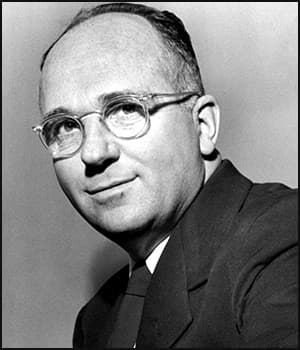
Biography coming soon.