BookBrief
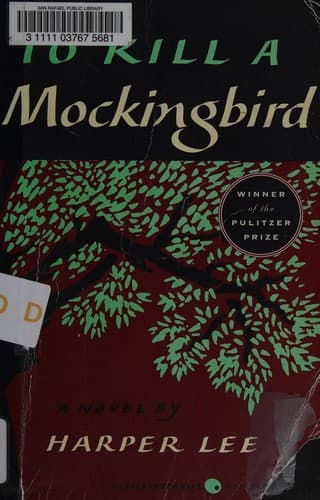
Harper Lee Collection E-book Bundle cover
Archivist's Choice

Harper Lee Collection E-book Bundle

Harper Lee

Genre

General

Reading Time

10-15 hours (for both main novels)

Key Themes

See below

Track Your Reading

Sign in to track this book

Journey through the moral complexities of the American South, where innocent eyes confront prejudice, justice, and the quiet courage of ordinary people.

Core Idea

Harper Lee's collection, primarily through 'To Kill a Mockingbird' and 'Go Set a Watchman,' deeply explores the complexities of empathy, justice, and moral development within the crucible of American Southern society. Lee challenges readers to confront uncomfortable truths about prejudice and the fallibility of even our most revered figures, while simultaneously celebrating the enduring power of narrative and the unique moral clarity often found in childhood perspectives. Her work ultimately argues that true heroism lies not in grand gestures, but in the quiet acts of standing up for what is right, even when it's unpopular or personally costly, and in the continuous, often painful, process of re-evaluating one's understanding of the world and its people.
Reading time
10-15 hours (for both main novels)
Difficulty
Medium
✓ Read this if...
You are interested in classic American literature that tackles themes of racial injustice, moral growth, and the loss of innocence. You appreciate character-driven stories with strong ethical dilemmas and a nuanced portrayal of human nature. You want to understand the enduring impact of Harper Lee's work beyond just 'To Kill a Mockingbird'.
✗ Skip this if...
You prefer fast-paced thrillers or fantasy novels. You are not interested in historical fiction set in the American South or stories with a strong focus on social commentary and moral philosophy. You dislike narratives that explore the complexities and disappointments of adult life after a cherished childhood.

Core idea

The central argument and framework that powers the entire book.

Harper Lee's collection, primarily through 'To Kill a Mockingbird' and 'Go Set a Watchman,' deeply explores the complexities of empathy, justice, and moral development within the crucible of American Southern society. Lee challenges readers to confront uncomfortable truths about prejudice and the fallibility of even our most revered figures, while simultaneously celebrating the enduring power of narrative and the unique moral clarity often found in childhood perspectives. Her work ultimately argues that true heroism lies not in grand gestures, but in the quiet acts of standing up for what is right, even when it's unpopular or personally costly, and in the continuous, often painful, process of re-evaluating one's understanding of the world and its people.

At a glance

Reading time

10-15 hours (for both main novels)

Difficulty

Medium

Read this if...

You are interested in classic American literature that tackles themes of racial injustice, moral growth, and the loss of innocence. You appreciate character-driven stories with strong ethical dilemmas and a nuanced portrayal of human nature. You want to understand the enduring impact of Harper Lee's work beyond just 'To Kill a Mockingbird'.

Skip this if...

You prefer fast-paced thrillers or fantasy novels. You are not interested in historical fiction set in the American South or stories with a strong focus on social commentary and moral philosophy. You dislike narratives that explore the complexities and disappointments of adult life after a cherished childhood.

Key Takeaways

1

The Burden of Empathy

Understanding others' perspectives is crucial but often painful.

Quote

You never really understand a person until you consider things from his point of view… until you climb into his skin and walk around in it.

Atticus Finch's central teaching to Scout emphasizes the profound importance of empathy. This isn't merely about sympathy, but a rigorous mental exercise of perspective-taking, which is foundational to justice and moral understanding. However, the book also illustrates that this empathy can be a heavy burden, as it forces characters like Atticus to confront the ugliness of prejudice and injustice from the perspective of both the victim and the perpetrator, leading to a deep personal and societal struggle. It demands an intellectual ho...

Supporting evidence

Atticus's defense of Tom Robinson, where he attempts to make the jury understand the circumstances from Tom's perspective, despite the ingrained racial bias.

Apply this

Before forming strong opinions or making judgments, actively seek out and internalize the viewpoints of those involved, especially when they differ significantly from your own.


empathyperspective-takingmoral-courage
2

Innocence and Injustice

The vulnerability of the innocent in the face of societal prejudice.

Quote

It's a sin to kill a mockingbird.

The 'mockingbird' metaphor represents innocent beings who do no harm but provide joy, and whose destruction is an act of wanton cruelty. Tom Robinson, Boo Radley, and even Scout's childhood innocence are all 'mockingbirds' in the narrative. Tom is unjustly accused and convicted, his life destroyed by racial prejudice. Boo Radley, a recluse, is misunderstood and feared, yet he ultimately saves the children. The children's loss of innocence, particularly Scout's and Jem's, as they witness the trial and its aftermath, underscores how soc...

Supporting evidence

The trial and conviction of Tom Robinson, despite overwhelming evidence of his innocence, solely due to racial prejudice.

Apply this

Identify and protect those who are vulnerable and contribute positively to their community, ensuring they are not unfairly targeted or harmed by prejudice.

innocenceprejudicesocial-justice
3

The Unseen Heroism

True courage often manifests in quiet, principled stands.

Quote

Real courage is, when you know you're licked before you begin but you begin anyway and you see it through no matter what.

Atticus Finch embodies a different kind of heroism, one not marked by grand gestures or physical prowess, but by unwavering moral integrity and a quiet determination to uphold justice, even when facing certain defeat and social ostracization. His decision to defend Tom Robinson, knowing the futility of the legal battle and the backlash it would provoke, exemplifies this 'real courage.' Similarly, Mrs. Dubose's struggle against her morphine addiction, though unpleasant to the children, also represents a profound internal battle fought ...

Supporting evidence

Atticus's steadfast defense of Tom Robinson in court, despite the entire town's prejudice and the threats he receives.

Apply this

Define your core values and be prepared to act on them, even when it is unpopular or difficult, understanding that true strength lies in conviction.

courageintegritymoral-principles
4

The Power of Narrative

Stories shape understanding, identity, and societal values.

Quote

People generally see what they look for, and hear what they listen for.

The novel itself is a powerful narrative, told from Scout's perspective, which gradually reveals the complexities of Maycomb. Beyond the book's structure, the characters frequently rely on narratives – rumors about Boo Radley, the Ewells' fabricated story against Tom Robinson, and the community's ingrained narratives about race and class. These stories, whether true or false, profoundly influence how characters perceive each other and how justice is administered. The children's education comes not just from school, but from the storie...

Supporting evidence

The false narrative spun by the Ewells to condemn Tom Robinson, and the town's willingness to believe it based on existing racial biases.

Apply this

Be critical of the narratives you encounter, questioning their sources and underlying assumptions, and actively seek out diverse perspectives to form a more complete understanding.

narrativestorytellingsocial-construction
5

Childhood as a Moral Compass

Children often perceive injustice more clearly than adults.

Quote

Adults were always so complicated, always making things so difficult.

Scout and Jem's journey through the events of the novel highlights how children, unburdened by the layers of societal convention and prejudice that complicate adult understanding, often possess a more direct and intuitive grasp of right and wrong. They question the arbitrary rules of racial segregation, the unfairness of Tom Robinson's trial, and the hypocrisy of adults. Their innocent questions and observations serve as a moral mirror, reflecting the flaws and inconsistencies of the adult world. Their eventual disillusionment is a po...

Supporting evidence

Scout's confusion and distress during Tom Robinson's trial, particularly her inability to comprehend the jury's verdict despite the clear evidence of innocence.

Apply this

Periodically 'reset' your perspective by considering issues from a child's straightforward moral viewpoint, stripping away complex rationalizations to identify fundamental injustices.

childhood-innocencemoral-developmentsocietal-hypocrisy
6

The Double-Edged Sword of Community

Community can offer support but also enforce oppressive conformity.

Quote

The one thing that doesn't abide by majority rule is a person's conscience.

Maycomb is a tight-knit community where everyone knows everyone else's business. This closeness provides a sense of belonging and mutual support, as seen in the community's response to the fire or the care extended by neighbors like Miss Maudie. However, this same closeness fosters rigid social expectations and a powerful pressure to conform, particularly regarding racial and class hierarchies. The collective prejudice against Tom Robinson and the ostracization of Atticus demonstrate the darker side of a homogeneous community that pri...

Supporting evidence

The entire jury, representing the community, convicting Tom Robinson despite clear evidence, driven by collective racial bias.

Apply this

Actively engage in your community while maintaining a critical distance, ensuring you don't compromise your personal moral compass for the sake of group acceptance.

communityconformitysocial-pressure
7

The Nature of Evil

Evil is often mundane, rooted in ignorance, fear, and prejudice.

Quote

There are just some kind of men who—who's so busy worrying about the next world they've never learned to live in this one, and you can't argue with 'em.

The evil depicted in the novel is not a grand, supernatural force, but the insidious, everyday evil of human prejudice, ignorance, and malice. Bob Ewell embodies this mundane evil, driven by spite, racism, and a desire to maintain his perceived social standing, even if it means destroying an innocent man's life. His actions stem from a deep-seated fear and resentment towards anyone who challenges his worldview, particularly those he considers beneath him. The town's collective willingness to accept his fabricated story highlights how ...

Supporting evidence

Bob Ewell's false accusation against Tom Robinson and his subsequent attack on the Finch children, driven by malice and a desire for revenge.

Apply this

Recognize that 'evil' often manifests not in dramatic acts, but in everyday biases, microaggressions, and the refusal to empathize or acknowledge others' humanity. Actively challenge these subtle forms of prejudice.

prejudicebigotryhuman-malice
8

The Complexity of Justice

Legal justice and moral justice are not always aligned.

Quote

A court is only as sound as its jury, and a jury is only as sound as the men who make it up.

The trial of Tom Robinson vividly illustrates the tragic gap between legal justice and moral justice. Legally, Atticus presents an irrefutable case for Tom's innocence. Morally, it is clear that Tom is a victim of racial prejudice. Yet, the jury, swayed by societal biases rather than evidence, delivers a verdict that is legally permissible but morally reprehensible. This highlights the fragility of the justice system when human prejudice infiltrates its processes. The resolution, where Boo Radley saves the children and Heck Tate decid...

Supporting evidence

The jury's guilty verdict for Tom Robinson, despite clear evidence of his innocence and the Ewells' perjury, demonstrating the failure of the legal system.

Apply this

Advocate for judicial reform that addresses systemic biases and actively support efforts to ensure juries are diverse and representative, reflecting a broader moral compass.

justice-systemmoral-dilemmalegal-ethics

Critical analysis

Notable Quotes

You never really understand a person until you consider things from his point of view... until you climb into his skin and walk around in it.

Atticus Finch explaining empathy to Scout.

It's a sin to kill a mockingbird.

Miss Maudie explaining why it's wrong to harm innocent creatures.

The one thing that doesn't abide by majority rule is a person's conscience.

Atticus Finch discussing moral courage.

Mockingbirds don't do one thing but make music for us to enjoy. They don't eat up people's gardens, don't nest in corncribs, they don't do one thing but sing their hearts out for us. That's why it's a sin to kill a mockingbird.

Miss Maudie further elaborating on the symbolism of mockingbirds.

Before I can live with other folks I've got to live with myself. The one thing that doesn't abide by majority rule is a person's conscience.

Atticus Finch explaining his moral stance to Scout.

People generally see what they look for, and hear what they listen for.

Judge Taylor observing human nature during the trial.

Real courage is when you know you're licked before you begin, but you begin anyway and see it through no matter what.

Atticus Finch defining true courage.

Neighbors bring food with death and flowers with sickness and little things in between. Boo was our neighbor. He gave us two soap dolls, a broken watch and chain, a pair of good-luck pennies, and our lives. But neighbors give in return. We never put back into the tree what we took out of it: we had given him nothing, and it made me sad.

Scout reflecting on Boo Radley's kindness and their failure to reciprocate.

Prejudice, a dirty word, and a dirty emotion, it is. But it is not a disease. It is a choice.

Jean Louise Finch contemplating prejudice in 'Go Set a Watchman'.

The law is a zebra. It has stripes. The black ones are for the Negroes and the white ones are for the white folks. But in between there are gray stripes, and they are for the people who are not quite black and not quite white.

Uncle Jack explaining the complexities of law and race to Jean Louise in 'Go Set a Watchman'.

Every man's island, Jean Louise, every man's hell. His hell is his decision, his responsibility to himself.

Atticus Finch discussing individual responsibility with Jean Louise in 'Go Set a Watchman'.

The one thing that doesn't abide by majority rule is a person's conscience.

Atticus Finch's enduring wisdom, repeated in both novels.

Quiz

Test Your Knowledge

Ready to see how well you understood this book? Take our interactive quiz with 10 questions.

10
Questions
~5
Minutes
?
Best Score

Key Questions (FAQ)

This bundle typically includes Harper Lee's two major works: 'To Kill a Mockingbird' and 'Go Set a Watchman'. It offers readers the complete published fictional works by the acclaimed author.

About the author

Harper Lee

Nelle Harper Lee was an American novelist who wrote the 1960 novel To Kill a Mockingbird that won the 1961 Pulitzer Prize and became a classic of modern American literature. She assisted her close friend Truman Capote in his research for the book In Cold Blood (1966). Her second novel, Go Set a Watchman, has been confirmed to be an earlier draft of Mockingbird but was published in July 2015 as a sequel.