“Africa was a country that was made for hunting. It was a place where you could go and be a man, and where you could prove yourself.”
— Reflecting on the allure of the African safari experience.

Ernest Hemingway (1709)
Genre
Lifestyle
Reading Time
240 min
Key Themes
See below
Sign in to track this book
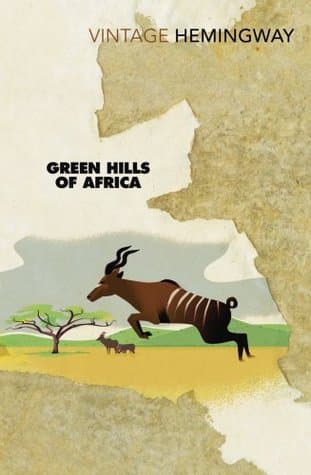
Follow Hemingway's 1933 East African safari, where he hunts big game, explores the vanishing wilderness, and reflects on the pursuit of a challenging trophy.
Ernest Hemingway, called 'Mr. Jackson' by some trackers, and his wife Pauline (P.O.M.) begin a month-long safari in Tanganyika. Their main goal is to hunt kudu, a challenging antelope. They are with professional hunter Karl ('Pop') and several local trackers. The first days involve long, hard treks through the bush. Hemingway often feels frustrated by close calls and missed chances. He describes the landscape, sounds, and physical demands of the hunt, showing a man deeply involved in the wilderness and the chase, while also dealing with the competitive aspect of hunting with P.O.M.
Hemingway's frustration grows as he fails to find a trophy kudu. He describes the vast plains, the heat, and the constant effort to track animals. He tells of several times when a good trail led nowhere or a shot was missed. Adding to his annoyance, P.O.M., despite having less experience, shoots a magnificent kudu. Hemingway feels a mix of pride for her and personal disappointment. This creates a subtle competitive tension, as Hemingway's ego as a hunter is challenged, making him even more determined.
The safari party moves their camp to new hunting grounds. During this time, Hemingway talks with Pop and other expedition members about hunting, the beauty of the African landscape, and the ethics of killing. He describes the elephants they see, observing them with respect beyond just hunting. While the main goal remains big game, these encounters offer moments to think about Africa's wildness and the hunter's place in it. This highlights the contrast between the thrill of the chase and a thoughtful appreciation of nature.
Driven by his desire for a trophy kudu, Hemingway pushes himself to his limits. He endures long walks, intense heat, and the constant threat of wild animals. He describes the detailed art of tracking, the subtle signs left by game, and the patience needed. His story emphasizes the physical and mental endurance required for the hunt, showing it as a test of skill and will. Despite many close calls and the trackers' exhaustion, the elusive big kudu avoids him, building suspense and Hemingway's obsession. He feels a deep connection to the land and animals, seeing the hunt as a way to truly experience Africa.
Unexpectedly, the hunting party tracks and successfully takes down a rhinoceros. This hunt, though not his main goal, gives Hemingway a significant trophy and a needed boost to his morale after the kudu hunt's frustrations. He describes the rhino's power and danger, and the precision needed for the shot. The successful kill is told with a sense of accomplishment and respect for the animal. This experience temporarily shifts his focus from the kudu, letting him enjoy a different kind of hunting success and think about the varied challenges and rewards of African game.
After the rhino hunt, Hemingway's focus returns to his initial goal: the kudu. He feels a deep, almost spiritual, connection to hunting this specific animal, seeing it as a personal challenge and a symbol of his engagement with the African wilderness. He continues to push his trackers and himself, exploring new areas and enduring more physical discomfort. The story shows his strong determination and the almost mystical appeal the kudu has for him, portraying the hunt as a personal quest for validation and connection with nature.
After much tracking and many false leads, Hemingway and his tracker, M'Cola, finally spot a truly magnificent kudu bull. The description of the animal is clear and respectful, showing its beauty and power. Hemingway recounts the tense stalk, careful positioning, and the important shot. This moment is shown as the culmination of his entire safari, a profound experience beyond just hunting. The successful taking of the kudu is described with joy, relief, and deep respect for the animal, fulfilling his long-held desire and bringing a sense of completion to his personal challenge in Africa.
With the successful kudu hunt, the safari ends. Hemingway reflects on his entire experience, the friendships made, the challenges overcome, and Africa's beauty. He talks about the future of big game hunting and the development threatening the wilderness. There is a bittersweet feeling as he prepares to leave, a sense of having achieved something important while also knowing such wild places are impermanent. He expresses his deep love for Africa and the unique freedom and intensity it offers, solidifying his connection to the continent.
Throughout the safari, often during breaks or in the evenings, Hemingway discusses literature with Pop. He shares his views on contemporary writers, the challenges of writing great prose, and the importance of authenticity. He thinks about other authors, the difficulty of writing a great novel, and the possibility of an 'African writer' emerging. These conversations offer insight into Hemingway's literary philosophy and his aspirations as a writer, weaving his artistic concerns into the hunting story and showing his constant intellectual engagement.
As the safari concludes, the party begins the long journey back to civilization. Hemingway describes dismantling the camp, packing trophies, and saying goodbye to the trackers. He carries not just physical trophies, but also the lasting memories and experiences of the African wilderness. The story ends with a lingering sense of Africa's impact on him—a place that tested him, fulfilled his desires, and left him with a deep appreciation for its wild beauty and the thrill of the hunt. He looks back at the 'green hills' with longing and understanding.
The Protagonist
Hemingway begins driven by a competitive hunting spirit, evolving to a deeper appreciation of the land and a more philosophical understanding of the hunt, ultimately finding personal fulfillment.
The Supporting
P.O.M. maintains her steady, capable presence throughout the safari, proving herself as a hunter and a supportive partner.
The Supporting
Pop remains a consistent figure of wisdom and experience, guiding the safari and offering a seasoned perspective.
The Supporting
M'Cola consistently demonstrates his unwavering skill and dedication, serving as an indispensable part of the hunting team.
The Supporting
Abdullah remains a consistent supporting presence, offering a different dynamic to the tracking team.
The Antagonist/Symbolic
The kudu remains a symbol of the ultimate challenge, eventually being taken by Hemingway, fulfilling his quest.
The book explores the complex relationship between humans and hunting. Hemingway shows hunting as more than a sport; it is a primal engagement with nature that tests skill, endurance, and character. He considers the ethics of killing, showing deep respect for the animals he hunts and their land. The thrill of the chase, the needed patience, and respect for the prey are central. For example, his frustration with the kudu highlights the challenge, while his reverence for the rhino after the kill shows the ethical side. The hunt is a way to connect with an authentic, wild existence.
“A man must be a hunter. He must hunt to live. If he is not a hunter, he is not a man. Then he is a woman, or a sheep, or a goat, or a pig, or a chicken.”
Hemingway paints a vivid picture of the African landscape, describing its vastness, beauty, and wild spirit. From the 'green hills' to the dusty plains, the environment is almost a character, shaping the hunters' experiences. He emphasizes sensory details: the heat, smells, and sounds of the bush. Beneath this appreciation is a sad awareness of its fragility, even in the 1930s. He often laments the growth of civilization and the potential loss of this untouched wilderness, knowing that the Africa he experiences is quickly disappearing. This theme appears in his long, descriptive passages about the landscape and his discussions with Pop about the future of big game.
“I had loved country all my life; the country was the only thing that could not betray you. There were never any problems with the country.”
Mixed with the hunting story are frequent talks about literary theory and writing. Hemingway discusses his artistic philosophy, the challenges of writing truthfully, and the importance of authenticity. He thinks about other authors, the difficulty of writing a great novel, and the possibility of an 'African writer' emerging. These discussions, often with Pop, show Hemingway's self-awareness as an artist and his constant pursuit of literary excellence. The book itself, presented as a 'true narrative,' applies his literary principles, showing his belief that a well-told story, even non-fiction, can convey deep truths. This is clear in his careful word choice and precise descriptions.
“A writer's problem does not change. He himself changes, but his problem remains the same. It is always how to write truly, and having found what is true, to project it in such a way that it becomes a part of the experience of the person who reads it.”
The safari acts as a test for Hemingway's self-discovery and a way to explore humanity's place in nature. Through the physical demands of the hunt, the solitude of the bush, and direct encounters with wild animals, Hemingway seeks to test himself and find authenticity. The pursuit of the kudu becomes a metaphor for a personal quest, a way to prove his manhood and connect with something primal within himself. His frustrations, successes, and reflections on life and death in the wilderness all lead to a deeper understanding of his character and his connection to the natural order. This theme is embodied in his relentless pursuit and the deep satisfaction he feels upon reaching his goal.
“You did not really think of yourself as a hunter. You just hunted. You were a hunter. You had always been a hunter.”
The story is told entirely from Hemingway's perspective, offering direct access to his thoughts and experiences.
The use of a first-person narrative allows the reader to directly experience the safari through Hemingway's eyes and mind. This device creates an intimate and immediate connection, immersing the reader in his physical sensations, emotional frustrations, intellectual musings, and philosophical debates. It lends authenticity to his account, supporting his claim of presenting a 'true narrative' of Africa. We witness his competitive spirit, his respect for the land and animals, and his reflections on writing, making the book a deeply personal and subjective journey.
The narrative frequently veers from the immediate action to explore broader ideas about literature, life, and Africa.
Hemingway employs frequent digressions, often in the form of conversations with Pop or internal monologues, to explore themes beyond the immediate hunt. These discussions cover topics like the craft of writing, the nature of courage, the authenticity of experience, and the future of the African wilderness. This device elevates the book from a mere hunting memoir to a work of literary and philosophical inquiry. It allows Hemingway to showcase his intellectual depth and integrate his artistic concerns with his adventures, providing layers of meaning and context to the physical journey.
The elusive kudu represents Hemingway's ultimate challenge, personal validation, and the spirit of wild Africa.
The kudu functions as a powerful symbol throughout the narrative. Initially, it symbolizes the ultimate hunting challenge, an elusive and magnificent trophy that Hemingway desperately seeks to validate his skill. As the hunt progresses, it evolves to represent a personal quest, a test of his endurance and will. Ultimately, the successful taking of the kudu symbolizes not just a hunting triumph, but a profound connection to the wild heart of Africa and a sense of personal fulfillment. Its majestic nature embodies the beauty and untamed spirit of the continent.
Subtle competition, particularly between Hemingway and P.O.M., fuels his drive and adds narrative tension.
A subtle but significant plot device is the competitive dynamic, primarily between Hemingway and his wife, P.O.M. When P.O.M. successfully bags a kudu before he does, it fuels Hemingway's already intense desire to secure his own trophy. This friendly rivalry adds a layer of personal challenge and narrative tension to the hunting quest. It underscores Hemingway's ego and his need for personal accomplishment, making his eventual success with his own kudu even more satisfying as he overcomes not only the challenge of the animal but also his own competitive impulses.
“Africa was a country that was made for hunting. It was a place where you could go and be a man, and where you could prove yourself.”
— Reflecting on the allure of the African safari experience.
“I did not want to write about Africa. I wanted to write about what I felt about Africa, and I wanted to write the truth.”
— Explaining his literary intentions and approach to depicting his experiences.
“A man can be destroyed but not defeated.”
— A philosophical musing, though more famously from 'The Old Man and the Sea,' it reflects a core Hemingway theme present here.
“We had a good day, and the sun was good, and the country was good, and it was good to be alive.”
— Enjoying a successful day of hunting and appreciating the natural world.
“There is no hunting like the hunting of man, and those who have hunted armed men long enough and liked it, never care for anything else thereafter.”
— A controversial but often quoted line, revealing a darker side of the hunting mentality, though often misattributed or taken out of context.
“If a man is to write a story that he wants to be true, he must be true to himself.”
— Discussing the honesty and integrity required in the craft of writing.
“It was a lovely country, and it was a pleasure to hunt in it.”
— Describing the beauty of the African landscape from a hunter's perspective.
“The great thing about Africa is that you can get away from everything.”
— Highlighting the sense of escape and isolation that Africa offered him.
“We were learning something new every day, and it was exciting.”
— Referring to the continuous learning and discovery during the safari.
“The problem with American writers is that they have never been hungry.”
— A critical observation on the perceived lack of struggle or authenticity in some American literature.
“It was impossible to be lonely in Africa. There was too much to see, too much to do.”
— Countering the idea of loneliness amidst the constant activity and spectacle of the safari.
“You can always tell a good writer by the way he writes about food.”
— An informal literary criterion, often reflecting Hemingway's own detailed descriptions of food and drink.
“The wind was blowing hard, and it was cold, but it was a good cold, a clean cold.”
— Describing the invigorating and raw natural elements encountered in the wilderness.
“All my life I’ve been trying to learn how to write, and I still don’t know how.”
— A humble and lifelong reflection on the continuous challenge and pursuit of mastery in writing.
Ready to see how well you understood this book? Take our interactive quiz with 10 questions.
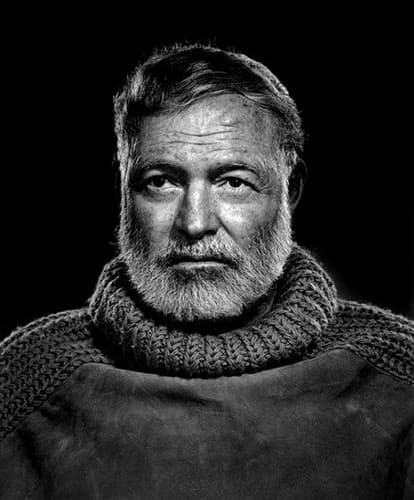
Ernest Miller Hemingway was an American novelist, short-story writer, and journalist. His economical and understated style—which included his iceberg theory—had a strong influence on 20th-century fiction, while his adventurous lifestyle and public image brought him admiration from later generations. Hemingway produced most of his work between the mid-1920s and the mid-1950s, and he was awarded the 1954 Nobel Prize in Literature. He published seven novels, six short-story collections, and two nonfiction works. Three of his novels, four short-story collections, and three nonfiction works were published posthumously. Many of his works are considered classics of American literature.