BookBrief
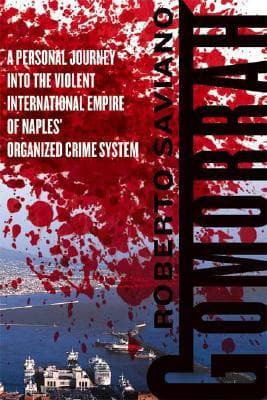
Gomorrah cover
Archivist's Choice

Gomorrah

Roberto Saviano (2017)

Genre

Politics / History

Reading Time

640 min

Key Themes

See below

Track Your Reading

Sign in to track this book

Through personal stories and detailed reporting, Roberto Saviano shows the Camorra's hold on Naples. He reveals how this crime network's involvement in fashion, drugs, and waste disposal has turned the region into a center of global corruption and environmental damage.

Core Idea

Roberto Saviano's "Gomorrah" is a direct, first-person look at the Camorra, the Naples crime group. It shows the Camorra not just as a mafia but as "The System"—a widespread, global economic force that affects every part of society, from fashion and waste management to building and international trade. Saviano carefully details how the Camorra works with brutal effectiveness, using fear, corruption, and a complex business plan to control areas, industries, and people's lives, often with government help. The book argues that to understand the Camorra, one must see its deep ties to the global economy, its ability to innovate, and its skill at changing and adapting. This makes it an unseen, yet ever-present, force that shapes the modern world far beyond Naples. Saviano shows that the Camorra's power comes from its economic strength and its ability to use the hidden side of globalization. It turns illegal acts into organized, profitable businesses that look like legal capitalism. He describes a world where violence is a business tool, where the appeal of criminal brands attracts young people, and where the lines between legal and illegal blur. The main point is that the Camorra is not old-fashioned but a changing, global group. It is a product of and a part of today's economy. Its harmful legacy and daily violence are a constant threat, making us rethink how we see organized crime and its effect on global society.
Reading time
640 min
Difficulty
Medium
✓ Read this if...
You want a raw, immersive, and deeply personal account of how organized crime operates as a global economic system, not just a local gang, and its pervasive impact on society and politics.
✗ Skip this if...
You prefer a detached academic analysis or a traditional true-crime narrative with a clear resolution; this book is a visceral, often bleak, journey into an ongoing struggle.

Core idea

The central argument and framework that powers the entire book.

Roberto Saviano's "Gomorrah" is a direct, first-person look at the Camorra, the Naples crime group. It shows the Camorra not just as a mafia but as "The System"—a widespread, global economic force that affects every part of society, from fashion and waste management to building and international trade. Saviano carefully details how the Camorra works with brutal effectiveness, using fear, corruption, and a complex business plan to control areas, industries, and people's lives, often with government help. The book argues that to understand the Camorra, one must see its deep ties to the global economy, its ability to innovate, and its skill at changing and adapting. This makes it an unseen, yet ever-present, force that shapes the modern world far beyond Naples.

Saviano shows that the Camorra's power comes from its economic strength and its ability to use the hidden side of globalization. It turns illegal acts into organized, profitable businesses that look like legal capitalism. He describes a world where violence is a business tool, where the appeal of criminal brands attracts young people, and where the lines between legal and illegal blur. The main point is that the Camorra is not old-fashioned but a changing, global group. It is a product of and a part of today's economy. Its harmful legacy and daily violence are a constant threat, making us rethink how we see organized crime and its effect on global society.

At a glance

Reading time

640 min

Difficulty

Medium

Read this if...

You want a raw, immersive, and deeply personal account of how organized crime operates as a global economic system, not just a local gang, and its pervasive impact on society and politics.

Skip this if...

You prefer a detached academic analysis or a traditional true-crime narrative with a clear resolution; this book is a visceral, often bleak, journey into an ongoing struggle.

Key Takeaways

1

The System's Invisible Hand

The Camorra operates not as a traditional mafia but as a pervasive, hyper-capitalist economic force.

Quote

The Camorra is an economic organization, a business, not merely a criminal gang. It is the system.

Saviano destroys the romantic idea of organized crime. He shows the Camorra not as a strict, honor-bound mafia, but as a flexible, business-focused network deeply involved in legal global markets. Its power comes from using free-market ideas, using globalization to control large parts of the economy, from building and fashion to waste management and international trade. This 'System' thrives on being unknown and efficient, putting profit first, which makes it more harmful and harder to fight than typical criminal groups. Its influence...

Supporting evidence

Saviano's personal experiences working in Camorra-controlled businesses, such as a Chinese textile factory, and his detailed accounts of how Camorra clans infiltrate and manage complex supply chains for goods ranging from illicit drugs to designer fashion.

Apply this

Recognize that organized crime in the modern era often operates with the sophistication of multinational corporations. Understanding this economic framework is crucial for developing effective counter-strategies that target financial networks rather than solely focusing on traditional law enforcement methods.


economic-criminalityglobalization-crimecamorra-system
2

Globalization's Dark Mirror

The Camorra leverages global trade routes and cheap labor, particularly from China, to maximize profits and evade oversight.

Quote

The Camorra understood globalization before the economists did. They saw the opportunities in the free flow of goods and capital, and they exploited them ruthlessly.

Saviano carefully details how the Camorra acts as a key, though illegal, helper of global trade. They arrange huge shipments of Chinese-made goods, both fake and real, into Europe, avoiding customs and rules. This involves controlling thousands of Chinese factories that make fashion items, often with unfair labor. The Camorra's link with Chinese economic networks, especially in textiles, shows how criminal groups adapt to and profit from the connected global economy. This shared relationship not only increases the Camorra's wealth but...

Supporting evidence

The extensive network of Chinese factories in Italy and abroad producing goods for the Camorra, and the rapid, unchecked distribution of these goods across Europe from Naples. Saviano's work in a Chinese-run textile factory provides firsthand insight.

Apply this

Consumers and businesses should demand greater transparency in supply chains, especially for fashion and consumer goods, to avoid inadvertently supporting exploitative labor practices and criminal enterprises. Governments need to strengthen international cooperation and customs enforcement to disrupt illicit trade routes.

illicit-tradesupply-chain-exploitationchina-camorra
3

Toxic Legacy

The Camorra's control over waste disposal has turned Campania into an environmental disaster zone, with devastating health consequences.

Quote

The land of fires. The Camorra transformed our earth into a giant, open-air tomb for the toxins of the world.

One of the most shocking parts of 'Gomorrah' is the Camorra's profitable and uncaring business of toxic waste disposal. For decades, they have illegally dumped industrial, chemical, and nuclear waste, often from northern Italy and other European countries, into the rich farmlands and waters of Campania. This has caused an environmental disaster, with high rates of cancer, birth defects, and other serious health problems among local people. Saviano shows how the pursuit of profit overrides any care for human life or the environment, sh...

Supporting evidence

The alarming rise in cancer rates in Campania, specifically linked to the 'land of fires' where toxic waste is illegally burned and buried. Saviano's accounts of how waste is handled and disposed of, often with the complicity of legitimate businesses.

Apply this

Advocate for stricter environmental regulations and oversight, particularly in waste management. Support investigative journalism and whistleblowers who expose corporate and criminal complicity in environmental crimes. Recognize the long-term, devastating impact of unchecked greed on public health and the environment.

environmental-crimetoxic-wastepublic-health-crisis
4

Everyday Brutality

Violence is not just a tool for the Camorra but an intrinsic, often random, part of daily life in its controlled territories.

Quote

Here, death is a part of the landscape, as common as the olive trees. It arrives suddenly, without warning, and often without reason.

Saviano's story includes chilling accounts of violence, from public killings to brutal beatings, which show the constant fear under Camorra rule. Unlike movie mafias, Camorra violence is often rough, public, and seems random. It is meant to show power and keep control through terror. He tells of seeing his first murder at 14 and his father being beaten for helping a victim. This widespread brutality is not just a result of power struggles; it is a basic part of the System's way of working, ensuring obedience and stopping disagreement....

Supporting evidence

Saviano's personal anecdote of witnessing a murder at 14 and his father's assault for attempting to help a victim. The high murder rate in Campania, the highest in Europe, is a statistical testament to this pervasive violence.

Apply this

Support community initiatives that provide alternatives to violence and foster civic engagement in regions affected by organized crime. Understand that fear and intimidation are powerful tools used by criminal organizations to maintain power, and that challenging this requires systemic support for victims and witnesses.

organized-crime-violenceculture-of-fearsocial-decay
5

The Allure of the Criminal Brand

The Camorra exploits the fashion industry, not just for profit, but to project power and influence a generation.

Quote

The clothes were not just clothes; they were uniforms. A declaration of who you were, who you aspired to be, and who owned you.

Saviano looks into the Camorra's deep involvement in the fashion industry, from making fake luxury goods to controlling distribution and even setting trends in their areas. This is not just about money; it is about cultural influence and identity. For many young people in Naples, being linked with Camorra-approved brands or working in their fashion networks represents a path to perceived success, power, and respect in an otherwise difficult economic situation. The criminal underworld effectively takes over the glamour and hopeful qual...

Supporting evidence

Saviano's undercover work in a Chinese textile factory producing fashion goods, and his detailed descriptions of Camorra members' specific clothing choices and the symbolic importance of brands within their culture.

Apply this

Educate younger generations about the true cost behind 'cool' brands that may be linked to illicit activities. Support ethical fashion brands and initiatives that provide legitimate economic opportunities in disadvantaged areas, offering alternatives to criminal allure.

fashion-crimecultural-influence-crimeyouth-radicalization
6

The State's Complicity and Absence

The Camorra thrives in a vacuum created by a weak, corrupt, or often absent state, blurring lines between legal and illegal.

Quote

Where the state falters, the System steps in. Not to protect, but to profit. Not to govern, but to control.

Saviano argues that the Camorra's lasting power is not just because of its own harshness but also because of the Italian government's failures and involvement. He shows how political corruption, slow government work, and weak law enforcement create good conditions for the Camorra to operate freely. In many areas, the 'System' effectively takes the place of the government, providing services (or demanding payment for them), solving disagreements, and offering jobs, though under harsh conditions. This lack of legal authority forces citi...

Supporting evidence

Accounts of local politicians and businessmen collaborating with Camorra clans, the inability of the state to effectively manage waste disposal, and the general lack of public services and economic opportunities in Camorra-controlled areas.

Apply this

Demand government accountability and transparency in areas prone to organized crime. Support anti-corruption efforts and institutions that strengthen the rule of law. Understand that systemic issues like poverty and lack of governance are critical factors enabling criminal organizations.

state-failurepolitical-corruptionrule-of-law-erosion
7

The Price of Witnessing

Bearing witness to the Camorra's truth comes with an unbearable personal cost, highlighting the courage required for resistance.

Quote

Every word I write is a step closer to my own death. But silence is death, too.

Saviano's own story is closely tied to the book's message. 'Gomorrah' is not just an exposé; it is a very personal act of challenge that has cost him his freedom, forcing him into constant police protection and isolation. He clearly shows the mental cost of living under constant threat, the terror of knowing his words have made him a target. This personal sacrifice shows the great courage needed to speak truth to power when that power is a deadly, ever-present organization. His story is a strong reminder that fighting against such sys...

Supporting evidence

Saviano's current status of living under constant police protection, unable to live a normal life, directly due to the threats from the Camorra following the book's publication.

Apply this

Support investigative journalists and authors who risk their lives to expose injustice. Understand the profound personal sacrifice involved in challenging powerful criminal or corrupt organizations. Value and protect freedom of speech, especially when it challenges dangerous powers.

investigative-journalismwhistleblower-protectioncourage-resistance
8

A Global, Not Local, Problem

The Camorra's operations extend far beyond Naples, demonstrating that organized crime is a transnational threat.

Quote

The Camorra is not a Neapolitan problem. It is a world problem, intertwined with the very fabric of global commerce.

Saviano makes it very clear that the Camorra is not just an Italian issue but a complex international criminal business. Its reach extends across continents, from the Chinese factories supplying its fashion empire to the toxic waste sites in Somalia, and the drug routes through Eastern Europe. He shows how the Camorra's economic activities—whether legal or illegal—are deeply connected to the global economy, affecting consumer prices, environmental health, and labor practices worldwide. This new perspective makes readers face the uncom...

Supporting evidence

The detailed accounts of Chinese goods distribution across Europe, the Camorra's involvement in waste disposal in Africa, and its international drug trafficking networks.

Apply this

Recognize that global issues like organized crime require international cooperation and coordinated efforts from governments, businesses, and consumers. Support policies that address transnational crime and its underlying economic drivers.

transnational-crimeglobal-securityinternational-cooperation
9

The Erosion of Identity

Living under the Camorra's rule distorts personal and community identity, fostering cynicism and a loss of self-worth.

Quote

To be born here is to be born into a system that has already decided your fate, your opportunities, your very definition of right and wrong.

Beyond the physical violence and economic exploitation, Saviano clearly describes the deep psychological and cultural damage caused by the Camorra. Growing up in its shadow means adopting its values, where cleverness and harshness are valued, and real justice seems like a far-off dream. The constant exposure to corruption and brutality twists moral judgment, leading to deep cynicism and a feeling of helplessness among the people. This loss of civic identity and self-worth makes it very hard for communities to fight the Camorra, as the...

Supporting evidence

Saviano's observations of how young people are drawn into the Camorra's orbit, the normalization of criminal behavior, and the general apathy or fear that prevents collective action against the System.

Apply this

Support educational initiatives and cultural programs that promote civic values, critical thinking, and a strong sense of community in areas vulnerable to organized crime. Understand the psychological impact of living under criminal rule and advocate for mental health and support services.

cultural-impact-crimepsychological-effects-crimecommunity-resilience
10

The Banality of Evil, Systematized

The Camorra's power lies in its mundane, bureaucratic efficiency, transforming evil into a routine business operation.

Quote

The true horror is not the spectacle of violence, but the quiet, bureaucratic efficiency with which the System conducts its business of death and destruction.

Saviano reveals that the true terror of the Camorra is not its dramatic gunfights (though they happen) but its coldly logical, almost bureaucratic way of doing crime. It is a system of contracts, invoices, logistics, and supply chains, where human lives and environmental health are just side effects in the pursuit of profit. This 'ordinariness of evil' on a large scale makes the Camorra very strong, as it works like a shadow corporation, carefully managing its assets and operations. By removing the romanticism, Saviano shows the cold,...

Supporting evidence

The detailed descriptions of how waste is processed and transported, how fashion goods are manufactured and distributed, and the intricate financial transactions involved in Camorra operations.

Apply this

Look beyond superficial portrayals of organized crime and understand its systemic, often mundane, operational methods. Recognize that combating such entities requires dismantling their economic and logistical infrastructure, not just arresting individuals.

banality-of-evilsystemic-corruptionorganizational-crime

Critical analysis

Notable Quotes

Only through the system of power, a system that is complex and articulated, that is to say, only through the camorra, did I understand what it meant to be a man.

Reflecting on the allure and perceived necessity of the Camorra for young men in Naples.

The Camorra is not a parallel state. It is the state.

Saviano's stark assertion about the deep integration of the Camorra into Italian society and governance.

The clothes are not a disguise, they are a uniform. They are the uniform of success, of power, of belonging.

Discussing the importance of brand-name clothing and fashion for Camorra members as a display of status.

I often think that the only way to truly defeat the Camorra is to stop talking about it, to stop giving it oxygen, to stop making it a myth.

A paradoxical thought on how public attention, even critical, can inadvertently sustain the Camorra's image.

The children of Gomorrah learn early that life is not fair, that the rules are made by others, and that the only way to survive is to break them.

Describing the harsh realities and moral compromises faced by youth growing up in Camorra-controlled territories.

The Camorra doesn't just kill people. It kills hope.

Highlighting the broader societal impact of organized crime beyond direct violence.

There is no 'us' and 'them.' There is only 'them.' Everyone is connected, everyone is compromised.

Illustrating the pervasive nature of the Camorra's influence, making it difficult to draw clear lines between perpetrators and victims.

The waste, the toxic waste, is the real gold of the Camorra.

Revealing a key, often overlooked, source of Camorra wealth: illegal waste disposal.

My generation grew up with the feeling that the state was an enemy, or at best, an absent father.

Reflecting on the widespread disillusionment with the Italian state among his peers in Camorra-affected regions.

The Camorra is a multinational corporation, and its main product is fear.

Emphasizing the global reach and primary control mechanism of the Camorra.

To tell the story of the Camorra is to tell the story of the world.

Saviano's belief that understanding the Camorra offers insights into broader global economic and political systems.

The blood of the victims is the cement of the system.

A grim metaphor for how violence reinforces the Camorra's power structure and demands loyalty.

They don't want to be rich, they want to be eternal.

Describing the ultimate ambition of many Camorra leaders: to create a lasting legacy and defy mortality through their power.

The silence is the real strength of the Camorra.

Highlighting the code of omertà and the fear that prevents people from speaking out against the organization.

Quiz

Test Your Knowledge

Ready to see how well you understood this book? Take our interactive quiz with 10 questions.

10
Questions
~5
Minutes
?
Best Score

Key Questions (FAQ)

Gomorrah is a nonfiction book by Roberto Saviano that exposes the inner workings and devastating impact of the Camorra, an organized crime network based in Naples, Italy. It details their control over various industries, from fashion and construction to drug trafficking and toxic waste disposal, and its profound effects on society and the environment.

About the author