BookBrief
Go Ask Alice cover
Archivist's Choice

Go Ask Alice

Anonymous (2006)

Genre

Reference

Reading Time

180 min

Key Themes

See below

Track Your Reading

Sign in to track this book

A teenage girl's diary chronicles her swift decline into 1970s drug culture, from an innocent game to addiction, ending in her tragic death.

Core Idea

"Go Ask Alice" is presented as a real diary of a teenage girl's drug addiction. It offers a direct, personal look at how quickly drug use escalates from trying drugs to being dependent. The book shows the destructive effects of substance abuse on a person's identity, relationships, and mental health. It highlights how misleading the 'first step' into drugs can be and how hard it is to break free from addiction's cycle of relapse and hopelessness. The story is a warning, showing the deep and lasting harm from trauma and addiction, and its often fatal result.
Reading time
180 min
Difficulty
Easy
✓ Read this if...
You are looking for a stark, first-person narrative on the perils of drug addiction, particularly from a teenage perspective, and are prepared for disturbing and unvarnished content.
✗ Skip this if...
You are seeking a nuanced or clinically accurate exploration of addiction, or prefer less sensationalized accounts of substance abuse. This book is not a factual reference on addiction, despite its presentation.

Core idea

The central argument and framework that powers the entire book.

"Go Ask Alice" is presented as a real diary of a teenage girl's drug addiction. It offers a direct, personal look at how quickly drug use escalates from trying drugs to being dependent. The book shows the destructive effects of substance abuse on a person's identity, relationships, and mental health. It highlights how misleading the 'first step' into drugs can be and how hard it is to break free from addiction's cycle of relapse and hopelessness. The story is a warning, showing the deep and lasting harm from trauma and addiction, and its often fatal result.

At a glance

Reading time

180 min

Difficulty

Easy

Read this if...

You are looking for a stark, first-person narrative on the perils of drug addiction, particularly from a teenage perspective, and are prepared for disturbing and unvarnished content.

Skip this if...

You are seeking a nuanced or clinically accurate exploration of addiction, or prefer less sensationalized accounts of substance abuse. This book is not a factual reference on addiction, despite its presentation.

Key Takeaways

1

The Deceptive First Step

Casual experimentation can lead to an irreversible descent.

Quote

It started when she was served a soft drink laced with LSD in a dangerous party game. Within months, she was hooked...

The book clearly shows that addiction often starts with simple or forced first experiences, not always with clear choices. The main character's first LSD use was not her choice, showing how outside factors, peer pressure, or even simple curiosity can start the process. This 'first step' is misleading because it rarely feels like a life-changing decision at the time, but it normalizes drug use and leads to more experimentation. The story highlights how quickly this first exposure can worsen, breaking the idea of control and showing how...

Supporting evidence

The protagonist's first exposure to LSD in a soft drink at a party, without her knowledge or consent, leading to an immediate, profound, and disorienting experience.

Apply this

Educate young people about the dangers of accepting drinks or substances from others, the importance of understanding consent, and the potential for even a single exposure to alter one's life trajectory dramatically. Foster critical thinking about social situations where drugs might be present.


involuntary-exposuregateway-drugspeer-pressure
2

Rapid Escalation and Loss of Control

Addiction's grip tightens quickly, eroding free will.

Quote

After you’ve had it, there isn't even life without drugs…

The diary entries powerfully show the quick shift from occasional use to full addiction. What starts as an 'escape' or 'thrill' quickly becomes a desperate need, changing how the main character sees life itself. The book carefully tracks the change from using drugs for fun to using them to avoid withdrawal and simply function. This loss of control is not a moral failure but a brain change, where the drug becomes vital for survival in the user's mind. The story strongly shows how fast the first 'choice' turns into a strong urge, demons...

Supporting evidence

The rapid progression from LSD to speed, then to heroin, and the increasing frequency and desperation of drug-seeking behaviors described in the diary.

Apply this

Understand that addiction is a progressive disease, not a static choice. Support early intervention efforts and provide resources for individuals and families to recognize the signs of escalating drug use before it becomes all-consuming.

addiction-progressioncompulsive-behaviorwithdrawal
3

The Illusion of Normalcy

Addiction isolates, making genuine connection impossible.

Quote

She was trapped in a downward spiral that took her from her comfortable home and loving family...

The book reveals the false sense of normalcy that drug users try to keep, especially when they have a supportive family. The main character's inner life becomes more broken and secret, creating a huge barrier between her and her loved ones. Her attempts to hide her addiction, along with the paranoia and mood swings from drugs, lead to more isolation. The 'comfortable home and loving family' become the setting for her secret life, showing the deep loneliness of addiction. This isolation is not just physical but emotional and psychologi...

Supporting evidence

The protagonist's increasing lies, secretive behavior, and emotional distance from her parents and siblings, despite their efforts to reach out to her.

Apply this

Encourage open communication within families, create environments where individuals feel safe to confess struggles, and educate families on the signs of secret drug use and the importance of professional help rather than attempting to 'fix' it alone.

social-isolationfamily-dynamicssecrecy
4

The Erosion of Identity

Drugs strip away self-worth, values, and personal integrity.

Quote

It was a journey that would rob her of her innocence, her youth—and ultimately her life.

One of the most tragic parts shown is the slow, painful loss of the main character's identity. The drugs don't just change her behavior; they change who she is. Her dreams, values, and sense of self are slowly destroyed, replaced by the single goal of getting and using drugs. This 'robbing' of innocence and youth represents the loss of personal power and moral sense. The diary entries show a once lively girl becoming a shadow of herself, doing increasingly desperate and risky things. This change is a clear warning: addiction doesn't j...

Supporting evidence

The protagonist's descent into prostitution, theft, and neglect of her appearance and hygiene, all of which are antithetical to her initial character.

Apply this

Promote self-esteem and strong personal values in young people. Offer support systems that help individuals in recovery rediscover their authentic selves and rebuild their sense of worth beyond their addiction.

identity-lossself-destructionmoral-decay
5

The Unforgiving City

The urban landscape becomes a metaphor for addiction's harsh realities.

Quote

…to the mean streets of an unforgiving city.

The 'unforgiving city' is a strong symbol for the harsh realities of active addiction. It stands for the loss of safety, security, and innocence, pushing the main character into a world of exploitation, violence, and constant danger. This urban setting is not just a place but a symbolic space where normal society's rules no longer apply, and survival often means doing morally questionable things. The city's indifference mirrors the drug world's indifference to human suffering, showing how addiction removes protective layers, leaving p...

Supporting evidence

The protagonist's experiences with homelessness, hunger, sexual exploitation, and violence encountered on the streets after running away from home.

Apply this

Increase funding for homeless shelters and support services for individuals struggling with addiction in urban areas. Implement harm reduction strategies and outreach programs to reach vulnerable populations on the streets.

urban-decayvulnerabilityexploitation
6

The Cycle of Relapse and False Hope

Recovery is a long, arduous journey marked by setbacks.

Quote

You will never forget her.

The diary entries often describe times of truly wanting to be sober, followed by painful relapses. This back-and-forth nature is a key part of addiction, showing that willpower alone is often not enough. Each relapse is a huge blow, not just to the person but to the hopes of their loved ones. The book shows the pain of trying to get free, the brief clear moments, and the strong pull of the drug. These cycles of hope and despair show that addiction is a long-term condition and how hard it is to stay sober, highlighting that setbacks ar...

Supporting evidence

Multiple instances where the protagonist resolves to get clean, experiences brief periods of abstinence, and then succumbs to drug use again, often triggered by stress or peer influence.

Apply this

Promote understanding that relapse is common in recovery and not a sign of failure. Advocate for comprehensive, long-term treatment models that include relapse prevention strategies and ongoing support, rather than one-time interventions.

relapse-preventionaddiction-recoverywillpower
7

The Unseen Scars of Trauma

Drug use can be a misguided attempt to cope with underlying pain.

Quote

A teen plunges into a downward spiral of addiction...

While not directly explained as a main cause, the story subtly suggests hidden weaknesses and past traumas that might have made the main character more vulnerable. Her quick fall into addiction, especially after her first unplanned drug use, suggests a deeper emptiness or unresolved issues that drugs temporarily hid or made worse. Teenagers, especially, are at a stage where they are easily influenced and often lack healthy ways to deal with stress, worry, or past traumas. The book, though a warning about drugs, quietly suggests that d...

Supporting evidence

The protagonist's feelings of loneliness, insecurity, and desire for acceptance, even prior to her deep addiction, which are then amplified by drug use and its consequences.

Apply this

Integrate mental health screenings and trauma-informed care into addiction treatment programs. Educate parents and educators on recognizing signs of trauma and providing healthy coping strategies for adolescents.

trauma-informed-careself-medicationadolescent-mental-health
8

The Indelible Mark

The story's legacy highlights addiction's timeless impact.

Quote

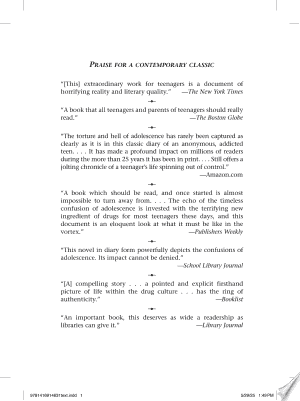
For thirty-five years, the acclaimed, bestselling first-person account... has left an indelible mark on generations of teen readers. As powerful—and as timely—today as ever...

The lasting popularity and impact of 'Go Ask Alice' show how permanent and universal addiction's destructive power is. Its continued relevance, decades after it came out, highlights that the main struggles—peer pressure, finding identity, the appeal of escape, and the terrible results of drug use—stay the same for all generations. The book's 'indelible mark' comes from its raw, honest portrayal, making it a strong warning story that deeply connects with teens and adults. It reminds us that while drugs may change, basic human weaknesse...

Supporting evidence

The book's status as an 'acclaimed, bestselling first-person account' that has remained 'as powerful—and as timely—today as ever' for over thirty-five years.

Apply this

Utilize powerful narratives like 'Go Ask Alice' in drug prevention education to create empathy and understanding. Encourage open discussions about the book's themes to foster critical thinking about the dangers of addiction.

cautionary-taletimeless-narrativedrug-prevention
9

The Power of a Personal Narrative

First-person accounts humanize the abstract horrors of addiction.

Quote

Read her diary. Enter her world. You will never forget her.

The book's strength comes from its first-person diary format, which gives an honest, personal, and deep look into an addict's mind. This storytelling method avoids clinical detachment, letting readers 'enter her world' and experience the decline with the main character. The raw honesty of the entries—her hopes, fears, delusions, and despair—makes the abstract idea of addiction human, relatable, and terrifyingly real. This direct connection builds empathy and makes the results of drug use much more impactful than statistics or general ...

Supporting evidence

The entire book is presented as the protagonist's diary entries, offering her unfiltered thoughts, feelings, and experiences.

Apply this

Incorporate personal testimonies and survivor stories in addiction education and recovery programs. Encourage individuals impacted by addiction to share their experiences to break stigma and foster connection.

personal-testimonyempathy-buildinganti-stigma
10

The Ultimate Cost

Addiction's true price is the loss of life itself.

Quote

...and ultimately her life.

The tragic end of the main character's journey—her death—is the clearest and most direct warning of all. This is not just a story about losing innocence or youth; it is about losing life completely. The book does not avoid the final, permanent consequence, making sure the reader understands the full weight of the 'horrors of addiction,' leaving no room to romanticize or underestimate its deadliness. It is a powerful and necessary reminder that while recovery is possible, the path of addiction is full of danger, with death always a pos...

Supporting evidence

The book's premise explicitly states that the journey 'would rob her of her innocence, her youth—and ultimately her life,' culminating in her death.

Apply this

Emphasize the life-threatening nature of addiction in public health campaigns. Advocate for increased access to overdose prevention resources, such as naloxone, and comprehensive treatment options to save lives.

mortality-rateoverdose-preventionfatal-consequences

Critical analysis

Notable Quotes

I can't believe I'm really a drug addict. I mean, I'm me. I'm not some crazy person. I'm me.

Alice's internal struggle with her identity after realizing the depth of her addiction.

It's a wonder I'm still alive. I've done so many dangerous things, and I just keep doing them.

Alice reflecting on the risks she has taken while under the influence of drugs.

I tried to tell my parents, but they just don't understand. They think I'm making it all up.

Alice's frustration with her parents' inability to grasp the reality of her situation.

The only thing that matters is the next high. Everything else is just a blur.

Alice describing the overwhelming focus of her addiction.

I hate myself for what I've become. I hate the drugs, but I can't stop.

Alice's self-loathing and powerlessness in the face of her addiction.

They say you can stop anytime you want. That's a lie. A big, fat lie.

Alice refuting the common misconception about the ease of quitting drugs.

I wish I could go back to being the old me. The me before all of this started.

Alice longing for her past self, before her life was consumed by drugs.

It's so easy to get pulled in. You think you're just experimenting, and then suddenly you're trapped.

Alice's warning about the deceptive nature of initial drug use.

Sometimes I feel like I'm watching myself from a distance, like it's not really me doing these things.

Alice experiencing a sense of detachment from her actions due to drug use.

I just want to be normal again. That's all I want.

Alice expressing her deep desire to return to a normal, drug-free life.

The secrets are killing me. I can't keep them inside anymore.

Alice feeling the burden of her hidden drug use and the need to confess.

Every time I try to get clean, something pulls me back. It's like a magnet.

Alice describing the powerful pull of addiction and the difficulty of sustained recovery.

I'm so tired of lying. To myself, to my family, to everyone.

Alice expressing exhaustion from the constant deception required to maintain her drug habit.

I wonder if I'll ever be free. Truly free.

Alice's contemplation of whether she will ever fully escape the grip of her addiction.

Quiz

Test Your Knowledge

Ready to see how well you understood this book? Take our interactive quiz with 10 questions.

10
Questions
~5
Minutes
?
Best Score

Key Questions (FAQ)

'Go Ask Alice' is presented as the authentic diary of a teenage drug addict. While the publisher claimed it was real, it is widely considered to be a fictionalized work, possibly written or heavily edited by Beatrice Sparks, a youth counselor.

About the author

Anonymous

Anonymous may refer to:Anonymity, the state of an individual's identity, or personally identifiable information, being publicly unknown Anonymous work, a work of art or literature that has an unnamed or unknown creator or author Anonymity, a property of a voting rule, saying that it does not discriminate apriori between voters