BookBrief
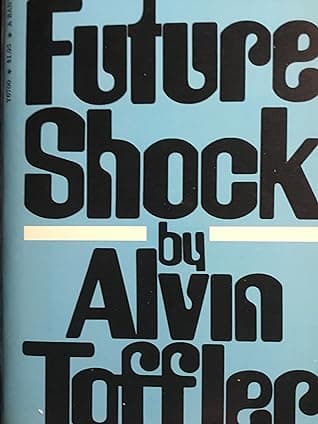
Future Shock cover
Archivist's Choice

Future Shock

Alvin Toffler (1801)

Genre

Business / History / Economics / Technology / Philosophy

Reading Time

9-12 hours

Key Themes

See below

Track Your Reading

Sign in to track this book

Alvin Toffler’s 'Future Shock' explores how fast technological and social change disrupts our sense of stability, making individuals and societies feel overwhelmed by newness.

Core Idea

Alvin Toffler's "Future Shock" argues that society is going through a huge, new transformation because of the fast pace of technological, social, and economic change. This quick, constant change overwhelms people, leading to 'future shock' – a feeling of confusion like culture shock, but experienced in one's own changing society. Toffler says that traditional organizations and personal coping methods cannot handle this speed of change, causing widespread stress, confusion, and a breakdown of social rules. He predicts a future with much transience, novelty, and diversity, which means we must rethink how we organize work, family, and education to build strength and flexibility.
Reading time
9-12 hours
Difficulty
Medium
✓ Read this if...
You are interested in understanding the long-term impacts of rapid technological and social change, and how societies and individuals cope (or fail to cope) with constant upheaval. This book is foundational for anyone studying future studies, organizational change, or the sociology of technology.
✗ Skip this if...
You prefer practical, actionable advice over broad theoretical frameworks and predictive analyses. While insightful, its predictions are from the 1970s and some specific examples may feel dated, though the core thesis remains highly relevant.

Core idea

The central argument and framework that powers the entire book.

Alvin Toffler's "Future Shock" argues that society is going through a huge, new transformation because of the fast pace of technological, social, and economic change. This quick, constant change overwhelms people, leading to 'future shock' – a feeling of confusion like culture shock, but experienced in one's own changing society. Toffler says that traditional organizations and personal coping methods cannot handle this speed of change, causing widespread stress, confusion, and a breakdown of social rules. He predicts a future with much transience, novelty, and diversity, which means we must rethink how we organize work, family, and education to build strength and flexibility.

At a glance

Reading time

9-12 hours

Difficulty

Medium

Read this if...

You are interested in understanding the long-term impacts of rapid technological and social change, and how societies and individuals cope (or fail to cope) with constant upheaval. This book is foundational for anyone studying future studies, organizational change, or the sociology of technology.

Skip this if...

You prefer practical, actionable advice over broad theoretical frameworks and predictive analyses. While insightful, its predictions are from the 1970s and some specific examples may feel dated, though the core thesis remains highly relevant.

Key Takeaways

1

The Accelerating Pace of Change

Society is experiencing an unprecedented rate of novelty, transience, and diversity.

Quote

Change is the process by which the future invades our lives.

Toffler says that the most important part of modern life is not change itself, but how fast change is happening. This rapid increase in the speed of technological, social, and cultural shifts creates a completely new human experience. We are not just getting used to new things; we are getting used to a constant stream of new things, each arriving faster than the last. This quick turnover affects everything from how long products last to personal relationships, making stability rare. The future is not just different; it comes quicker a...

Supporting evidence

Toffler illustrates this with examples like the shrinking time between scientific discovery and technological application, or the decreasing lifespan of corporations on the Fortune 500 list.

Apply this

Cultivate 'learnability' and mental agility. Regularly reassess long-held beliefs and professional skills, actively seeking out new information and perspectives to avoid becoming obsolete in a rapidly evolving environment.

acceleration-of-changenoveltytransience
2

Future Shock Defined

The shattering stress and disorientation induced by too much change in too short a time.

Quote

Future shock is the dizzying disorientation brought on by the premature arrival of the future.

Toffler created the term 'future shock' to describe the mental and physical stress people feel when they face too much change in a short time. It is not just about disliking change; it is a breakdown in how we think and feel when change happens faster than we can adapt. Symptoms can include confused behavior, difficulty making decisions, and even physical illness. This idea is important because it says that society's fast changes are not just an inconvenience but a real threat to individual and group well-being, requiring a forward-lo...

Supporting evidence

Toffler cites medical and psychological studies on stress and adaptation, linking the symptoms of future shock to information overload and the breakdown of traditional coping mechanisms in a rapidly changing environment.

Apply this

Practice conscious deceleration. Periodically unplug from information streams, engage in mindfulness, and intentionally create pockets of stability in your personal life to allow your mind to process and integrate change at a healthier pace.

future-shockstress-responseadaptation-limits
3

The Death of Permanence

The erosion of long-lasting structures in products, places, people, and organizations.

Quote

The one thing that is permanent is change itself.

Toffler says that permanence, once a basic part of human society, is quickly disappearing. We are moving from a world of lasting goods, stable jobs, lifelong marriages, and settled communities to one marked by transience. Products are made to become obsolete, careers involve frequent job changes, relationships are more fluid, and even places to live become temporary. This 'throw-away society' goes beyond physical items to human relationships and organizational structures. The mental effect of this lack of permanence is significant, ma...

Supporting evidence

He details the rise of disposable products, the increasing mobility of populations, the decline in average job tenure, and the growing divorce rates as evidence of this widespread transience.

Apply this

Embrace a 'portfolio' approach to life. Instead of seeking single, permanent solutions for work or relationships, build resilience by diversifying your skills, social networks, and interests, recognizing that each component may be temporary.

transiencedisposable-societyobsolescence
4

Information Overload and Decision Stress

The deluge of data and choices paralyzes individuals and institutions.

Quote

The individual is forced to make a thousand and one small decisions and readjustments.

One of the main causes of future shock is the rapid increase in information and available choices. Toffler saw the challenges of the internet age, describing a world where people are flooded with data, making it hard to find what is relevant or make decisions on time. This 'information overload' is not just about having too much to read; it is about the mental strain of constantly sorting, checking, and responding to new inputs. This leads to stress about decisions, where the sheer number of options, from products to political candida...

Supporting evidence

Toffler illustrates this with the explosion of media channels, product varieties in supermarkets, and the complexity of modern bureaucratic processes, all demanding more cognitive effort.

Apply this

Develop robust filtering mechanisms. Curate your information sources, practice selective attention, and set boundaries for digital consumption. Prioritize making 'good enough' decisions rather than striving for perfect ones in a world of infinite options.

information-overloaddecision-fatiguecognitive-load
5

The Rise of Ad-Hocracy

Flexible, temporary organizational structures replace rigid bureaucracies.

Quote

Bureaucracy is a machine designed to cope with routine. Ad-hocracy is a machine designed to cope with non-routine problems.

Toffler predicted the decline of traditional, strict bureaucracies in favor of more flexible, temporary organizational forms he called 'ad-hocracies.' These structures have cross-functional teams, temporary assignments, and a focus on specific, often short-term projects. Unlike hierarchies, ad-hocracies are fluid, quickly forming and dissolving to handle new challenges. While they offer speed and new ideas, this constant restructuring can add to future shock within organizations, as employees face continuous changes in teams, roles, a...

Supporting evidence

He discusses the emergence of project-based work in industries like aerospace and consulting, where teams are assembled for specific tasks and disbanded afterward, contrasting this with the traditional factory model.

Apply this

Cultivate a 'project mindset' for your career. Focus on acquiring transferable skills and building a diverse professional network rather than relying on a single, linear career path within one organization. Be prepared to adapt to new team dynamics frequently.

ad-hocracyorganizational-changeflexibility
6

The Future of the Family

The traditional nuclear family structure is diversifying under the pressure of rapid change.

Quote

The family is the most basic unit of social organization, and it is here that the impact of future shock is most deeply felt.

Toffler foresaw big changes in family structures due to more mobility, changing gender roles, and the pressures of a transient society. He predicted a move away from the single 'standard' family unit towards many different forms, including single-parent families, blended families, communal living, and 'professional parents' or specialized childcare. The stress of constant adaptation, career demands, and moving puts great pressure on traditional family bonds, leading to more divorces and a search for new ways to provide stability and e...

Supporting evidence

He discusses the historical evolution of family forms, the rise of geographical mobility requiring families to move frequently, and the increasing number of women entering the workforce, all contributing to pressure on traditional family roles.

Apply this

Consciously invest in creating 'portable' support systems, whether through strong friendships, community groups, or extended family networks, that can adapt to geographical moves or changing life circumstances. Be open to unconventional family structures.

family-structuressocial-changemobility
7

The Need for Future-Consciousness

Proactively anticipating and planning for change is crucial for survival.

Quote

Unless man quickly learns to control the rate of change in his personal life as well as in society, we are doomed to a massive adaptational breakdown.

Toffler says that simply reacting to change is not enough; people and societies must develop 'future-consciousness' – a deliberate effort to anticipate, understand, and even shape future trends. This means going beyond short-term planning and developing a long-range view of what might come. Without this foresight, we become passive victims of accelerating change, unable to prepare for its results. He stresses the importance of education that teaches flexibility and careful thinking about future possibilities, rather than just passing ...

Supporting evidence

He contrasts societies that are trapped in present-day thinking with those that invest in long-range planning and scenario building, highlighting the consequences of failing to anticipate major shifts.

Apply this

Engage in regular 'future-gazing.' Dedicate time to reading about emerging technologies and social trends, participate in foresight exercises, and consider the long-term implications of your choices on a personal and professional level.

future-consciousnessforesightscenario-planning
8

The Crisis of Identity

Constant change erodes stable self-concepts, leading to identity confusion.

Quote

When we speak of future shock, we are speaking of the human cost of too much change in too short a time.

In a world of transience and newness, the stable self-concept that once grounded people is increasingly challenged. Toffler suggests that our identities are often linked to our roles, relationships, possessions, and environments. When these elements are always changing—frequent job changes, shifting social circles, disposable goods, and temporary residences—it becomes hard to keep a clear and consistent sense of self. This 'crisis of identity' can show up as feelings of rootlessness, anxiety, and a struggle to define oneself in a worl...

Supporting evidence

He discusses how traditional markers of identity, like a lifelong profession or a stable community, are dissolving, forcing individuals to constantly re-evaluate and redefine themselves in a fluid social landscape.

Apply this

Build identity around internal values and adaptable skills rather than external roles or possessions. Cultivate a strong sense of purpose and a 'growth mindset' that embraces continuous learning and self-discovery as core components of your identity.

identity-crisisself-conceptpersonal-adaptation
9

The Need for Human Scale

Counteracting future shock requires creating manageable environments.

Quote

We must search for ways to help individuals and institutions cope with the super-industrial revolution.

Toffler suggests that one way to lessen future shock is to intentionally create 'human-scale' environments and experiences. This means designing systems, communities, and even personal routines that offer a sense of control, familiarity, and manageable complexity amid the larger flow of change. It is about finding ways to protect the individual from the full force of future shock, whether through smaller, more connected communities, less overwhelming information flows, or more stable personal routines. This does not mean resisting pro...

Supporting evidence

He contrasts the overwhelming scale of modern cities and institutions with the more manageable environments of past communities, suggesting that intentional design can create 'islands of stability' within a sea of change.

Apply this

Prioritize building a strong local community, whether through neighborhood groups, clubs, or volunteer work. Seek out 'slow' experiences (e.g., slow food, artisanal crafts) that offer a sense of tradition and deliberate pace in your personal life.

human-scalecommunity-buildingstress-management
10

The Politics of the Future

Democracy faces new challenges in managing accelerating change and diverse values.

Quote

The super-industrial revolution poses a threat to the political stability of nations.

Toffler predicted that the faster pace of change would greatly affect political systems, especially democracies. The growth of new values, lifestyles, and interest groups, along with information overload and the temporary nature of issues, makes it harder for political organizations to represent diverse publics and make timely, effective decisions. He foresaw a breakdown of agreement, a rise in special interest groups, and the possibility of political paralysis or authoritarian responses to manage the confusion. The challenge is how t...

Supporting evidence

He discusses the increasing complexity of political issues, the fragmentation of public opinion, and the difficulty of traditional political parties to adapt to rapidly changing voter demands and social movements.

Apply this

Actively engage in civic discourse and support political innovations that promote agile governance, participatory decision-making, and long-term strategic planning, rather than short-term reactive policies. Advocate for education that fosters critical thinking about complex societal issues.

political-instabilitygovernancesocial-fragmentation

Critical analysis

Notable Quotes

The illiterate of the 21st century will not be those who cannot read and write, but those who cannot learn, unlearn, and relearn.

Discussing the need for adaptability in a rapidly changing world.

Change is not merely necessary to life—it is life.

Emphasizing the fundamental role of change in human existence.

The future always arrives too fast, and in the wrong order.

Describing the disorienting pace of technological and social change.

We must search for our own stability amid the flux.

Advising on finding personal equilibrium in turbulent times.

The acceleration of change in our time is, itself, an elemental force.

Analyzing how speed itself becomes a transformative factor.

Information overload occurs when the amount of input to a system exceeds its processing capacity.

Explaining the concept of cognitive limits in the information age.

The family is the giant shock absorber of society—the place to which we retreat to lick our wounds.

Highlighting the role of family structures in coping with change.

We are simultaneously experiencing a youth revolution, a sexual revolution, a racial revolution, an economic revolution, and an unprecedented rate of technological change.

Listing the multiple, concurrent upheavals of the modern era.

The management of change is the central problem of our time.

Stating the core challenge for individuals and institutions.

Technology feeds on itself. Technology makes more technology possible.

Describing the self-accelerating nature of technological innovation.

The new education must teach the individual how to classify and reclassify information, how to evaluate its veracity, how to change categories when necessary.

Proposing a new approach to learning for the future.

We are creating a new society, not changing the old one.

Arguing that current transformations are foundational, not incremental.

The rate of change has implications quite apart from, and sometimes more important than, the directions of change.

Focusing on the impact of speed over specific trends.

To survive, to avert what we have termed future shock, the individual must become infinitely more adaptable and capable than ever before.

Defining the core thesis of the book on personal adaptation.

Quiz

Test Your Knowledge

Ready to see how well you understood this book? Take our interactive quiz with 10 questions.

10
Questions
~5
Minutes
?
Best Score

Key Questions (FAQ)

Future Shock is a term coined by Alvin Toffler to describe the psychological and social disorientation people experience when they are overwhelmed by rapid technological and societal changes, leading to stress and difficulty adapting to new realities.

About the author

Alvin Toffler

Alvin Toffler was a renowned futurist and author, best known for his groundbreaking book "Future Shock." His work explored the impact of technology and social change on society, influencing countless thinkers and policymakers. Toffler's insightful analyses and predictions cemented his legacy as a leading voice in understanding the complexities of the future.