BookBrief
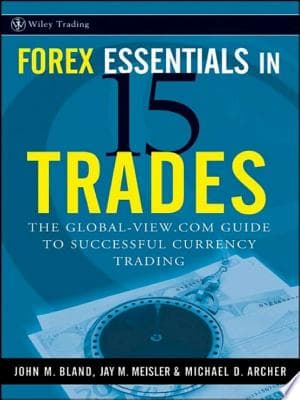
Forex Essentials in 15 Trades cover
Archivist's Choice

Forex Essentials in 15 Trades

John Bland (2009)

Genre

General

Reading Time

120 min

Key Themes

See below

Track Your Reading

Sign in to track this book

This book uses 15 real-world forex trades to turn collective wisdom and common trader mistakes into essential lessons for currency exchange.

Core Idea

This book argues that true Forex trading skill comes not just from theory, but from carefully examining real trades, both wins and losses. By focusing on 15 specific examples, it promotes a full analysis of strategy, entry/exit, money management, and trader psychology. The main idea is that learning from these specific experiences, combined with a structured approach and diverse viewpoints, leads to better, more lasting trading ability than abstract teaching.
Reading time
120 min
Difficulty
Medium
✓ Read this if...
You are an aspiring or struggling Forex trader looking for practical, trade-by-trade analysis rather than just theoretical concepts, and you appreciate learning from concrete examples and the experiences of others.
✗ Skip this if...
You are an experienced, consistently profitable Forex trader looking for advanced algorithmic strategies, or you prefer purely academic, statistical analyses over anecdotal, experience-based learning.

Core idea

The central argument and framework that powers the entire book.

This book argues that true Forex trading skill comes not just from theory, but from carefully examining real trades, both wins and losses. By focusing on 15 specific examples, it promotes a full analysis of strategy, entry/exit, money management, and trader psychology. The main idea is that learning from these specific experiences, combined with a structured approach and diverse viewpoints, leads to better, more lasting trading ability than abstract teaching.

At a glance

Reading time

120 min

Difficulty

Medium

Read this if...

You are an aspiring or struggling Forex trader looking for practical, trade-by-trade analysis rather than just theoretical concepts, and you appreciate learning from concrete examples and the experiences of others.

Skip this if...

You are an experienced, consistently profitable Forex trader looking for advanced algorithmic strategies, or you prefer purely academic, statistical analyses over anecdotal, experience-based learning.

Key Takeaways

1

The Imperative of Shared Learning

Isolation breeds failure; collaboration fosters growth in forex trading.

Quote

Those who do not share information, discuss tactics and review prior trades are doomed for failure.

The forex market is dynamic and challenging, where individual skill often matters less than collective intelligence. Bland stresses that traders must constantly learn and adapt. This learning is not a solo effort; it grows through interaction, discussion, and open review of both successes and failures. Traders who work alone, keeping their strategies secret and avoiding feedback, miss out on important insights and diverse viewpoints. The book suggests that dissecting trades with others, as seen in the Global-View.com community, helps ...

Supporting evidence

The existence and success of Global-View.com with over 33,000 registered users from 125 countries, serving as a hub for traders to learn and discuss, directly supports this premise.

Apply this

Actively participate in trading communities, forums, or peer groups. Regularly share your trade analyses (both winning and losing) and seek constructive criticism. Offer insights to others to deepen your own understanding.


collaborative-learningcommunity-tradingfeedback-loop
2

Holistic Trade Dissection

Successful trading requires analyzing selection, execution, money management, and psychology.

Quote

Each description will include how the trade was selected and why it was made, as well as money management and psychological aspects of the trade.

A trade involves more than just entry and exit points. Bland carefully breaks down each of the 15 trades, showing that real understanding comes from a multi-faceted analysis. This includes the initial reason for the trade (the 'why'), the specific execution, the role of money management in protecting capital, and perhaps most importantly, the trader's mental state throughout. Ignoring any of these elements leads to an incomplete picture and poor learning. A seemingly 'good' trade might have been poorly managed, or a 'bad' trade could ...

Supporting evidence

The book's structure, where each of the 15 trades is dissected to include selection, rationale, money management, and psychological aspects.

Apply this

After every trade, conduct a comprehensive review. Document your initial thesis, actual entry/exit, profit/loss, and critically assess your money management and emotional state during the trade. Use a structured template for consistency.

trade-analysisforex-psychologyrisk-managementtrade-rationale
3

Learning from Failure (and Success)

Both exemplary and flawed trades offer invaluable lessons for growth.

Quote

using the material to expose some of the best (and worst) practices of a Forex trader.

People usually only analyze winning trades, celebrating success and hiding failures. Bland, however, understands that true skill comes from an unbiased look at both the 'best' and 'worst' practices. The 'worst' trades, often filled with emotional decisions, poor risk management, or flawed analysis, offer the most painful yet important lessons. They reveal weaknesses and areas for immediate improvement. Conversely, examining 'best' trades reinforces effective strategies and helps understand when they work well. By presenting a balanced...

Supporting evidence

The explicit mention that the book exposes 'some of the best (and worst) practices of a Forex trader' through the 15 dissected trades.

Apply this

Maintain a trade journal that rigorously documents all trades, not just profitable ones. Categorize trades by outcome and regularly review both your biggest wins and biggest losses to extract specific lessons from each.

failure-analysisbest-practicestrade-journalingcontinuous-improvement
4

The Critical Role of Money Management

Effective capital preservation is paramount for long-term survival in trading.

Quote

Each description will include... money management and psychological aspects of the trade.

While market analysis and strategy selection get most of a trader's attention, Bland implies that money management is the foundation for any lasting trading career. It is not just about setting stop-losses; it includes position sizing, risk-reward ratios, and overall portfolio risk. Poor money management can destroy an account even with a high win rate, while strong money management can keep a trader in the game during drawdowns. The book, by including money management in every trade breakdown, highlights its critical importance. It i...

Supporting evidence

The consistent inclusion of 'money management' as a key aspect in the dissection of each of the 15 trades.

Apply this

Define and strictly adhere to a maximum risk per trade (e.g., 1-2% of capital). Calculate position size based on your stop-loss and risk tolerance before entering any trade. Regularly review your risk-reward ratios.

position-sizingrisk-rewardcapital-preservationdrawdown-management
5

Psychology as the Ultimate Edge

Emotional discipline often dictates success more than any strategy or indicator.

Quote

Each description will include... psychological aspects of the trade.

Even the most technically sound trading plan can fail due to human emotion. Bland's deliberate inclusion of 'psychological aspects' in each trade analysis shows the deep impact of mindset on trading outcomes. Fear, greed, overconfidence, and impatience are not abstract; they are real forces that lead to early exits, chasing trades, revenge trading, and ignoring risk limits. The book's stories likely illustrate these psychological traps in real situations. Mastering one's own psychology – developing discipline, patience, and emotional ...

Supporting evidence

The explicit and consistent inclusion of 'psychological aspects' in the detailed dissection of each of the 15 trades, along with the mention of 'entertaining anecdotal stories' likely illustrating these points.

Apply this

Practice mindfulness and self-awareness to recognize emotional triggers. Develop a pre-trade checklist to ensure rational decision-making. Review your emotional state in your trade journal and identify patterns of psychological interference.

trading-psychologyemotional-disciplinemindsetbias-awareness
6

The Power of Anecdotal Learning

Real-life stories bring abstract trading concepts to vivid, memorable life.

Quote

Entertaining anecdotal stories are interspersed throughout each trade story.

While technical analysis and fundamental theories are important, they can often feel abstract and disconnected from the messy reality of live trading. Bland wisely includes 'entertaining stories' in his trade breakdowns. These narratives are powerful teaching tools, making complex ideas relatable and memorable. They show the human side of trading – the doubts, the temptations of greed, the satisfaction of a well-executed plan. By connecting theoretical lessons to real-world experiences, these stories help traders understand lessons be...

Supporting evidence

The explicit statement that 'entertaining anecdotal stories are interspersed throughout each trade story,' implying their deliberate use as a teaching method.

Apply this

Seek out and engage with real-life trading stories and case studies, not just theoretical explanations. When learning, try to connect concepts to actual market events or personal experiences to solidify understanding.

case-studiesexperiential-learningnarrative-learningtrading-stories
7

Strategy Selection and Rationale

Every trade needs a clear 'why' based on reasoned analysis, not guesswork.

Quote

Each description will include how the trade was selected and why it was made...

Before any trade, there must be a clear and well-reasoned justification for it. Bland's emphasis on 'how and why the trade was selected' highlights the importance of thorough pre-trade analysis. This is not about intuition or 'gut feelings,' but a systematic process of finding opportunities based on market conditions, technical indicators, fundamental insights, or a combination. A clear reason provides a framework for entry, exit, and stop-loss placement, and acts as a benchmark to objectively evaluate the trade's performance. Without...

Supporting evidence

The consistent inclusion of 'how the trade was selected and why it was made' in the detailed dissection of each of the 15 trades.

Apply this

Before entering any trade, clearly articulate your reasons for selection. Write down your thesis, including market conditions, technical signals, and any fundamental drivers. Only proceed if your rationale is robust and aligns with your trading plan.

trade-thesismarket-analysistechnical-analysisfundamental-analysis
8

Consistency Through Structure

A structured approach to trade analysis builds discipline and replicable results.

Quote

In this book, the authors dissect each of 15 chosen trades, using the material to expose some of the best (and worst) practices of a Forex trader.

The book's method of analyzing 15 trades using a consistent framework (selection, rationale, money management, psychology) is a powerful lesson itself. It shows that consistent success in trading comes not from occasional brilliance but from a disciplined, structured approach. By using the same analytical lens for every trade, traders can find patterns, improve their decision-making, and build a reliable system. This structured review promotes objectivity, reduces emotional biases, and creates a feedback loop that constantly improves ...

Supporting evidence

The consistent application of a detailed dissection framework (including trade selection, rationale, money management, and psychology) across all 15 trades presented in the book.

Apply this

Develop and strictly follow a structured trading plan and post-trade review process. Use checklists for entries, exits, and risk management. Treat your trading like a business with defined procedures.

trading-systemprocess-drivendisciplinestructured-learning
9

The Value of Diverse Perspectives

Exposure to varied trading styles and outcomes broadens a trader's understanding.

Quote

Global-View.com exposes its users to an incredible base of knowledge.

The large number of users and countries represented on Global-View.com, and the diverse trades analyzed in the book, show how important it is to be exposed to different trading perspectives. No single trading style or strategy works best for everyone. By examining trades from various angles, perhaps even trades by traders with different philosophies, Bland offers a richer learning experience. This exposure helps traders understand the subtleties of various market conditions, how different tools apply, and the many ways successful outc...

Supporting evidence

The mention of Global-View.com's 33,000 registered users from 125 countries, implying a vast and diverse knowledge base from which the book's examples are drawn.

Apply this

Actively seek out different trading methodologies and perspectives. Don't limit yourself to one guru or one style. Understand the pros and cons of various approaches and how they might apply in different market contexts.

diverse-strategiesadaptabilitymarket-nuancesmulti-perspective

Critical analysis

Notable Quotes

The market doesn't care about your feelings, only your decisions.

Emphasizing the need for emotional discipline in trading.

Risk management isn't a suggestion; it's the bedrock of sustained profitability.

Highlighting the critical importance of managing risk in every trade.

A good trade plan is your map; without it, you're lost in the market's wilderness.

Stressing the necessity of having a well-defined trading plan before execution.

Patience isn't just a virtue; it's a powerful trading tool.

Encouraging traders to wait for optimal setups rather than chasing trades.

Don't just learn from your wins; dissect your losses to truly grow.

Advising traders to analyze losing trades for educational value and improvement.

The trend is your friend, but only if you know when your friend is about to leave.

Discussing the importance of identifying trends and recognizing potential reversals.

Consistency in execution beats sporadic brilliance every single time.

Emphasizing the value of sticking to a strategy consistently over attempting risky, high-reward trades.

Never confuse a gut feeling with a well-researched trade setup.

Warning against impulsive trading based on emotion rather than objective analysis.

Your trading journal is not just a record; it's your personal trading mentor.

Promoting the use of a trading journal for self-assessment and continuous improvement.

Small gains, consistently accumulated, build fortunes.

Underscoring the power of compounding and consistent, modest profits.

Understand the 'why' behind every trade, not just the 'what'.

Encouraging deeper understanding of market drivers and trade rationale.

The best trades often require the least intervention once initiated.

Suggesting that a well-planned trade should run its course without constant fiddling.

Emotional trading is simply gambling with extra steps.

A stark reminder of the dangers of letting emotions dictate trading decisions.

Mastering yourself is more crucial than mastering any indicator.

Prioritizing self-control and mental fortitude over technical tools.

Quiz

Test Your Knowledge

Ready to see how well you understood this book? Take our interactive quiz with 10 questions.

10
Questions
~5
Minutes
?
Best Score

Key Questions (FAQ)

This book by John Bland dissects 15 real-world Forex trades to illustrate best and worst practices in trading. It uses these examples to teach crucial aspects like trade selection, money management, and trading psychology, drawing on the vast knowledge base of Global-View.com.

About the author