“The price of power, he reflected, was eternal vigilance. And occasional ruthlessness.”
— Raymond Gould reflects on the demands of political leadership.

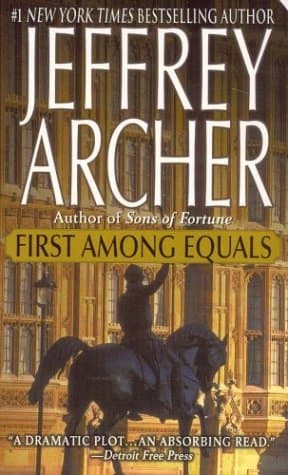
Jeffrey Archer (1984)
Genre
Politics / Thriller / Historical Fiction / Mystery
Reading Time
10-12 hours
Key Themes
See below
Sign in to track this book
Four ambitious MPs, bound by rivalry and shared history, navigate three decades of cutthroat British politics, their personal lives intertwined with their relentless pursuit of the ultimate prize: Prime Minister.
In 1964, four distinct individuals are elected to the House of Commons. Simon Kerslake, a brilliant Conservative from a privileged background, wins a by-election. Raymond Gould, a working-class Labour politician with a sharp mind, secures his seat in a mining constituency. Charles Seymour, an Old Etonian and Conservative, is elected from a safe rural seat, carrying the weight of family tradition. Andrew Fraser, a pragmatic and intelligent Labour MP, wins a challenging Scottish seat. Their paths immediately cross in Parliament, starting a decades-long rivalry and complex relationship as they each want to be Prime Minister.
As the four MPs begin their parliamentary journeys, their personal lives mix with their political careers. Simon Kerslake marries Elizabeth and quickly establishes himself as a rising star within the Conservative Party, known for his economic skill. Raymond Gould, despite his humble origins, is a strong debater and a fierce advocate for his working-class constituents, marrying the steadfast Margaret. Charles Seymour, with his aristocratic background, struggles initially to connect with the common man but relies on his political lineage and his supportive wife, Fiona. Andrew Fraser, a more reserved but equally ambitious Labour MP, navigates early political challenges with his wife, Philippa, and focuses on policy and strategic thinking.
The political landscape shifts, offering the first real tests of the four men's ambitions. Simon Kerslake gains recognition for his economic proposals and is considered for junior ministerial roles. Raymond Gould builds a reputation as a powerful speaker and a champion of socialist causes, making him popular on the Labour backbenches. Charles Seymour, using his connections and social standing, also begins to climb the Conservative ranks, though more slowly than Kerslake. Andrew Fraser, though less flashy, quietly builds support and shows a keen understanding of parliamentary procedure, positioning himself for future influence. Their initial moves are closely watched by their rivals, setting the stage for future confrontations.
The path to power is full of personal and political challenges. Simon Kerslake faces scrutiny over his financial dealings and endures personal heartache. Raymond Gould's outspoken nature sometimes alienates potential allies, and he grapples with the demands of public life on his family. Charles Seymour, despite his privileged background, experiences political rejection and struggles to gain widespread popularity beyond his traditional base. Andrew Fraser, while generally steady, encounters moments of doubt and strategic miscalculation. These setbacks force each man to re-evaluate their approaches and strengthen their resolve, often with the unwavering support, or sometimes the quiet suffering, of their wives.
As the years pass, opportunities for leadership begin to emerge within both major parties. Simon Kerslake, having served in various capacities, makes a strong bid for the Conservative leadership, showing his experience and vision for the country. He faces stiff competition, and the contest is a grueling one, testing his political mettle and his ability to rally support. On the Labour side, Raymond Gould, having cemented his reputation as a formidable figure, also eyes the top position, believing his working-class roots and principles make him the ideal leader. Andrew Fraser, ever the strategist, often plays a role behind the scenes in these contests, either supporting or subtly opposing his rivals, while Charles Seymour continues to build his influence within the Conservative Party, though not yet ready for the top job.
The relentless pursuit of power inevitably leads to shifting alliances and occasional betrayals. Simon Kerslake and Charles Seymour, though both Conservatives, find themselves in competition, sometimes subtly undermining each other. Raymond Gould and Andrew Fraser, while both Labour, also have different ideological approaches and personal ambitions that lead to friction and strategic maneuvering. Friendships are strained, and political expediency often takes precedence over loyalty. Wives, too, become entangled in these complex webs, offering support, advice, or sometimes suffering the consequences of their husbands' choices. Each man learns that trust is fragile in Westminster, and that yesterday's ally can be tomorrow's rival.
Decades into their careers, the ultimate prize, 10 Downing Street, seems within reach for one of the protagonists. Simon Kerslake, having endured previous leadership bids and consolidated his position within the Conservative Party, launches a final, determined campaign for the leadership. His experience, economic policies, and ability to unite different factions of the party position him as a strong contender. Similarly, Raymond Gould, after years of tireless work and building a loyal following, sees an opening for the Labour leadership, believing he can finally lead the party to victory. The narrative intensifies as the political stakes reach an all-time high, with each man giving everything to achieve their lifelong ambition.
A general election looms, and the outcome is incredibly close, with the fate of the nation and the careers of the four men hanging in the balance. Simon Kerslake leads the Conservative Party, presenting a vision of economic stability and national pride. Raymond Gould, leading Labour, champions social justice and equality, galvanizing his base. Charles Seymour and Andrew Fraser play roles in their respective parties' campaigns, either as senior ministers, shadow ministers, or strategists. The campaign is grueling, marked by intense debates, media scrutiny, and unexpected twists, as the public decides who will govern the country, and ultimately, which of these ambitious men will achieve their ultimate goal.
After years of relentless ambition, political maneuvering, and personal sacrifice, one of the four principal characters finally achieves the ultimate prize: the Prime Ministership. The election results are announced, and the victor is declared, leading their party to a narrow but decisive victory. This moment is the culmination of decades of effort, the realization of a lifelong dream. The narrative focuses on the immediate aftermath of this achievement, the reactions of the victor's family and supporters, and the quiet reflections of the defeated rivals, who must now come to terms with their own political futures and the success of their long-time competitor. The book explores the feeling of triumph and the heavy weight of responsibility that comes with leading a nation.
The newly appointed Prime Minister immediately confronts the immense pressures and challenges of leading the country. From international crises to domestic policy debates, the weight of office is clear. The narrative explores the Prime Minister's first decisions, the formation of the new government, and the ongoing interactions with the now-defeated rivals, who remain in Parliament as opposition figures or backbenchers. The personal cost of the highest office becomes evident, impacting family life and demanding unwavering dedication. The story highlights that achieving the top job is only the beginning; the real test lies in the ability to govern effectively and navigate the complex, often unforgiving, world of national politics.
The Protagonist
From a rising star, Simon navigates political setbacks and personal challenges to ultimately vie for, and potentially win, the premiership, demonstrating growth in leadership and resilience.
The Protagonist
Starting as a fiery backbencher, Raymond rises through the Labour ranks, maintaining his working-class principles while adapting to the demands of leadership, becoming a serious contender for Prime Minister.
The Protagonist
Beginning as a somewhat traditional, less charismatic figure, Charles learns to adapt and maneuver within the Conservative party, overcoming initial struggles to become a powerful, if not always popular, political player.
The Protagonist
From a thoughtful backbencher, Andrew leverages his strategic intellect and political acumen to become a significant force within the Labour Party, often as a kingmaker or a crucial ministerial figure.
The Supporting
Initially a dedicated political wife, Elizabeth grows more independent and resilient, finding her own voice amidst the demands of her husband's career.
The Supporting
Margaret remains a constant source of strength and moral guidance for Raymond, embodying steadfast loyalty throughout his political journey.
The Supporting
Fiona uses her social grace and political acumen to support Charles's career, becoming an increasingly influential figure in her own right within Conservative circles.
The Supporting
Philippa provides intellectual and emotional stability for Andrew, acting as a quiet but influential sounding board for his political strategies.
The relentless pursuit of the Prime Ministership drives the four protagonists, often leading them to make difficult moral compromises. Simon Kerslake faces scrutiny over financial dealings, Raymond Gould's principles sometimes alienate allies, and Charles Seymour's ambition can make him ruthless. Andrew Fraser, while pragmatic, is not immune to strategic maneuvering. The narrative consistently shows how the desire for power tests personal integrity and family loyalties, forcing characters to weigh their ideals against the realities of political advancement. For example, alliances shift and friendships are strained when leadership contests arise, showing that the ultimate prize often comes at a high personal cost.
“In politics, there are no permanent friends, only permanent interests.”
The book portrays the sacrifices made by politicians and their families. The wives of the four MPs – Elizabeth, Margaret, Fiona, and Philippa – each experience the emotional strain, neglect, and public scrutiny that come with being married to an ambitious politician. Marriages are tested, children often grow up without constant parental presence, and personal lives become fodder for media speculation. Simon Kerslake's wife, Elizabeth, for instance, struggles with her own identity as her husband's career consumes their lives. This theme highlights the often-unseen toll that the pursuit of power takes on individuals and their closest relationships.
“The higher you climb, the harder the wind blows, and the lonelier it gets.”
The novel explores how social class influences political careers in Britain. Simon Kerslake and Charles Seymour benefit from privileged, establishment backgrounds, giving them networks and an easier path to advancement, though they still face challenges. Raymond Gould, from a working-class mining community, must overcome significant social barriers, relying on his intellect and speaking skills to rise. Andrew Fraser, while Labour, is portrayed as more middle-class and intellectual. This theme highlights the differing starting points and obstacles faced by individuals based on their social origins, and how these backgrounds shape their ideologies, alliances, and public perception within politics.
“He knew that for every Old Etonian who slipped effortlessly into the Commons, there were a hundred like him who had to fight for every inch.”
The book examines the varied qualities needed for effective leadership, looking at different styles through its protagonists. Simon Kerslake shows charismatic, economically astute leadership; Raymond Gould represents principled, populist leadership; Charles Seymour, traditional, establishment leadership; and Andrew Fraser, strategic, pragmatic leadership. The narrative constantly questions what truly makes a great leader – is it charisma, integrity, strategic brilliance, or a combination? It shows that the path to power often requires a blend of these, along with resilience and a willingness to adapt, as each character learns from their successes and failures on their journey to the top.
“A leader must be able to inspire, but also to calculate. To dream, but also to deliver.”
The simultaneous tracking of four distinct political careers.
The novel employs the device of parallel journeys by following the political careers of Simon Kerslake, Raymond Gould, Charles Seymour, and Andrew Fraser from their entry into Parliament in 1964. This allows for a comprehensive look at the political landscape from multiple perspectives – both Conservative and Labour, and from different social backgrounds. By charting their concurrent rises, rivalries, and interactions over decades, the device creates a sense of continuous competition and suspense, as readers are left to wonder which of the 'first among equals' will ultimately achieve the premiership. It also highlights the cyclical nature of political ambition and the constant jockeying for position.
Spanning decades to cover significant political and social shifts.
The narrative utilizes significant time jumps, often covering several years between chapters or sections, allowing it to span over three decades of British political history. This device enables the author to integrate real historical events and political figures (often thinly veiled) into the fictional plot, grounding the story in a realistic context. It also shows the evolution of the characters' careers and personal lives against a backdrop of changing social attitudes, economic challenges, and shifts in political ideology, emphasizing the long game played in the pursuit of power and how external events influence individual trajectories.
Exploring the political world through the eyes of the protagonists' spouses.
A significant plot device is the inclusion of the wives' perspectives (Elizabeth, Margaret, Fiona, and Philippa). While not always central, their chapters or sections provide crucial insights into the personal toll of political life. They offer a grounded, often emotional, counterpoint to the political machinations of their husbands. This device humanizes the politicians, revealing their vulnerabilities and the sacrifices made by their families. It also broadens the scope of the story beyond the confines of Westminster, showing how political ambition reverberates through private lives and shapes the identities of those connected to power.
The consistent framing of the pursuit of power as a competitive race.
Throughout the novel, the ambition to become Prime Minister is consistently framed as a 'race,' a competition with clear winners and losers. This metaphor reinforces the high stakes and competitive nature of political life. It helps to build tension as the protagonists vie for positions, leadership bids, and ultimately, the top job. The language used often reflects this, with characters 'running' for leadership, 'gaining ground,' or 'falling behind.' This device makes the political struggle more immediate and dramatic, providing a clear narrative drive towards the ultimate goal of one man becoming 'first among equals.'
“The price of power, he reflected, was eternal vigilance. And occasional ruthlessness.”
— Raymond Gould reflects on the demands of political leadership.
“A man without ambition is like a ship without a rudder.”
— Andrew Fraser early in his career, driven by his aspirations.
“In politics, there are no permanent friends and no permanent enemies, only permanent interests.”
— A seasoned politician advises one of the protagonists.
“The ballot box is more powerful than the bullet.”
— One of the candidates emphasizes the importance of democratic process.
“You can always tell a true leader by the quality of the enemies he makes.”
— Simon Kerslake reflecting on the challenges and opposition he faces.
“Compromise is not a dirty word, it is the art of government.”
— Charles Gurney explaining the necessity of negotiation in Parliament.
“Luck, like opportunity, often knocks only once.”
— Andrew Fraser seizes a crucial moment in his career.
“The greatest danger in politics is to believe your own propaganda.”
— A warning given to a rising star about losing touch with reality.
“History is not made by those who stand on the sidelines.”
— Raymond Gould's determination to be at the center of events.
“Every man has his price, it's just a matter of finding out what it is.”
— A cynical observation about human nature and corruption.
“The only thing more dangerous than a politician with a secret is a journalist who knows it.”
— A character discussing the power of the press and political scandal.
“To govern is to choose, and to choose is to displease.”
— A Prime Minister grappling with difficult policy decisions.
“True leadership is not about being popular, it's about doing what is right, even when it's unpopular.”
— Simon Kerslake's internal monologue about integrity in politics.
“The past is a foreign country; they do things differently there.”
— A character reflecting on how much has changed over the years in British politics.
Ready to see how well you understood this book? Take our interactive quiz with 10 questions.

Jeffrey Howard Archer, Baron Archer of Weston-super-Mare is an English novelist, life peer, convicted criminal, and former politician. Before becoming an author, Archer was a Member of Parliament (1969–1974), but did not seek re-election after a financial scandal that left him almost bankrupt.

Brett Casper
5.0
Dirk Uffelmann
4.7
Winston S. Churchill
4.5

Chimamanda Ngozi Adichie
4.5
Will Durant
4.4
Thomas Sowell
4.4
W.E.B. Du Bois
4.3
Alan Moore
4.3