BookBrief
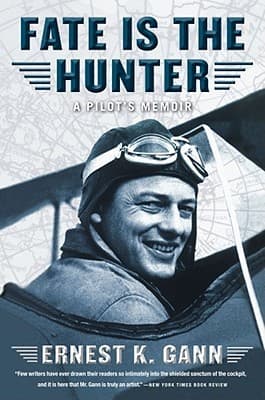
Fate Is the Hunter cover
Archivist's Choice

Fate Is the Hunter

Ernest K. Gann (1961)

Genre

Lifestyle / Biography / Memoir / History

Reading Time

10-12 hours

Key Themes

See below

Track Your Reading

Sign in to track this book

Join a pilot's intense journey through the dangerous, early days of commercial aviation, as Ernest K. Gann reveals the triumphs and terrors of flying.

Core Idea

Ernest K. Gann's "Fate Is the Hunter" explores the human experience in the early, unforgiving world of commercial aviation. It shows that while pilots master machines and weather, an inherent unpredictability—often called 'fate'—always exists, influencing outcomes regardless of skill. The book suggests that true professionalism and resilience come not from conquering this unpredictability, but from a strong commitment to duty, learning from every close call, and accepting the fine line between success and tragedy that defines a life lived at the edge of the sky. It describes the bonds formed in shared danger and the lasting spirit of adventure that draws people to such a high-stakes life.
Reading time
10-12 hours
Difficulty
Medium
✓ Read this if...
You are fascinated by the golden age of aviation, stories of extreme responsibility, the psychological toll of high-stakes professions, or the profound bond between humans facing shared dangers. This book is for those who appreciate detailed, immersive memoirs about living life with an acute awareness of mortality and the constant dance with 'fate.'
✗ Skip this if...
You prefer light-hearted narratives, are not interested in historical aviation, or find detailed accounts of mechanical failures and life-or-death decision-making stressful rather than engaging. If you are looking for a purely motivational self-help book, this is not it, though it offers immense wisdom through its narrative.

Core idea

The central argument and framework that powers the entire book.

Ernest K. Gann's "Fate Is the Hunter" explores the human experience in the early, unforgiving world of commercial aviation. It shows that while pilots master machines and weather, an inherent unpredictability—often called 'fate'—always exists, influencing outcomes regardless of skill. The book suggests that true professionalism and resilience come not from conquering this unpredictability, but from a strong commitment to duty, learning from every close call, and accepting the fine line between success and tragedy that defines a life lived at the edge of the sky. It describes the bonds formed in shared danger and the lasting spirit of adventure that draws people to such a high-stakes life.

At a glance

Reading time

10-12 hours

Difficulty

Medium

Read this if...

You are fascinated by the golden age of aviation, stories of extreme responsibility, the psychological toll of high-stakes professions, or the profound bond between humans facing shared dangers. This book is for those who appreciate detailed, immersive memoirs about living life with an acute awareness of mortality and the constant dance with 'fate.'

Skip this if...

You prefer light-hearted narratives, are not interested in historical aviation, or find detailed accounts of mechanical failures and life-or-death decision-making stressful rather than engaging. If you are looking for a purely motivational self-help book, this is not it, though it offers immense wisdom through its narrative.

Key Takeaways

1

The Allure of Unpredictability

Early aviation was a constant dance with the unknown, demanding a unique breed of individual.

Quote

There was a time when the mere act of flight was an adventure, a challenge to the very elements themselves.

Gann shows that early commercial aviation was not just a job; it was a calling for those drawn to the unknown. Unlike today's automated and predictable air travel, every flight in those early days was an improvisation against unpredictable weather, basic navigation, and mechanical failures. This unpredictability created a deep connection between the pilot, their aircraft, and nature. It was not about conquering the skies, but about negotiating with them, understanding their moods, and constantly adapting. This environment produced pil...

Supporting evidence

Gann's numerous anecdotes of navigating through storms with limited instrumentation, relying on dead reckoning, and making critical decisions without ground support.

Apply this

Embrace the unpredictable in your own pursuits. Recognize that true mastery often comes from navigating fluid, uncertain environments rather than perfectly controlled ones. Cultivate adaptability and intuition.
early-aviationpilot-instinctrisk-taking
2

The Weight of Responsibility

A pilot's singular authority in the cockpit carries immense psychological and practical burdens.

Quote

Once airborne, the pilot's word was law, his judgment the sole arbiter of fate.

Gann clearly illustrates the immense responsibility placed on an early airline pilot. Unlike modern crews with extensive support, the captain of a 1930s or 40s aircraft was the final authority, often making solitary decisions that directly affected the lives of every passenger and crew member. This was not just a technical role; it was an existential one. The mental strength needed to consistently make high-stakes decisions under pressure, often with incomplete information and in life-threatening situations, is a main theme. Gann expl...

Supporting evidence

Gann's detailed accounts of making critical go/no-go decisions in adverse weather, handling engine failures mid-flight, and the constant awareness of the lives entrusted to him.

Apply this

In leadership roles, recognize the true weight of your decisions. Cultivate mental resilience and the ability to make choices with conviction, even when information is imperfect. Understand that true authority comes with immense accountability.

leadership-responsibilitydecision-making-under-pressurepilot-psychology
3

Man vs. Machine (and Nature)

The constant battle against mechanical limitations and the raw power of the elements defined early flight.

Quote

Every flight was a test, not just of skill, but of the machine's will to remain aloft and nature's will to bring it down.

Gann provides a raw understanding of how fragile early aircraft were and the constant fight against the elements. These were not sophisticated machines; they were temperamental and needed constant care, repair, and an intimate understanding of their quirks. Pilots were often mechanics, meteorologists, and navigators all in one, constantly improvising to keep their planes flying. The book is full of terrifying encounters with storms, ice, and mechanical failures, showing the thin line between success and disaster. This constant struggl...

Supporting evidence

Stories of fighting ice accretion on wings, navigating through thunderstorms before radar, and dealing with engine malfunctions mid-ocean with only basic tools.

Apply this

Develop a profound respect for the tools and systems you use, understanding both their strengths and limitations. Cultivate a mindset of preparedness for potential failures and the ingenuity to improvise when necessary. Recognize that nature always bats last.

aviation-historymechanical-failureenvironmental-challenges
4

The Brotherhood of the Air

Shared peril forged an unbreakable bond among the pioneers of flight.

Quote

We were a small, strange fraternity, bound by the invisible threads of shared danger and impossible dreams.

Gann beautifully describes the unique camaraderie that developed among early pilots. In a job where every flight could be your last, and where only another pilot could truly understand the pressures and fears, a strong sense of brotherhood emerged. This was more than professional friendship; it was a deep, unspoken bond formed in shared risk, mutual reliance, and a common passion for flying. They understood each other's unspoken anxieties, celebrated successes, and mourned losses with intense feeling. This fraternity provided essentia...

Supporting evidence

Gann's descriptions of post-flight debriefs, the silent understanding between pilots, and the collective grief and resilience after a colleague's loss.

Apply this

Seek out and cultivate strong bonds with those who share your unique challenges and passions. Recognize the power of shared experience in fostering resilience and mutual support, especially in high-stakes environments.

camaraderieprofessional-bondsshared-experience
5

The Evolution of Trust

From daring adventurers to trusted professionals, pilots earned public confidence one flight at a time.

Quote

We were the showmen, the daredevils, until one day, imperceptibly, we became the trusted carriers of lives and commerce.

Gann chronicles aviation's transition from a daredevil spectacle to a reliable mode of transportation. Early pilots were seen as adventurers, their flights often met with awe and skepticism. Gann shows how, through countless hours of dangerous, careful work, pilots slowly built public trust. This was not a PR campaign; it was earned through consistent performance, strong dedication, and the sheer bravery of facing the odds every day. The book subtly highlights how the risks forced a culture of strict self-discipline and professionalis...

Supporting evidence

Gann's personal journey from barnstorming to flying mail and then passengers, illustrating the gradual shift in public perception and the increasing demands for reliability.

Apply this

Understand that true trust is built through consistent, reliable performance over time, especially in challenging circumstances. Focus on demonstrating competence and integrity rather than seeking immediate validation. Recognize the long game of building reputation.

public-trustprofessionalismaviation-evolution
6

The Illusion of Control

Despite immense skill, pilots ultimately bowed to the greater forces of fate and nature.

Quote

No matter how much we planned, how much we practiced, there was always that one last card held by fate, waiting to be played.

The title 'Fate Is the Hunter' captures a central idea of the book: that even with great skill and preparation, forces beyond human control exist. Gann, despite his deep expertise and experience, often faces situations where sheer luck, good or bad, plays a decisive role. This is not a defeatist view but a realistic acceptance of the limits of human control, especially when dealing with powerful natural phenomena and imperfect machinery. It creates a sense of humility, reminding us that while we can reduce risks, eliminating them enti...

Supporting evidence

Gann's recounting of near-misses, unexpected mechanical failures that defy explanation, and weather phenomena that appear without warning, forcing improvisation or sheer survival.

Apply this

Cultivate humility and acknowledge the role of chance in outcomes, even as you strive for mastery. Distinguish between what you can control and what you cannot, focusing your energy on the former while accepting the latter. Prepare for the unexpected.

fatehuman-agencyrisk-management
7

The Romance of the Sky

Beyond the danger, there was an undeniable, almost spiritual, allure to flying.

Quote

For all the fear and the sweat, there was always the profound, silent beauty of the sky, a world few others knew.

Gann does not just focus on the dangers; he vividly conveys the profound beauty and unique perspective of flight. He describes the calm solitude above the clouds, the majesty of landscapes seen from afar, and the almost spiritual connection pilots felt with the vastness of the sky. This inherent romance was a strong motivator, drawing individuals to a dangerous profession despite the risks. It was a world of unmatched views, a sense of freedom, and a unique perspective on the human condition. This 'romance' balanced the constant fear,...

Supporting evidence

Gann's poetic descriptions of sunrises and sunsets from the cockpit, flying through towering cumulus clouds, and the silent majesty of night flights.

Apply this

In any demanding pursuit, actively seek out and appreciate the inherent beauty, unique perspectives, and moments of profound satisfaction that balance the challenges. Connect with the 'why' behind your efforts beyond just the practical.

awe-of-flightpersonal-fulfillmentnature's-beauty
8

Learning from Every Mistake

Survival in early aviation depended on a relentless, unforgiving process of continuous learning.

Quote

The sky was a harsh teacher, but its lessons, once learned, were never forgotten.

Gann illustrates that early pilots operated where mistakes were often fatal. This reality created an intense, almost obsessive, drive for continuous learning and self-improvement. Every incident, every close call, every mechanical problem was carefully analyzed and absorbed. There was no room for complacency or ego; the margin for error was too small. This culture of relentless learning, often through direct, painful experience, was vital for the rapid advancement of aviation safety and technique. It highlights a strong dedication to ...

Supporting evidence

Gann's reflections on specific errors he or others made, and the immediate, often life-saving, adjustments to procedures or personal flying habits that resulted.

Apply this

Adopt a mindset of radical continuous learning, especially from failures and near-failures. Cultivate intellectual humility and a willingness to constantly refine your approach based on experience and new information. See every challenge as a learning opportunity.

continuous-learningerror-analysismastery
9

The Enduring Spirit of Adventure

Even as aviation became routine, the pioneering spirit of its early days remained a powerful legacy.

Quote

Though the wildness has been tamed, the echo of that first, impossible leap still resonates in the soul of every true pilot.

While 'Fate Is the Hunter' focuses on the early, dangerous era of flight, Gann also reflects on aviation's inevitable shift to a more regulated, safer, and arguably less 'adventurous' industry. However, he argues that the pioneering spirit, the willingness to push boundaries and face the unknown, remains a lasting part of aviation's soul. This spirit involves not just physical courage but also intellectual curiosity, ingenuity, and a strong commitment to exploration. The book shows humanity's drive to overcome limits, reminding us tha...

Supporting evidence

Gann's nostalgic tone when describing the 'golden age' of flight, contrasted with his acknowledgment of modern safety, yet his insistence that the core 'pilot's spirit' persists.

Apply this

Identify and nurture the 'pioneering spirit' within yourself, even in established fields. Seek out opportunities for innovation, challenge the status quo (safely), and maintain a sense of wonder and curiosity about your work and the world.

pioneering-spiritexplorationhuman-endeavor
10

Beyond the Cockpit: A Human Story

Gann's memoir transcends aviation to explore universal themes of courage, fear, and purpose.

Quote

The story of flight, at its heart, is merely another chapter in the endless human quest to understand ourselves.

While seemingly a pilot's memoir, 'Fate Is the Hunter' is a deep reflection on the human condition. Gann uses the extreme context of early aviation to explore universal themes: courage in the face of overwhelming odds, the psychological impact of fear and loss, the search for meaning in a dangerous world, and the deep satisfaction from mastering a craft. His stories of life and death in the skies resonate beyond technical flight details, offering insights into human resilience, community bonds, and the ongoing struggle to define one's...

Supporting evidence

Gann's introspective passages on his own fears, moments of doubt, and philosophical reflections on the meaning of his dangerous profession and the lives lost.

Apply this

Look for universal human lessons within specialized or niche experiences. Recognize that every challenging endeavor, regardless of its specific context, offers opportunities for profound self-discovery and understanding of the human spirit.

human-conditioncouragepurpose

Critical analysis

Notable Quotes

There are no atheists in the foxholes, nor in the cockpits of airplanes when the engine quits.

Reflecting on the nature of faith and fear during critical flight situations.

For some men there is no greater joy than to be alone in the sky, to control a powerful machine, and to know that for a brief time he is the master of his own destiny.

Describing the profound sense of freedom and control experienced by pilots.

A man's worth is measured by his ability to survive, and to do so with dignity.

Gann's philosophy on resilience and maintaining self-respect in challenging circumstances.

The sea, like the sky, has no favorites. It will take you or leave you, depending on your skill and your luck.

Drawing parallels between the unpredictable nature of the sea and the sky in terms of risk.

It is a peculiar sensation, this living in the past. It is as if one were constantly reaching for something just out of grasp, something that was once real but is now only a memory.

Reflecting on the bittersweet experience of remembering past events and lost comrades.

The greatest enemy of an airplane is the ground.

A concise and stark statement highlighting the ever-present danger for pilots.

You do not fly an airplane with your hands, you fly it with your mind.

Emphasizing the mental acuity and decision-making required for successful piloting.

There is no such thing as a perfect flight. There is always something that could have been done better.

Illustrating the constant pursuit of excellence and self-critique among experienced pilots.

Fate is indeed a hunter, and it hunts with a thousand faces.

The central theme of the book, acknowledging the myriad ways fate can intervene.

Courage is not the absence of fear, but rather the judgment that something else is more important than fear.

Defining true courage in the face of perilous situations encountered in aviation.

The sky does not belong to us. We merely borrow it for a while.

A humble perspective on humanity's relationship with the vastness of the sky and nature.

Every takeoff is optional. Every landing is mandatory.

A classic pilot adage highlighting the critical importance of a successful landing.

The greatest teachers are often the greatest failures.

Reflecting on the lessons learned from mistakes and challenging experiences.

We flew not because we were unafraid, but because we were more afraid of not flying.

Explaining the compelling drive and passion that motivated pilots despite the inherent dangers.

Quiz

Test Your Knowledge

Ready to see how well you understood this book? Take our interactive quiz with 10 questions.

10
Questions
~5
Minutes
?
Best Score

Key Questions (FAQ)

'Fate Is the Hunter' is Ernest K. Gann's classic memoir detailing his experiences as a pilot during the perilous early days of commercial aviation. It offers a thrilling and intimate look into the cockpit, recounting the triumphs and terrors faced by pilots when flying was a far more dangerous undertaking.

About the author