BookBrief
Ethics cover
Archivist's Choice

Ethics

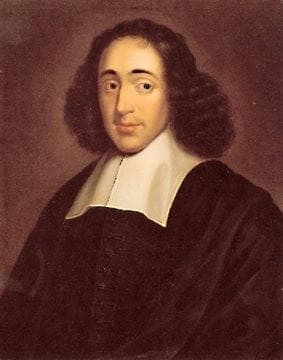
Baruch Spinoza

Genre

Politics / Psychology / Spirituality / Philosophy

Reading Time

900 min

Key Themes

See below

Track Your Reading

Sign in to track this book

Spinoza's "Ethics" builds a universe from divine first principles, guiding the reader through mind, emotion, and human limitations to reveal a path to freedom and happiness through understanding.

Core Idea

Spinoza's Ethics develops a monistic, pantheistic philosophy where God is Nature (or Substance) and is the sole, infinite, self-caused entity from which all else follows. Using a geometric method, he argues that mind and body are not distinct substances but two attributes of this single Substance, expressing the same reality in different ways. Humans, as finite parts of this Substance, are driven by a conatus—a basic striving for self-preservation. True freedom and virtue come not from free will, but from understanding the causes of our emotions and actions, moving from passive 'passions' to active 'actions' through reason. The highest human good is the 'intellectual love of God,' a rational understanding and acceptance of the universe's order, which brings calm and liberation from inadequate ideas and turbulent emotions.
Reading time
900 min
Difficulty
Hard
✓ Read this if...
You are interested in a foundational work of Western philosophy that rigorously redefines God, mind, body, and ethics through a deductive, geometrical method, and seeks a rational path to human freedom and tranquility.
✗ Skip this if...
You prefer an empirical or analytical philosophical style, are put off by dense, axiomatic reasoning, or are seeking an introduction to philosophy rather than a challenging primary text.

Core idea

The central argument and framework that powers the entire book.

Spinoza's Ethics develops a monistic, pantheistic philosophy where God is Nature (or Substance) and is the sole, infinite, self-caused entity from which all else follows. Using a geometric method, he argues that mind and body are not distinct substances but two attributes of this single Substance, expressing the same reality in different ways. Humans, as finite parts of this Substance, are driven by a conatus—a basic striving for self-preservation. True freedom and virtue come not from free will, but from understanding the causes of our emotions and actions, moving from passive 'passions' to active 'actions' through reason. The highest human good is the 'intellectual love of God,' a rational understanding and acceptance of the universe's order, which brings calm and liberation from inadequate ideas and turbulent emotions.

At a glance

Reading time

900 min

Difficulty

Hard

Read this if...

You are interested in a foundational work of Western philosophy that rigorously redefines God, mind, body, and ethics through a deductive, geometrical method, and seeks a rational path to human freedom and tranquility.

Skip this if...

You prefer an empirical or analytical philosophical style, are put off by dense, axiomatic reasoning, or are seeking an introduction to philosophy rather than a challenging primary text.

Key Takeaways

1

God as Nature, Not Person

Understanding God as an infinite, all-encompassing substance identical with the universe.

Quote

By God, I understand a being absolutely infinite—that is, a substance consisting of infinite attributes, each of which expresses eternal and infinite essence.

Spinoza redefines God, moving from a transcendent deity to an immanent, impersonal force identical with Nature. This 'God or Nature' (Deus sive Natura) is the sole, self-sufficient substance from which everything else comes. It has infinite attributes, though humans perceive only two: thought and extension. This monistic view states there is no supernatural realm; all that exists is part of this single, infinite substance. Understanding God this way is basic to Spinoza's ethics, as it implies a deterministic universe governed by fixed...

Supporting evidence

Spinoza's Part I of the Ethics, 'Concerning God,' meticulously defines God through a series of propositions and demonstrations, establishing God as the only substance, infinite, and the cause of all things, not external but inherent.

Apply this

Cultivate a profound sense of wonder and reverence for the natural world, recognizing its inherent order and interconnectedness as expressions of a singular, divine substance. Embrace a deterministic worldview, focusing on understanding causes and effects rather than seeking supernatural explanations or interventions.

pantheismmonismdeterminismsubstance-monism
2

Mind-Body Parallelism

The mind and body are two attributes of the same substance, existing in perfect synchronicity without direct causal interaction.

Quote

The order and connection of ideas is the same as the order and connection of things.

Spinoza offers a solution to the mind-body problem: parallelism. Instead of mind causing body or vice-versa, or an interactionist dualism, he suggests that thought and extension (mind and body) are two distinct attributes through which the single substance, God, expresses itself. They are not separate entities but different ways of seeing the same reality. Every mental event has a corresponding physical event, and vice-versa, but they do not cause each other. They run in perfect parallel, like two synchronized clocks, because they are...

Supporting evidence

Part II of the Ethics, 'Of the Nature and Origin of the Mind,' particularly Proposition VII, which states the mind is the idea of the body, and their order and connection are identical.

Apply this

Recognize that your thoughts and physical states are intimately linked expressions of your being. Instead of viewing them as separate, understand their parallel nature to better analyze and manage emotional responses by observing both mental patterns and bodily sensations.

mind-body-problemparallelismattributedualism
3

Emotions as Passions and Actions

Emotions are natural phenomena, either passive reactions to external causes or active expressions of our power.

Quote

An affect which is a passion ceases to be a passion as soon as we form a clear and distinct idea of it.

Spinoza sees emotions (affects) not as moral failings but as natural events from changes in our body's power to act. He divides them into 'passions' and 'actions.' Passions are affects where we are acted upon by outside causes, making us 'bound' to them because we don't fully understand their origins. Examples include fear, envy, and irrational desires. Actions, conversely, are affects that come from within us, expressing our nature and power, such as joy from understanding or virtue. The key to freedom, for Spinoza, is to change pass...

Supporting evidence

Spinoza's Part III, 'On the Origin and Nature of the Affects,' defines various emotions and explains their genesis from the fundamental affects of desire, joy, and sadness, linking them to increases or decreases in our power of acting.

Apply this

When experiencing strong emotions, pause and analyze their root causes. Instead of simply reacting, strive to understand why you feel what you feel, identifying external triggers or internal thought patterns. This intellectual exercise can reduce the emotion's power over you.

affectpassionactionemotional-intelligenceconatus
4

Human Bondage and Freedom

True freedom comes from understanding the deterministic nature of reality and our emotions, not from free will.

Quote

Men believe themselves to be free, simply because they are conscious of their actions and unconscious of the causes whereby those actions are determined.

Spinoza rejects the idea of free will, arguing that everything, including human actions and thoughts, is determined by prior causes within the infinite chain of cause and effect that makes up God/Nature. Our feeling of freedom is an illusion from our ignorance of these causes. We are 'in bondage' when our actions are dictated by passions, which come from inadequate ideas and outside forces. True freedom, paradoxically, means recognizing this determinism and actively seeking to understand the causes of our affects and actions. By gaini...

Supporting evidence

Part IV, 'Of Human Bondage, or the Strength of the Affects,' systematically demonstrates how humans are subject to passions and how these are determined. Proposition 2 states that we are necessarily subject to passions.

Apply this

Instead of fighting against external circumstances or internal impulses you cannot control, focus on understanding them. Embrace the idea that every event has a cause, and your power lies in your intellectual response and understanding, not in an illusory 'free will' to choose differently without cause.

determinismfree-willbondagefreedomadequate-idea
5

The Conatus: Striving for Self-Preservation

Every being possesses an inherent drive to persist in its own being and increase its power of acting.

Quote

Each thing, in so far as it is in itself, endeavors to persist in its own being.

The conatus is Spinoza's basic principle of motivation. It is the inherent striving of every existing thing to preserve its being (its essence) and to increase its power of acting. This is not a conscious will but a fundamental drive in all parts of God/Nature, from rocks to humans. In humans, this conatus appears as desire, which Spinoza defines as the essence of man as it is determined to any action by any given change of itself. Joy is an increase in our power to act, sadness a decrease. Understanding the conatus helps explain huma...

Supporting evidence

Part III, Proposition VI, 'Each thing, in so far as it is in itself, endeavors to persist in its own being,' and Proposition VII, 'The striving by which each thing endeavors to persist in its own being is nothing but the actual essence of the thing.'

Apply this

Reflect on your core desires and motivations. Are they truly enhancing your power of acting and preserving your being, or are they leading to a decrease in your vitality? Align your actions with your conatus, seeking activities and knowledge that genuinely empower you.

conatusdesireself-preservationessencepower-of-acting
6

Intellectual Love of God (Amor Intellectualis Dei)

The highest good and ultimate happiness come from a rational understanding and love of the deterministic universe.

Quote

The intellectual love of God, which arises from the third kind of knowledge, is eternal.

The 'intellectual love of God' is the highest point of Spinoza's ethical system. It's not an emotional, personal love for a traditional deity, but a deep, rational understanding and acceptance of God/Nature's eternal, necessary order. This love comes from the 'third kind of knowledge' – intuitive knowledge, which grasps things as eternal (sub specie aeternitatis). When we understand that all things follow necessarily from God's nature, and that we are part of this infinite system, our minds achieve the greatest power and joy. This int...

Supporting evidence

Part V, 'Of the Power of the Intellect, or of Human Freedom,' especially Propositions XXXII and XXXIII, which describe the third kind of knowledge and the intellectual love of God that arises from it.

Apply this

Dedicate time to deep philosophical reflection and scientific inquiry to understand the fundamental laws and interconnectedness of the universe. Cultivate a sense of awe and acceptance for reality as it is, recognizing your place within its eternal order, thereby fostering inner peace and intellectual joy.

amor-intellectualis-deithird-kind-of-knowledgesub-specie-aeternitatisreasonenlightenment
7

The Illusion of Teleology

Nature has no purpose or end goals; human projection of purpose is a misunderstanding.

Quote

All final causes are nothing but human fictions.

Spinoza rejects teleology – the idea that natural events (or God) act for an end or purpose. He argues that giving purposes to nature or God is an illusion, born from human ignorance of true causes and our tendency to project our goal-oriented behavior onto the universe. We assume things exist for our benefit (e.g., rain for crops), leading to superstition and poor reasoning. For Spinoza, everything in Nature follows necessarily from its own essence and God's fixed laws. There is no 'why' in the sense of a final cause, only 'how' in t...

Supporting evidence

Spinoza's Appendix to Part I, where he explicitly refutes final causes and explains why humans invent them, attributing it to ignorance and a belief in free will.

Apply this

When faced with events, resist the urge to ask 'Why did this happen to me?' or 'What is the purpose of this suffering?' Instead, focus on understanding the immediate, efficient causes and consequences. Embrace the idea that existence simply is, without inherent external purpose, allowing for a more objective and less emotionally charged view of reality.

teleologyfinal-causeefficient-causeanthropomorphismdeterminism
8

Virtue as Rational Self-Interest

Living virtuously means acting according to reason, which is ultimately beneficial for oneself and others.

Quote

The highest good of the mind is the knowledge of God, and the highest virtue of the mind is to know God.

For Spinoza, virtue is not about obeying external moral codes or divine commands, but about acting from reason. To act virtuously is to act in line with one's true nature, which is to strive to understand and preserve one's being (the conatus) and to increase one's power to act. Since reason shows what is truly good for us, the most rational action is also the most virtuous. This includes seeking knowledge, understanding our emotions, and developing adequate ideas. Also, Spinoza argues that living by reason naturally leads to a social...

Supporting evidence

Part IV, 'Of Human Bondage, or the Strength of the Affects,' particularly Propositions XVIII and XXVI, which argue that reason dictates what is truly good for us and that men are most useful to one another when they follow reason.

Apply this

Evaluate your actions and choices through the lens of reason. Ask: 'Does this choice genuinely enhance my understanding and power of acting?' and 'Does this choice align with the rational well-being of myself and others?' Prioritize intellectual growth and understanding as the path to both personal and communal flourishing.

virtue-ethicsrationalismself-interestcommon-goodethics

Critical analysis

Notable Quotes

All things in so far as they are in themselves, endeavor to persist in their own being.

Proposition 6, Part III, 'On the Origin and Nature of the Affects'

The mind is the very idea of the body, and it is united to the body in such a way that the mind is the body's idea.

Proposition 13, Part II, 'On the Nature and Origin of the Mind'

He who is led by fear to do good, rather shuns evil than loves good.

Scholium, Proposition 43, Part IV, 'On Human Bondage, or the Strength of the Affects'

Reason does not demand anything contrary to nature, but demands that everyone love himself, seek his own advantage, what is truly useful to him, and desire everything that really leads a human being to greater perfection.

Proposition 18, Part IV, 'On Human Bondage, or the Strength of the Affects'

The more we understand particular things, the more we understand God.

Proposition 24, Part V, 'On the Power of the Intellect, or on Human Freedom'

By 'God' I understand a being absolutely infinite, i.e., a substance consisting of infinite attributes, each of which expresses eternal and infinite essence.

Definition 6, Part I, 'On God'

A free man, that is, one who lives according to the dictate of reason alone, is not led by fear of death, but directly desires the good, i.e., to act, to live, to preserve his being on the basis of seeking his own advantage.

Proposition 67, Part IV, 'On Human Bondage, or the Strength of the Affects'

The greater the emotion toward anything, the more the mind endeavors to persevere in its existence.

Proposition 7, Part III, 'On the Origin and Nature of the Affects'

Hatred is increased by being reciprocated, and can, on the other hand, be destroyed by love.

Proposition 43, Part III, 'On the Origin and Nature of the Affects'

The human mind cannot be absolutely destroyed with the body, but something of it remains which is eternal.

Proposition 23, Part V, 'On the Power of the Intellect, or on Human Freedom'

Blessedness is not the reward of virtue, but virtue itself; nor do we delight in it because we restrain our lusts, but on the contrary, because we delight in it, we are able to restrain our lusts.

Proposition 42, Part V, 'On the Power of the Intellect, or on Human Freedom'

The order and connection of ideas is the same as the order and connection of things.

Proposition 7, Part II, 'On the Nature and Origin of the Mind'

Men are more easily led by hope than by fear.

Scholium, Proposition 54, Part IV, 'On Human Bondage, or the Strength of the Affects'

The highest good of the mind is the knowledge of God, and the highest virtue of the mind is to know God.

Proposition 28, Part IV, 'On Human Bondage, or the Strength of the Affects'

Quiz

Test Your Knowledge

Ready to see how well you understood this book? Take our interactive quiz with 10 questions.

10
Questions
~5
Minutes
?
Best Score

Key Questions (FAQ)

Spinoza's Ethics presents a fully cohesive cosmology, deriving a picture of reality from first principles. It argues for a monistic view of God or Nature, from which all things necessarily follow, and provides a guide to achieving an ethical life through understanding this reality.

About the author

Baruch Spinoza

Baruch Spinoza was a 17th-century Dutch philosopher, considered one of the great rationalists of modern philosophy. His most famous work, "Ethics," presented a complex metaphysical system that profoundly influenced subsequent philosophical thought. Spinoza's writings explored themes of God, nature, and human freedom with rigorous logical analysis.